


10 ‘Friends’ Mistakes You’ll Never Be Able to Unsee



‘Friends’ is famously tight with running gags and character arcs, but years of rewatching have surfaced continuity slips, set tweaks, and timeline hiccups that even casual viewers notice once they’re pointed out. These aren’t about taste or interpretation—they’re concrete inconsistencies, visible stand-ins, and date math that doesn’t line up. Below are ten specific production or continuity errors, each explained with clear context so you can spot them right away during your next rewatch. Consider it a practical field guide to the show’s most talked-about goofs.
The Apartment Numbers That Change
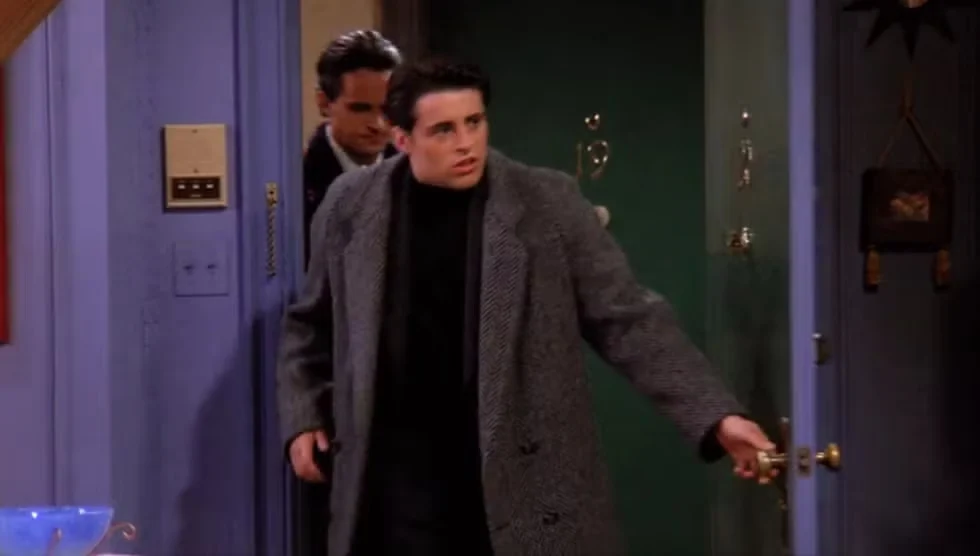
Early in the series, Monica and Rachel’s door is labeled with a low number, while Joey and Chandler’s across the hall is also a single-digit—consistent with a building’s lower floors. As the show settles in, the numbers are updated to higher values that better match the characters’ constant mentions of living on an upper level with a city view. The switch reflects a production correction rather than an in-story move; the apartments, hallway, and neighbors remain the same. If you scan early episodes against later ones, the doors themselves provide the clearest evidence of the change.
Ross’s Age Stuck at 29
Across multiple seasons, Ross repeatedly states he is 29, even as time clearly advances through holidays, jobs, and relationships. The show’s calendar moves forward—new Thanksgivings, birthdays, and career milestones—but his stated age doesn’t always keep pace. Lines of dialogue establish different year markers, yet the number “29” resurfaces beyond a single year. The inconsistency is traceable by comparing age claims to dated events like weddings and baby timelines.
Rachel’s Moving Birthday
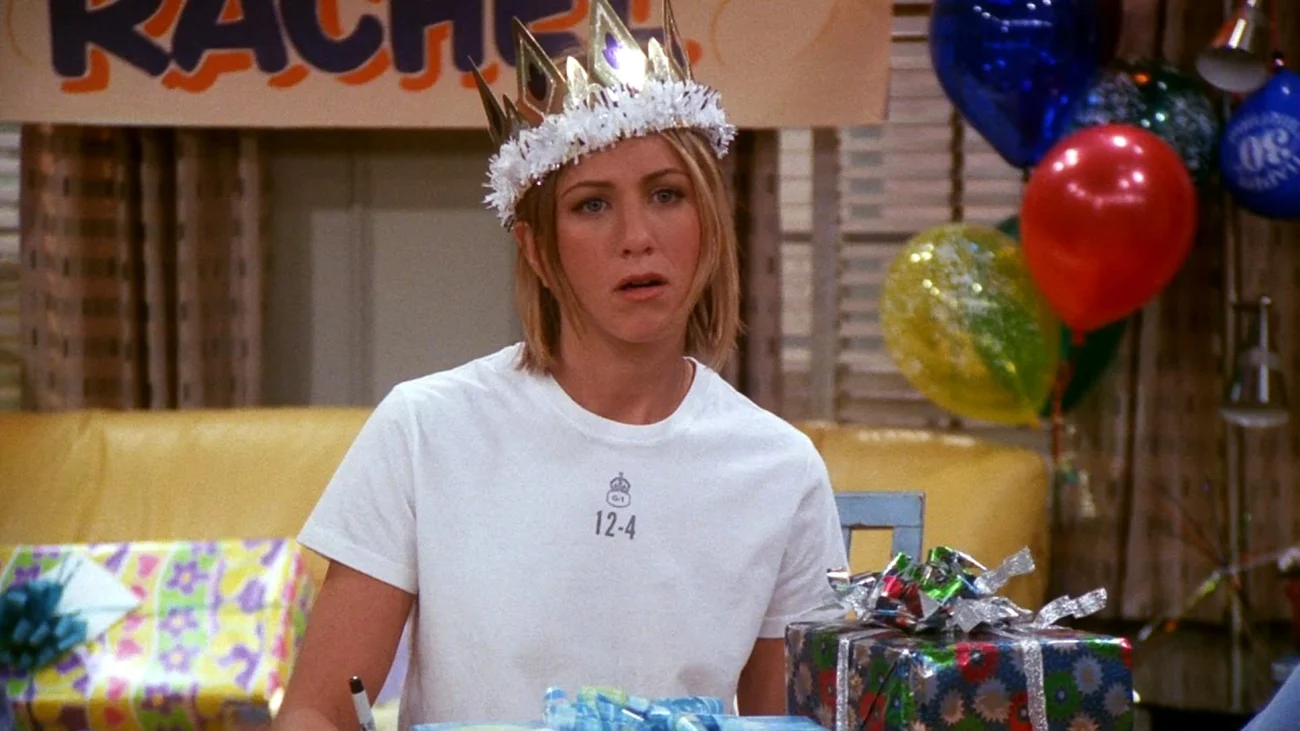
Rachel references different birth months in separate episodes, creating a conflict when the group plans celebrations or refers to zodiac signs. One storyline anchors her birthday in spring, while another positions it later in the year. These references can’t both align with the same calendar for the surrounding plots, which include job changes and relationship beats that occur in specific seasons. Tracking the party planning details across seasons makes the mismatch obvious.
The Mystery Room That Becomes a Closet
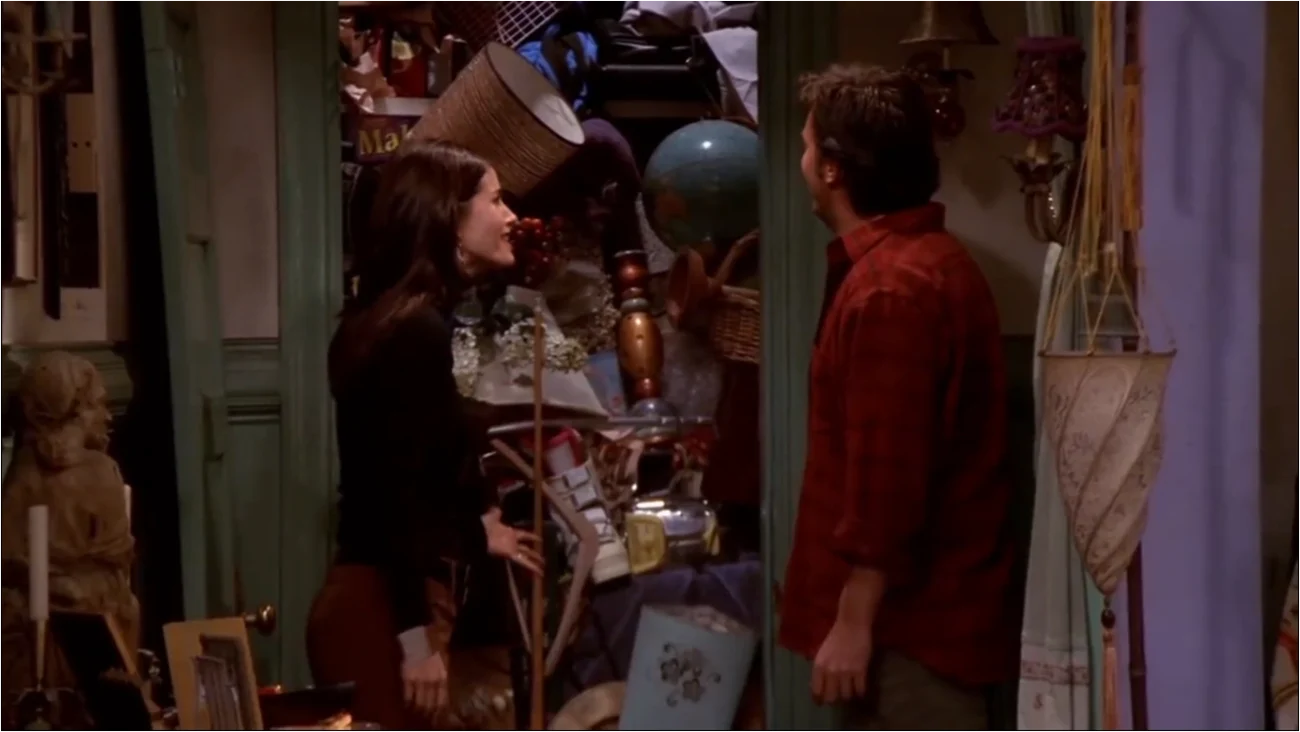
Monica’s apartment has a door that, at various points in the series, implies extra space beyond the kitchen and bedrooms. In later seasons, that same door famously reveals a jam-packed storage closet rather than a usable room. The change is a set and story adjustment that redefines the apartment’s layout without any on-screen renovation to explain it. Comparing early walk-throughs and later reveals shows how the floor plan is effectively retconned.
Stand-Ins Caught on Camera
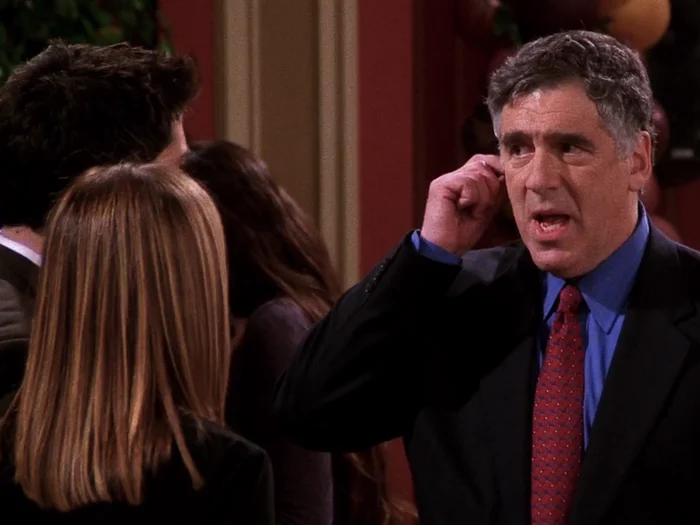
In a handful of shots, background angles accidentally capture a double or stand-in sitting where a principal character should be between cuts. These moments occur during over-the-shoulder coverage or rapid dialogue exchanges when the camera pivots. When the edit returns to the main angle, the correct actor reappears in the same spot, confirming it’s a continuity oversight rather than a new character. Pausing on transitional frames makes these substitutions easy to verify.
Ben’s Timeline vs. Emma’s
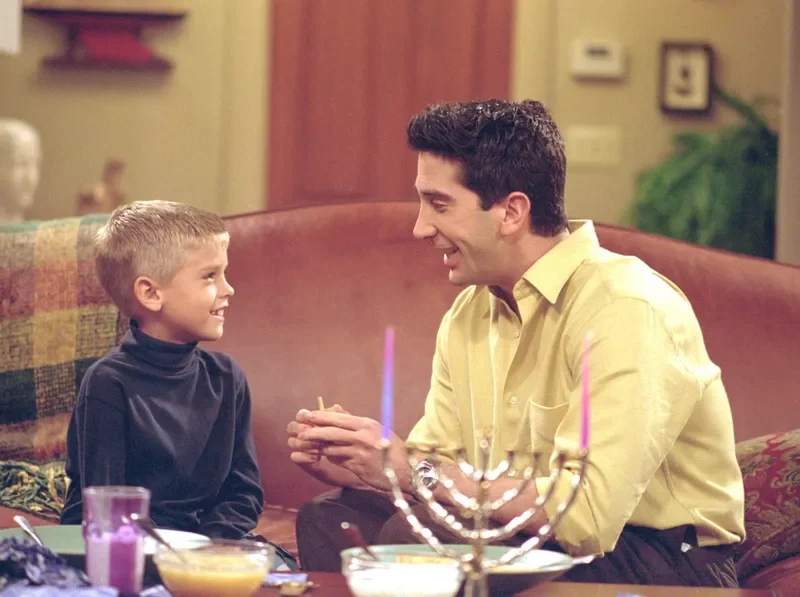
Ben’s birth, early childhood visits, and school-age appearances set a clear starting clock for Ross as a parent. Later, Emma’s arrival creates a second timeline that should run alongside Ben’s school years. Instead, Ben’s on-screen presence drastically tapers off just as Emma’s baby milestones take center stage, disrupting the expected overlap. The result is a visible age-and-presence imbalance when you chart both kids against the same in-show years.
Central Perk’s Ever-Available Couch
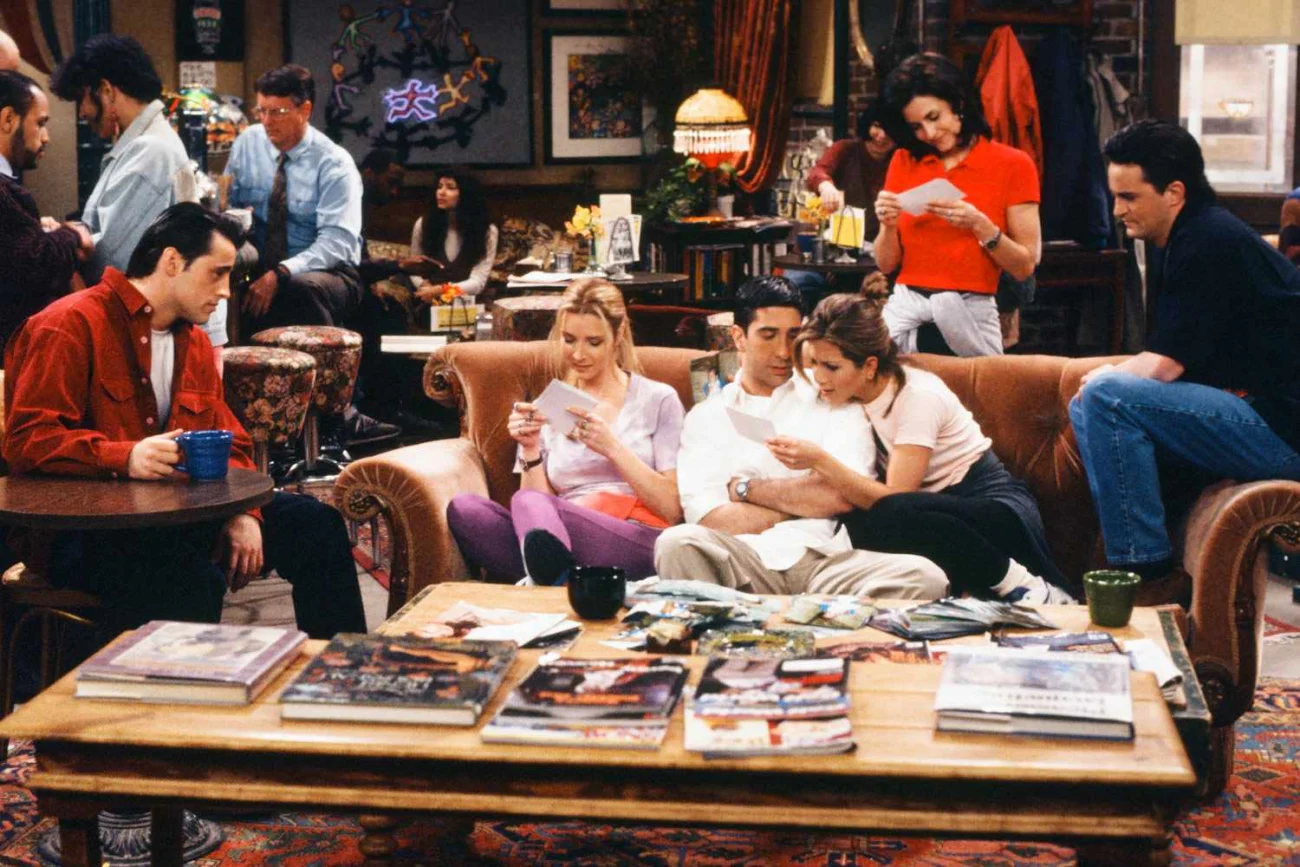
The iconic orange couch functions like a reserved fixture despite being placed in a busy coffee shop. Regular scenes show the group walking in at different times of day and immediately sitting there, even when the rest of the shop is active. Staff never references a reservation system, and signage doesn’t explain saved seating. The persistent availability creates a logistical inconsistency with the otherwise bustling setting.
Prop Positions That Shift Mid-Scene
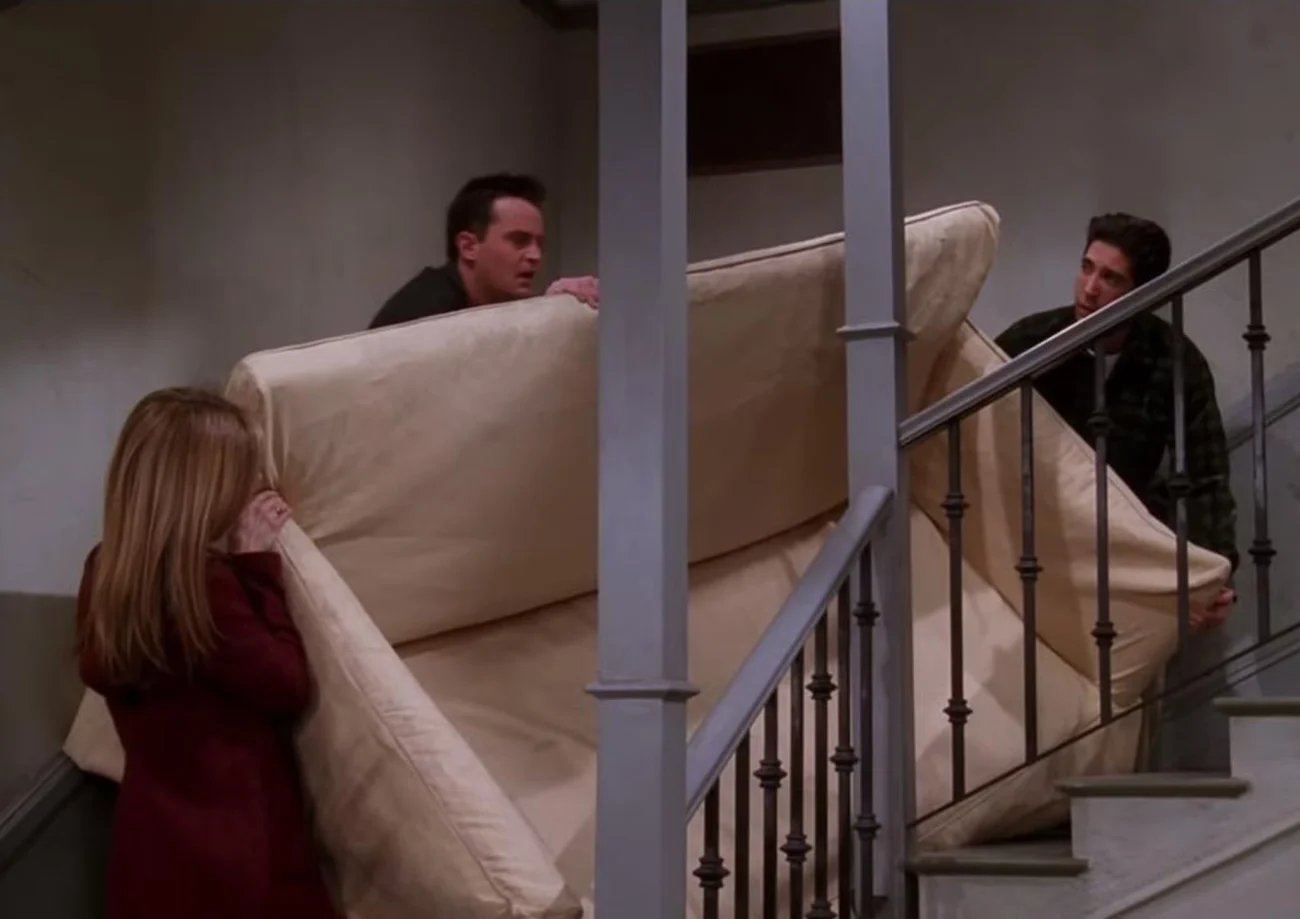
Within single conversations, cups, plates, and paper items sometimes jump between hands or change positions on the table between cuts. These are continuity mismatches caused by reshoots and angle changes that don’t perfectly replicate the previous placement. The quickest tells are liquid levels resetting or silverware moving across placemats without a character touching them on camera. Watching the same exchange from both angles reveals the object “teleports.”
Windows, Views, and the Hallway Geometry
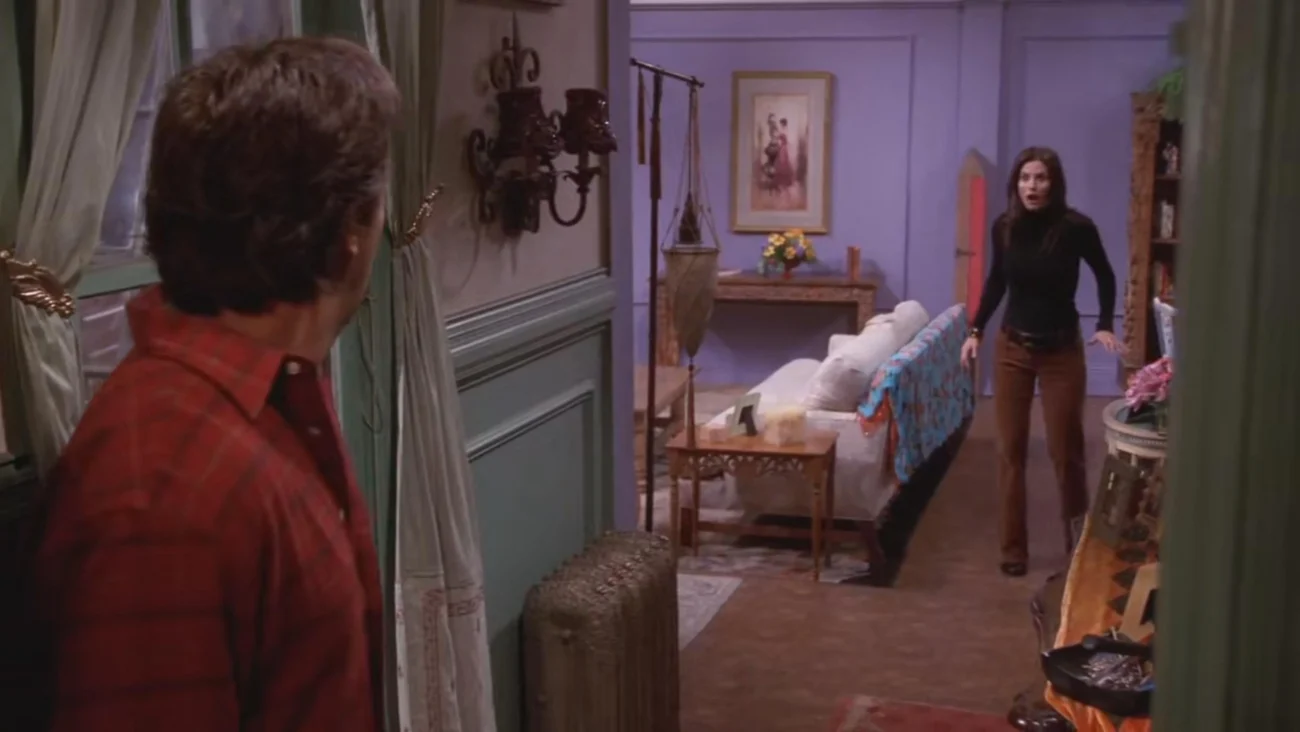
Across seasons, certain shots imply different angles to the street view from Monica’s kitchen and to the balcony outside the living room. Likewise, the hallway outside the apartments can read as slightly reconfigured, with door spacing and sightlines that don’t always match earlier blocking. These shifts come from set rebuilds and camera needs rather than narrative changes. Side-by-side comparison of similar scenes—like characters entering with groceries—shows how the geometry varies.
Job Details and Titles That Don’t Always Align
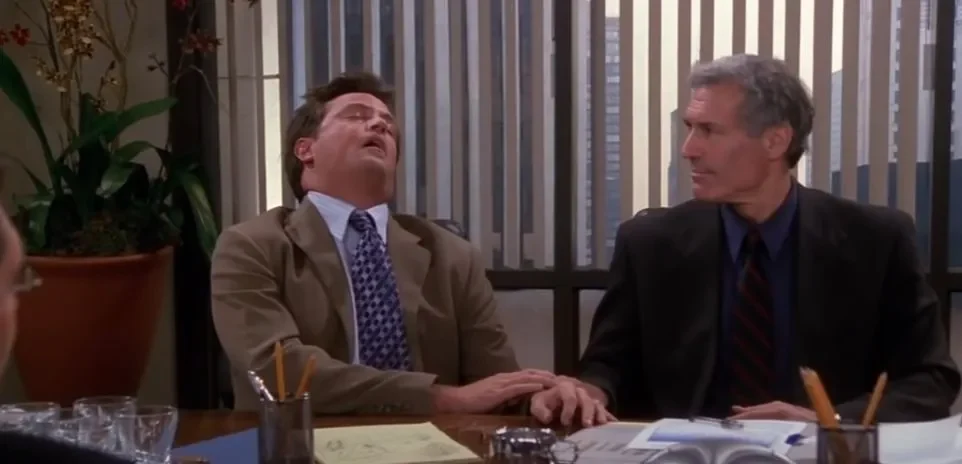
Characters occasionally give job descriptions that pivot later without a clean in-story reclassification. A role may be described broadly in one scene, then summarized with a different title or function in another, even before a promotion or career shift is written. The most noticeable instances involve corporate roles with technical jargon that later dialogue simplifies or reframes. Tracking workplace episodes in order highlights where responsibilities and labels subtly contradict earlier descriptions.
Share the ‘Friends’ mistake that jumps out to you most in the comments!