


10 ‘Joker’ Mistakes You’ll Never Be Able to Unsee

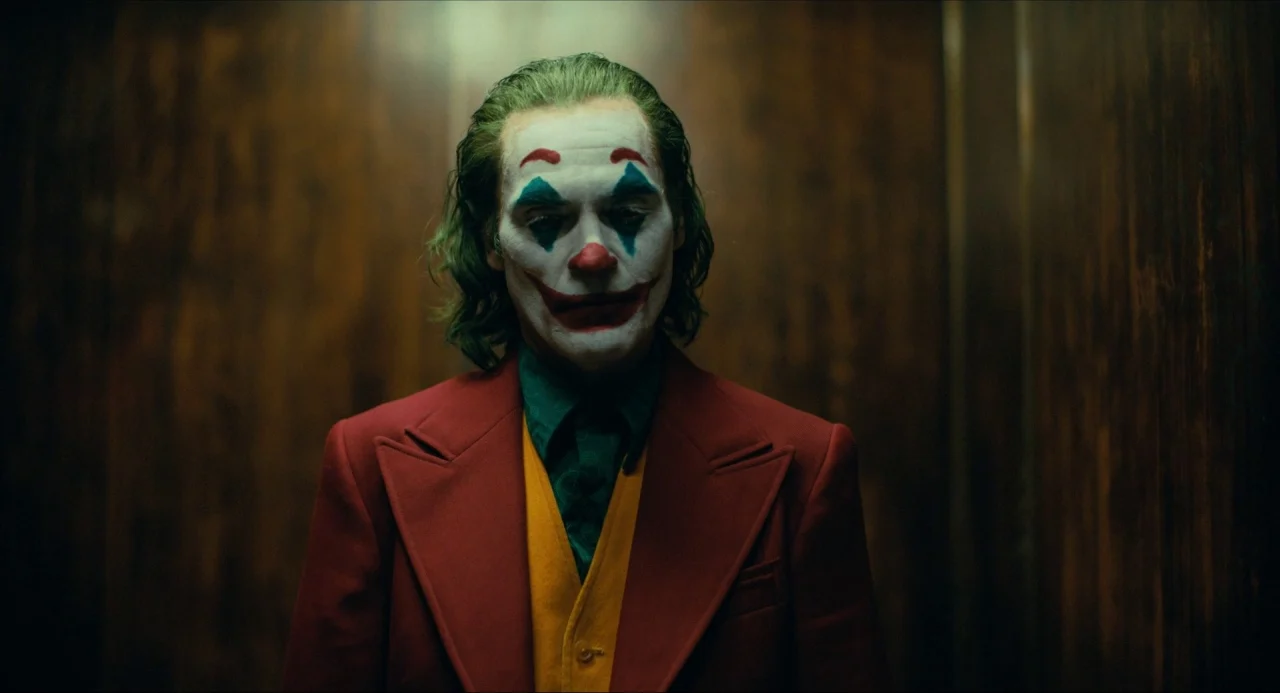


Even meticulously crafted films slip up, and ‘Joker’ is no exception. Beyond the striking performances and bold craft, the movie hides a handful of continuity blips, prop anachronisms, and timeline head-scratchers that sharp-eyed viewers keep spotting. None of these undercut the story, but once you notice them, they tend to pop out on every rewatch. Here are ten of the most commonly cited goofs—what happens on screen, and why it doesn’t quite line up.
Makeup that shifts between cuts

Arthur’s clown face-paint doesn’t always stay consistent within a single scene. The size and angle of the blue eye triangles, the red nose shape, and the length of the mouth paint can switch positions between over-the-shoulder shots. This usually happens during dialogue, where reverse angles were filmed at different times. It’s a classic continuity issue: once paint is smudged or reapplied off camera, matching it perfectly is hard. The result is small but noticeable design changes from shot to shot.
Cigarettes that magically change length
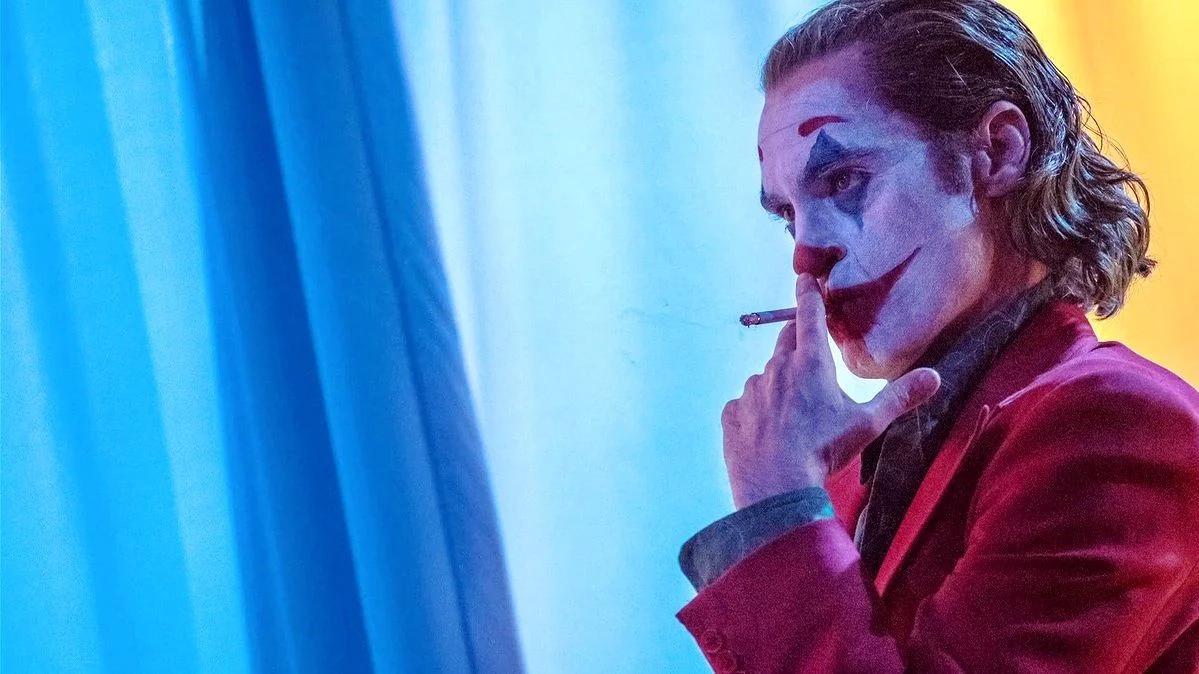
Because Arthur smokes throughout the film, continuity on cigarette length is crucial—and it occasionally slips. Within the same conversation, a cigarette can jump from nearly finished to freshly lit, or shift to a different hold between hands. These jumps indicate that takes were spliced together from different moments, with props reset inconsistently. It’s a textbook on-set challenge whenever repeated lighting and ashing need to match across multiple angles.
The notebook that won’t keep the same page
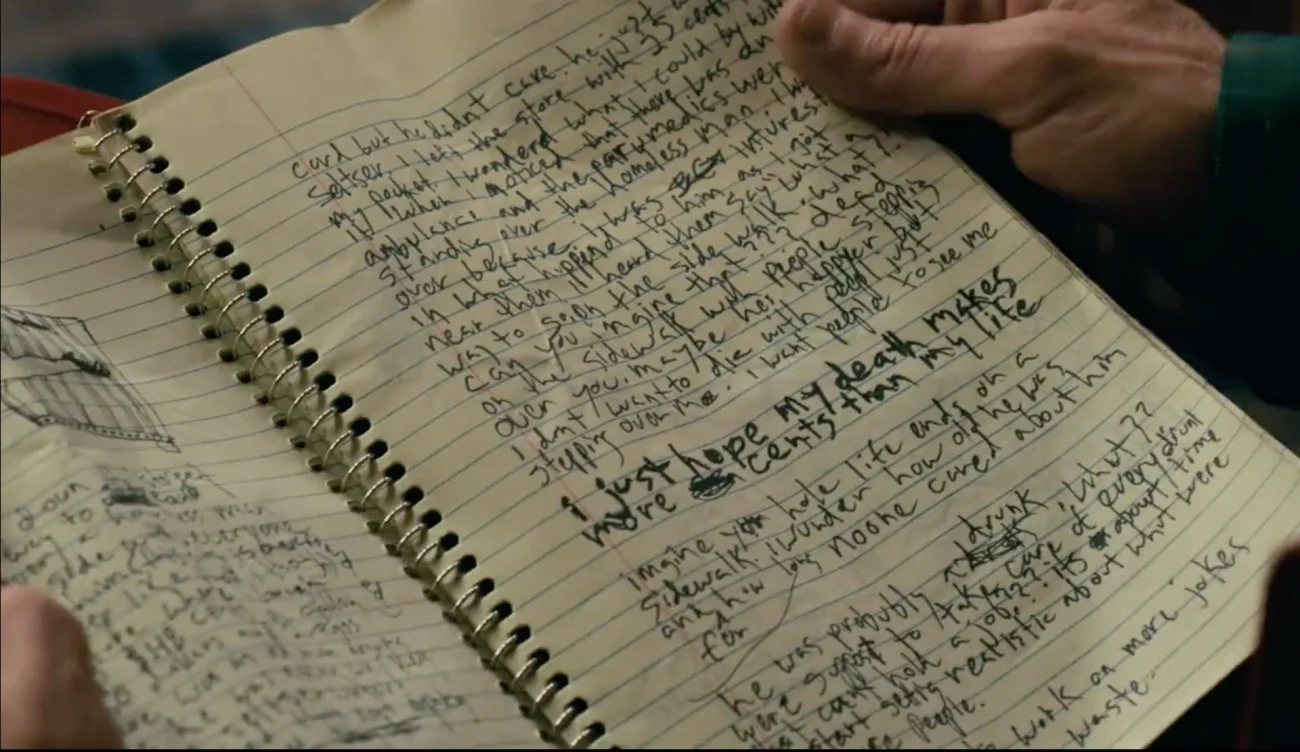
Arthur’s joke journal doesn’t always show the same content when the camera cuts back to it. A page filled with doodles or a specific line can switch to different handwriting, spacing, or illustrations in the next shot. That suggests the production used multiple hero props or swapped pages between takes. For continuity, inserts are usually filmed separately, and here the insert pages don’t perfectly align with the pages seen in the wider coverage.
Repeating clock times in background shots

Several interior scenes feature wall clocks displaying the same time across different locations, even when the story setting changes. Matching times across scenes can indicate re-used hero clocks or frozen, battery-less props placed by set dressing. Because many scenes were shot out of sequence, a locked clock face is a common shortcut that avoids ticking-sound cleanup but creates visible repetition. Viewers notice when time stands still in places that shouldn’t be synchronized.
Wardrobe resets mid-scene
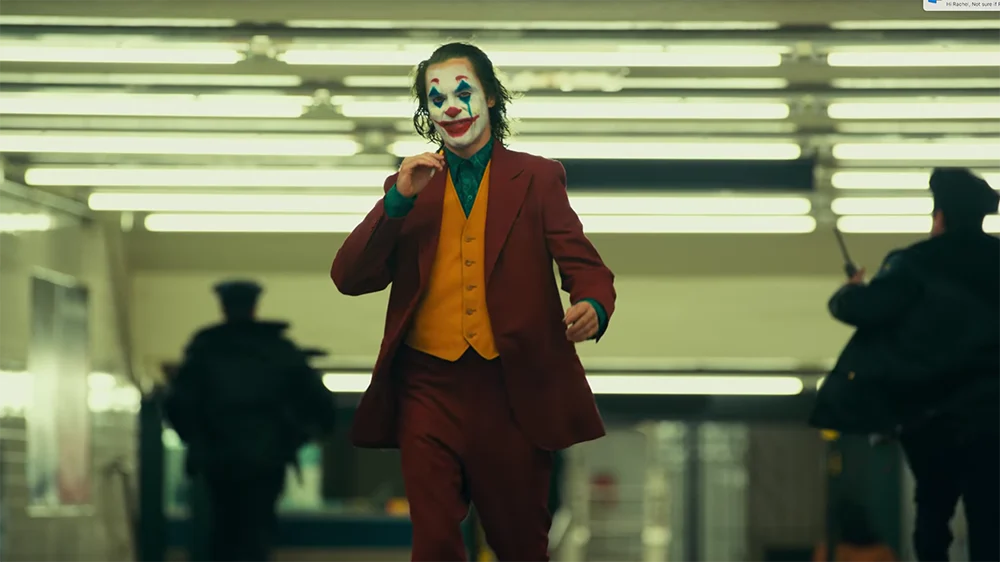
Small parts of Arthur’s wardrobe—shirt collar points, tie placement, and the tilt of his vest—don’t always match between angles. For example, a collar that sits under the lapel in one shot can pop over it after a cut, then revert again. These shifts usually trace back to minor adjustments during resets or after stunt movements. When scenes require multiple takes and resets, matching these micro-details is notoriously tricky.
Eyeglasses and prop placements that drift
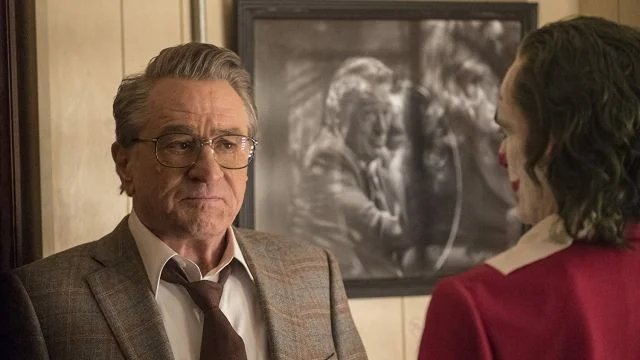
Tabletop props in social-worker and hospital scenes—files, pens, or Arthur’s glasses—can relocate subtly between cuts. An item set near the edge of a folder might jump a few inches or rotate 90 degrees after an edit. That’s a standard continuity hitch when multiple crew members handle paperwork marks and actor business. Because coverage angles are stitched together in the edit, the prop geography doesn’t always stay locked.
Mismatched television playback
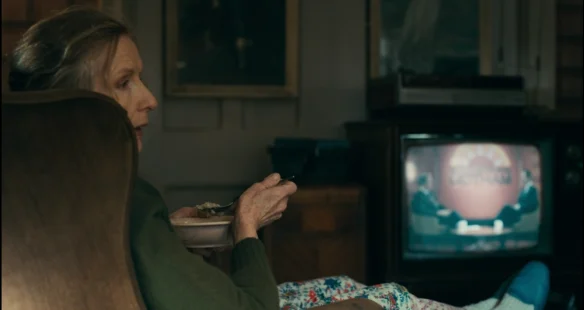
Footage shown on in-story televisions occasionally shifts aspect ratio or scan-line texture between shots of the screen and the characters watching it. Insert plates for TV playback are often created separately and then composited or played back on set, which can lead to different picture treatments appearing in different shots. The artifact style, frame cropping, and even brightness can vary. Those inconsistencies stand out when the camera cuts rapidly between the TV and reaction shots.
Subway hardware that doesn’t line up with the era
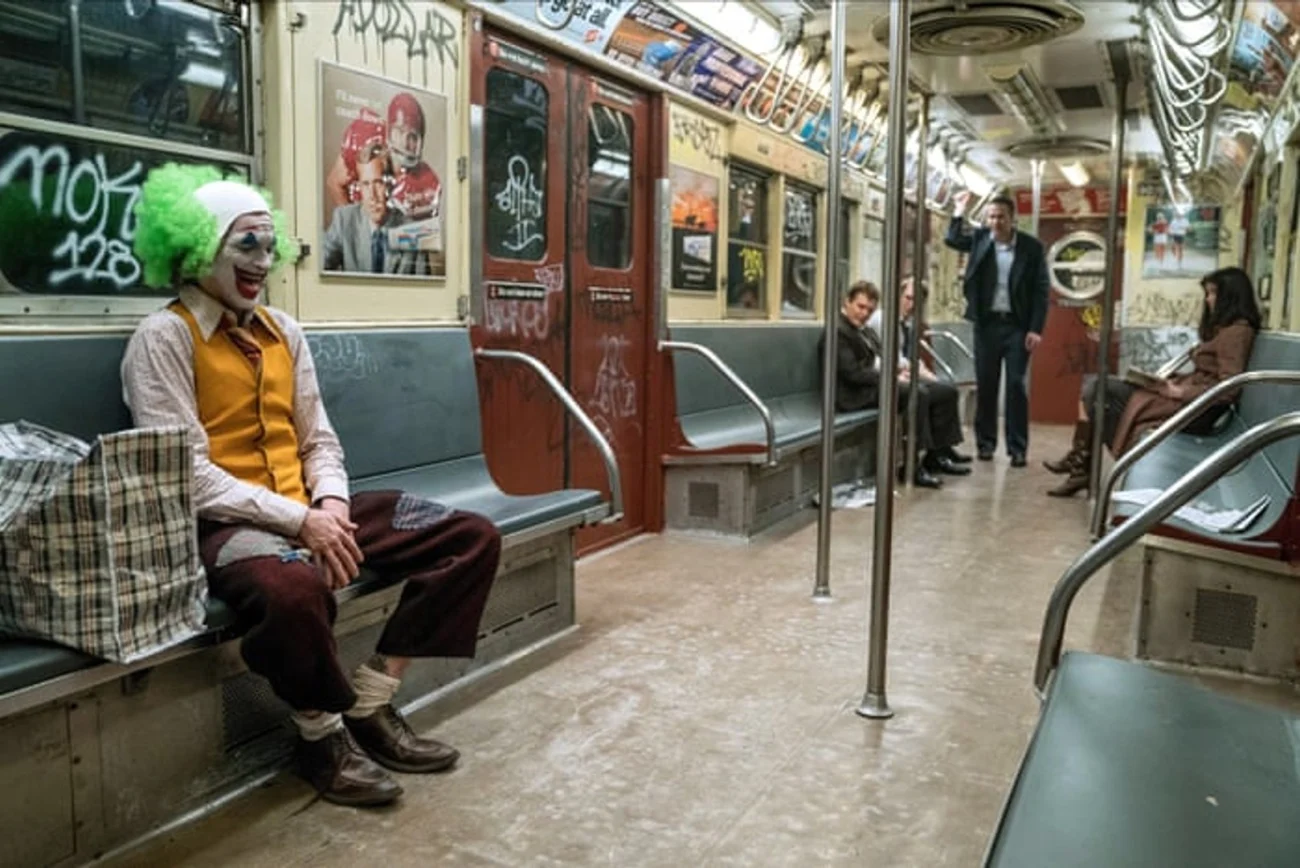
Some subway cars, signage, and interior details look like composites drawn from different transit periods, and a few elements don’t match the implied setting. Productions often source available rolling stock and retrofit interiors, which can leave modern or out-of-period fixtures in frame. Door signage, grab-bar finishes, and route maps are common tells. When real transit equipment can’t be perfectly era-matched, small anachronisms slip through.
Emergency vehicle details out of time
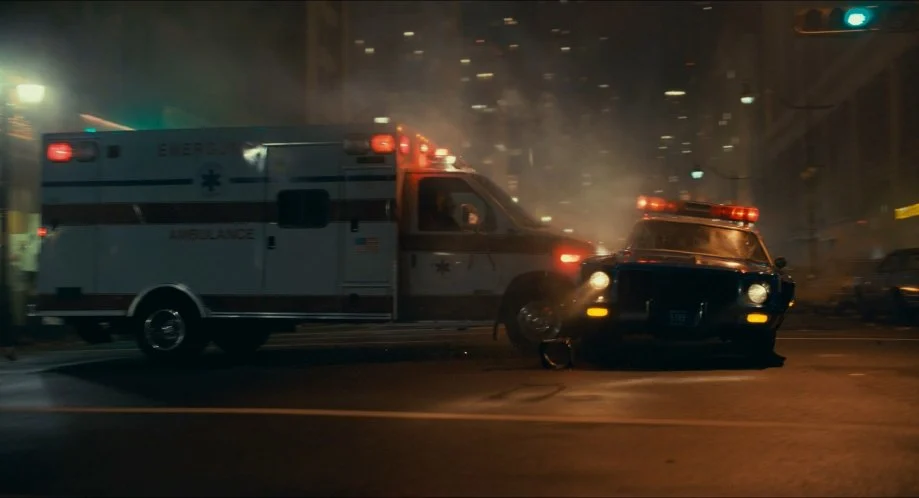
Ambulance and police car liveries, equipment mounts, or lightbar styles don’t always align precisely with the era the film evokes. Vehicle picture cars are frequently updated models dressed to read “period,” but certain trim pieces and hardware are hard to hide. Sharp viewers spot details like roof light profiles or interior consoles that arrived later than the story timeframe. These are practical compromises when production relies on what’s rentable and street-legal.
Blood and grime continuity
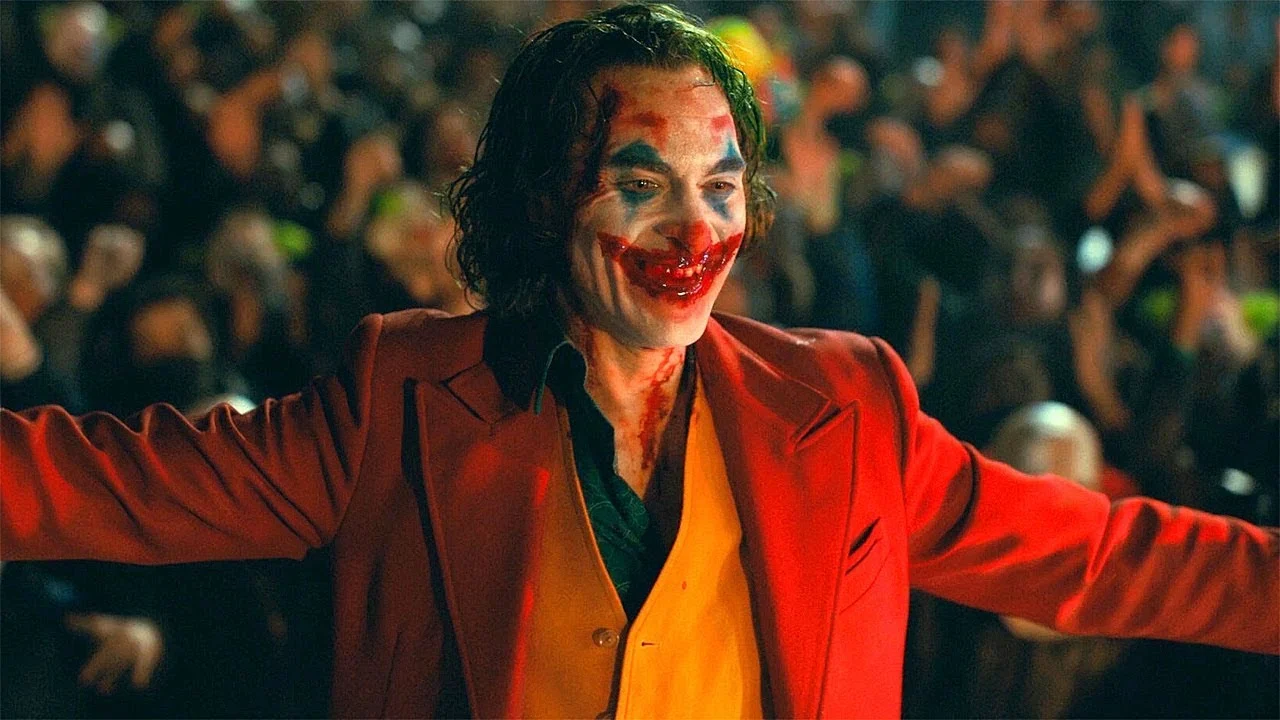
After intense sequences, the placement and saturation of blood, sweat, or grime on Arthur’s face and clothing can change between cuts. Special-effects makeup departments track these “continuity levels” with photos, but action resets and time-pressed turnarounds make perfect matches difficult. A smear may migrate, lighten, or reappear as coverage shifts angles. The differences are subtle, but once noticed, they can make consecutive shots feel slightly out of sync.
Think you’ve caught others in ‘Joker’? Drop the ones you’ve spotted in the comments so everyone can compare notes!