


15 Best Comic Book Villain Movie Performances of All Time, Ranked

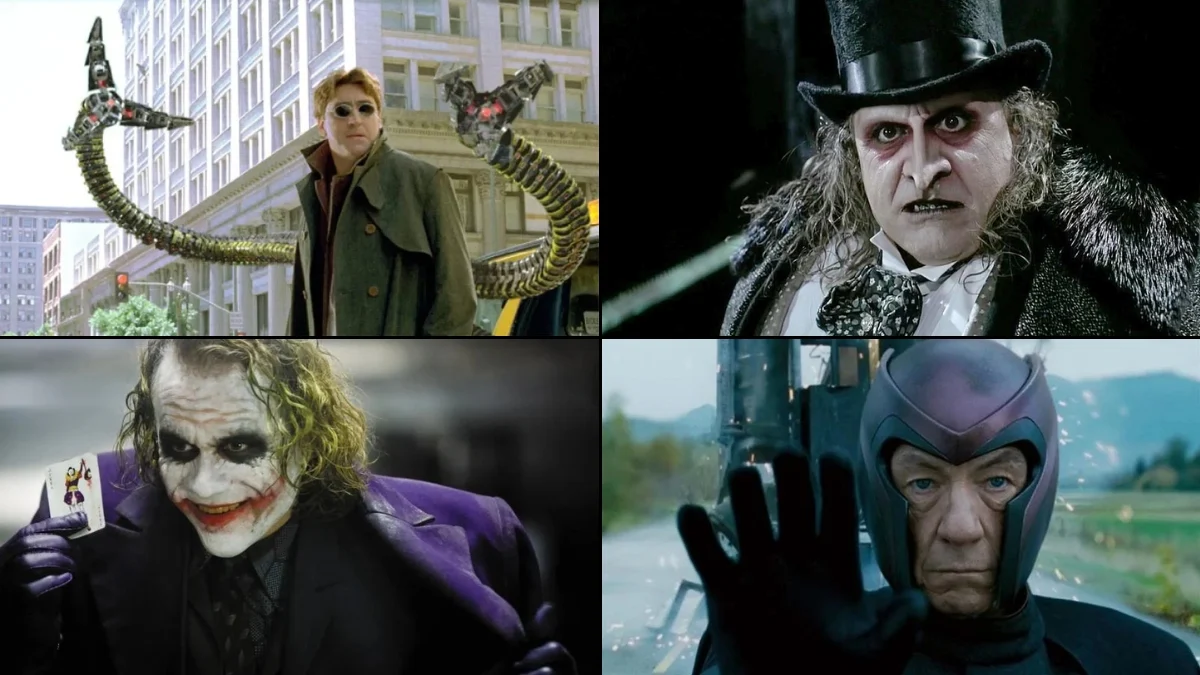


Comic book films live or die on their antagonists, and a great screen villain often shapes the story’s stakes, themes, and even its look. The performances below come from actors who helped define their films through preparation, physical transformation, voice work, stunt choices, and close collaboration with directors, stunt teams, and effects artists.
To keep this focused, each entry highlights concrete details—training and makeup, on-set methods, production choices, scene work, and measurable outcomes like awards or industry impact. The result is a snapshot of how these portrayals were built behind the scenes and what they contributed to the comics-to-cinema pipeline.
Tom Hardy — Bane, ‘The Dark Knight Rises’ (2012)

Hardy adopted a distinctive, amplified vocal timbre and wore a respiratory mask that became central to the character’s silhouette, training extensively to add mass for physically demanding set pieces. The film’s opening mid-air heist was staged with large-scale practical effects, and Hardy performed within genuine IMAX-framed sequences that emphasized the character’s imposing presence.
Costume elements—including the shearling coat and tactical harness—were designed to read in wide shots and survive complex fights, while the mask required careful sound recording and post-production mixing to keep dialogue intelligible. Hardy’s fight choreography with Christian Bale was mapped to show methodical grappling and leverage, reflecting a character who overwhelms opponents through planning and control.
Danny DeVito — Oswald Cobblepot/The Penguin, ‘Batman Returns’ (1992)

DeVito worked under extensive prosthetics and facial appliances, paired with specialized dental pieces to alter diction and mouth shape. The production used chilled sets and wrangled trained penguins alongside animatronics, which affected blocking and required DeVito to calibrate performance energy to creature behavior and camera speed.
Makeup and costuming teams created flipper-like gloves and a tailored, bedraggled wardrobe that maintained continuity through water, smoke, and stage blood. The signature inky spittle look was achieved with on-set safe mixtures that had to be refreshed during takes, coordinating with lighting to keep the effect readable without obscuring facial acting.
Terence Stamp — General Zod, ‘Superman II’ (1980)
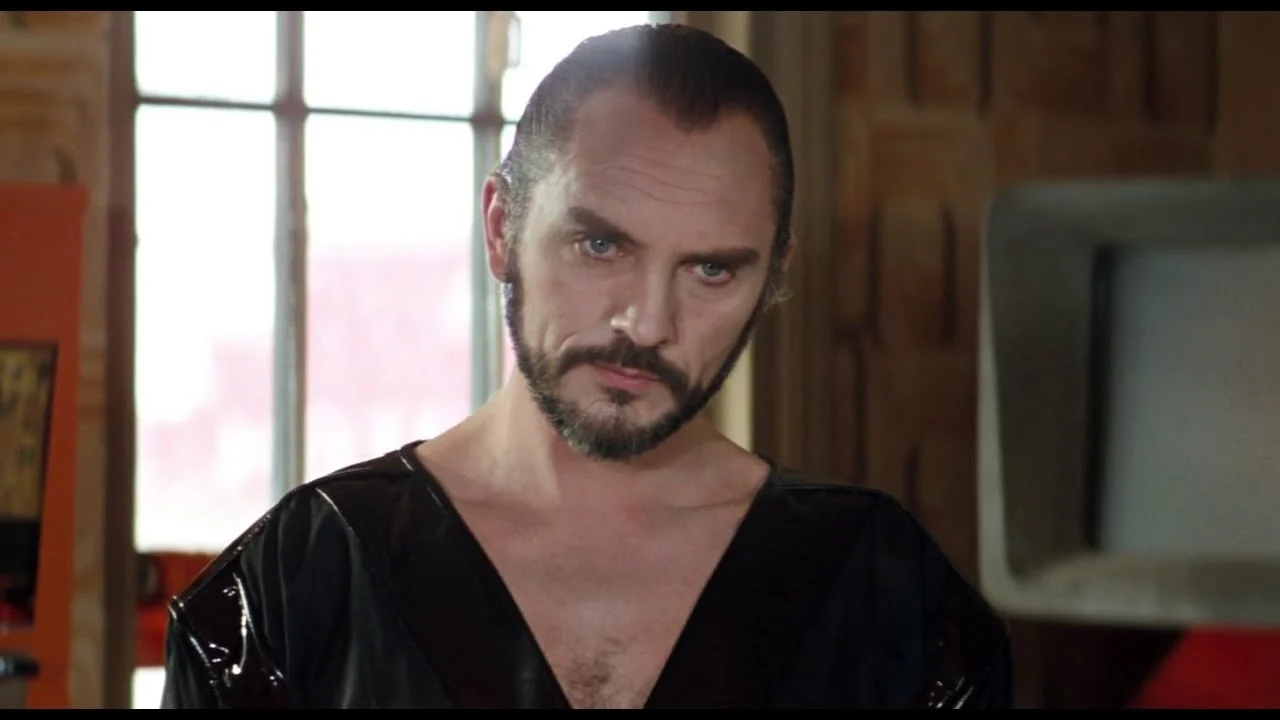
Stamp’s portrayal centered on formal diction and precise stillness, with blocking and camera placement designed to give the character height and dominance in ensemble frames. Production spanned director changes and pickups, so Stamp’s continuity relied on consistent posture, gesture limits, and vocal pacing that matched footage from different units.
Costume design emphasized reflective black materials that interacted strongly with set lighting, demanding careful exposure to avoid glare while preserving detail. The character’s Kryptonian powers were realized through wire work, optical compositing, and miniatures, and Stamp adjusted eyeline and head angle to sell effects shots that would be completed months later.
Michael Keaton — Adrian Toomes/Vulture, ‘Spider-Man: Homecoming’ (2017)
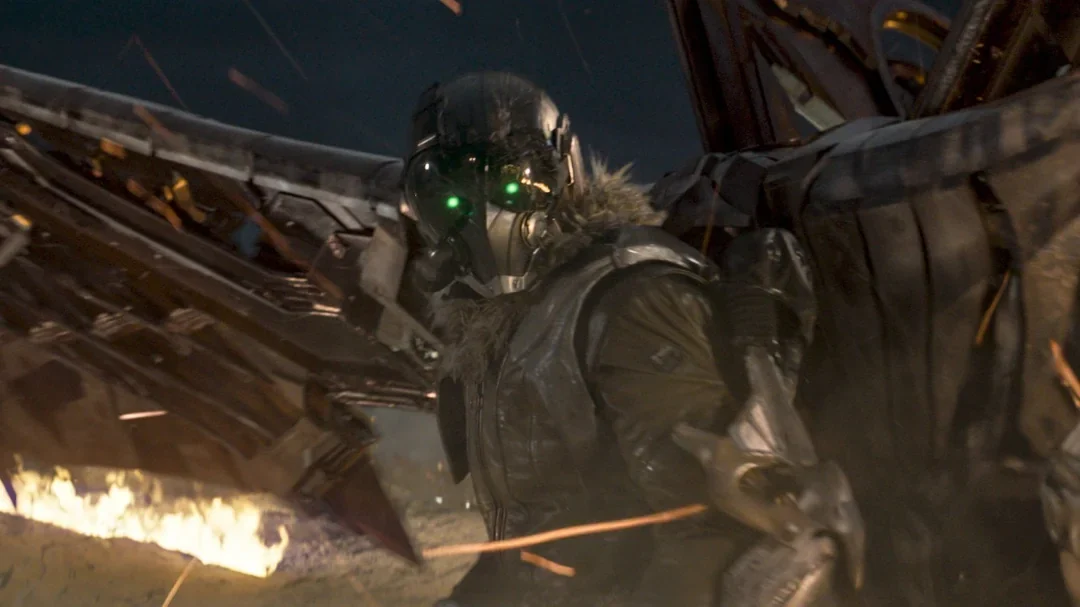
Keaton’s performance connects the character to ground-level concerns: a contractor displaced by federal cleanup operations who repurposes Chitauri technology. The production visualized the Vulture’s flight with a wing rig and harness work, while digital extensions filled out the exosuit and turbines; Keaton matched body tilt and gaze to previs so aerial shots cut cleanly.
The tense car-ride sequence relies on confined framing, practical interior lighting, and micro-expressions rather than effects, showing how the role balances spectacle with dialogue-driven intimidation. Design choices—work boots, flight jacket textures, and a saw-toothed collar—tie the villain’s look to scavenged tech and blue-collar origins, reinforcing the story’s Staten Island and Queens settings.
Cate Blanchett — Hela, ‘Thor: Ragnarok’ (2017)

Blanchett trained extensively with the stunt department to integrate bladed-weapon drills and broad, dance-like movement patterns that read through a motion-capture-assisted headdress. The character’s antlered crown was realized digitally, so Blanchett performed with tracking markers and consistent head carriage to maintain scale and symmetry across shots.
Costume and makeup teams designed a sleek, black-green palette that keyed well against bright production design, letting the character cut sharply through saturated frames. Fight scenes were staged on large sets in Queensland, Australia, with wire assists and long-lens coverage; Blanchett coordinated timing with VFX cues to align blade throws and impact beats for later CG integration.
Paul Dano — Edward Nashton/The Riddler, ‘The Batman’ (2022)

Dano collaborated with the creative team on a utilitarian costume—cold-weather mask, glasses, and a green field jacket—so mouth coverage would influence breathing patterns and vocal cadence. The character’s communication style (handwritten ciphers, live streams, and voice modulation) required tailored recording setups and prop work that linked clues across scenes.
The film drew on true-crime iconography for staging, including close-quarters break-ins and forensic-style evidentiary trails that Dano played with minimal, deliberate movement. Outside the film, Dano wrote the tie-in comic series ‘Riddler: Year One’, mapping the character’s pre-film methodology and aligning it with production design details like notebooks, symbols, and taped evidence.
Ian McKellen — Erik Lehnsherr/Magneto, ‘X-Men’ (2000)

McKellen’s characterization builds from the character’s backstory as a Holocaust survivor, informing measured speech, posture, and an aversion to uncontained violence. Early scenes set at a concentration camp required controlled physicality and careful eyelines to elements that would be extended with visual effects in post.
The depiction of magnetism used then-new digital compositing, practical metal props on rigs, and subtle wind and debris cues; McKellen coordinated hand positions and gaze to anchor the illusions. The helmet and tailored costumes communicated status and purpose, and continuity across multiple films kept silhouette and movement language consistent for audience recognition.
Tom Hiddleston — Loki, ‘The Avengers’ (2012)

Hiddleston returned to the role with expanded screen time, combining classical rhetoric with modern sarcasm to navigate long dialogue runs. He trained in staff work and modular fight choreography, executing multi-opponent beats that could be re-timed for digital doubles and CG environments without breaking character continuity.
The scepter prop was matched to interactive light for on-set reflections, and Hiddleston’s blocking was planned around camera moves designed to hide effects seams. He originally auditioned for the role of Thor, a casting history that informed dialect choices and physical differentiation from the Asgardian hero across shared scenes.
Alfred Molina — Otto Octavius/Doctor Octopus, ‘Spider-Man 2’ (2004)
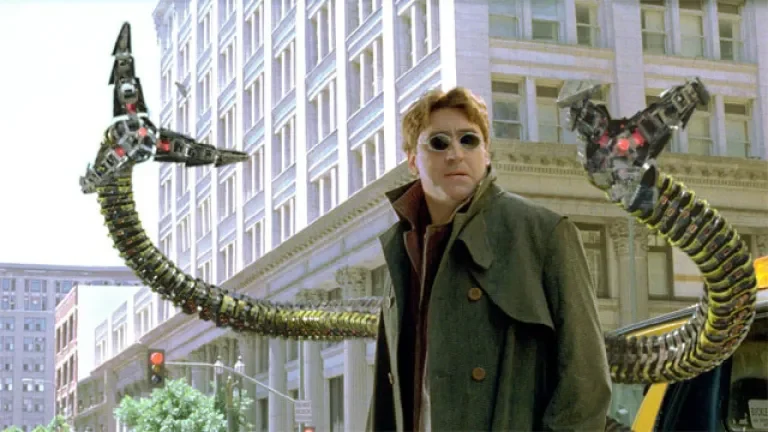
Molina performed with practical, hydraulically assisted tentacle rigs controlled by a team of puppeteers, allowing real weight, clatter, and shadows in frame. This approach let the actor improvise eye lines and timing against tangible arms, while close-ups captured finger-like claws that could grip physical objects without greenscreen stand-ins.
The character’s arc from esteemed scientist to dangerous antagonist is visualized through wardrobe and posture shifts, while VFX blended practical tentacles with digital extensions for stunts and wide shots. Sound design assigned distinct mechanical motifs to each arm, and Molina timed looks to those cues so performance and effects editorial would sync.
Willem Dafoe — Norman Osborn/Green Goblin, ‘Spider-Man: No Way Home’ (2021)

Dafoe reprised the role and completed extensive stunt and fight work, coordinating with second-unit teams to integrate practical throws and complex breakaway walls. The updated look removed the rigid mask for greater facial readability, relying on performance plus partial prosthetics and digital enhancements to convey instability in close-ups.
Production balanced multiverse ensemble logistics with actor-driven action, giving Dafoe space to execute long takes that could be intercut with digital doubles. The film became one of the highest-grossing releases of its era, and Dafoe’s participation was highlighted in marketing and press as a key returning element that connected different franchise generations.
Michael B. Jordan — Erik Killmonger, ‘Black Panther’ (2018)

Jordan trained in striking and grappling and worked with makeup artists on extensive keloid-style scarification prosthetics, which were applied over large areas of his torso and arms. The costuming—designed by Ruth E. Carter—integrated tactical fabrics and West African–inspired patterns, and Jordan’s movement was choreographed to showcase both military precision and personal history.
Dialogue coaching shaped accent and cadence to reflect the character’s Oakland upbringing and global combat experience. The film’s success led to multiple Academy Awards in craft categories, and Jordan’s antagonist became central to discussions of heritage, diaspora, and the geopolitics embedded in the story’s Wakandan technology.
Jack Nicholson — The Joker, ‘Batman’ (1989)

Nicholson’s performance was built with pronounced prosthetic smile pieces and high-contrast makeup that read under moody, expressionist lighting. His costumes—vivid tailoring, gloves, and hat—were designed to pop against dark sets, requiring careful exposure and color timing to keep hues stable from scene to scene.
His contract famously included profit participation and merchandising considerations, a then-notable template for major star deals on franchise films. On set, Nicholson coordinated with a mix of miniatures, matte paintings, and early optical effects, pacing movements and eye lines to match background plates and animated elements.
Josh Brolin — Thanos, ‘Avengers: Infinity War’ (2018)

Brolin performed in a full motion-capture setup with facial point tracking so subtle expressions could drive a high-resolution CG character. VFX vendors mapped his performance onto a massive digital model, blending on-set lighting references with simulated skin, armor wear, and atmospheric effects for physical credibility.
Story structure positioned the antagonist at the center of the narrative, and Brolin recorded both production-day dialogue and later sessions to refine rhythm against evolving effects shots. The film surpassed the two-billion-dollar mark worldwide, and the villain’s climactic finger snap was staged with silent framing and tightly timed reaction cuts to sell the scale of its consequences.
Joaquin Phoenix — Arthur Fleck/Joker, ‘Joker’ (2019)

Phoenix underwent a significant weight change under medical supervision and coordinated closely with director Todd Phillips on a movement vocabulary that included balletic gestures and sudden stops. Music by Hildur Guðnadóttir was played on set for some scenes to shape tempo, allowing Phoenix to time body language to the score’s pacing.
The film won the Golden Lion at the Venice Film Festival, and Phoenix received the Academy Award for Best Actor for the role. Box-office results passed the one-billion-dollar threshold globally, setting records for an R-rated release at the time, and the production’s New York and Newark locations provided period-specific textures for exterior sequences.
Heath Ledger — The Joker, ‘The Dark Knight’ (2008)
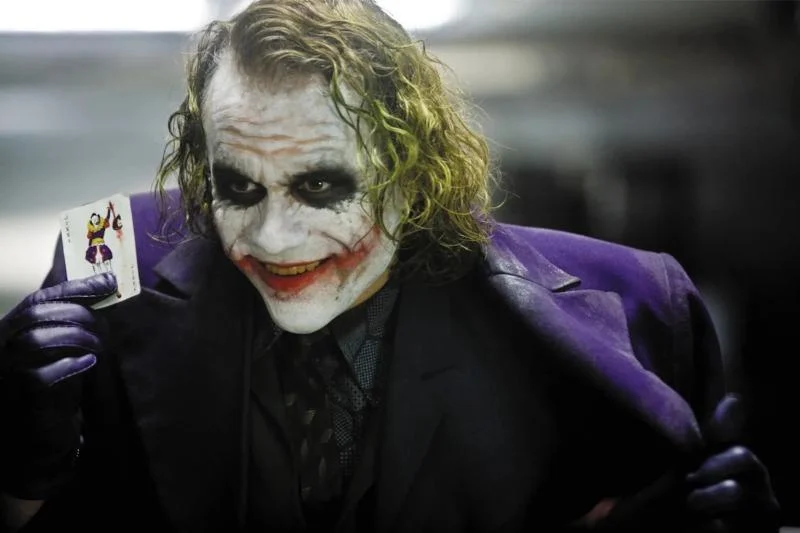
Ledger collaborated with the makeup department on a cracked, grease-paint look and developed a precise vocal register and physical tics to maintain character continuity across handheld and IMAX coverage. The hospital demolition combined a practical building set with timed pyrotechnics, and Ledger performed the gag’s remote-trigger beats in a single coordinated take.
He was posthumously awarded the Academy Award for Best Supporting Actor for the role. The film’s global box office passed the one-billion-dollar mark, and its large-format photography, practical stunts, and location work in Chicago and Hong Kong framed Ledger’s performance within grounded action that emphasized in-camera scale.
Share your own picks and what details stood out to you in these portrayals in the comments!