


15 Best Movie Monologues of All Time

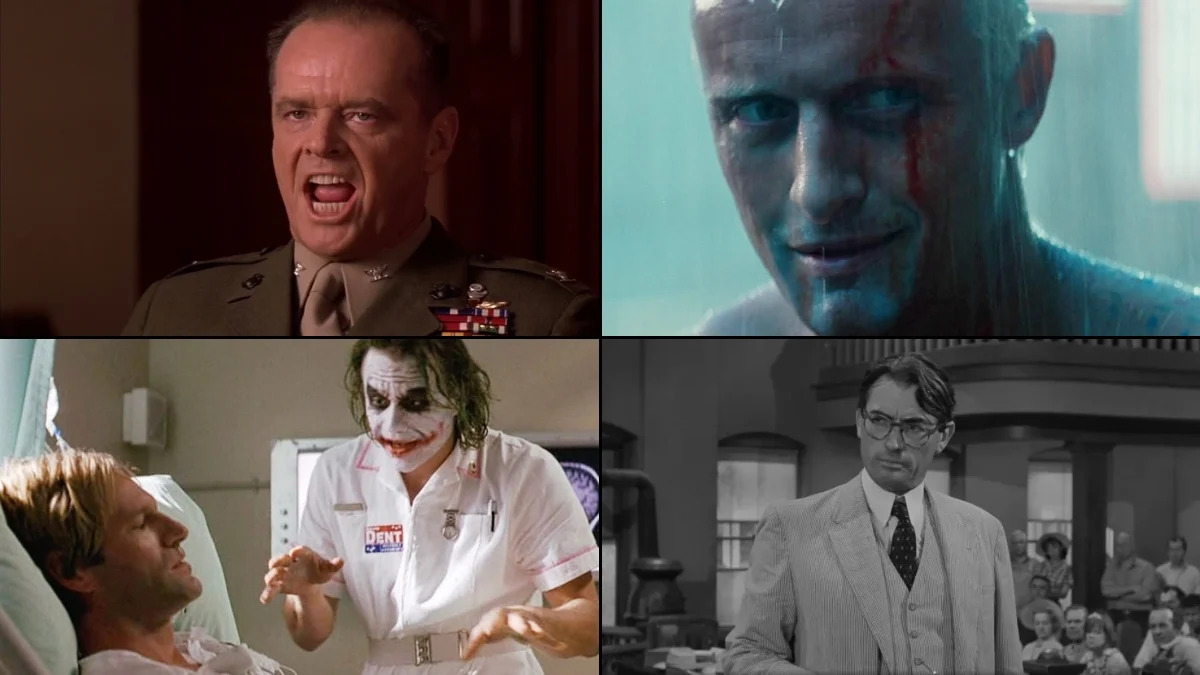


Great movie speeches do more than fill the silence — they reveal character, turn plots on a dime, and lodge a few carefully chosen words in audience memory. Some come in courtrooms or boardrooms, others on park benches or in the rain, but each one lands because the writing, performance, and situation all click at once.
Below are fifteen standout monologues from films across genres and eras. For each, you’ll find where the speech appears in the story, who delivers it and to whom, and details about the writing, performance, and production that shaped what ended up on screen.
‘Network’ (1976) – “I’m as mad as hell”
Howard Beale delivers the on-air tirade from the UBS news desk after being told he’s being let go, turning a personal crisis into a live broadcast plea for viewers to shout from their windows. The scene unfolds inside the studio, with colleagues watching as Beale pivots from resignation to a call-and-response that spreads through the city in the next sequence.
Writer Paddy Chayefsky crafted the speech as part of a satire of television’s ratings chase, and director Sidney Lumet staged it to feel like a genuine live meltdown. Peter Finch performed the monologue multiple times to capture escalating intensity, and the film’s sound design layers in off-screen voices and city ambience to suggest a network-wide ripple effect.
‘Jaws’ (1975) – Quint’s USS Indianapolis story
Aboard the Orca at night, Quint recounts the sinking of the USS Indianapolis to Brody and Hooper, explaining his fear of the water and lifelong grudge against sharks. The scene follows a round of bonding and one-upmanship and turns the hunt personal, adding a survivor’s account that reframes the danger they’re about to face.
The speech was shaped from multiple drafts, including contributions from John Milius and actor Robert Shaw, who trimmed and refined the final text before filming. Director Steven Spielberg shot the monologue in tight coverage with minimal score, letting Shaw’s delivery and the creak of the boat carry the tension while the camera holds on the listeners’ reactions.
‘A Few Good Men’ (1992) – “You can’t handle the truth!”
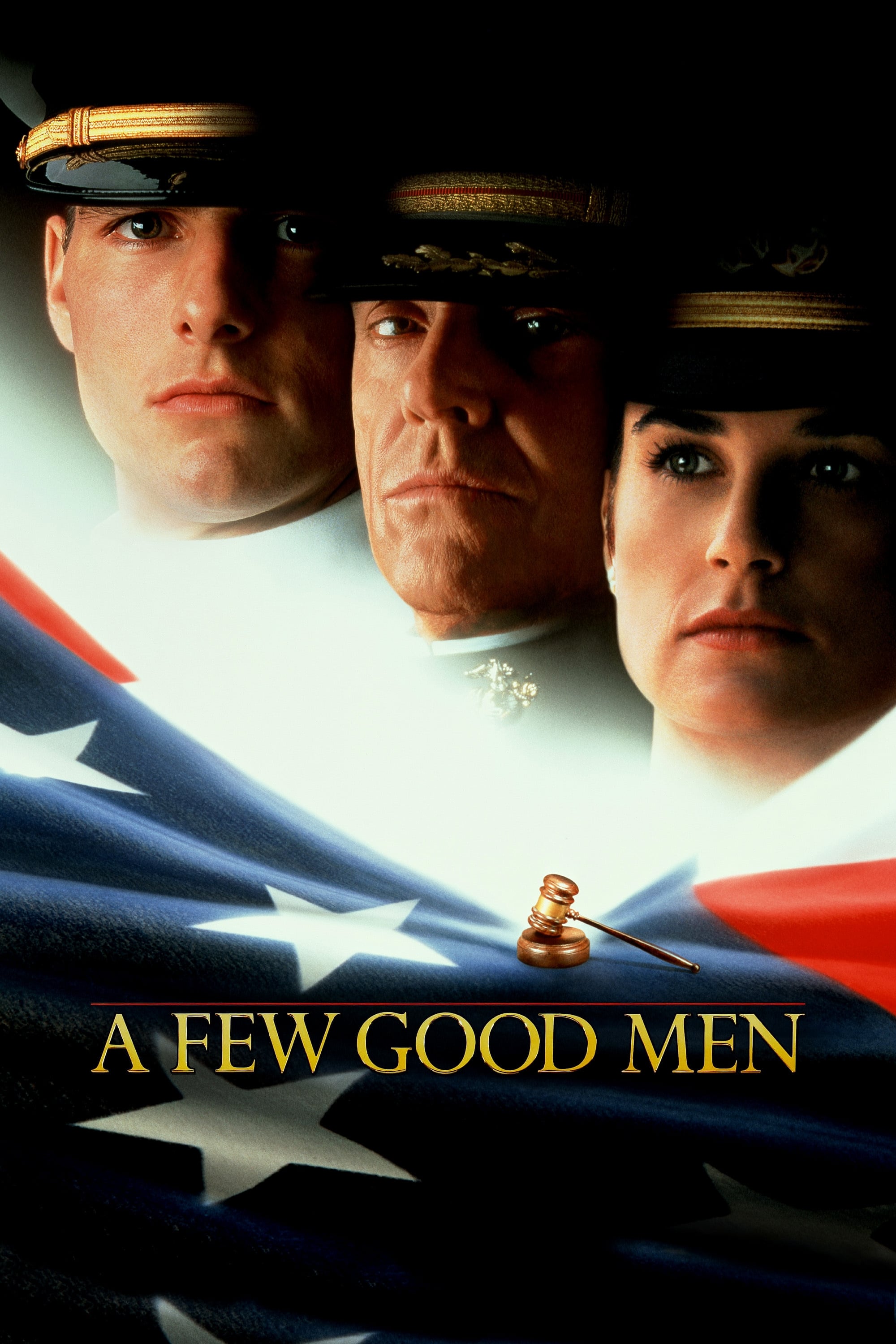
In the climactic courtroom scene, Colonel Nathan Jessup takes the stand opposite Lt. Daniel Kaffee and explains the chain-of-command logic behind the “code red.” The monologue erupts during cross-examination, when Kaffee presses Jessup on whether he ordered the hazing that led to a Marine’s death.
Aaron Sorkin adapted the scene from his stage play, preserving the verbal build to the now-famous line. Jack Nicholson’s performance was captured from multiple angles to give editors reaction options, and Rob Reiner staged the courtroom to emphasize the distance between the witness box and counsel table, underlining the power gap as the exchange unfolds.
‘Good Will Hunting’ (1997) – Sean’s park bench speech
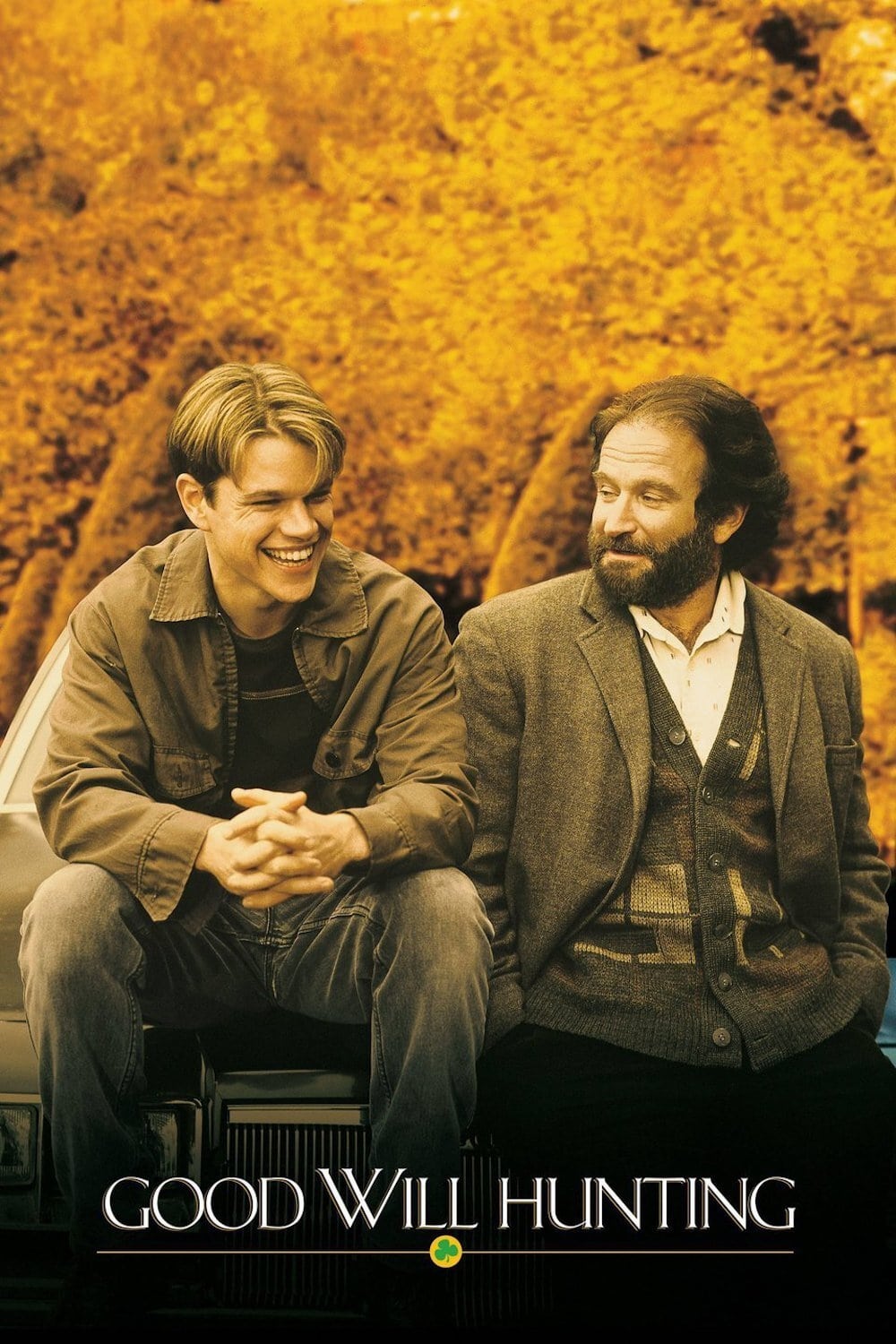
After a contentious first session, therapist Sean Maguire meets Will on a bench along the Charles River and quietly lays out the difference between book knowledge and lived experience. The monologue is addressed directly to Will, with pauses that allow the listener’s internal shift to register.
Robin Williams worked from the script by Matt Damon and Ben Affleck but improvised small phrasings and timing, and the production recorded the scene on location to capture natural ambience. Director Gus Van Sant keeps the camera largely static and relies on medium framing so the words and the shifts on Will’s face carry the emotional movement of the scene.
‘There Will Be Blood’ (2007) – “I drink your milkshake”
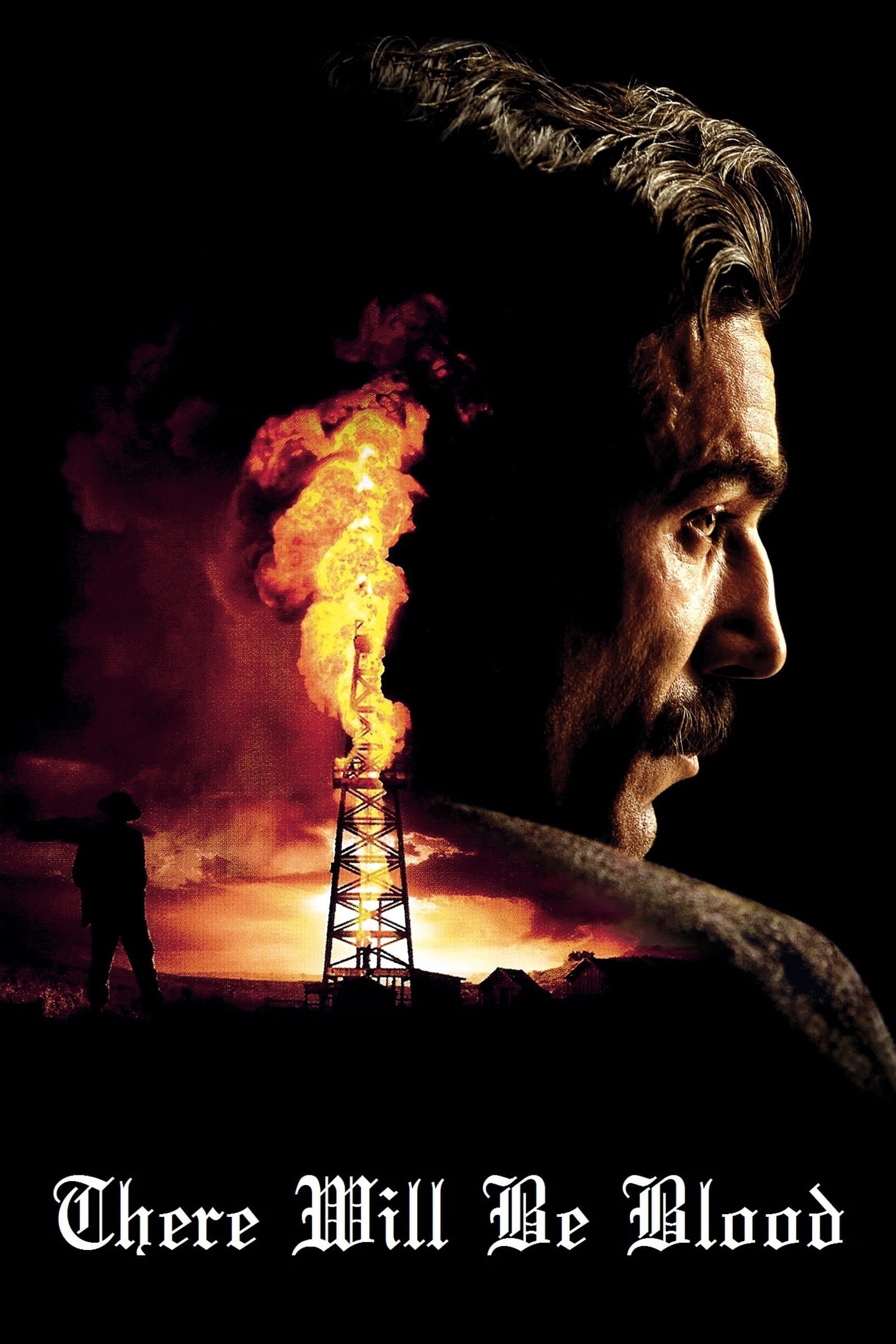
In the bowling alley at Daniel Plainview’s estate, Plainview confronts Eli Sunday about a land deal and explains drainage in blunt, metaphor-heavy terms. The speech culminates in a demonstration of business leverage and personal dominance, delivered across the lanes with echoing acoustics.
Paul Thomas Anderson wrote the monologue drawing on period testimony about oil field drainage, and Daniel Day-Lewis shaped the cadence and volume to fit the cavernous setting. Production recorded practical reverberation and let footsteps and pin sounds bleed into dialogue, accenting the scene’s physical distance and the way Plainview controls the space.
‘The Great Dictator’ (1940) – The final speech
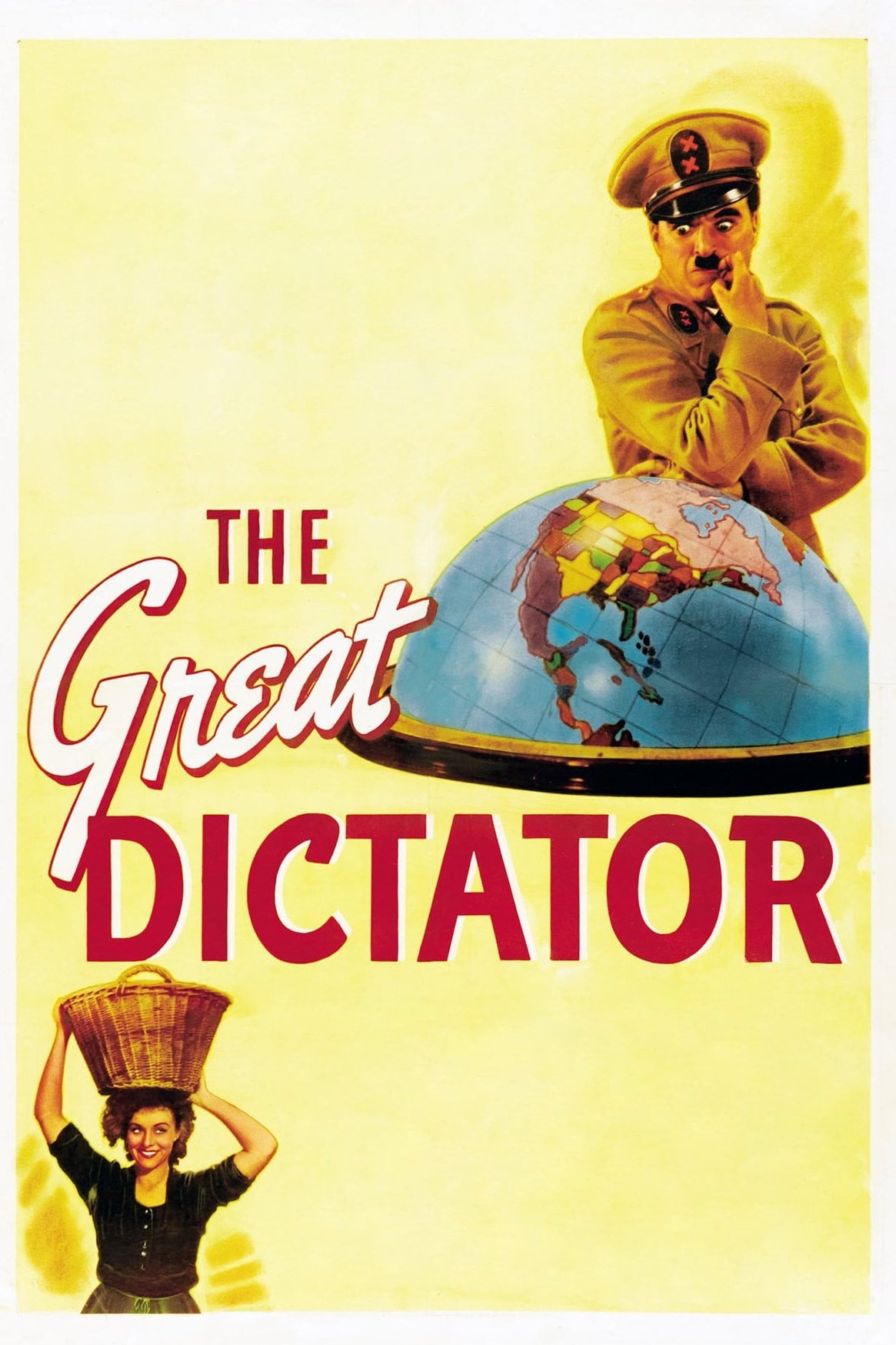
Disguised as the dictator, the Jewish barber addresses a mass rally and pleads for kindness and democracy, renouncing militarism and persecution. The speech functions as the film’s moral turn, with the character stepping out of fear and speaking directly to citizens and soldiers over loudspeakers.
Charlie Chaplin wrote and delivered the monologue as the film’s closing statement, departing from his usual silent-era style to use extended spoken dialogue. The production frames the address with simple staging and direct camera placement so that Chaplin’s words face the audience head-on, and the soundtrack swells only after the speech ends to transition into the final image.
‘Pulp Fiction’ (1994) – Jules’s diner “Ezekiel” reflection
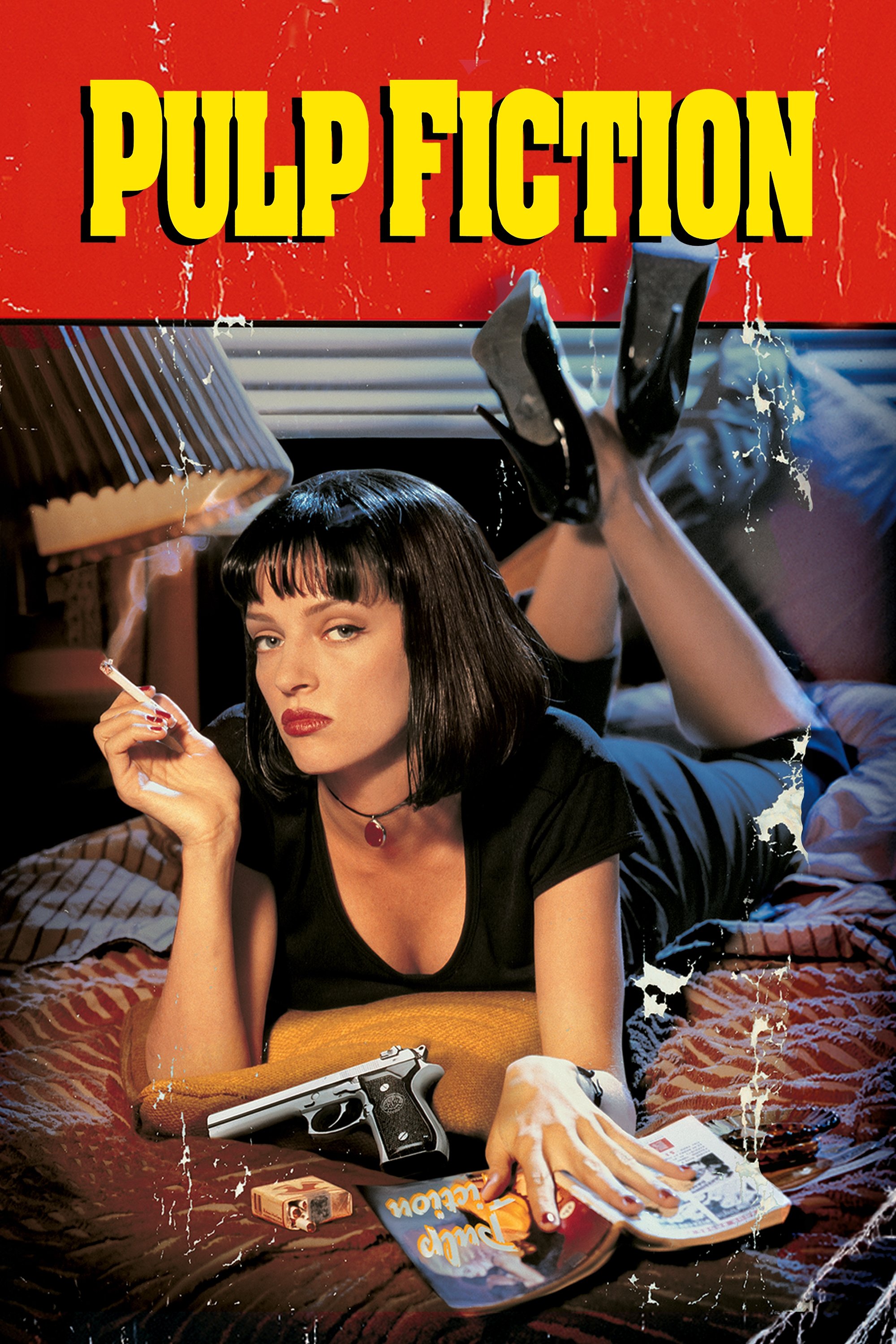
In the closing sequence at the coffee shop, Jules Winnfield talks to Pumpkin about the meaning of the passage he quotes and announces his decision to change his path. The conversation happens with guns on the table, but the monologue portion is Jules explaining what the words have meant and how he plans to act on them.
Quentin Tarantino wrote the speech to bookend the film’s opening, connecting the nonlinear structure back to the same location. Samuel L. Jackson modulated the earlier recitation into a calmer, reflective delivery here, and the production recorded the scene with audience background kept low so the shift from threat to negotiation reads clearly on the track.
‘The Dark Knight’ (2008) – Joker’s hospital talk with Dent
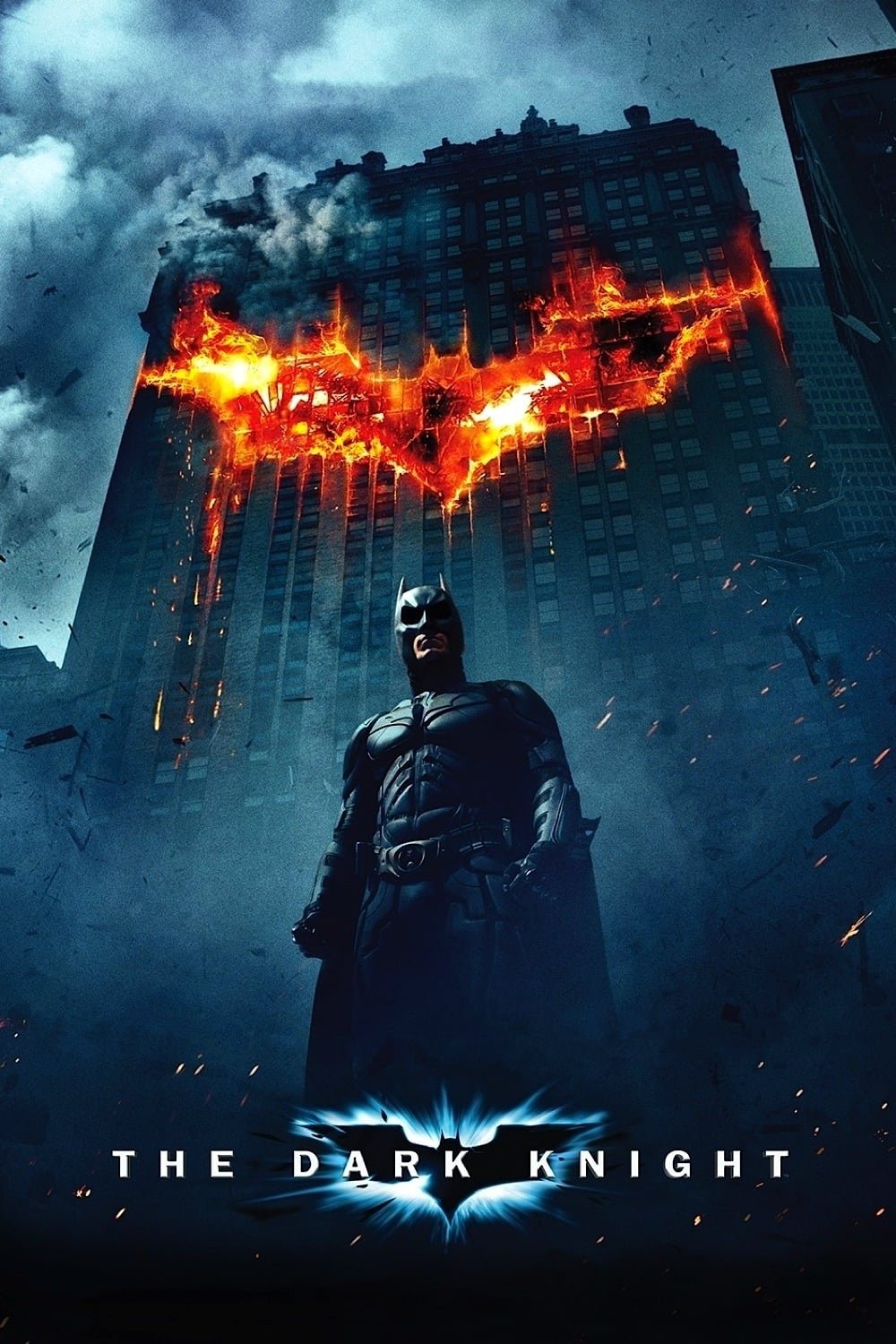
At Gotham General, the Joker visits Harvey Dent in a nurse disguise and lays out his philosophy about chaos, nudging Dent toward vigilantism. The speech reframes the city’s crisis by redefining fairness as randomness, delivered bedside with the hospital wired to explode.
Christopher Nolan and Jonathan Nolan built the monologue to pivot Dent’s arc, from a story developed with David S. Goyer. Heath Ledger’s performance uses halting rhythms and sudden volume changes to keep the listener off balance, and the production synchronized a practical demolition of the hospital exterior with Ledger’s exit for a continuous take that lends documentary-like immediacy to the scene.
‘Blade Runner’ (1982) – Roy Batty’s “tears in rain”
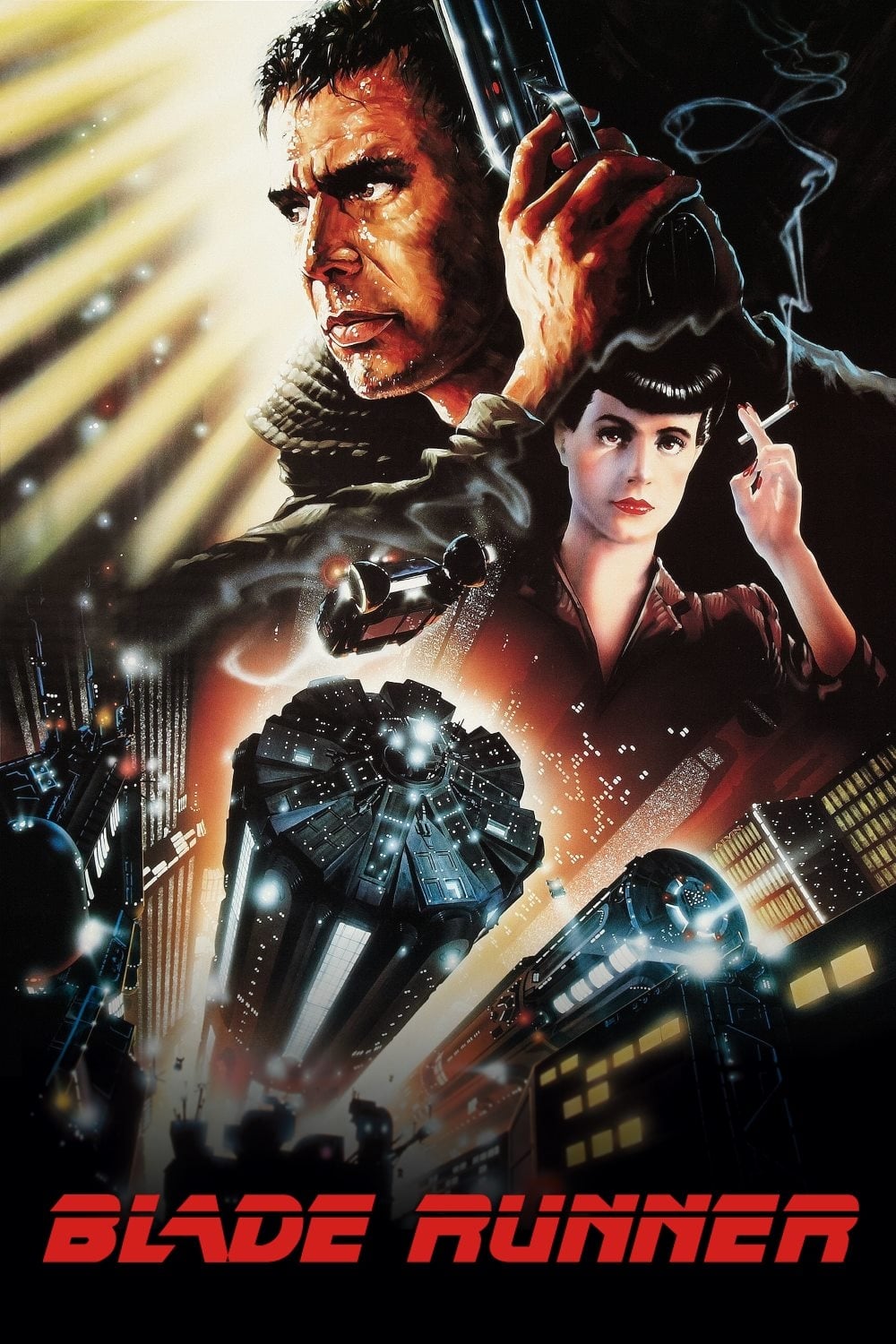
On a rooftop in the rain, Roy Batty saves Deckard and reflects on experiences that will be lost when he dies, listing images from space and war before letting go. The monologue serves as the replicant’s farewell and reframes him as a figure capable of mercy.
Actor Rutger Hauer condensed and revised the scripted lines during shooting, creating the now-famous closing phrase. Director Ridley Scott shot the scene at night with rain rigs and strong backlight, and the score drops to a subdued motif by Vangelis, giving the words space and tying the moment into the film’s soundscape.
‘To Kill a Mockingbird’ (1962) – Atticus Finch’s summation
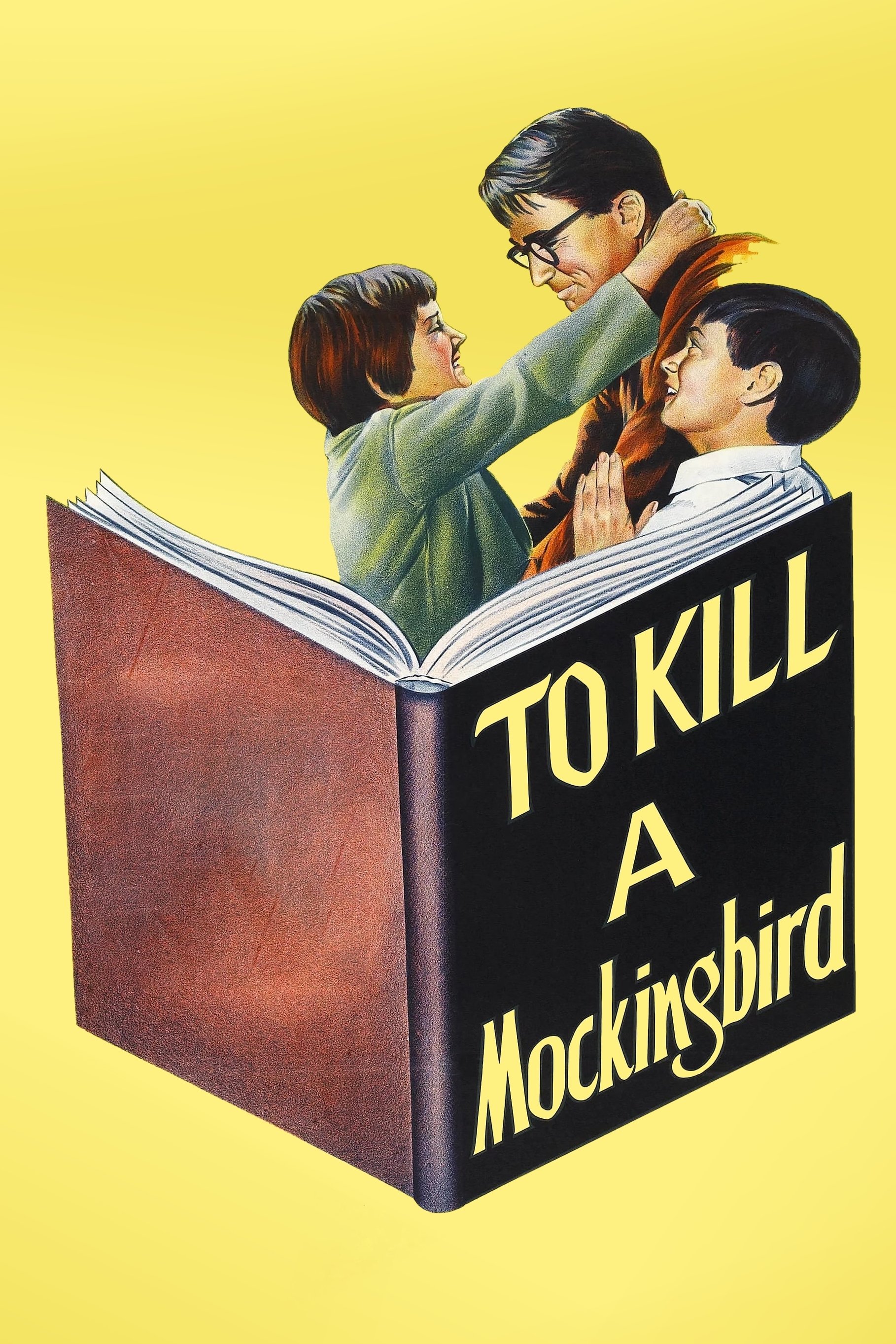
In the courtroom of Maycomb County, Atticus addresses the jury with a closing argument that asks them to set aside prejudice and judge the case by the evidence. The monologue is delivered at the end of the trial, with Scout and Jem watching from the balcony.
Screenwriter Horton Foote adapted the argument from Harper Lee’s novel, selecting passages that fit a film courtroom structure. Gregory Peck worked with director Robert Mulligan to keep the delivery restrained, and the production positions the camera at jury level and from the balcony to show both the legal audience and the community audience hearing the same words.
‘On the Waterfront’ (1954) – “I coulda been a contender”
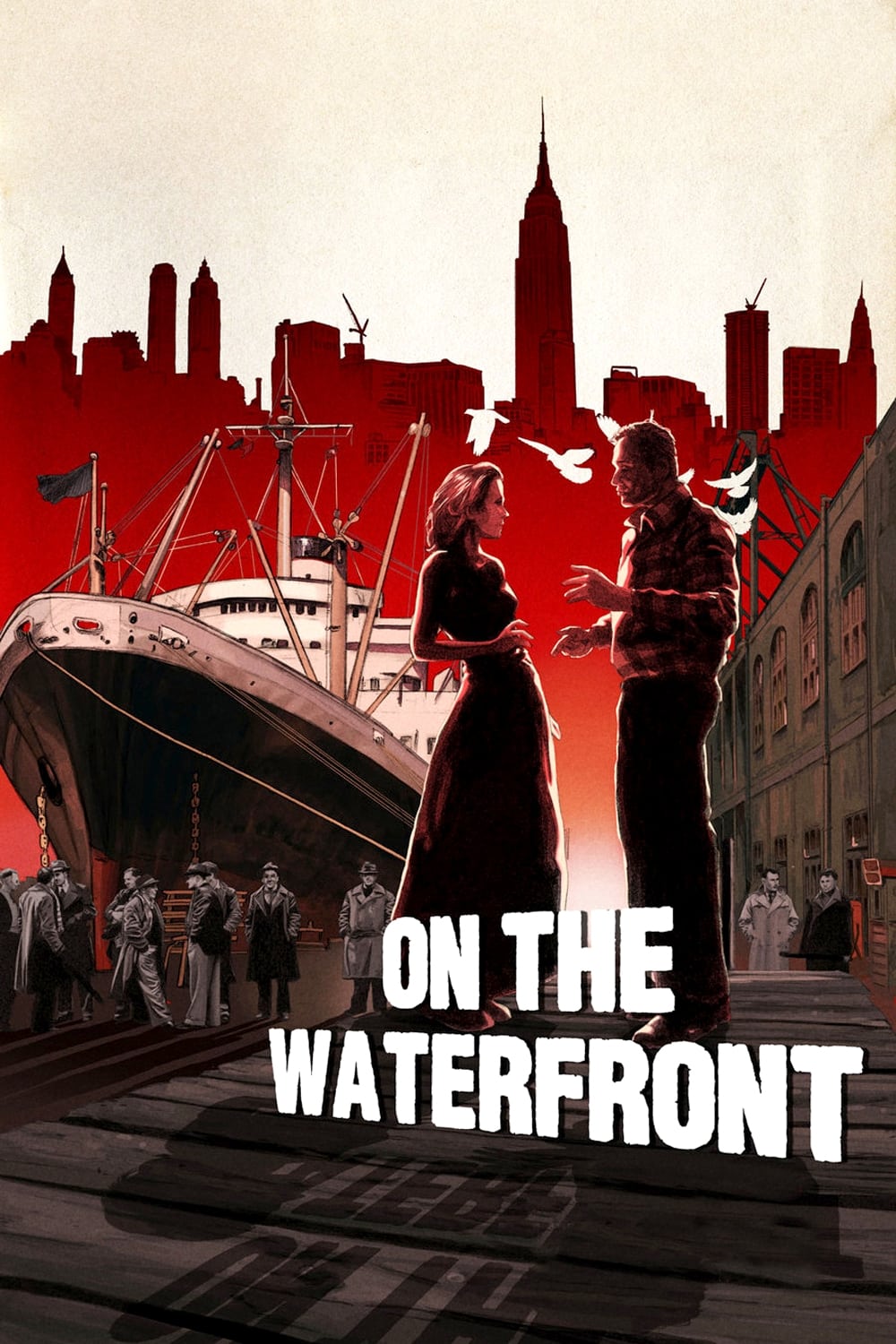
In the back of a taxi, Terry Malloy tells his brother Charley how a fixed fight changed the course of his life, confronting him about loyalty and lost opportunity. The close quarters and moving car put the faces in tight frame while the speech unfolds without interruption.
Budd Schulberg’s screenplay drew on interviews with longshoremen and boxers, and Elia Kazan shot the scene with practical rear projection to simulate nighttime streets. Marlon Brando used minimal gestures and a soft vocal approach, and editors let pauses play out so the lines land in a single continuous exchange between the two brothers.
‘The Lord of the Rings: The Return of the King’ (2003) – Aragorn’s Black Gate rally
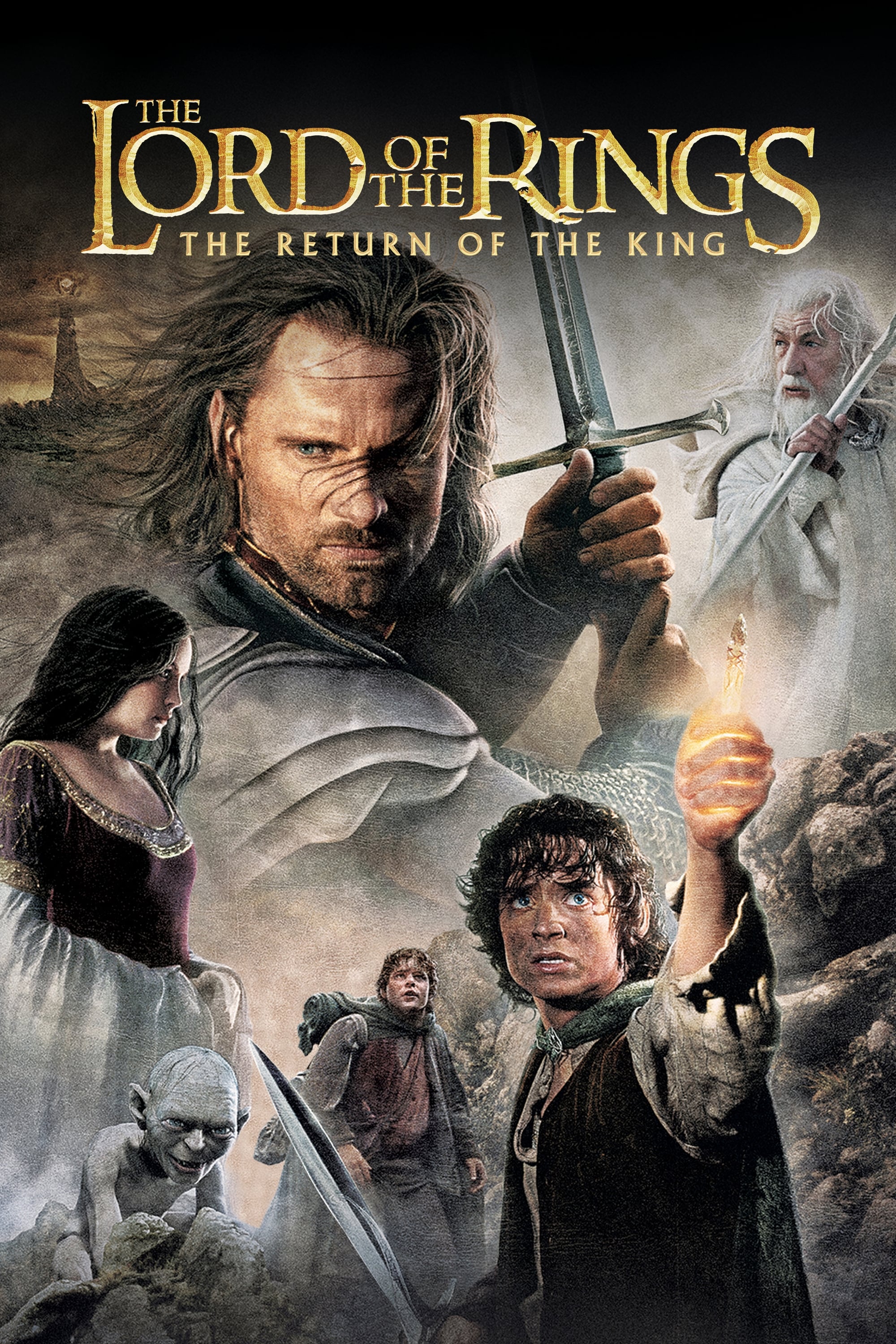
Before the final charge at the Black Gate, Aragorn addresses the gathered forces of Men, acknowledging fear and calling them to stand together. The speech is given atop a rise facing the enemy, with the remaining leaders looking on.
The lines were adapted from J.R.R. Tolkien’s text and adjusted by writers Fran Walsh, Philippa Boyens, and Peter Jackson for on-screen cadence. Viggo Mortensen rehearsed the address in full costume and delivered it on a large exterior set, and the sound team layered crowd responses to scale the moment without drowning out the spoken words.
‘The Shawshank Redemption’ (1994) – Red’s parole board “rehabilitated”
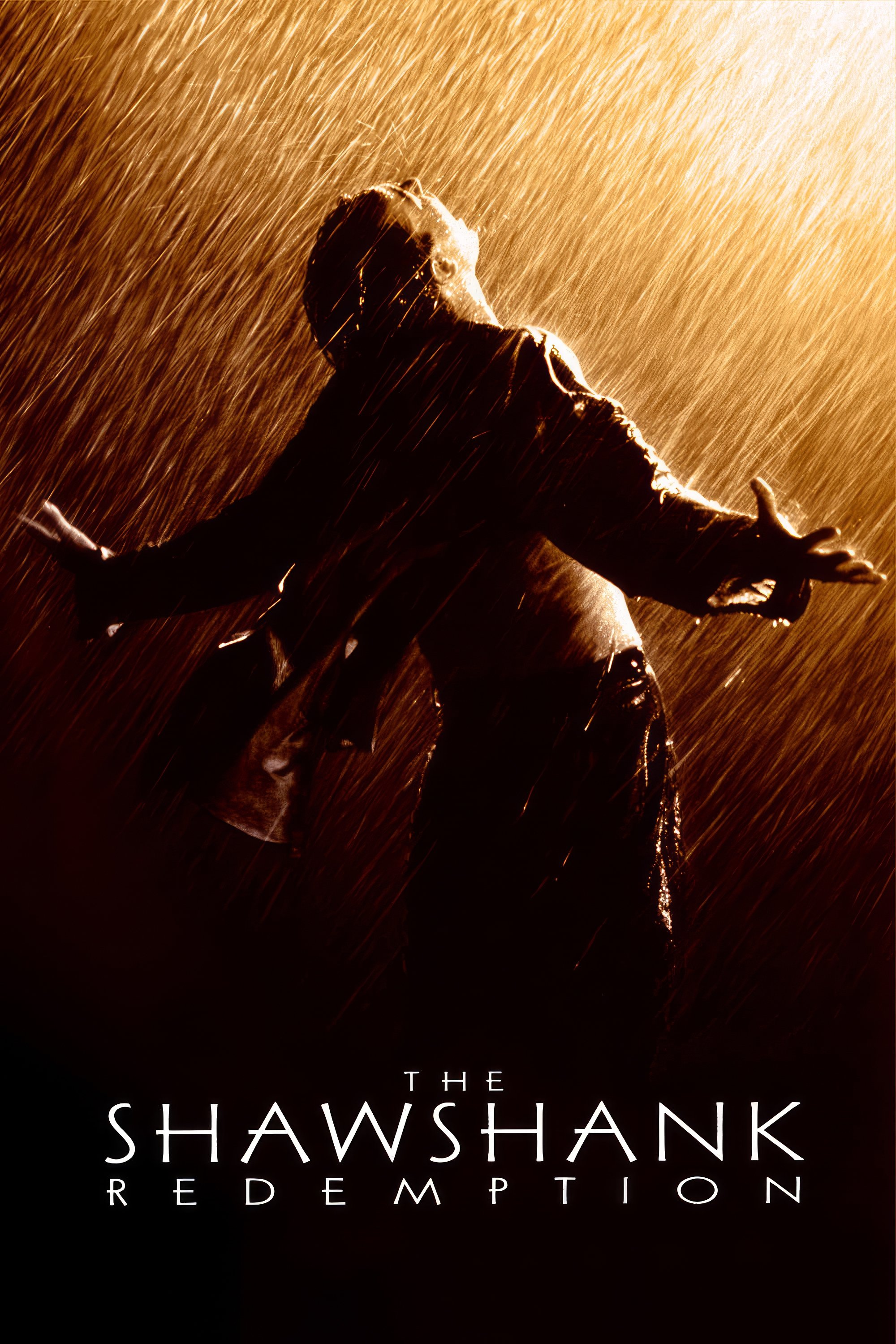
At his final hearing, Ellis “Red” Redding answers the board’s standard questions with an unsparing assessment of his past and what the word “rehabilitated” means. The monologue is delivered seated across a desk under fluorescent lights, with minimal cutaways.
Frank Darabont adapted the scene from Stephen King’s novella and kept the board’s bureaucratic language to contrast Red’s plainspoken reply. Morgan Freeman recorded the speech both on set and in ADR to ensure clarity, and the film uses a straightforward shot-reverse-shot pattern so the power of the words sits at the center of the scene.
‘Glengarry Glen Ross’ (1992) – Blake’s “Always Be Closing”
Salesman Blake addresses a room of real-estate agents with a blistering lecture on leads, quotas, and the rules of the job, spelling out the A-B-C acronym and the stakes for non-performers. The speech happens in the office after hours, with the rest of the team standing or sitting as they’re dressed down.
David Mamet expanded his stage script for the film, adding this character and monologue as a new sequence. Alec Baldwin performed the address in a single extended shoot day, and the production keeps the lighting hard and the camera low to emphasize the power dynamic while intercutting brief reaction shots from the ensemble.
‘Scent of a Woman’ (1992) – Frank Slade’s disciplinary hearing
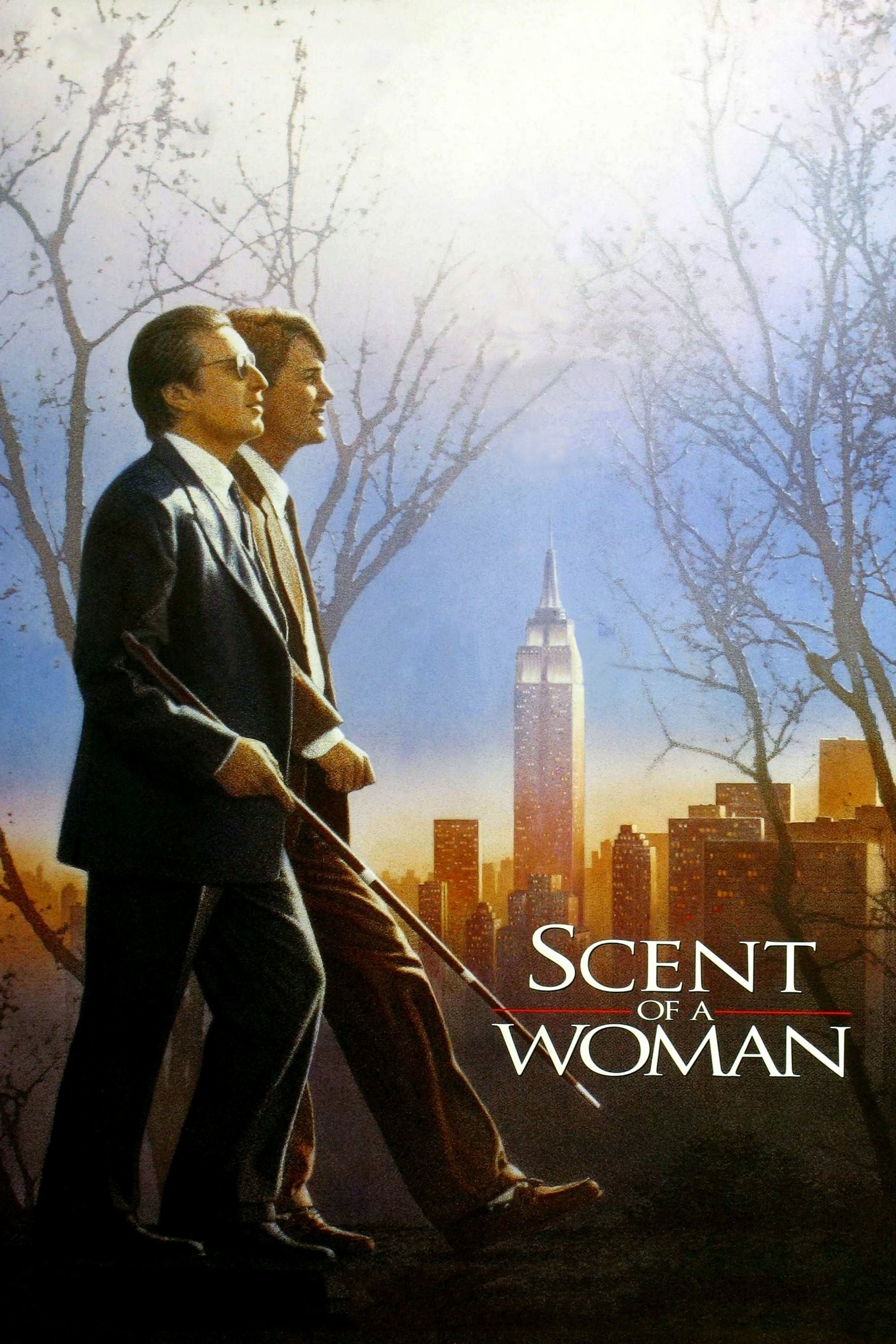
At the Baird School assembly, retired Lieutenant Colonel Frank Slade defends student Charlie Simms against expulsion and criticizes the institution’s handling of the incident under review. The monologue is delivered from the floor in front of faculty and students, building to a recommendation for the board.
Screenwriter Bo Goldman structured the speech as a formal address with rhetorical turns, and Al Pacino’s delivery integrates the character’s cadence and physicality. The production stages the sequence with the camera moving slowly from the aisle to the dais so the audience’s reactions are visible, and the edit times applause and silence to mark the pivots in Slade’s argument.
Tell us which monologues you’d add to the list — share your picks in the comments!