


15 Most Powerful Aztec Gods, Ranked

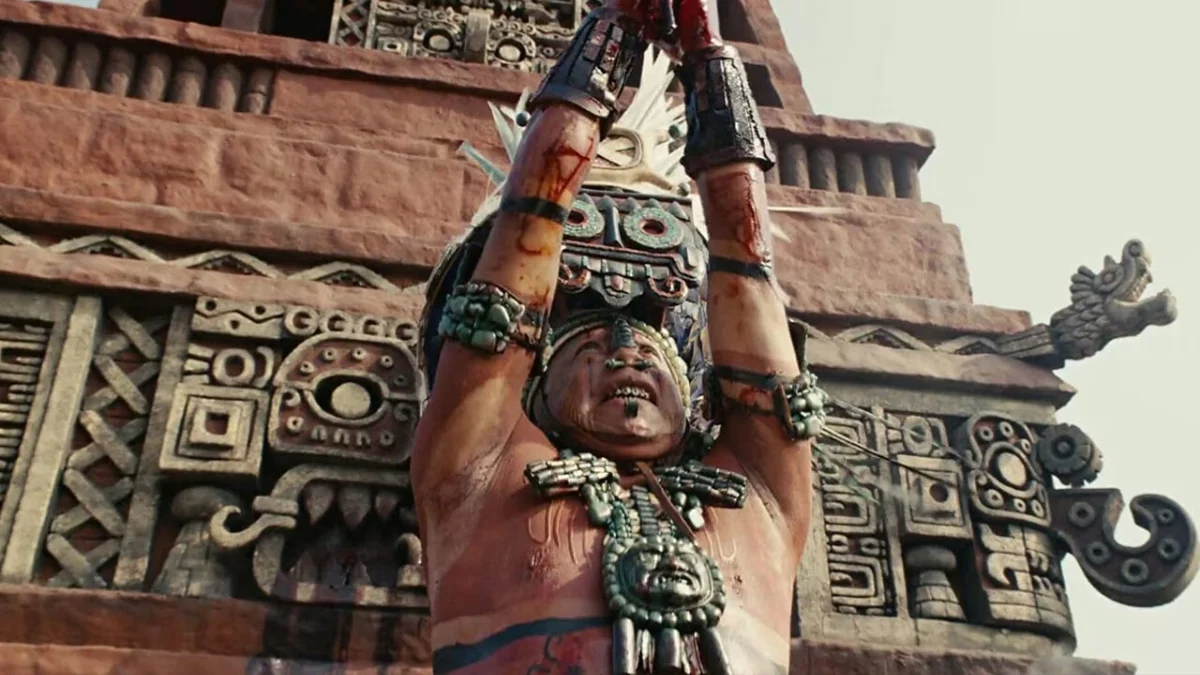


Aztec religion wove together sky, earth, and underworld through a living pantheon whose powers shaped war, rain, crops, birth, and death. Temples crowned city pyramids, festivals ordered the calendar, and myths tied rulers to divine patrons. What follows is a countdown of major deities—drawn from codices, rites, and state cults—whose domains and influence reached across the Mexica world.
15. Mayahuel
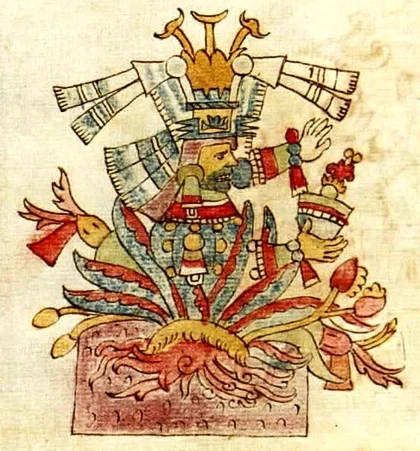
Mayahuel personifies the maguey (agave) plant, source of fiber, food, and the ritual beverage pulque. In codices she appears with multiple breasts, emphasizing nourishment and agricultural abundance. Myths pair her with the wind aspect of Quetzalcóatl, explaining how maguey spread across the land. Her cult linked farming cycles to social life, since maguey sustained clothing production, cordage, and drink used in offerings.
14. Xochipilli
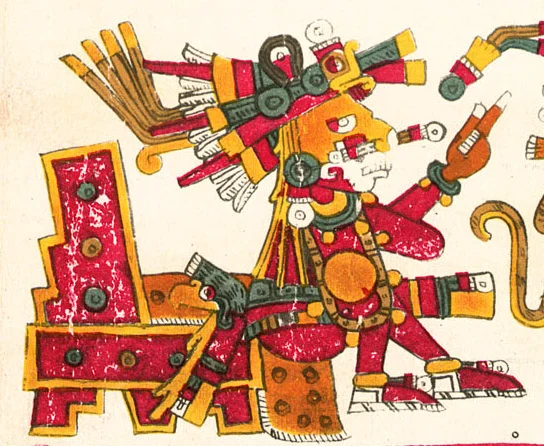
Xochipilli, “Flower Prince,” governs song, dance, games, and the aesthetic pleasures that accompany devotion. He is often depicted seated in ecstatic posture with floral and butterfly motifs, signifying fleeting beauty and transformation. Certain plants associated with him—like morning glory—hint at ritualized states of consciousness within tightly controlled ceremonial contexts. His presence affirmed that artistry and festivity were essential parts of orderly cosmic life.
13. Tlazolteotl
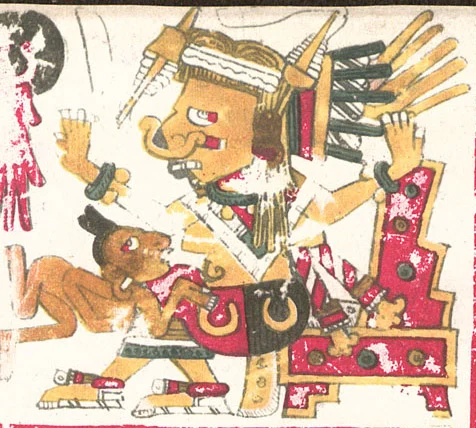
Tlazolteotl, the “Eater of Filth,” presides over sin, confession, and purification. She embodies both desire and its cleansing, allowing people to unburden transgressions through sanctioned rites. Midwifery and childbirth fall within her sphere, acknowledging the paradox of impurity and renewal in human beginnings. Iconography shows her with a blackened mouth or headdress, marking her role in absorbing moral and ritual pollution.
12. Mixcoatl
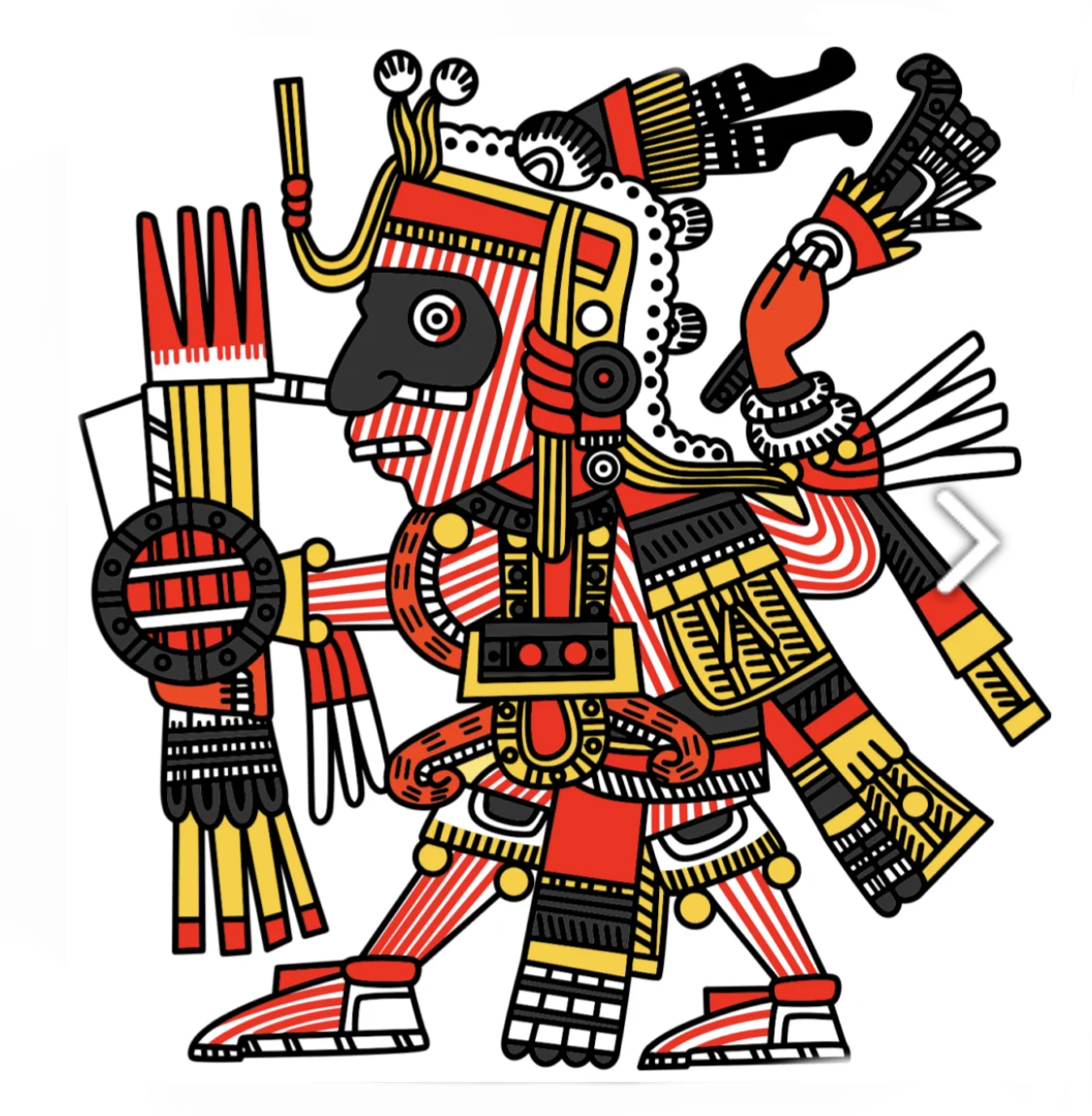
Mixcoatl, “Cloud Serpent,” is a hunter–warrior deity tied to the Milky Way and northern skies. He guides bands through wilderness and is credited with teaching fire-drilling and hunting techniques. Several central Mexican dynasties traced legendary origins to him, anchoring political legitimacy in celestial ancestry. His cult linked star paths to terrestrial migration and conquest stories across the highlands.
11. Chalchiuhtlicue
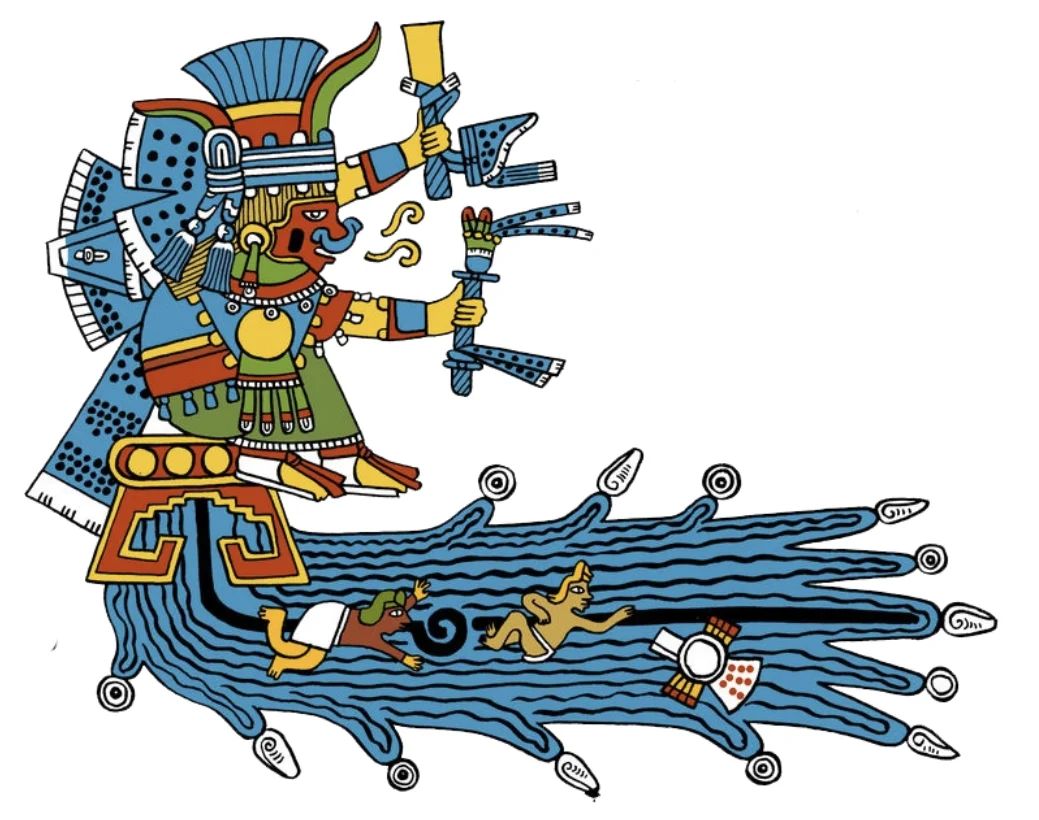
Chalchiuhtlicue, “She of the Jade Skirt,” rules lakes, rivers, springs, and childbirth. As consort or counterpart to Tlaloc, she channels gentle waters that sustain communities and protect infants. Myths of earlier sun eras describe her floods reshaping the world, tying fertility to cataclysmic renewal. Priests honored her at canals and springs, seeking safe deliveries and steady flows for chinampa agriculture.
10. Xipe Totec
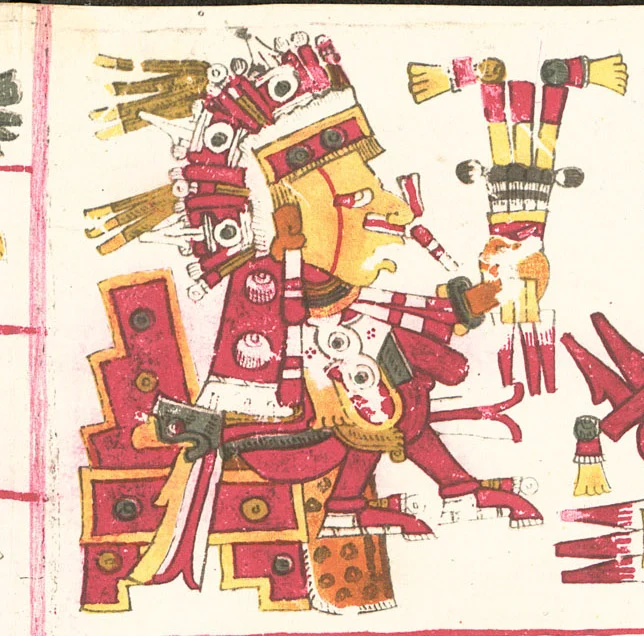
Xipe Totec, “Our Lord the Flayed One,” embodies agricultural renewal and skin-shedding rebirth. During the spring festival Tlacaxipehualiztli, ritual wearers donned flayed skins to symbolize new growth beneath old husks. He is linked to goldsmiths and healing of skin diseases, extending the metaphor of transformation. The deity’s shocking imagery reinforced the seasonal truth that life emerges through sacrifice and change.
9. Xiuhtecuhtli
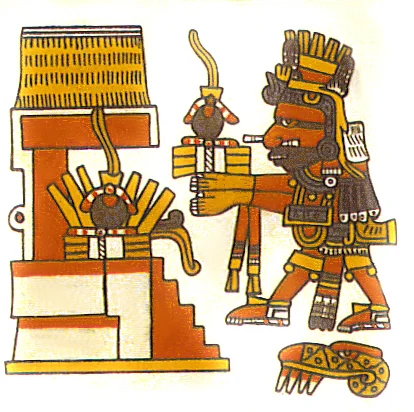
Xiuhtecuhtli, “Turquoise Lord,” is the hearth and fire at the center of home, temple, and state. He anchors timekeeping and kingship, with embers maintained in sacred braziers as signs of continuity. The 52-year New Fire ceremony renewed cosmic time when all flames were extinguished and rekindled under his auspices. As youthful fire or aged Huehueteotl, he bridges domestic warmth and world-ordering power.
8. Tonatiuh
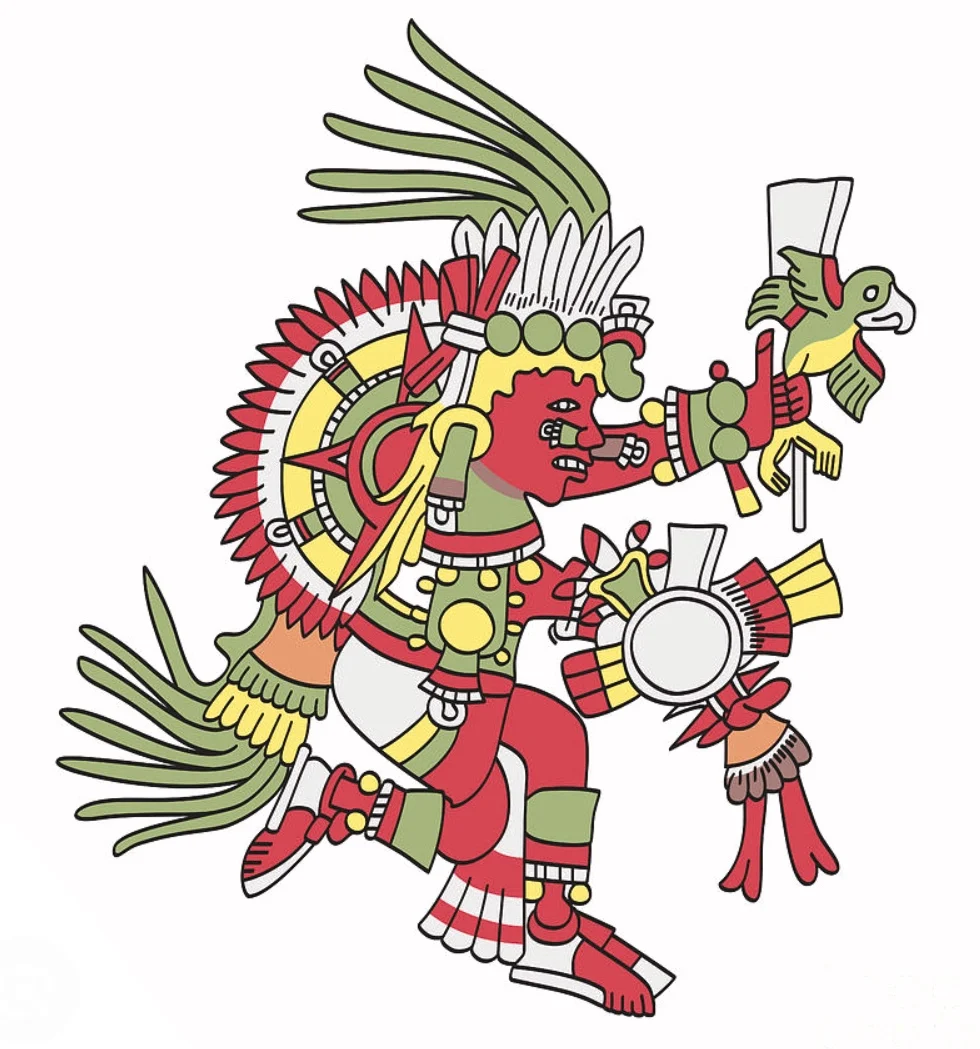
Tonatiuh is the solar power that requires motion and offerings to keep the world turning. He occupies the center of the Sun Stone, ringed by eras that ended in disaster, reminding people of cosmic fragility. Warriors sought “flowery death” to feed his path across the sky, binding military success to daily sunrise. State ritual timed dances, sacrifices, and calendars to sustain his regular course.
7. Tlaltecuhtli
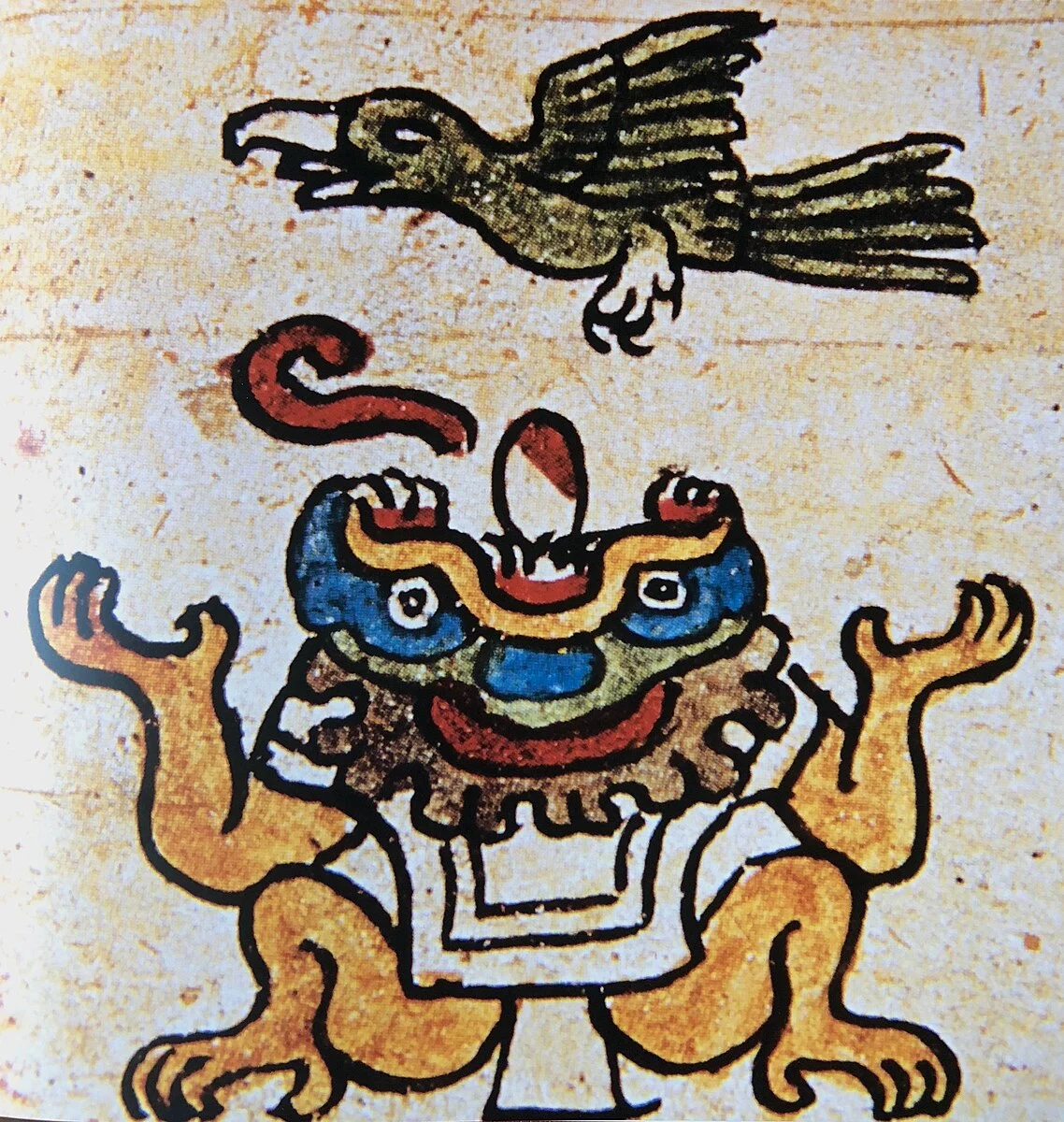
Tlaltecuhtli is the animate earth—often pictured as a monstrous, toad-like being whose body forms the land. Myths tell how primordial deities tore this being apart to create mountains, valleys, and crops, leaving a demand for repayment in blood and offerings. Massive earth-monster sculptures and reliefs under temple precincts marked foundations with cosmic memory. Earthquakes, burial obligations, and agricultural rites all acknowledged this deity’s ever-open, devouring mouth.
6. Mictlantecuhtli
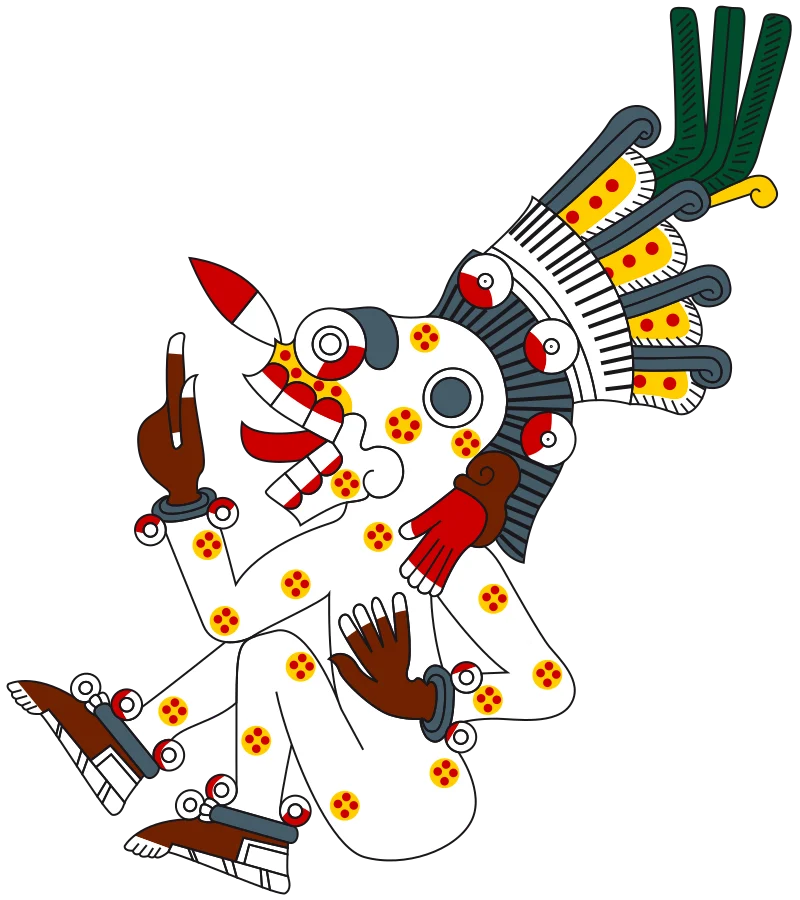
Mictlantecuhtli rules Mictlan, the layered underworld where most souls travel through trials after death. Skeletal and gaping, he and his consort Mictecacihuatl preside over bones—the raw material for human re-creation in myth. Priests mapped funerary bundles and dog-guides to the nine levels of the afterlife, aligning social practice with cosmology. He anchors the mortuary cult that connected family memory to state ritual.
5. Coatlicue
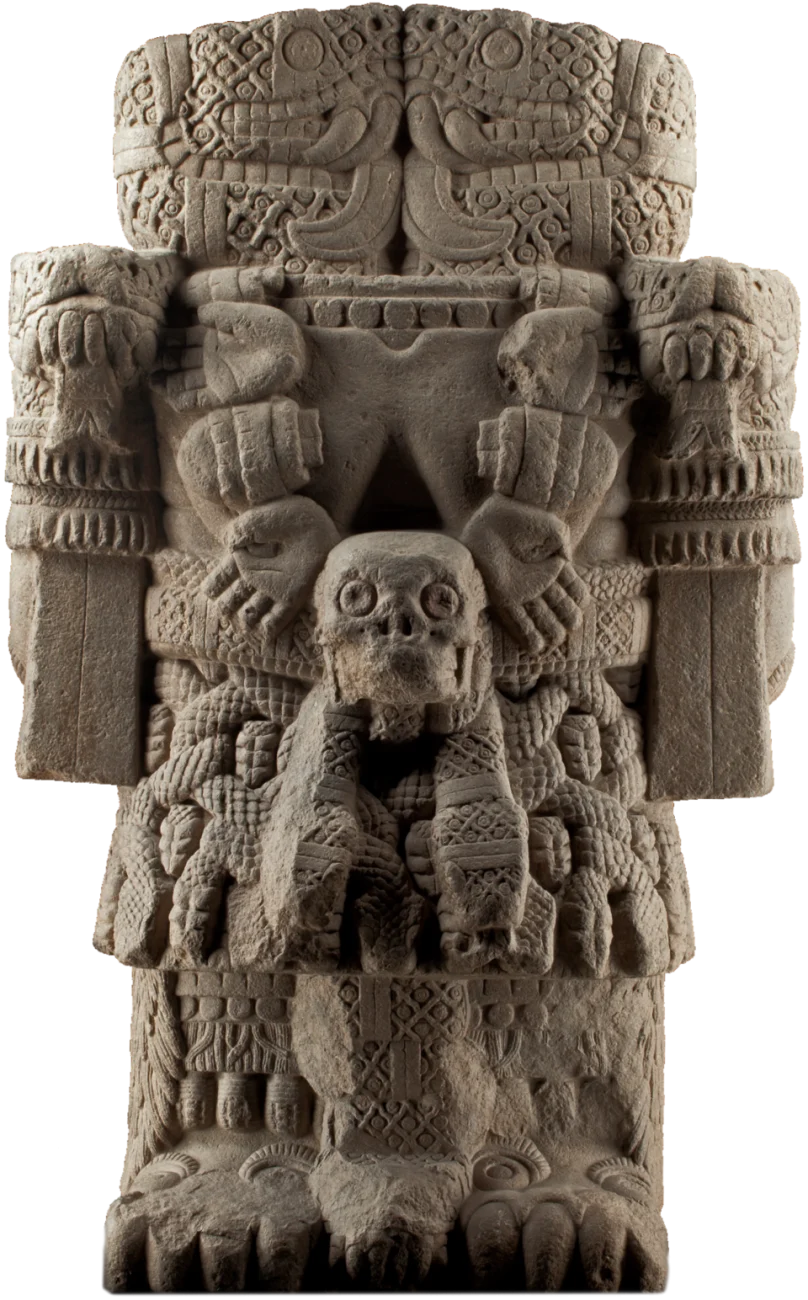
Coatlicue, “She of the Serpent Skirt,” is a formidable earth-mother and the mother of Huitzilopochtli. Her statue shows severed head replaced by two serpents, a necklace of hands and hearts, and clawed feet that grasp life and death. The myth of her miraculous pregnancy triggers a divine battle that affirms cosmic order. Through her, the fecund but dangerous ground generates gods, peoples, and the cycles that sustain them.
4. Tlaloc
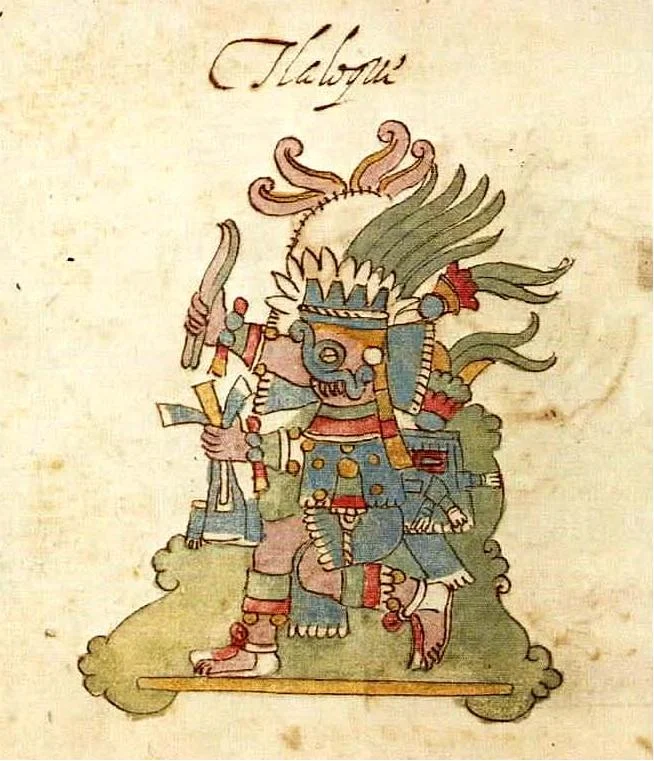
Tlaloc commands rain, storms, thunder, and the fertility of fields on which urban life depended. He shares the Templo Mayor’s twin summit with Huitzilopochtli, signaling equal necessity of water and war. Child offerings at mountain shrines sought timely rains, reflecting a theology that linked tears to showers. His goggle eyes and fanged mouth appear from household vessels to state architecture across the basin.
3. Quetzalcóatl
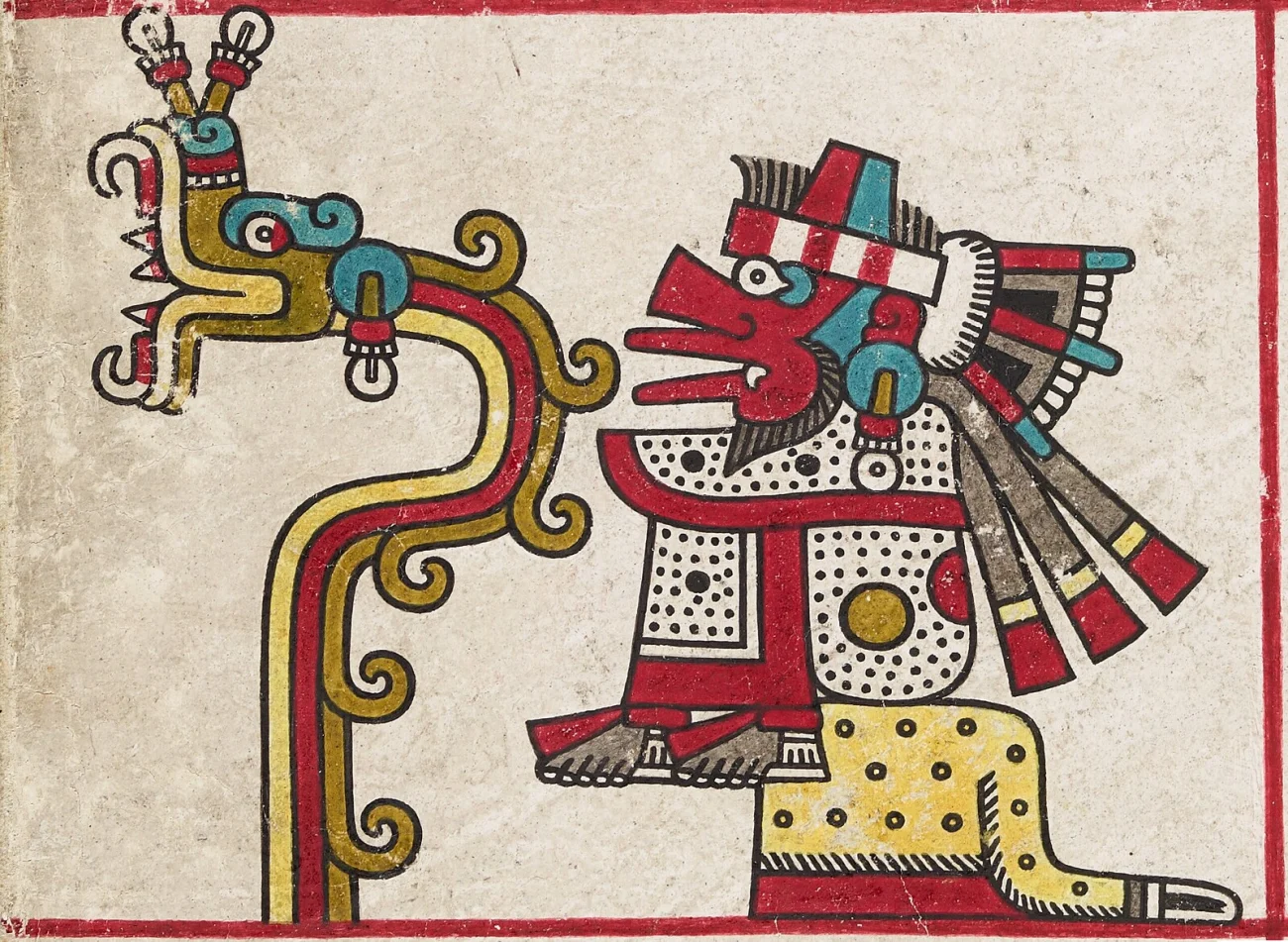
Quetzalcóatl, the Feathered Serpent, unites wind, priesthood, and knowledge with creation and renewal. As Ehecatl-Quetzalcóatl he wears a wind mask and favors round temples that ease breezes for ritual. Myths credit him with retrieving ancestral bones from Mictlan to create humanity and with establishing calendar and rites. He serves as a culture hero tied to Tollan traditions, modeling ethical rulership and sacred learning.
2. Huitzilopochtli
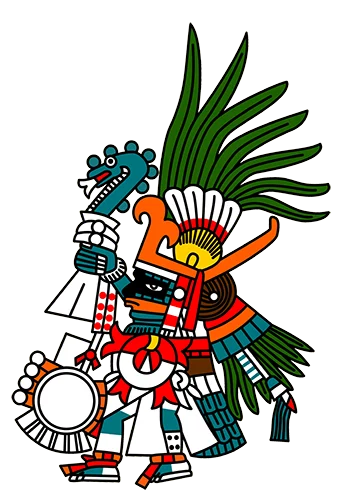
Huitzilopochtli, “Hummingbird on the Left,” is the Mexica patron of war and the sun’s southern course. The Templo Mayor centered his cult, and state expansion mirrored his mythic victories over the moon and stars. Warrior capture, military orders, and imperial festivals aligned to fuel his daily ascent. His blue-painted face, hummingbird feathers, and xiuhcoatl fire serpent mark him as the engine of empire.
1. Tezcatlipoca
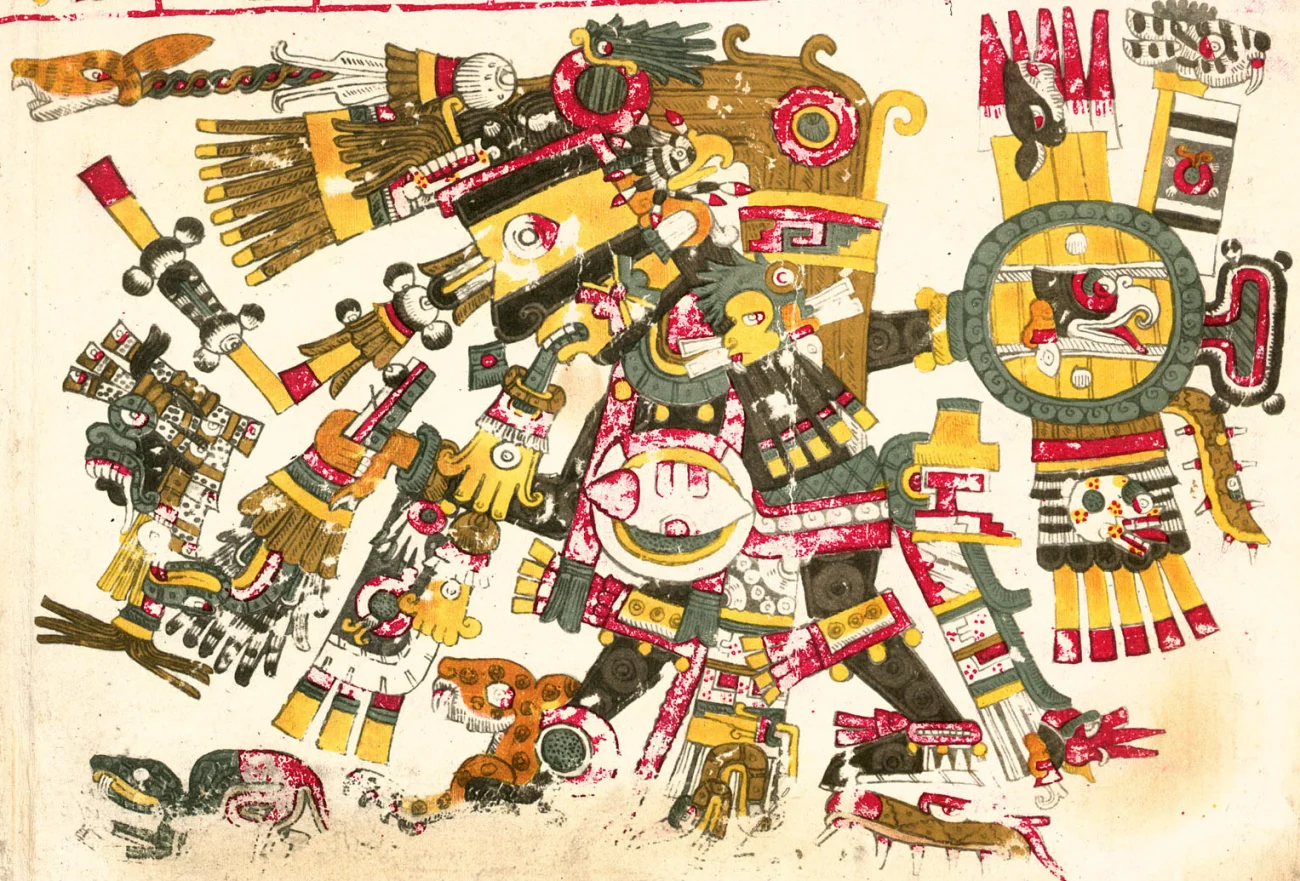
Tezcatlipoca, “Smoking Mirror,” governs night sky, fate, sorcery, rulership, and sudden change. He appears with an obsidian mirror—sometimes replacing a foot—signifying omniscience and the power to reveal or obscure. Rival and counterpart to Quetzalcóatl in Tollan stories, he sets tests that unmake and remake social order. Jaguar aspects, black face paint, and youthful lordly regalia connect him to elite power, divination, and the unpredictable turns of destiny.
Share your take: which deities would you place higher or lower, and why—drop your thoughts in the comments!