

15 Most Powerful Weapons in Anime

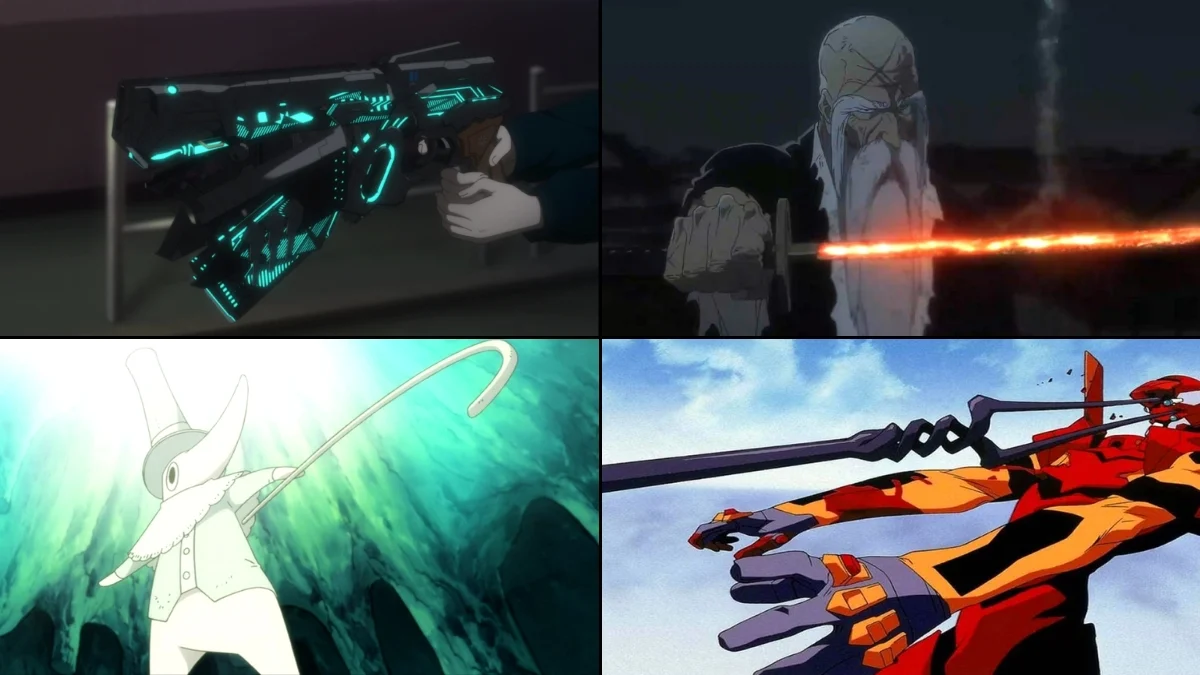


Some weapons in anime don’t just swing hard — they bend rules, rewrite fate, and bulldoze cosmic defenses. From notebooks that can end a life with a line, to spears that puncture metaphysical shields, these tools reshape the worlds they’re in as much as they win fights. Getting them right means sticking to what the series actually shows and documents.
Below are fifteen of the most formidable weapons across anime, each explained with concrete abilities, limits, and context from reliable write-ups and franchise references. You’ll also see the series for each weapon in single quotes for clarity and consistency.
Death Note
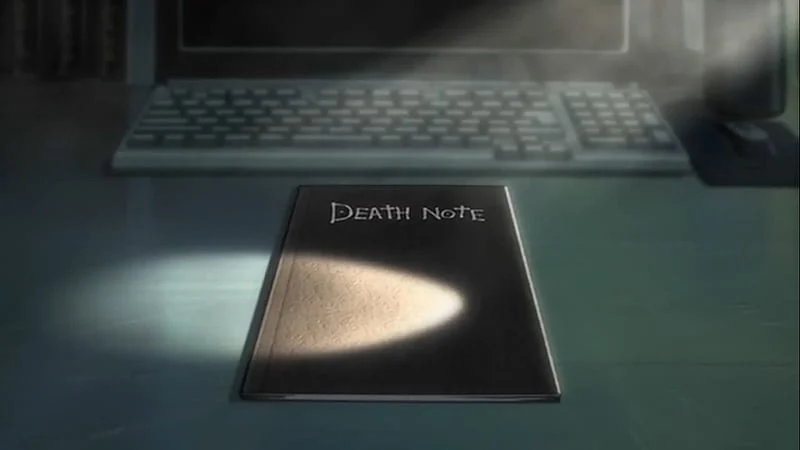
The Death Note is a supernatural notebook that kills any human whose name is written in it, provided the user can picture the target’s face. If no cause is specified within 40 seconds, the victim dies of a heart attack; further conditions can be detailed within the next 6 minutes and 40 seconds to guide how the death unfolds. Various compilations of the “chapter rules” catalog how timing, identification, and multi-victim entries work in practice.
The series documents many additional rules, such as the need to visualize a face to avoid collateral deaths of people with the same name and the way grouped names interact with a single cause of death. These rules are presented diegetically by the Shinigami and in chapter interludes, making the notebook’s effects predictable and reproducible within the story world.
Spear of Longinus
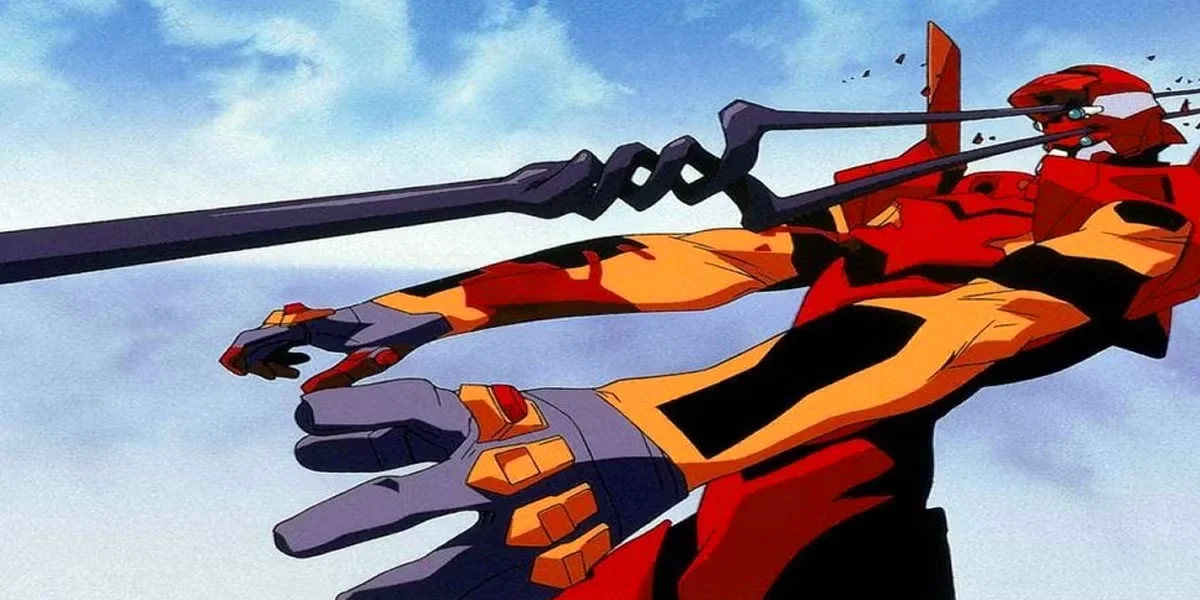
In ‘Neon Genesis Evangelion’, the Spear of Longinus is an extraterrestrial artifact that can pierce any active A.T. Field — the absolute defensive barrier used by Angels and Evangelions. It’s repeatedly described as “god-like” in effect, and franchise materials explain that both the original and SEELE’s copies share the field-piercing property, though the copies have limits in initiating Instrumentality.
Its scale and autonomy are also noted: the spear’s behavior includes immobilizing beings of overwhelming power and returning from the Moon, emphasizing that it’s more than a simple lance. Guides and episode analyses track first appearances and usage across the TV series and films.
Sword of Rupture, Ea
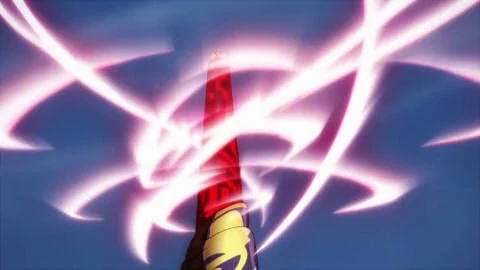
Gilgamesh’s Sword of Rupture in the ‘Fate’ franchise is a unique Noble Phantasm that “splits open the world,” thematically tied to creation myths rather than conventional swordplay. Canon guides and franchise materials place Ea at or above the output level of other top-tier weapons, and it is explicitly unique to Gilgamesh rather than a mass-replicated armament.
Descriptions note its multi-layered cylinder structure and cosmological function rather than blade mechanics, framing its attacks as reality-rending phenomena. Summaries across franchise references consistently emphasize its exclusivity and role as Gilgamesh’s signature trump card.
Excalibur (Soul Eater)
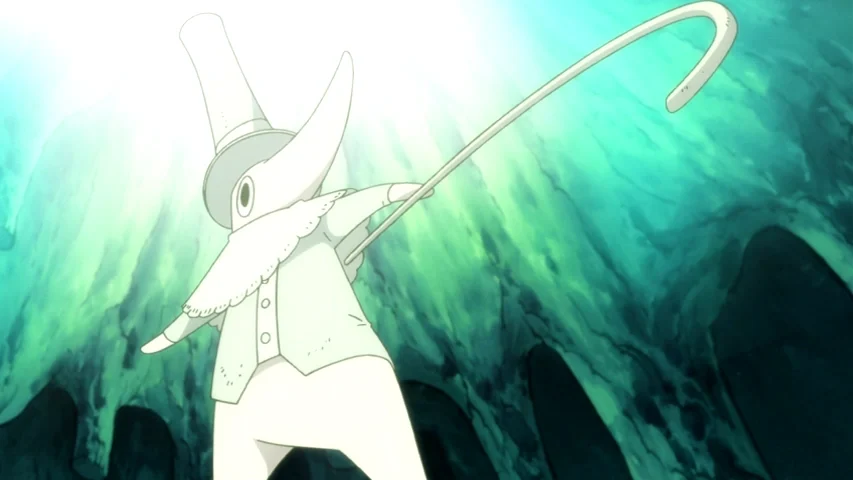
In ‘Soul Eater’, Excalibur is classified among the series’ Great Old Ones and is repeatedly stated within the story to be the strongest weapon in existence. Its soul wavelength is described as god-level, to the point that its mere presence can destabilize others, which underlines why it’s so rarely wielded despite its absurd potential.
Supplemental materials recount in-series claims (e.g., from Franken Stein) that place Excalibur above the academy’s Death Scythes and other legendary arms, establishing a clear upper bound for weapon power in that universe.
Tessaiga
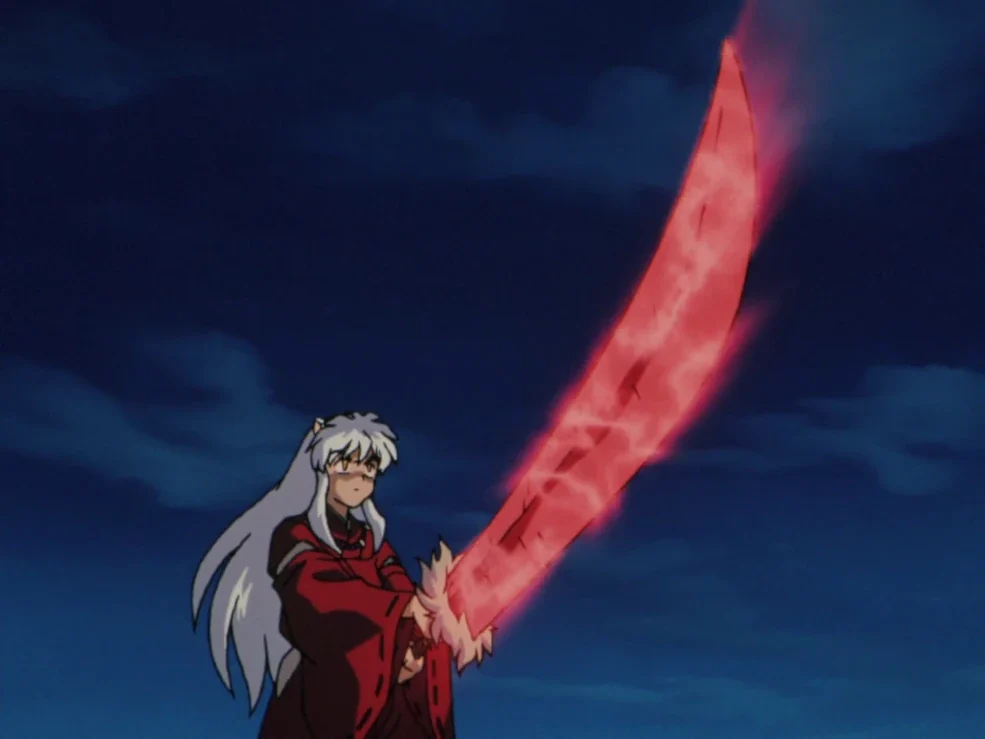
Tessaiga in ‘Inuyasha’ evolves as its wielder grows, unlocking techniques such as the Wind Scar, Backlash Wave, and barrier-cutting after specific story milestones. Official translations and franchise guides document how defeating certain foes or cutting particular materials awaken new functions, reflecting the sword’s adaptive design.
The blade’s repertoire includes the Backlash Wave, which absorbs and returns an enemy’s demonic energy, alongside later developments like the Adamant Barrage. Series documentation catalogs when each technique appears and the conditions required to use them.
Dragon Slayer
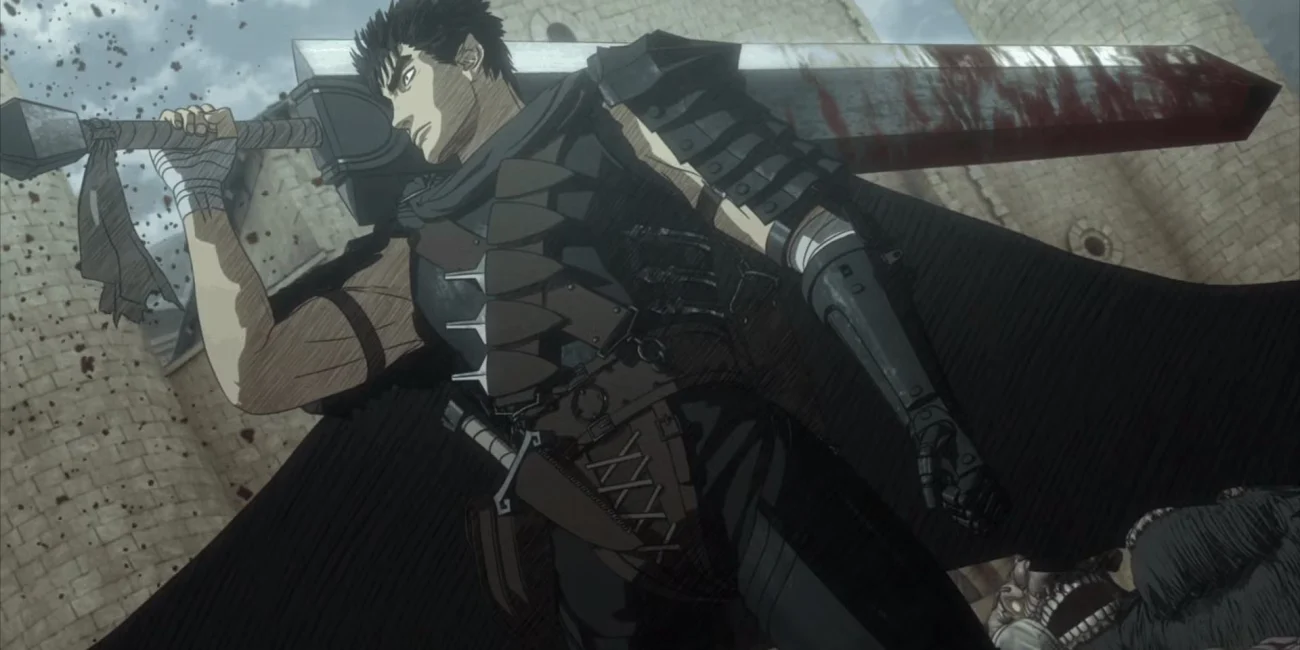
Guts’ Dragon Slayer in ‘Berserk’ is an enormous slab of tempered iron that, over countless battles, becomes steeped in the malice of the astral entities it has slain. Canon write-ups note that this saturation grants it the ability to wound profound astral beings, turning a “too big to be called a sword” hunk of metal into a bane of monsters and apostles.
The sword’s defining traits — mass, simplicity, and the acquired ability to harm spiritual targets — are treated as diegetic facts across franchise resources, explaining its effectiveness beyond ordinary metallurgy.
Yoru
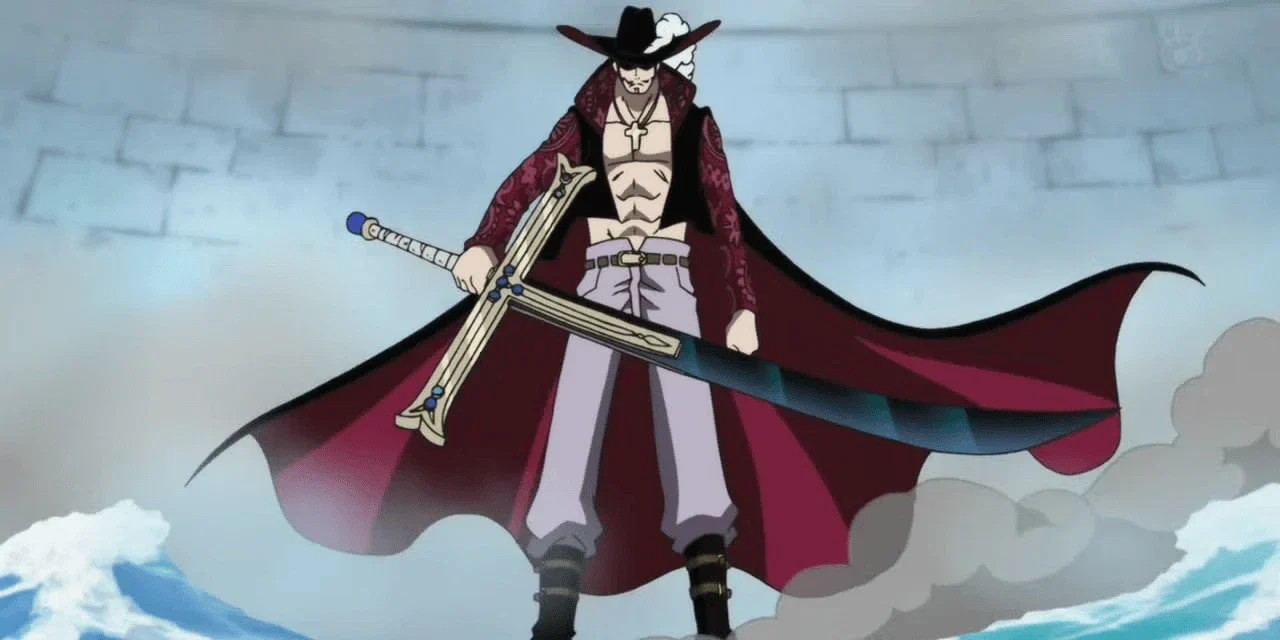
Yoru in ‘One Piece’ is a Supreme Grade “Black Blade” and one of the strongest swords in the world, wielded by Dracule Mihawk. Franchise databases list it among the 12 Supreme Grade swords, a classification reserved for the setting’s highest-tier blades.
The sword’s blackened status and ranking are consistent across series compendia, and Yoru’s association with the “Strongest Swordsman in the World” underscores its placement among the top weapons in that universe.
Thunder Spears
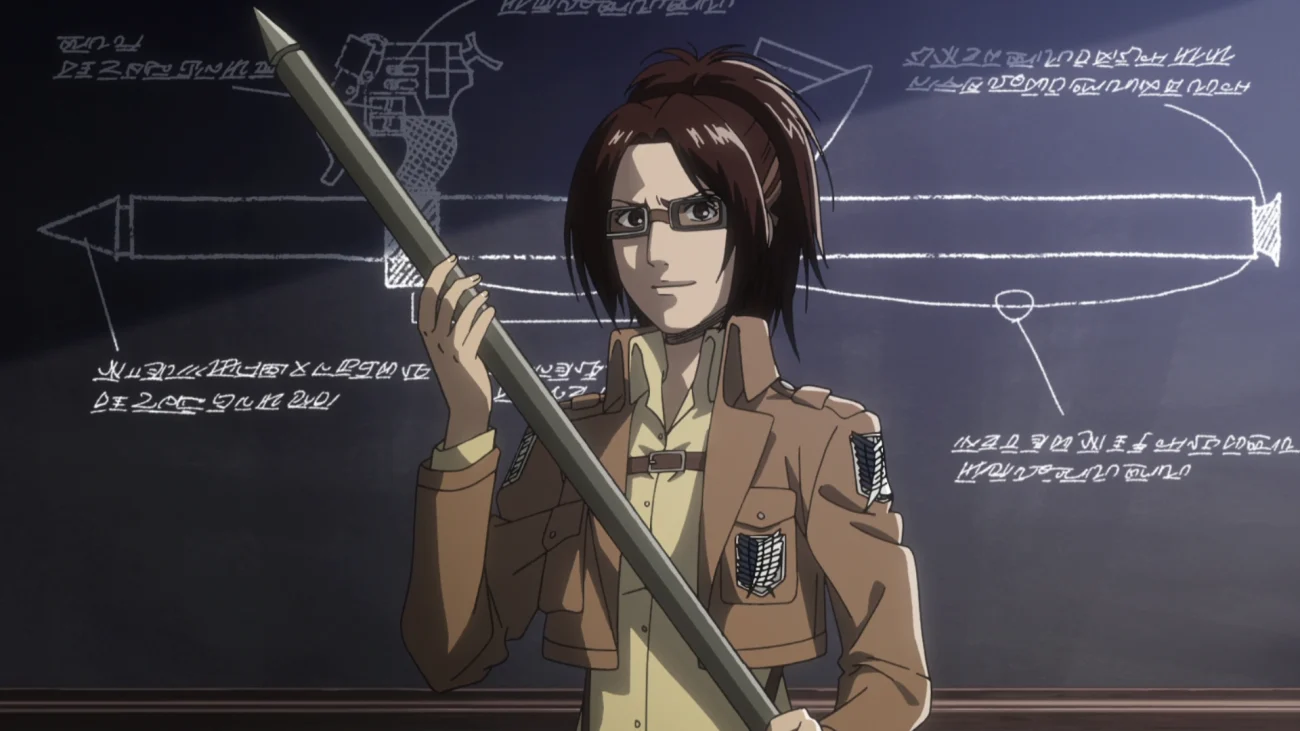
In ‘Attack on Titan’, Thunder Spears are explosive anti-Titan weapons designed to breach hardened defenses like the Armored Titan’s plating. Series materials emphasize they’re double-edged — lethally dangerous to users at close range and applicable only with specific tactics and immediate retreat options via vertical maneuvering gear.
Episode and guide entries distinguish between the general concept and its anime deployments, but both stress the same operational constraints and intended role as a specialized breaching tool.
One-Cut Killer: Murasame

Murasame in ‘Akame ga Kill!’ is a cursed blade that kills with a single cut by spreading a poisonous curse through the victim’s body until the heart stops. Canon summaries describe the visible black markings that propagate from the wound — a reliable indicator of the curse taking hold.
Franchise write-ups consistently frame Murasame’s lethality as conditional on even minimal skin penetration, distinguishing it from ordinary poisons or techniques and explaining its reputation among the Imperial Arms.
Power Pole (Nyoi-Bō)

The Power Pole in ‘Dragon Ball’ is a magical, length-changing staff passed down to Goku that can extend across great distances on command. Series references trace its provenance from Korin to Grandpa Gohan to Goku and note its original function as a traversal link between Korin Tower and Kami’s Lookout.
Beyond combat reach, franchise explainers highlight its utility in mobility and travel during early arcs, establishing why it remains one of the most recognizable implements from the series’ adventure phase.
Spirit Spear Chastiefol
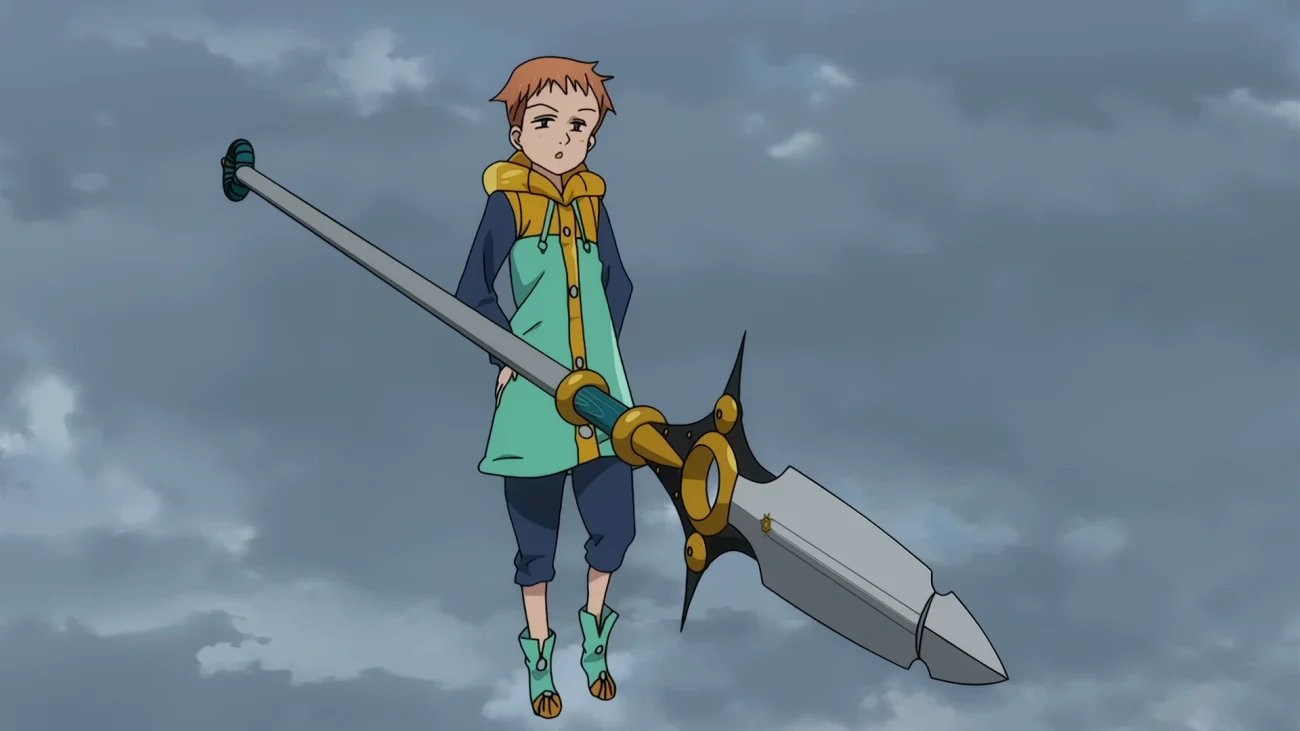
Chastiefol in ‘The Seven Deadly Sins’ is a shape-changing sacred treasure with at least ten distinct forms, from a homing spear to defensive guardians and high-output bombardments. Canon entries explain that each form has a “true form” variant that dramatically boosts output when released.
The weapon’s base appearance — a mottled green “pillow” — belies its combat versatility, and catalogs detail how the wielder shifts forms to match battlefield needs, including pursuit, defense, and area control.
Scissor Blades
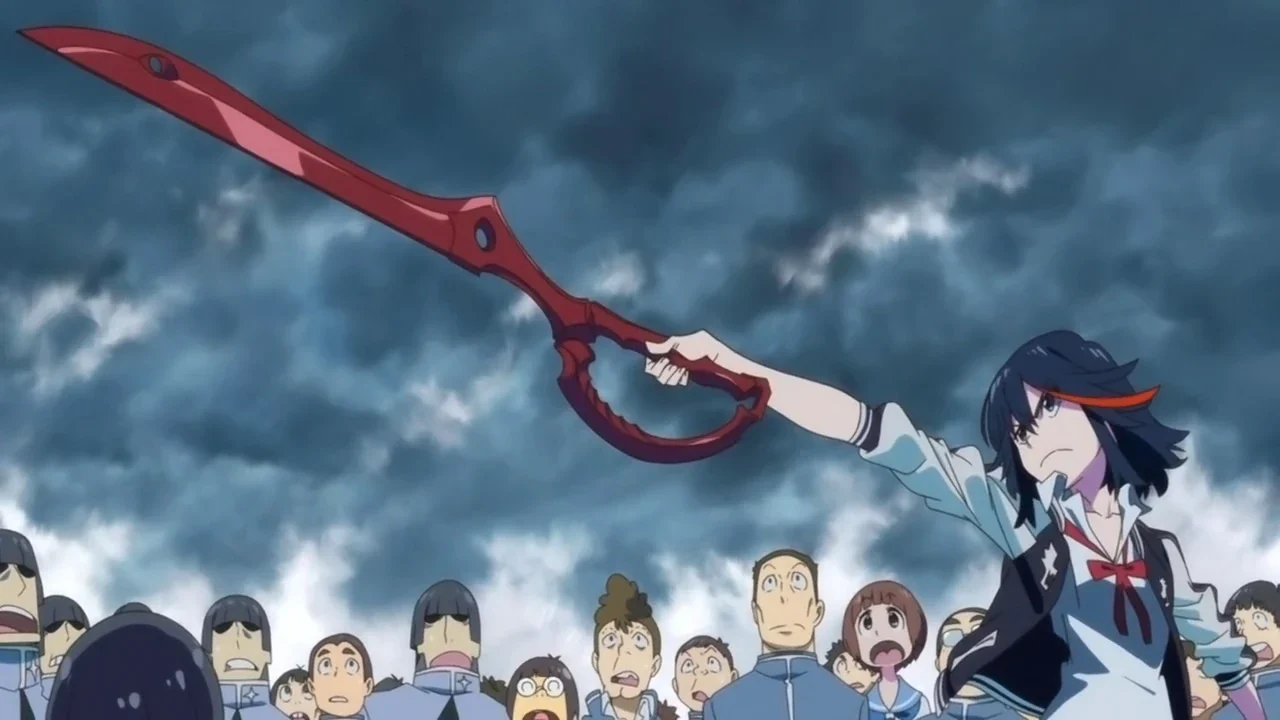
The Scissor Blades in ‘Kill la Kill’ are made of hardened Life Fibers and are specifically engineered to sever Life Fibers and prevent their regeneration. Canon summaries stress that when used together — or even separately — they nullify Life Fiber properties, which is crucial against Life Fiber-based clothing and organisms.
Series explainers further note how the blades interact with the wearer’s uniform and why so few weapons in the setting can replicate their anti-Life Fiber effect, making them strategically unique.
Nichirin Swords
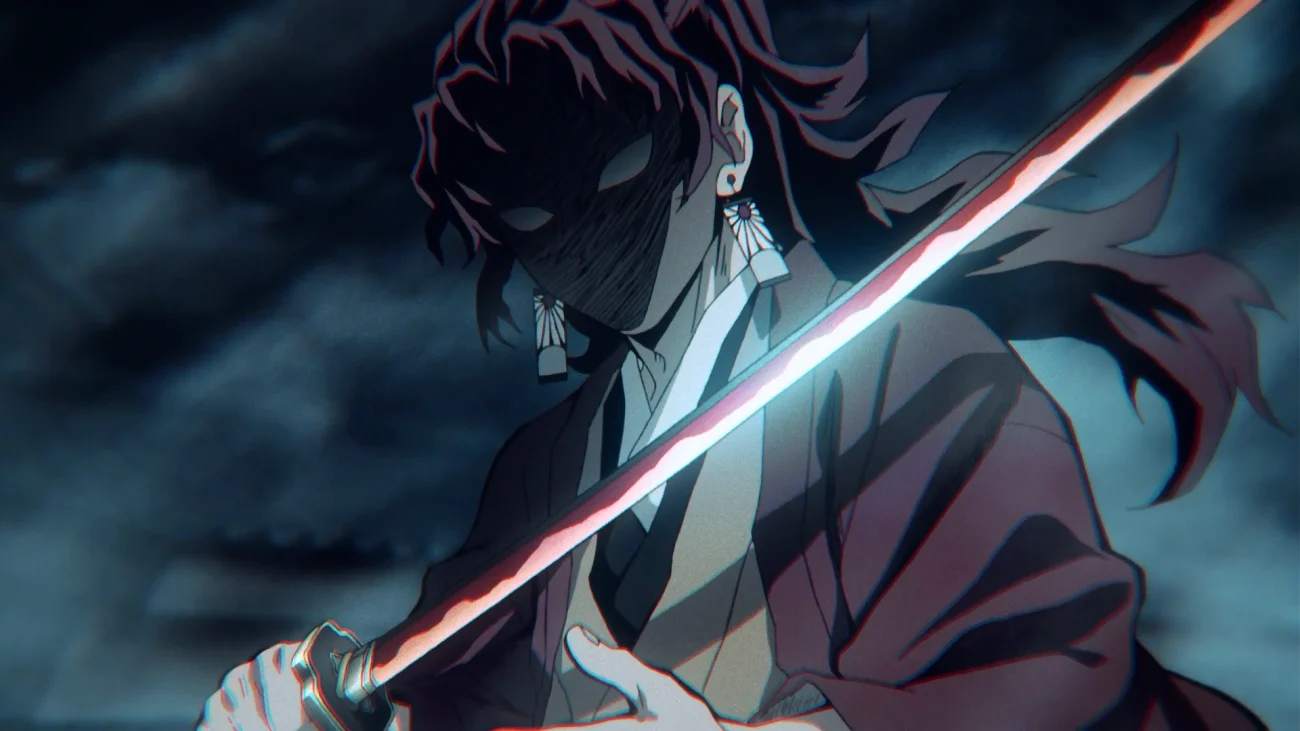
Nichirin swords in ‘Demon Slayer: Kimetsu no Yaiba’ are forged from ore that constantly absorbs sunlight, enabling them to kill demons. The blades’ colors shift based on the wielder, and documentation calls out special patterns and functions tied to users and techniques, including rare conditions that alter a blade’s properties in combat.
Franchise guides and explainers describe how these swords’ sunlight affinity drives their core anti-demon function, and why certain breathing styles and conditions can change performance without contradicting the swords’ fundamental mechanics.
Inverted Spear of Heaven
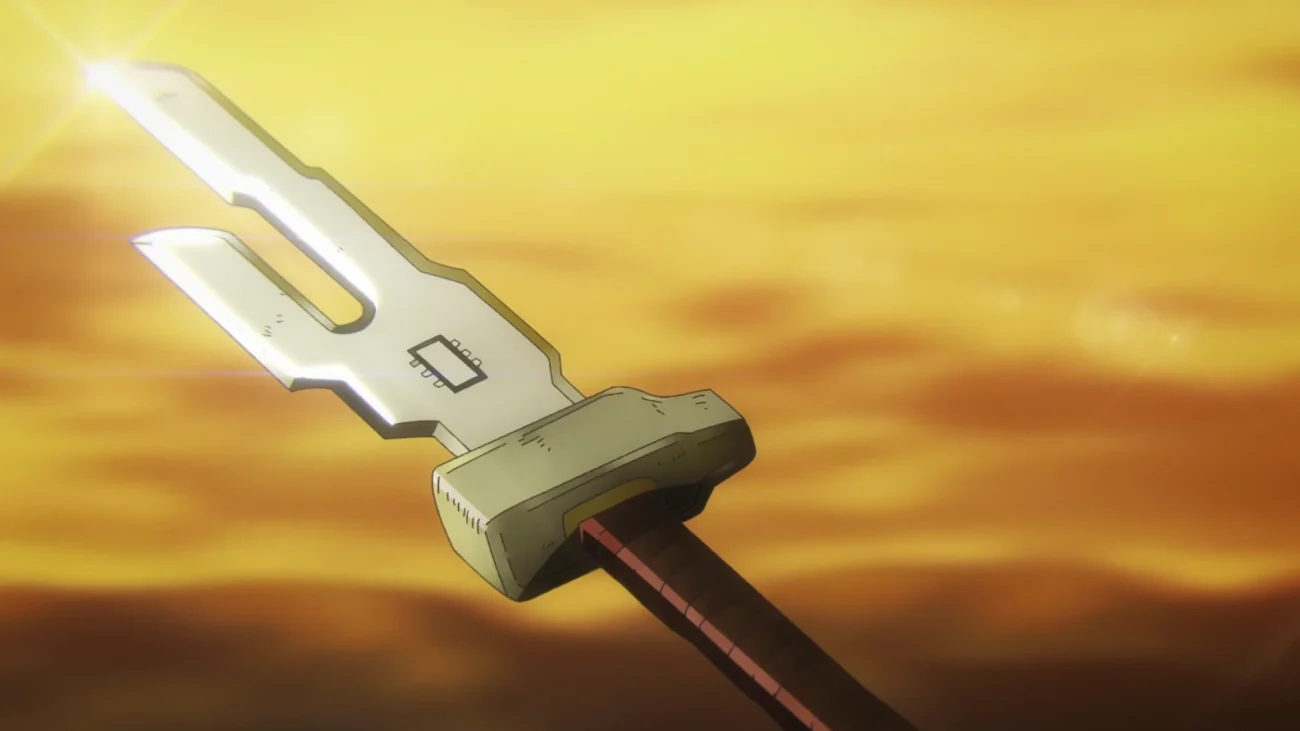
In ‘Jujutsu Kaisen’, the Inverted Spear of Heaven is a special-grade cursed tool that forcibly cancels active cursed techniques on contact, immediately nullifying abilities that would otherwise dominate a fight. Canon entries present this “forced cancellation” as a built-in effect powered by a foreign type of cursed energy.
Because it negates techniques rather than overpowering them, sources explain its outsized impact against elite sorcerers and why it’s historically significant as a countermeasure to otherwise overwhelming abilities.
Ryūjin Jakka
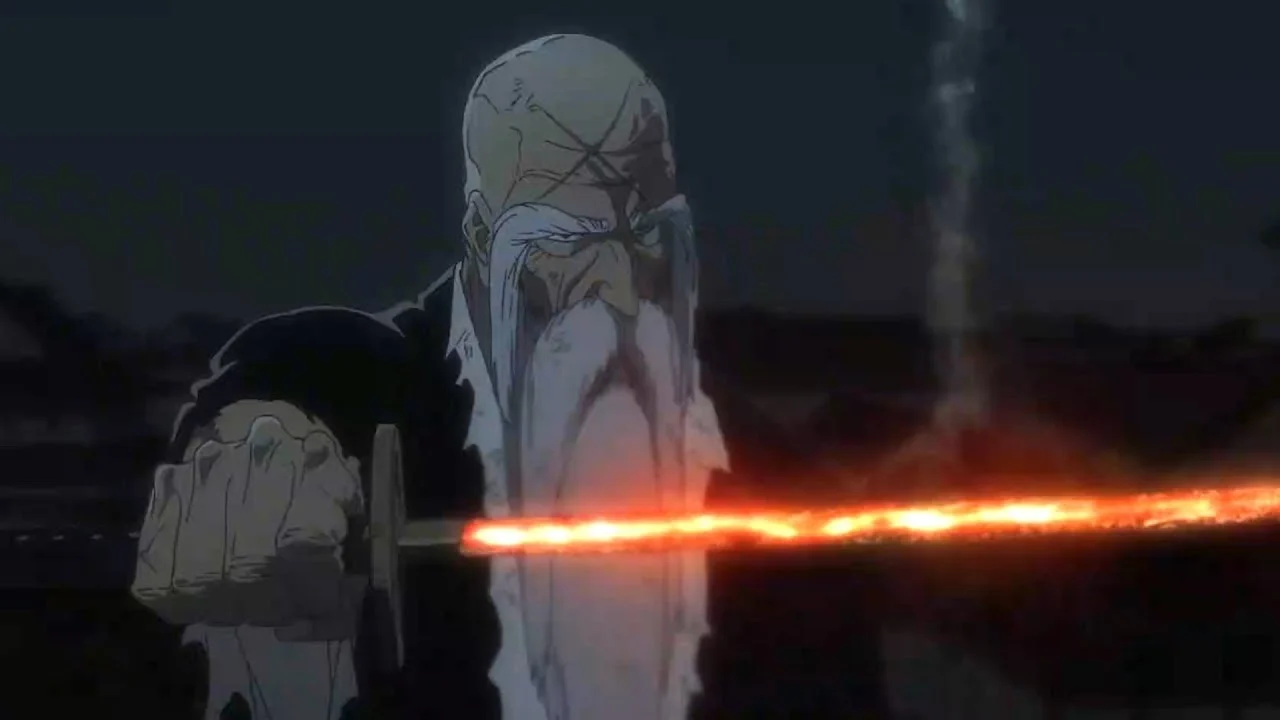
Ryūjin Jakka, the Zanpakutō of Genryūsai Yamamoto in ‘Bleach’, is cataloged as the oldest and most powerful fire-type Zanpakutō, with offensive output exceeding others in the Soul Society. Franchise summaries detail how its release incinerates targets and reshapes the battlefield with overwhelming heat.
Multiple references reiterate its status and capabilities, noting its sealed form’s unassuming appearance versus its released state’s apocalyptic flames — a contrast well documented in series guides and compendia.
The Dominator
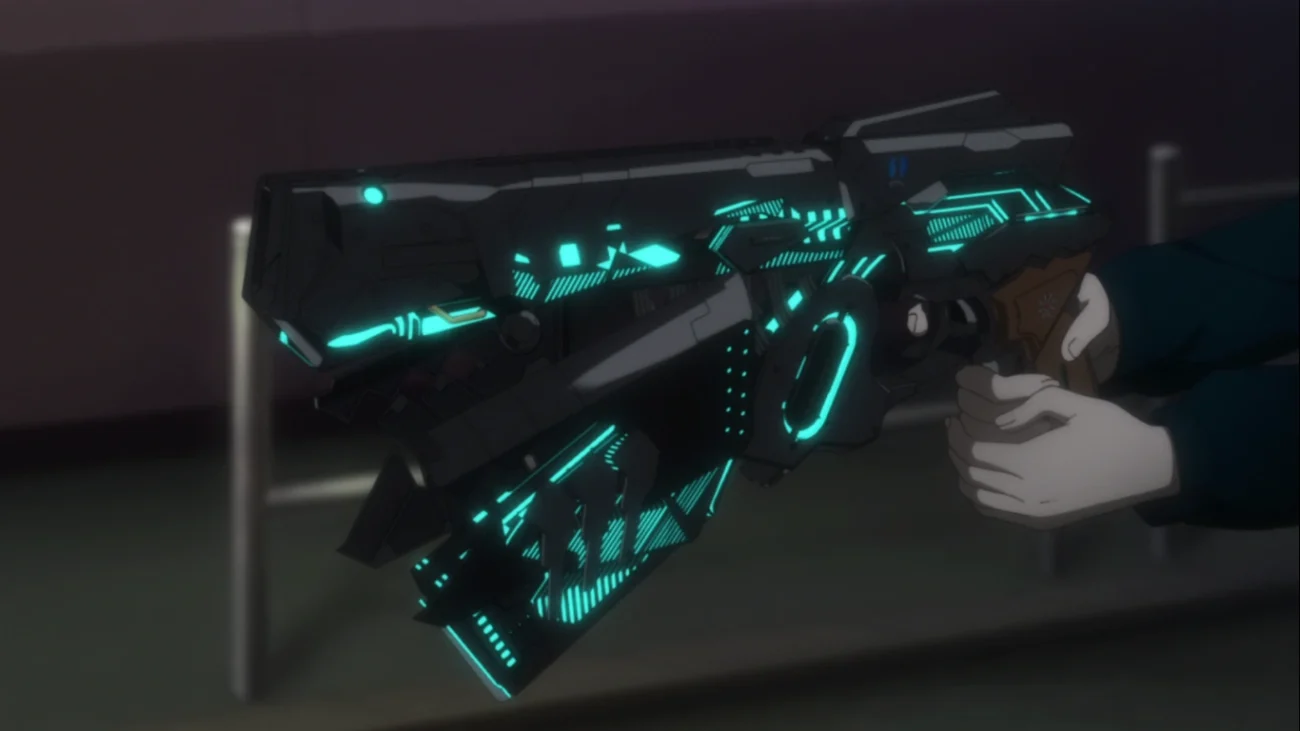
The Dominator in ‘Psycho-Pass’ is a networked firearm that authenticates to the Sibyl System, reads a target’s Crime Coefficient, and dynamically switches firing modes based on authorization — from Non-Lethal Paralyzer to Lethal Eliminator and beyond. Official write-ups and product notes explain its identity binding and remote authorization requirements.
It’s further described as providing real-time psycho-pass evaluations before discharge, making it as much an instrument of judgment as a weapon. Documentation specifies its modes, the visible transformation at the muzzle, and the way only the registered user can receive its system prompts.
Share your own picks for the most overpowered anime weapons in the comments — which one did we miss and why?