28 Years Ago, Brad Pitt’s ‘Seven Years in Tibet’ Hit Theaters and Sparked a Political Firestorm

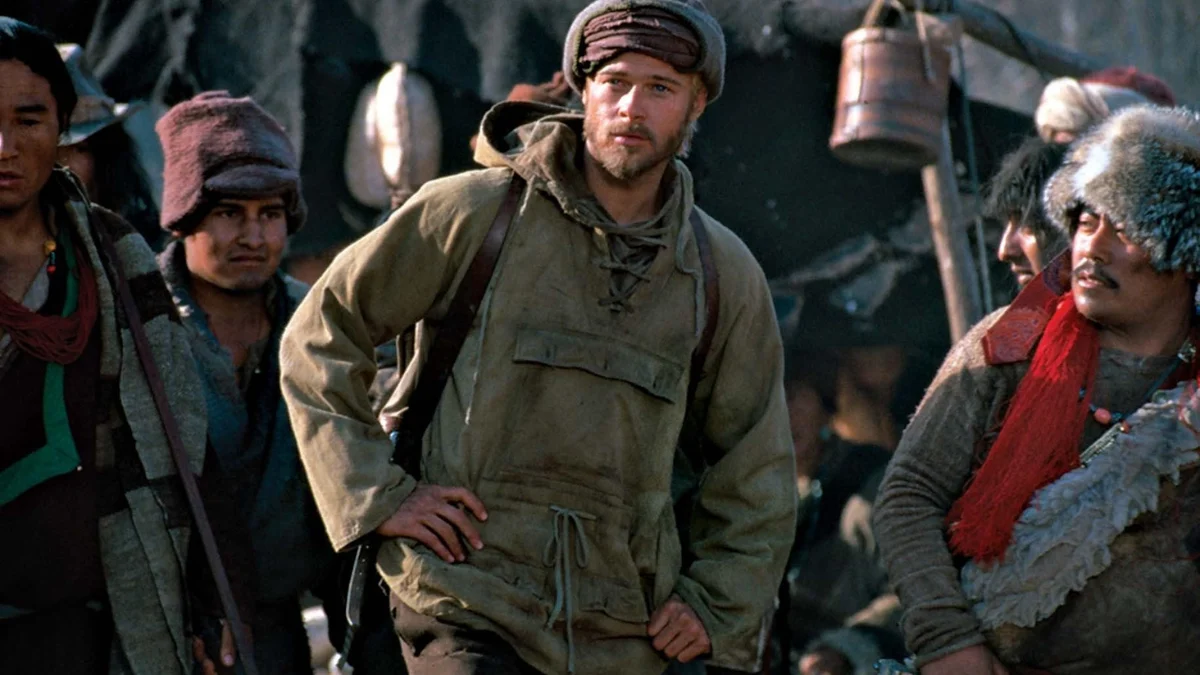

Some films are remembered for their box office, others for their performances. Brad Pitt’s ‘Seven Years in Tibet’ is remembered for both, and for the political storm that followed it, making it one of the most controversial projects of the actor’s career.
Directed by Jean-Jacques Annaud, the biographical war drama adapts Austrian mountaineer Heinrich Harrer’s 1952 memoir about his years in Tibet. The film premiered at the Toronto International Film Festival on September 13, 1997, where it began building buzz ahead of its theatrical debut.
On October 8, 1997, the film officially opened in cinemas in the United States and Canada. Its arrival would soon trigger a fierce reaction from the Chinese government, with consequences reaching far beyond the movie itself.
Pitt stars as Harrer, an Austrian climber who joins an expedition to the Himalayas, only to end up in a British prisoner-of-war camp in India during World War II. After escaping, he and fellow climber Peter Aufschnaiter, played by David Thewlis, embark on a dangerous journey that leads them to Tibet.
There, Harrer befriends the young 14th Dalai Lama and witnesses rising tensions as China moves to take control of the region. The cast also includes BD Wong, Mako, Jamyang Jamtsho Wangchuk and Lhakpa Tsamchoe.
The film features a score by John Williams, with cellist Yo-Yo Ma delivering a featured performance. Filming took place across several countries, including Argentina, Canada, Austria, and the United Kingdom.
‘Seven Years in Tibet’ opened in just 3 theaters, earning $46,130 in its first 2 days. It then expanded to an additional 2,100 theaters for the weekend, bringing in more than $10 million. Made on a budget of around $70 million, the film went on to earn approximately $131.5 million worldwide.
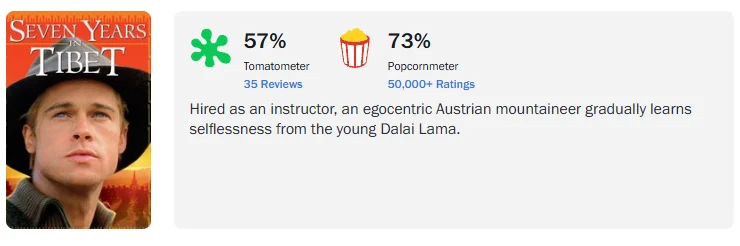
Critics were divided, and the film holds a 58% score on Rotten Tomatoes. As the film was released, China’s government condemned it, objecting to the portrayal of Chinese military officers as rude and arrogant toward local people. Officials also criticized the film’s positive depiction of the Dalai Lama.
The fallout was dramatic. Annaud, Pitt and Thewlis were barred from entering China, and Sony’s future films were also banned from playing in the country for a time. Adding to the controversy, Annaud had sent a team to Tibet to secretly capture footage for the film without approval from Chinese authorities. The director later told The Guardian that he received a permanent ban after the movie came out.
‘Seven Years in Tibet’ was part of a wider clash between Hollywood and China that year. Martin Scorsese’s ‘Kundun’, which also depicted Tibet and the Dalai Lama, prompted a temporary ban on Disney films, while ‘Red Corner’ was banned over its portrayal of China’s judicial system.
Sony was allowed to resume business in China in 1998. However, ‘Seven Years in Tibet’ itself has remained banned in the country. Over time, relations softened for some of those involved. Annaud was welcomed back to China in 2012 to chair the jury of the Shanghai International Film Festival.
Pitt later visited China in 2014 and 2016. Still, few of his films can claim such lasting geopolitical consequences. Nearly 3 decades later, the film continues to spark conversation. It recently returned to Netflix, giving a new generation of viewers the chance to revisit Pitt’s controversial adventure.
For many, the movie stands as a striking example of how cinema can collide with global politics. It remains a fascinating chapter in Pitt’s career and in Hollywood’s complicated relationship with China.
Have you watched Brad Pitt’s ‘Seven Years in Tibet’?
Have something to add? Let us know in the comments!