When and Where Is Vinland Saga Set? Explained!

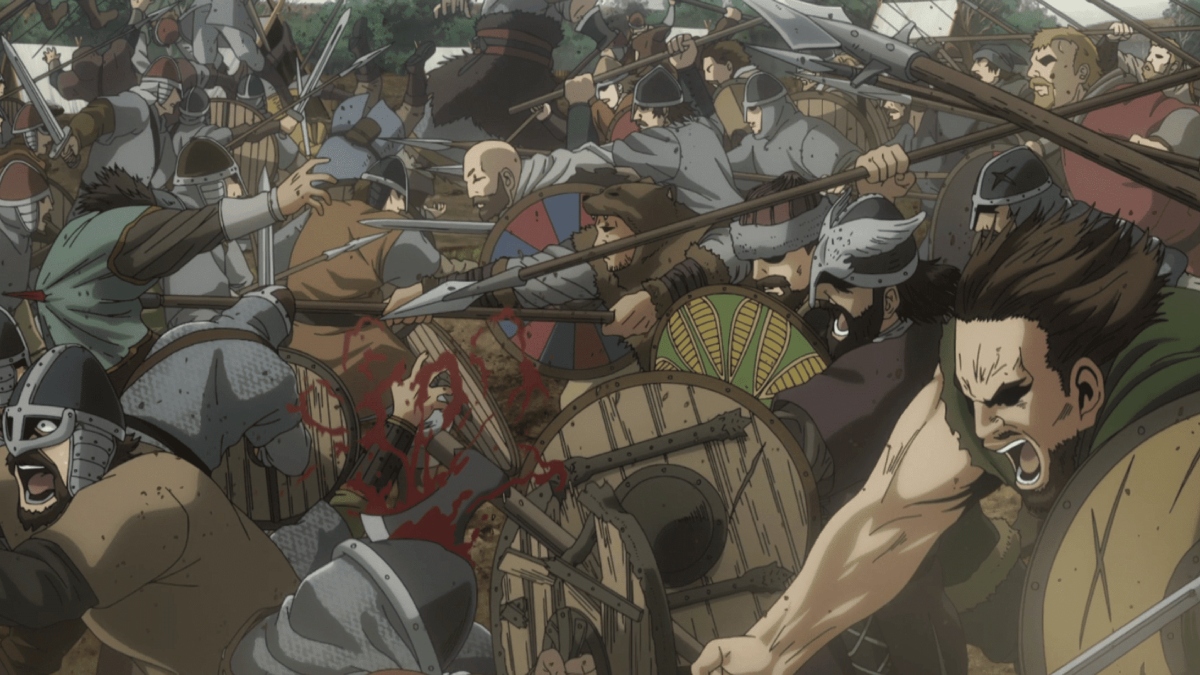

Vinland Saga is a historical manga written and drawn by mangaka Makoto Yukimura. The series was published by Kōdansha in Weekly Shōnen Magazine in April 2005 before being moved to the monthly magazine Afternoon in December 2005. The manga is inspired by several Icelandic sagas and refers to the discovery of North America by the Vikings, and that is what we are going to talk about in this article. Namely, we are going to reveal a bit about the history behind Vinland Saga, as you are going to find out when and where the manga is set.
It is a known fact that Vinland Saga is mostly set in 1013 AD in England (save for some flashback scenes, but that is a minority of the content). The Danish king Sweyn Forkbeard conquered England at the time, and as he was on his deathbed, his sons Harald and Cnut (Canute in the series) were arguing over the succession.
The rest of this article is going to tell you about the actual history behind Vinland Saga. We are going to tell you about all the historical events that actually happened and inspired the Vinland Saga, some of which have been depicted in the story, while some are yet to be depicted. We won’t be going into the actual plot of the manga so the info here cannot technically be classified as spoilers, but still, be careful how you approach it.
When and where is Vinland Saga set?
Every viewer and reader of Vinland Saga will have noticed the series’ realism and authenticity when the depiction of historical events is concerned. It is quite obvious that Yukimura did the necessary research and that Vinland Saga is not a piece of fiction simply inspired by Viking tales, but rather a very accurate take on actual historical events. Thanks to numerous references and behind-the-scenes information, we know when and where Vinland Saga is set and we are going to reveal that to you in this section.
The date is 1013 AD and the place is England. The Danish ruler has already conquered England but at one point, he has become old and is about to die. As it usually was with medieval monarchs, his two sons – Harald and Cnut – are fighting for his succession and want to become the new kings of Denmark and England. And this is the historical framework within which Vinland Saga evolves and by which it was inspired. In the next section, we are going to tell you about the actual historical events that happened in England in 1013 AD.
What is the actual history behind Vinland Saga?
The political situation in the Baltic region changed again with the naval battle of Svold on September 9, 1000. The battle took place between Danish troops under King Sven Gabelbart together with Swedish troops under King Olof Skötkonung, supported by renegade Norwegians under Erik Håkonsson on the one hand, and Norwegians under King Olav Tryggvason held on the other side. It ended in the defeat of Olav Tryggvason. Norway was divided between Sweden and Denmark. Sven now also ruled over Norway by means of two Jarle.
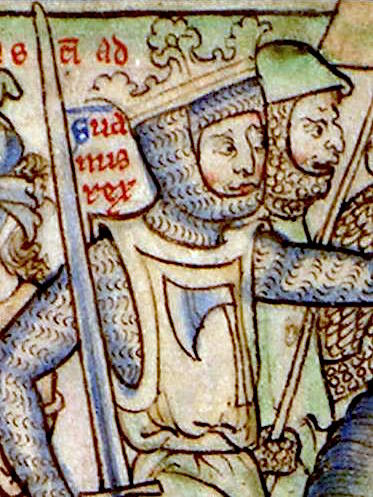
From 1003 Sven led some large-scale invasion attempts against England (1003-1005, 1006-1007, 1009-1012, and 1013), which the English king Æthelred initially tried to end by paying large sums of money. The St. Brice’s Day massacre is seen as one of the triggers for these invasion attempts: After the contractually agreed armistices with monetary payments were repeatedly broken by Scandinavian armies, confidence in the loyalty of the Scandinavians, who sometimes also worked as mercenaries and as soldiers, decreased Settlers stayed on English soil, considerably.
On November 13, 1002, the English king Æthelred ordered that all Danish residents of England should be put to death, with the death of Sven Gabelbart’s sister Gunhilde as well. Revenge for the St. Brice’s Day massacre is cited as one of the reasons for Sven’s invasion of England, but historians Nicholas Higham and Martin Ryan also believe it is possible that Sven only had the opportunity and his plentiful troops at his disposal used to conquer prosperous England.
In 1013 Sven came to England with a fleet, where he sailed first to Sandwich, then the Humber and the Trent to Gainsborough in Lincolnshire. Uhtred, Earl of North Humbria, submitted to Sven, as did the inhabitants of Lindsey, the Five Boroughs of the former Danelag, and all forces north of Watling Street. This situation is not completely clear, but some historians think that the rapid submission of these areas to Sven was because these areas had belonged to the dominion of Ealdorman Ælfhelm, whom the English king Æthelred had killed in 1006; Sven probably used animosities in these areas against Æthelred.
Sven’s position was further strengthened by the marriage of Sven’s son Cnut to Ælfgifu of Northampton, Ealdorman Ælfhelm’s daughter. Sven moved further south where he achieved the subjugation of the southern areas of England and eventually London. The English king Æthelred fled into exile in Normandy. On December 25, 1013, Sven was proclaimed King of England. Since he died just forty days later, it is uncertain whether he would have been able to establish himself as a successful ruler in England in the long term.
Sven Forkbeard died on February 3, 1014, at Gainsborough in Lincolnshire, which he had made his capital, shortly before his scheduled coronation. His body was transported to Denmark and buried in Roskilde Cathedral. However, the biography of a Flemish monk, King Cnut’s Deeds, or a pamphlet for Queen Emma, reports that he was “buried in the church which this king had erected in honor of the Trinity, in the tomb which he had made.” That would have been in Lund, whose oldest church was built of wood by Sven as the Holy Trinity Church. During the excavations, a tomb-shaped pit was found under the floor of this church.

Only the builders of a church used to be buried at such a spot, so it is quite possible that Sven was originally buried there. His son Harald II was the first to succeed as king of Denmark. His son Cnut was proclaimed king in the Danelag, but was expelled from England by Æthelred after his return from exile in Normandy. In 1016 Cnut returned and became king of all England after the deaths of Æthelred and his son Edmund Ironside. After the death of Harald II in 1018, Cnut the Great succeeded his brother as king of Denmark. Eventually, he ruled over a Scandinavian empire, which at times included Norway in addition to England, Denmark, parts of Sweden, and the Baltic Sea coast.