The Ending of ‘The Homesman’ Explained: What Was the Point of Mary Bee Cuddy’s Grave Marker?

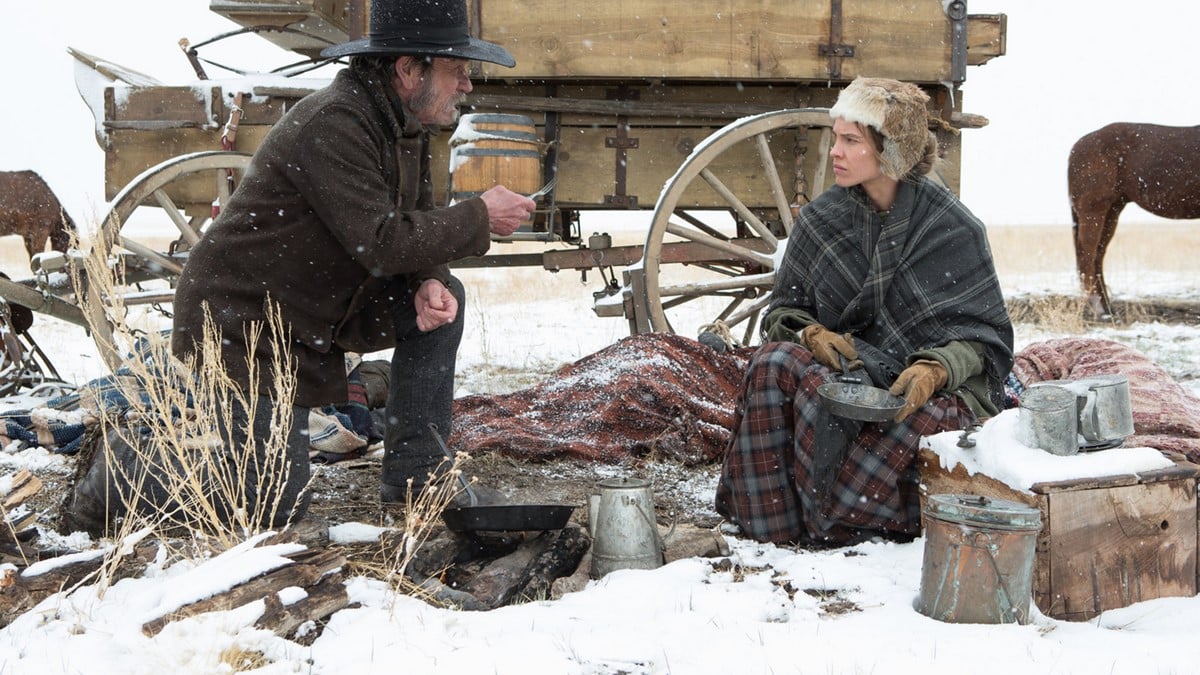

‘The Homesman’ is a 2014 Western historical drama film directed by Tommy Lee Jones, set in the 1850s Midwest. Based on Glendon Swarthout’s 1988 novel, the screenplay was co-written by Jones, Kieran Fitzgerald, and Wesley Oliver. The film stars Tommy Lee Jones and Hilary Swank, with a star-studded cast including Meryl Streep, Grace Gummer, Miranda Otto, Hailee Steinfeld, John Lithgow, Jesse Plemons, and James Spader. ‘The Homesman’ is not your classic Western movie, it’s primarily character-driven, and I was shocked to see it having such a low rating on IMDb because it’s truly one of the most beautiful movies you will see.
But one thing that plenty of negative reviews point out is the fact that the movie has a truly open-ended ending and there’s seemingly no point to it. This is why we’re here to explain our take on it. Let’s see what ‘The Homesman’ is all about, and how it ends.
Mary Bee Cuddy is the perfect woman and this drives men away from her
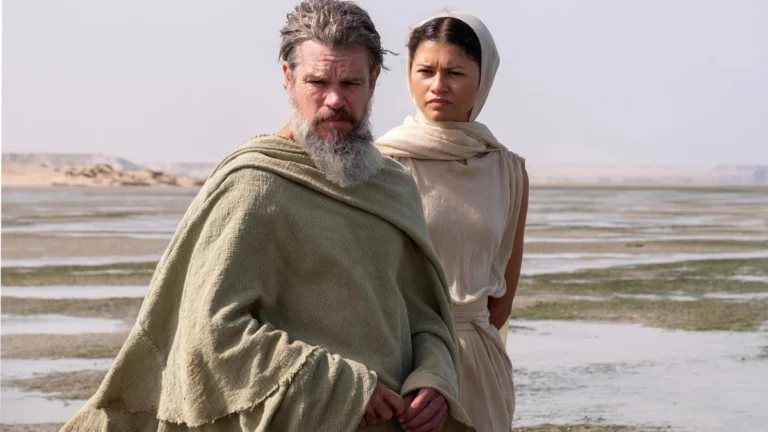
The first character we meet is Mary Bee Cuddy a 31-year-old woman from New York, she previously worked as a teacher but moved to the Midwest due to better business opportunities. She has a large estate with lots of land and animals to take care of. She is a god-fearing no-nonsense woman, she is wealthy when everything is taken into account and largely independent, doing most manual work on her farm alone. But, Mary has one problem, she is a spinster, unmarried, and with each passing year her marriage prospects are dwindling. She is desperate to get married and have children but most men in her community aren’t looking for someone to be equal to them, they are looking for someone to be subservient. The fact that Mary is considered somewhat plain doesn’t help matters either.
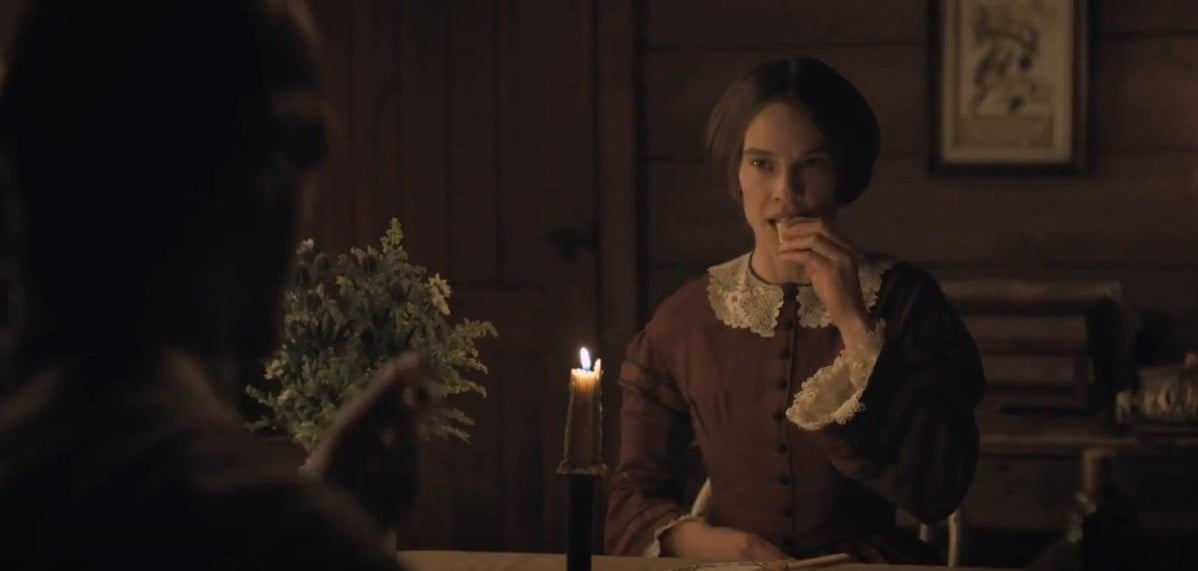
Mary invites one of her neighbors to dinner, Bob Giffen, but the dinner is only a prelude to what is to come, after a brief singing session, Mary proposes to Bob but he turns her down stating that she is plain and bossy and he will soon head East to find himself a wife in any case. All of this makes Mary feel lonely, isolated, and depressed, but she carries on, carrying the burden of business, land ownership, and single life on her strong back.
Mary volunteers to take care of sick women
Following a difficult winter, the small Nebraska Territory was decimated by deaths of livestock and diseases which made three women from Mary’s community go practically insane. The first woman was Arabella Sours who lost three children to diphtheria in the span of three days. This made Arabella insane with grief and she fell into a sort of catatonic state, carrying a doll with her at all times, a replacement for her dear children.
Theoline Belknap is yet another female victim of winter, following the deaths of animals and poor harvest her family is on the brink of starvation, Theoline is pregnant but soon after giving birth, she is forced to dispose of her newborn child because she can’t feed it. She gives the child a quick death rather than the child suffering from grueling starvation. Following this, Theoline loses her mind completely and refuses to communicate with the world.
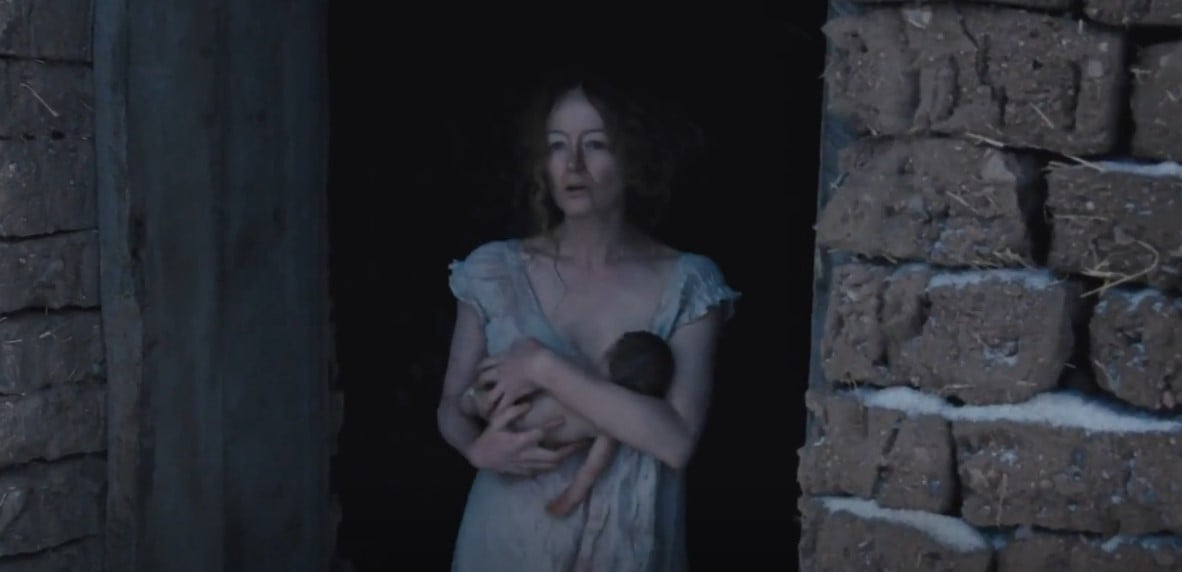
The third woman is Gro Svendsen, a Swedish woman who came to America with her husband and mother, her husband is extremely abusive and her mother is the only thing she has. Gro’s mother sadly passed away during the winter and Gro started blaming her husband for the fact. She slaps him and becomes extremely aggressive toward him repeating that god will strike him down.
Considering that their husbands won’t take care of the women after they were driven insane by the old way of life on the Frontier, they are now useless and unwanted. Luckily there is a church in Hebron, Iowa that is willing to take them in and take care of them, but another problem presents itself, no one really wants to assume the duties of a “Homesman” to take them to Iowa. During the Sunday sermon, Reverend Dowd calls for the husbands of the three women to escort them east but all three of them straight up refuse, with Theoline’s husband leaving the church. Mary decides to take place in the lottery instead of Theoline’s husband, claiming that she is just as capable of taking the women east as any man is. She has money, mules, a wagon and she knows how to ride just like any man does. Mary is chosen by the lottery to take the women east and all men are more than happy to let her take their place.
Mary enlists the help of an unlikely “hero”
At the same time, in their small town George Briggs, a claim jumper has laid an illegal claim on the property of Bob Giffen who has headed east to find himself a wife. After being caught in the house George was sentenced to be hanged but was left on the horseback with a noose around his neck. At that moment, Mary accidentally stumbles upon him and frees him from certain death but under one condition, George needs to be her companion on her upcoming long journey. She will feed him and provide him with everything while he travels with her.

George at first refuses and tells her that he can abandon her at any time, but after Mary promises to mail him $300 after their trip has concluded he reluctantly accepts. Mary however never mailed the money and instead kept it on herself. George is obviously not a high-class man, he swears a lot and has no respect for laws or private property either. He also constantly complains about the insane women they are carrying east. But considering that George has lived an illegal life so far, he is not a stranger to danger and knows how to survive in the open wild and knows his way around pretty much anything.
We also learn that George is a deserter, and he pretty much has no loyalties except for himself.
The decision to take George on the trip was a wise one
Soon after setting out on their month-long journey, the first trouble appears. Mary, George, and the women are ambushed by Pawnee Indians. George knows that taking numbers into account there is no way that he will be able to take all of them single-handedly, so he decides to give one of Mary’s horses away. The separation from her loyal horse weighs heavily on Mary but it is what it is. George also gives a single pistol with 4 rounds in it telling Mary that if the Pawnee kill him, she should lock herself in the wagon carrying the women and shoot them and then shoot herself in the head, because any fate is better than what the Indians will do to her if they catch her alive.
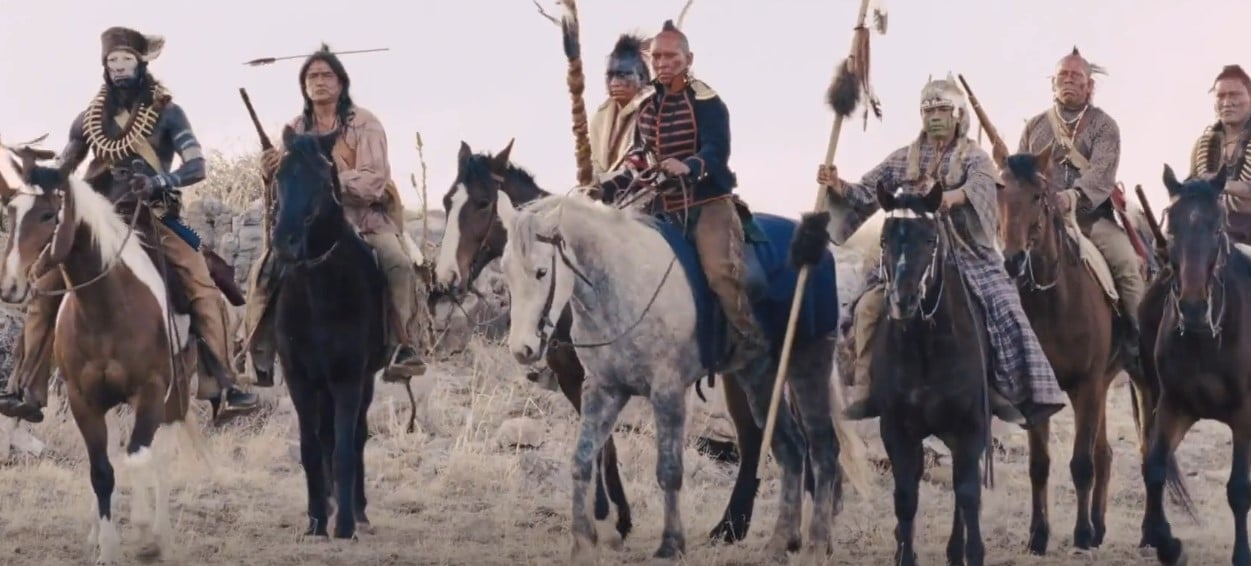
Luckily, it doesn’t have to go that way since the Indians take the horse and ride away. With a sigh of relief, the journey continues, and Mary can be seen taking care of the women, bathing them, feeding them, and making sure they are comfortable while leaving for their new home. Mary has the patience of a saint, and despite arguing with George often during the first half of their journey, the two start getting along more, and George stops complaining as much.
The other problem presents itself when one morning they notice that one of the women is missing, Arabella. She disappeared without a trace and it’s George’s job to ride after her to see if he can locate her.
George finds Arabella on horseback with a stranger, considering that Arabella is not of sound mind this is considered a kidnapping but the stranger will not have it. He decided to take Arabella to be his woman despite her being clinically insane. After George fails to persuade the stranger to give Arabella away, the two start to fight and the stranger soon starts to garrotte George. Arabella shoots the stranger in the last possible second, killing him instantly.
Arabella and George return back to their camp but they have another problem on their hands, Mary has discovered the grave of an 11-year-old girl that has been desecrated and wants to take care of it properly. George claims that Indians stole the clothes wolves chewed through the bones and there’s really nothing to take care of. Still, Mary insists on taking care of the grave and stays behind with a horse, promising to catch up to them.
After taking care of the grave Mary tries to locate the caravan but gets lost in the endless plains. She has no idea in which way to go and the horse is carrying her in circles, Mary spends 2 days riding endlessly night and day, without food forced to eat grass like the horse. She arrives at George’s camp by accident as the horse carries her in the right direction while she is sleeping.
Mary commits suicide and George is forced to continue the rest of the way alone
After arriving at the camp Mary is angry at George for leaving her behind and not lighting fires so she can navigate herself, George explains that he did but Mary must have missed them. Being so isolated and alone on the brink of death forces Mary to once again reconsider her life and she, in a moment of desperation asks George to marry her so they could both prosper. George declines, saying that he is no farmer, and besides he already abandoned one wife he doesn’t need another one, he is accompanying Mary only because he was promised his reward not because he personally likes her.

Later that night, Mary strips and propositions George, and the two have sex. When George wakes up the following morning he discovers that Mary has hanged herself. George is heartbroken and curses her for not respecting her end of the deal and leaving him with three insane women with not a single soul in the world. While burying Mary’s body he finds his $300 and starts lashing out at the three insane women claiming that their illness must have driven Mary crazy and caused her to commit such an unspeakable act. The three women are silent and seemingly do not comprehend the gravity of their situation.
George naturally continues on his way without the women, after all, Mary is no longer around and she broke her end of the deal first, he has the money and has no real incentive to deliver the women to Iowa. Still, as soon as he attempted to ride away, the women started following him with Arabella almost even drowning in the river. George decides that there’s no way out of this one except to fulfill Mary’s last wish, that the women are delivered safely to their destination.
George burns down the hotel in an act of vengeance
The end of the trip is nearing and George and the women are running out of supplies, they have nothing to eat but luckily they come by a somewhat high-class hotel in the middle of nowhere. George has money and attempts to rent 2 rooms a bath and meals for himself and the women but the owner won’t have it. He expects the company of 16 businessmen and his hotel is simply not a place for three insane women and an unkept vagabond.
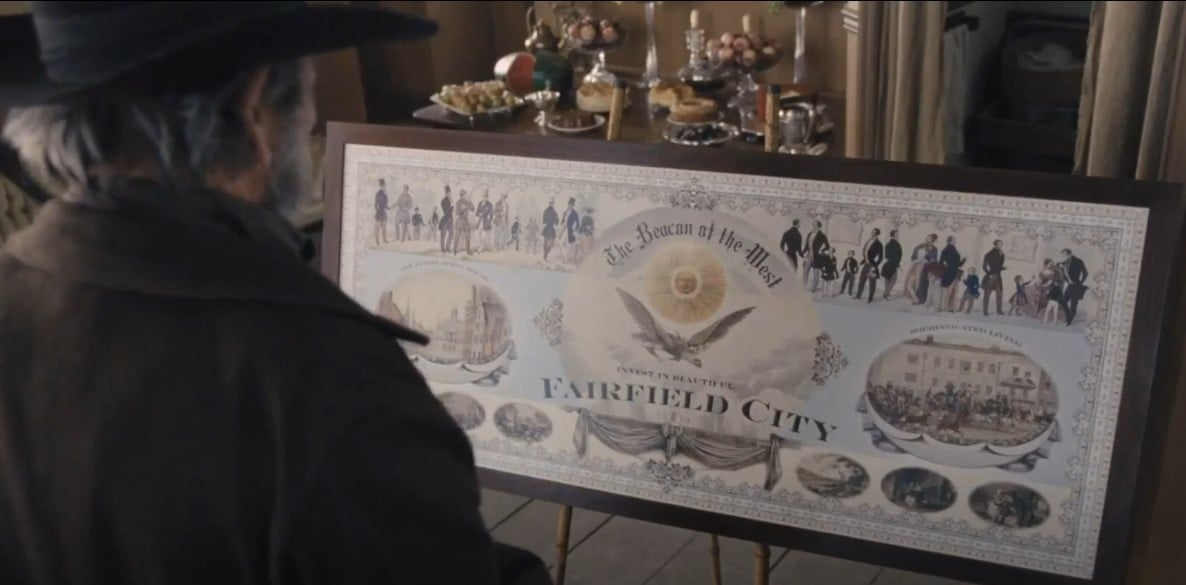
George attempts to shoot the owner, but the owner’s employee is faster and runs George out of the hotel with a rifle stuck at his back. Later that evening George returns to the hotel, sends the hotel cook away, and proceeds to burn down the building with everyone still inside, Before leaving he takes the suckling pig and feeds both himself and the women.
George fulfills his end of the bargain but loses the promised reward
George finally reaches Hebron and once there he manages to locate Altha Carter the wife of the local pastor who promised to take care of the women. Altha asks about Mary but George reveals that Mary passed away from fever, unwilling to disclose the full truth that Mary actually killed herself.

After he drops off the women, George visits a tailor and gets himself a fancy suit, he also has a slab of wood engraved with Mary’s name and information. He feels guilty about rejecting her proposal and decides to mark her grave with it. He couldn’t give her dignity in life but he can give her dignity in death at least. George also meets a young barkeep walking around barefoot and spends some money on her shoes.
Now that he is somewhat rich, George attempts to enter the high-class society and joins a high-stakes poker game in the casino. After he is asked to show his capital he discovers that the money that Mary left him is worthless since the bank went bankrupt since they departed on the month-long journey. He is chased away from the establishment and seemingly back to his old drunken ways. He visits the hotel in which he is staying one last time and gives the new shoes to the bartender before warning her to marry a man from the West if he comes asking, he tells her to stay where she is and a few seconds later he asks her to marry him.
The young woman says “Maybe,” but later that night, George is back on the open water ferry with his horse, he is leaving Hebron and heads out into the unknown future. He carries Mary’s headstone to the ferry with him, but his purpose of giving Mary a proper funeral is soon forgotten when he sees a band of musicians on board the ferry. They start loudly singing and the people who live close to the river complain, George, drunk, starts shooting at them and singing even louder. In the chaos, he doesn’t notice that Mary’s tombstone has fallen overboard from the Ferry into the deep river water below.
The ending of ‘The Homesman’ basically undoes Briggs’ character development
The ending is really open-ended which means that everyone can basically tailor it to his own preference since it was never actually discussed by the author of the original book of course. What I personally picked up from it is the fact that George returned to his old ways as soon as the civilization was taken from him.
Back when we first met Briggs he was a lowlife, something that Mary tried to correct. She promised him money which would have been an easy way to buy himself a better life if he wished as much. But Mary also set an example of what a decent human being is, especially by the fact that she took care of the dead girl’s grave despite bringing herself in danger. George really wanted to turn things around and become a part of civilized society, away from the frontier. This is what getting a fancy suit and buying a headstone for Mary meant to him.
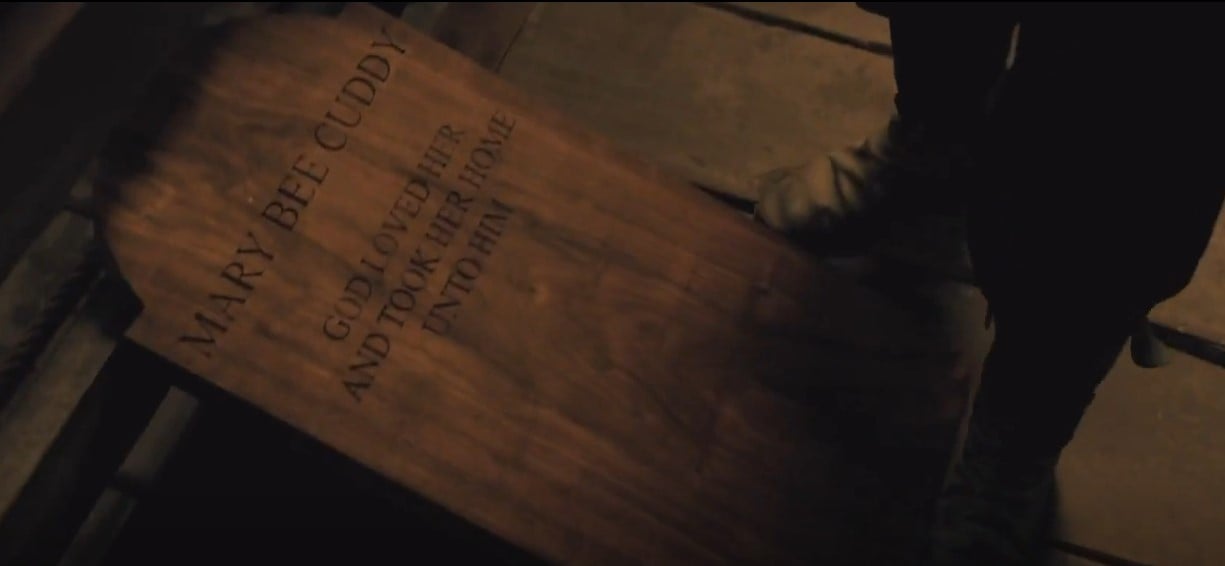
He was going to honor her and honor himself by turning a new leaf. After George was basically chased away from the Casino and when he realized that he had no money and no status, he immediately reverted back to his old ways. Mary’s tombstone represents character development, and as soon as that slid into the water without George even noticing, it was clear as day that George would return to the West, having nothing and nobody he doesn’t plan on changing ever.
This doesn’t mean however that George didn’t respect Mary, and I’m sure he would be heartbroken when noticing that the tombstone is missing, but the greater theme behind that scene was the fact that George did not care about Mary enough to Mary her, and ultimately to become a better man without a promise of a reward.
What do you think? Let us know in the comments below!