Notch Weighs In on “Stop Killing Games”: If You Don’t Own It, Pirating Isn’t Theft

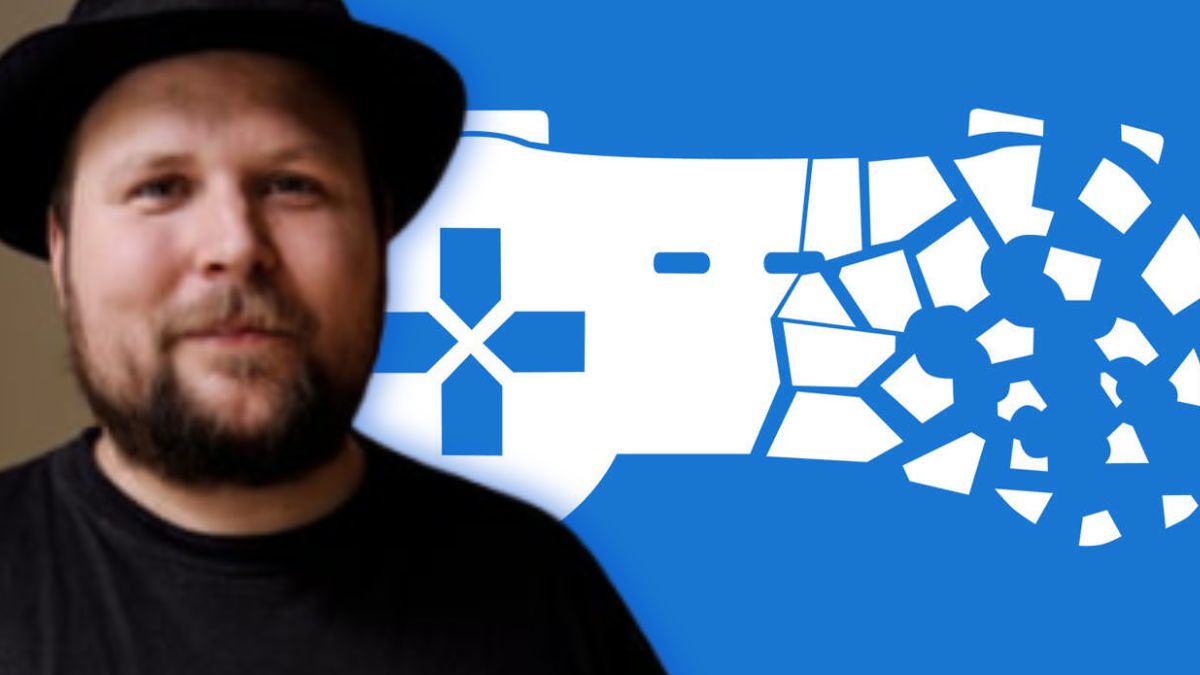

Markus “Notch” Persson, the guy who created Minecraft, made a surprise return to social media on July 7, 2025, and it didn’t take long for things to blow up. He replied to a post on X and reignited a big debate in the gaming world about ownership and piracy.
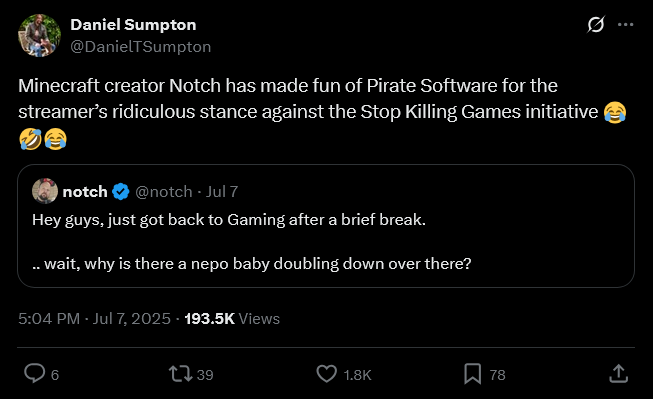
It all started when YouTuber Daniel Sumpton made a joke about indie developer Pirate Software pushing back hard against the “Stop Killing Games” petition. Notch replied directly and dropped a line that quickly went viral:
“Just verifying that yes, that is what I was talking about. If buying a game is not a purchase, then pirating them is not theft.”
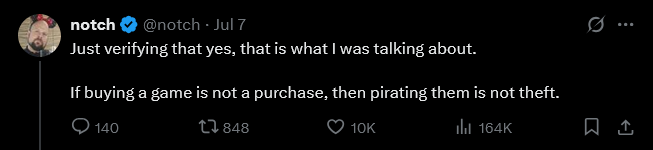
That one comment was enough to spark a firestorm. It got over a million views within a day, and hashtags like #Notch and #StopKillingGames started trending. He also called Pirate Software a “nepo baby,” which definitely added more drama to the conversation.
So, what’s this all about? The “Stop Killing Games” campaign is a petition launched by Ross Scott, the creator of the Accursed Farms YouTube channel. It’s part of a European Citizens’ Initiative, which is a way to ask the EU to consider passing a new law. Scott wants game companies to be forced to offer DRM-free versions or share server code before they shut down online games. The goal is simple: don’t let games disappear forever just because servers go offline.
The petition has already passed one million signatures and ends on July 31. That’s a lot of support. But not everyone’s on board.
Pirate Software, run by indie dev Jason Thor Hall, called the whole idea “ridiculous.” He said small studios could go bankrupt trying to keep old servers running forever. Sumpton agreed with that view, and that’s what brought Notch into the conversation with his now-famous take.
The bigger issue here is about what it means to “own” a game. When people pay for a game, they expect it to be theirs. But with online games, that’s not always true. Once the servers shut down, you might lose access forever, just like what happened with Ubisoft’s The Crew, which was removed in 2024. That move made a lot of players angry.
Notch’s point was blunt but clear. If publishers treat games like rentals or licenses instead of real purchases, then why should people feel bad for pirating them once they’re gone? It’s a messy situation, and players are stuck in the middle.
This isn’t just about one game or one company. Back in 2012, the EU ruled in a case called UsedSoft v. Oracle that software licenses could be resold, which helps the argument that digital purchases should come with actual ownership rights. And according to PwC, the gaming industry makes around $180 billion a year, mostly from digital sales. So there’s a lot of money—and trust—on the line.
Now, with the petition’s deadline coming up and more people talking about game preservation, the pressure is on. Whether lawmakers step in or not, the conversation is changing. Notch’s comment may have stirred things up, but it’s also making people think about what they’re really getting when they buy a game.
The “Stop Killing Games” petition closes on July 31. What happens after that could affect the future of game ownership, preservation, and digital rights in a big way.
Let us know your thoughts in the comments.