5 Ways ‘Casablanca’ Aged Poorly (& 5 Ways It Aged Masterfully)

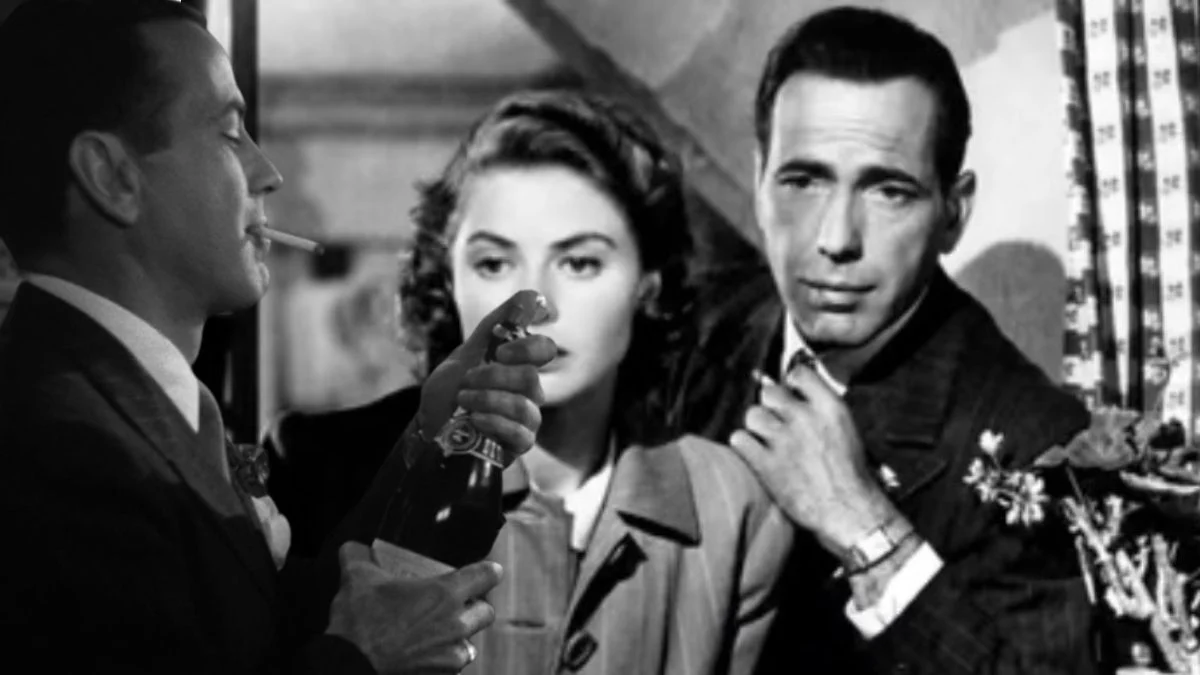

Released in 1942, ‘Casablanca’ was directed by Michael Curtiz and produced at Warner Bros with a screenplay by Julius J Epstein, Philip G Epstein, and Howard Koch based on the play ‘Everybody Comes to Rick’s’ by Murray Burnett and Joan Alison. It premiered during the war and won major Academy Awards the following year, which cemented its central place in studio era history. The story follows Rick Blaine, Ilsa Lund, and Victor Laszlo against the backdrop of Vichy controlled Morocco, with a mix of romance, espionage, and wartime urgency.
The film’s legacy spans craft, performance, and cultural impact, yet parts of it reflect the industry constraints and worldviews of its moment. Here are five ways the film shows its age alongside five elements that continue to hold up, organized to make it easy to see both sides of its long life in popular culture.
Aged Poorly: Limited depiction of Moroccan people and culture
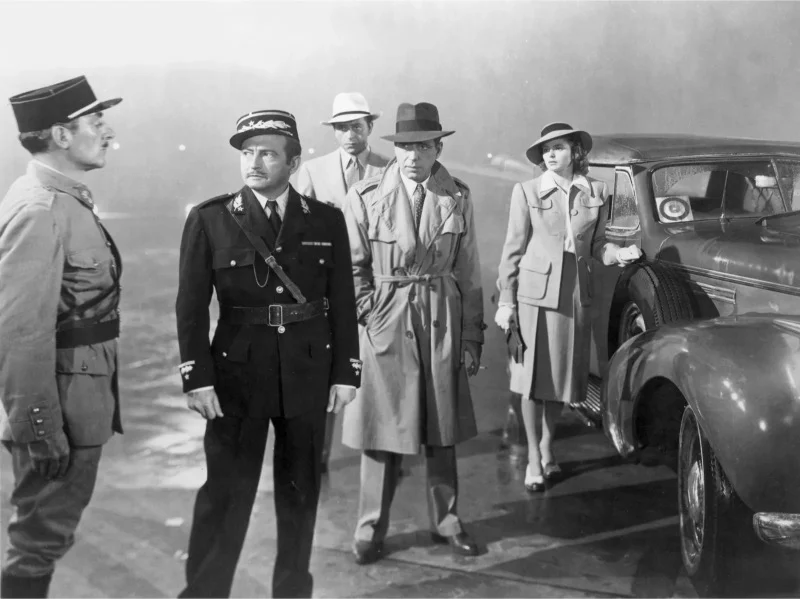
The setting places the action in Casablanca in 1941 under the French Protectorate, yet most speaking roles center on European refugees and colonial officials. Moroccan characters appear mostly as staff or background figures at Rick’s Café Américain, with little dialogue in Arabic and minimal exploration of local neighborhoods, customs, or civic life.
Production took place on Burbank soundstages with stock footage used for exteriors, which shaped the city’s presentation through European and American design choices. The film offers few scenes in which Moroccan institutions, markets, or leaders frame the plot, so the location functions primarily as a transit point for European stories.
Aged Masterfully: Narrative economy and structure
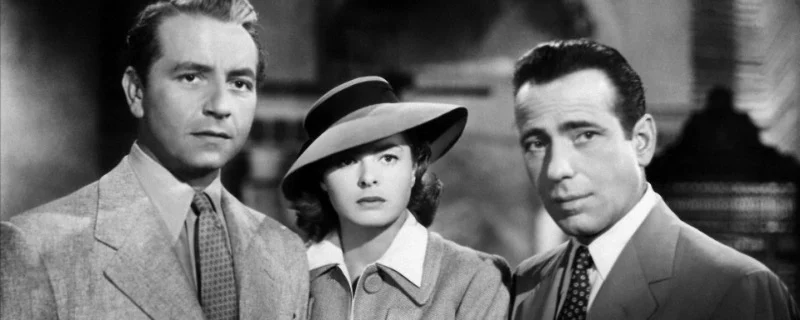
The finished film runs a compact length and moves cleanly from setup to payoff, anchored by the letters of transit that drive character choices from start to finish. The script adapts the stage play while tightening scenes into concise beats, which keeps motives and stakes legible through clear goals for Rick, Ilsa, and Laszlo.
Key reveals arrive at regular intervals, including the Paris backstory that reshapes why each character acts the way they do in Casablanca. The closing airport sequence resolves the letters of transit, the corrupt police force, and Major Strasser in one location, which demonstrates efficient plotting that many screenwriting courses still use as a case study.
Aged Poorly: Gender norms shaped by the Production Code

The Production Code restricted depictions of adultery and marital outcomes, which limited possible endings for Ilsa once the story establishes that she is Laszlo’s wife. The result places her choices inside the boundaries set by censorship rules of the period rather than solely by personal desire or complex negotiation.
Throughout the film, Ilsa’s agency is often expressed through conversations with Rick or Laszlo that must fit Code guidance on romance and duty. These constraints affect how the story articulates long term consequences for each character and narrow which options the script can place on the table in the final act.
Aged Masterfully: Dialogue that became part of everyday language
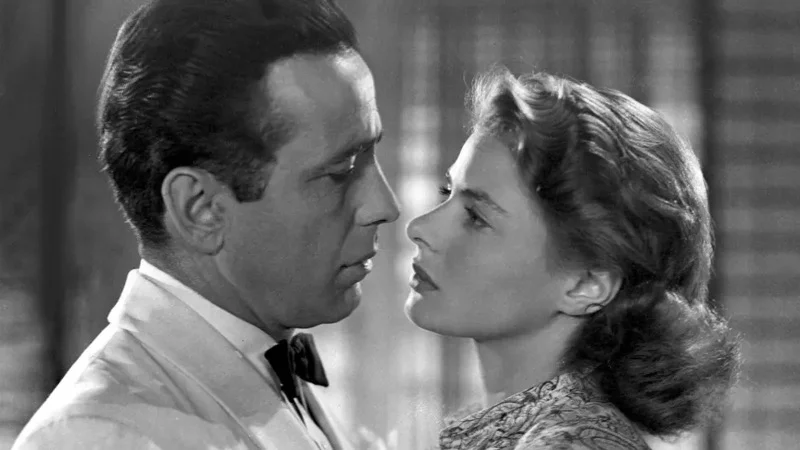
The screenplay includes lines that entered common speech and remain recognizable across generations. Phrases like here is looking at you kid and round up the usual suspects continue to circulate in headlines, sports broadcasts, and legal commentary, which shows how the script’s phrasing migrated beyond the screen.
The film also generated one of the most famous misquotations in movie history, since no character says play it again Sam. The actual lines include play it Sam and play it once Sam for old times sake, which have been cited in film reference works and language studies that track how viewers reshape memorable dialogue over time.
Aged Poorly: Colonial power dynamics in the story frame

Casablanca appears primarily through the lens of Vichy administration and European networks, with Captain Renault, German officers, and Free French supporters driving the political action. The narrative devotes most of its attention to exit visas, police raids, and refugee bottlenecks that connect European capitals, which sidelines local governance and civic institutions.
Historical context shows Morocco functioned as a French Protectorate during the period, and the script aligns its plot with that legal structure. This means the film maps tension among Vichy, Free French, and German interests while leaving anti colonial currents and Moroccan political perspectives largely offscreen.
Aged Masterfully: Performances anchored by an international ensemble
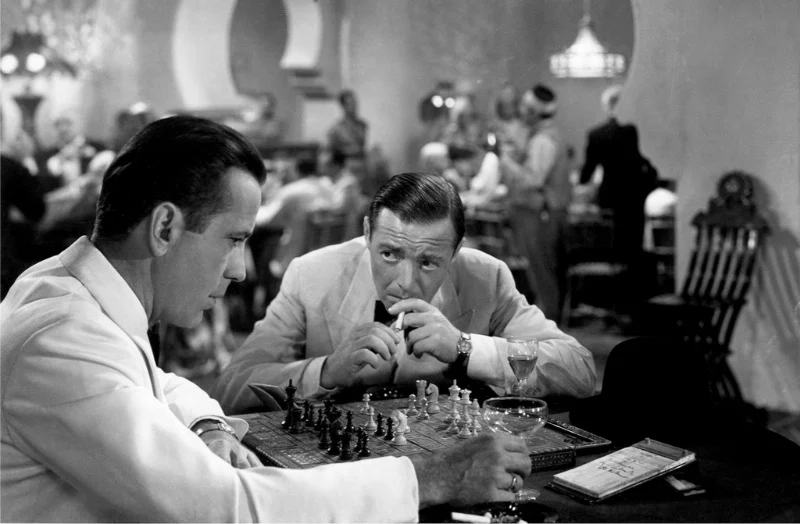
The cast includes Humphrey Bogart, Ingrid Bergman, and Claude Rains, along with many actors who had fled Nazi controlled Europe such as Conrad Veidt, Paul Henreid, Peter Lorre, S Z Sakall, and Madeleine Lebeau. Their backgrounds add documentary texture to refugee scenes and to the café’s mix of languages and accents.
Dooley Wilson, who plays Sam, was a drummer and singer who mimed the piano while a studio musician provided the actual keyboard performance. Production records and studio histories document how this combination allowed the camera to capture Wilson’s vocal phrasing while maintaining musical continuity across takes.
Aged Poorly: Studio era artifice in some visual effects and staging
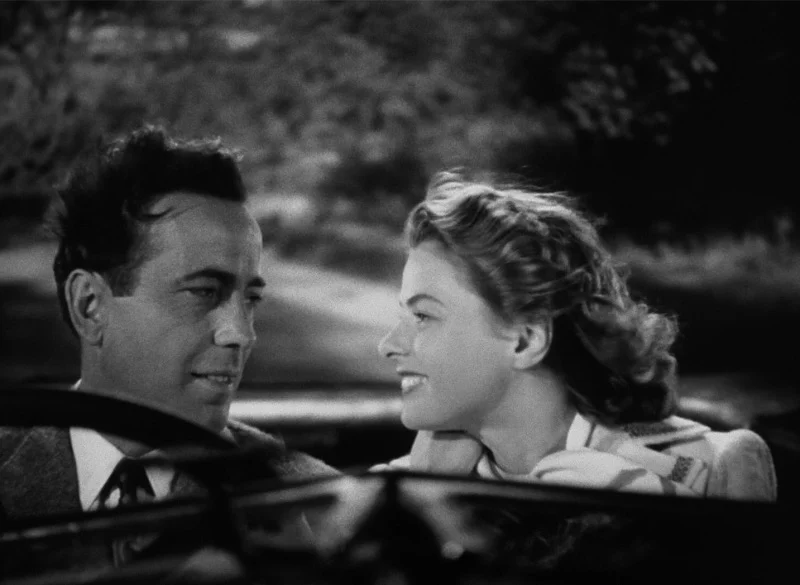
The airport finale uses a miniature aircraft and forced perspective to create depth on a small set, which can be identified by careful viewers who study background scale and fog levels. Rear projection appears in select driving shots, a common technique of the time that can look artificial on modern high resolution displays.
Soundstage work also shaped the geography of the city, since the café, police station, and marketplace were built as adjacent sets rather than distant locations. This concentrated footprint made production efficient but compresses the urban scale, which reduces a sense of travel time between major points in the story world.
Aged Masterfully: Black and white cinematography and lighting design
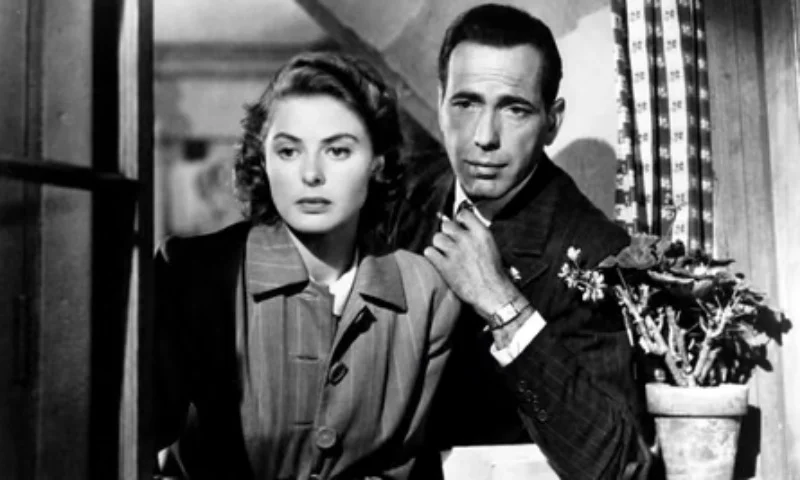
Director of photography Arthur Edeson used low key lighting and careful eye lights to shape faces and separate figures from crowded interiors. Close ups of Ingrid Bergman feature subtle diffusion and catchlights that produce consistent highlights across multiple angles while maintaining crisp detail on Bogart and Henreid.
The lighting plan supports clear sight lines in the café, with practical lamps and windows that justify motivated sources in wide shots. In the La Marseillaise scene the design guides attention from the bandstand to the crowd and then to Captain Renault, which reinforces the emotional trajectory without confusing the viewer.
Aged Poorly: Normalization of cigarette smoking and heavy drinking
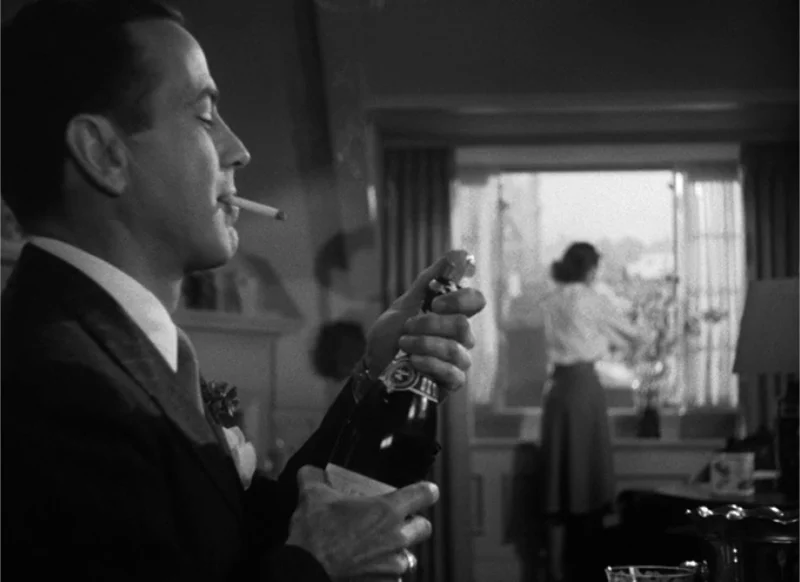
Cigarettes appear in many scenes as props for emphasis and as part of character business at the bar and gaming tables. Contemporary viewers see a level of smoking that reflects period norms and studio style, which differs from current health guidance and public space regulations in many countries.
Rick’s Café Américain is built around alcohol service, with champagne, whiskey, and brandy ordered and poured in most sequences set at night. The plot ties key decisions to drinks and bottle service, which mirrors wartime nightlife and hospitality trends rather than modern restrictions on advertising and portrayal.
Aged Masterfully: Music integration and cultural afterlife

The song As Time Goes By was written by Herman Hupfeld in 1931 and was revived for the film, after which Max Steiner wove it into the score as a recurring motif. Steiner initially planned to replace it, but the production kept it and it became identified with Rick and Ilsa, which strengthened musical continuity across scenes.
The film’s release aligned with wartime events that kept it in public view, including the Casablanca Conference held in early 1943 after the premiere. Over time the title has been used for theaters, restaurants, and film series worldwide, and its lines and images appear in advertising, political speeches, and academic coursework focused on cinema and history.
Share your take in the comments and tell us which aspects of ‘Casablanca’ you think still work today and which ones feel most dated.