5 Things About ‘Inglourious Basterds’ That Made Zero Sense and 5 Things About It That Made Perfect Sense

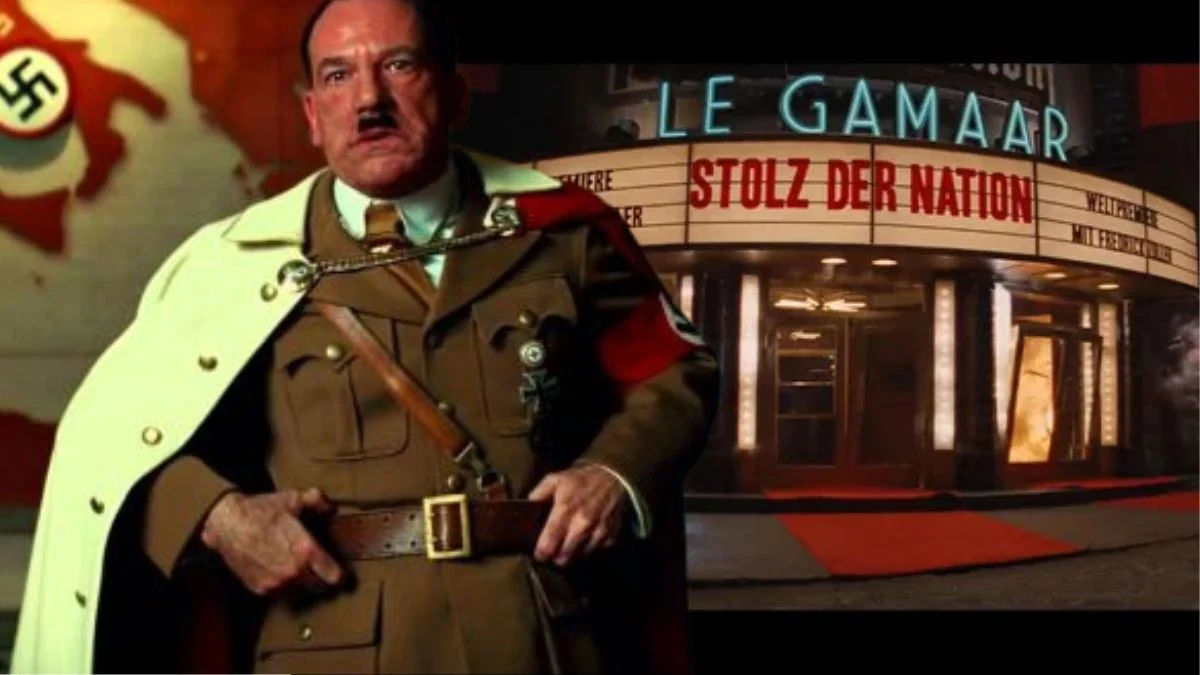

Quentin Tarantino’s war thriller plays with alternate history while mixing French, German, English, and Italian in a way most big studio films do not attempt. It puts real figures beside invented ones and sets everything inside occupied Europe with a focus on cinema, propaganda, and spycraft.
This list breaks down ten specific elements that viewers often talk about. You will see where the story steps away from recorded events and where the details line up with the period, the technology, and the tradecraft that defined the era.
Zero Sense: Hitler at the premiere
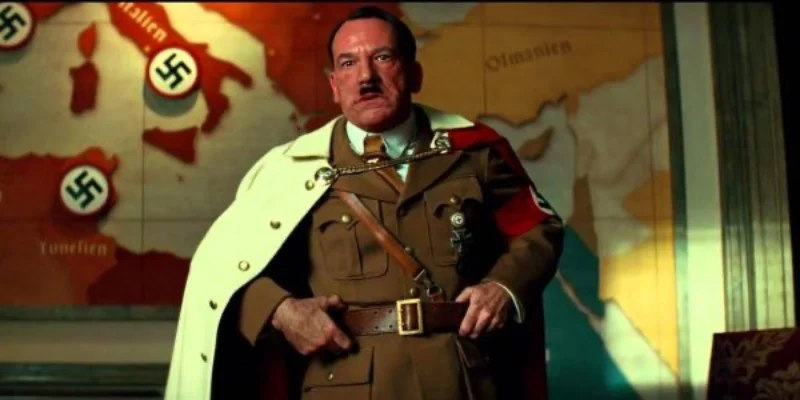
The film gathers Hitler and his top circle inside a Paris cinema for the premiere of ‘Nation’s Pride’. In reality Hitler made a brief pre dawn tour of Paris right after the city fell and did not return for public events. By the time the story takes place, Germany’s leadership moved between heavily guarded headquarters inside the Reich and avoided open venues in cities under air threat.
High command security relied on layered protection with controlled access, vetted guest lists, and hardened sites. A crowded theater in occupied territory would not match standard arrangements for the head of state and the propaganda minister, especially with Allied bombing raids and resistance activity in France late in the war.
Perfect Sense: Nitrate film burns
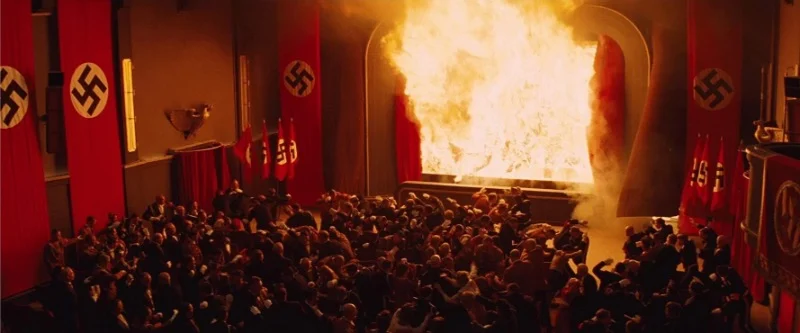
Shoshanna’s plan uses stacks of nitrate film to ignite the theater. Cellulose nitrate stock is highly flammable and releases oxygen while it burns, which means the fire can sustain itself even in low ventilation. Projection rooms in the period had fire shutters and metal magazines because nitrate fires could spread from the booth to the auditorium in seconds.
Ignition could occur from heat, friction, or a projector malfunction. Once nitrate ignites, water does little to stop it, and dense black smoke fills an enclosed space fast. Using reels as an accelerant inside a closed cinema matches how real theater fires started and why so many venues added extra precautions.
Zero Sense: The three finger tell
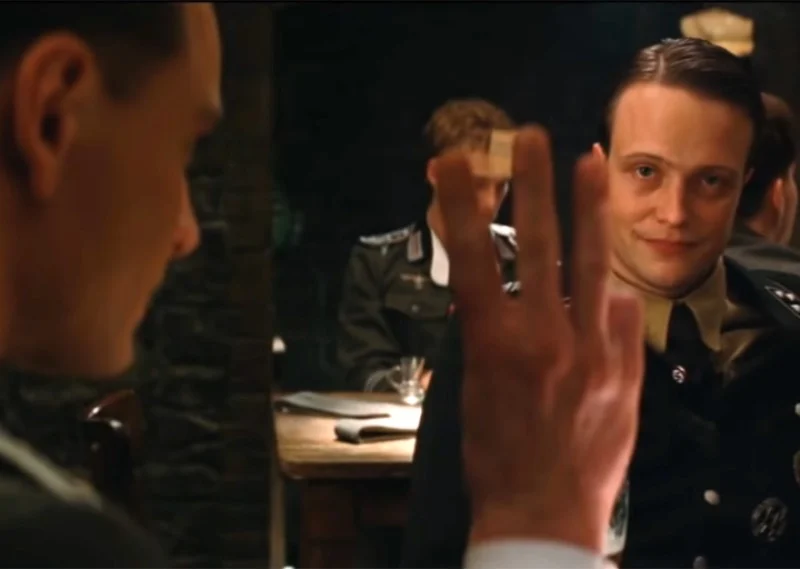
The basement bar scene turns on how Archie Hicox signals the number three with his hand. He raises his index, middle, and ring fingers, which is a common pattern in Britain. A German would typically show three with the thumb, index, and middle fingers, and Major Hellstrom notices the mismatch at once.
Gestures and counting customs vary by region and are easy markers for origin when a person is under close scrutiny. In a wartime setting where counterintelligence watches for small slips, that signal reads as a clear giveaway that conflicts with the cover identity the team presents.
Perfect Sense: Dialect as a security check
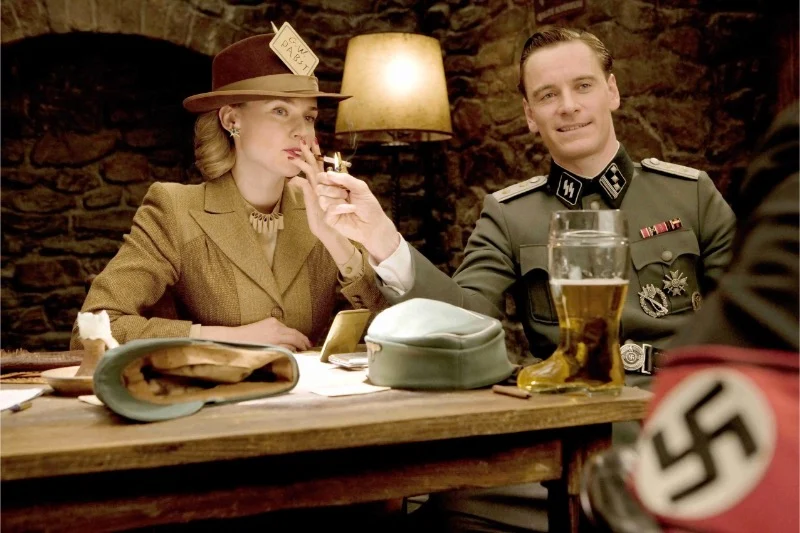
German officers in the story listen for dialect and register, then probe with casual conversation to test a suspect’s background. That reflects real practice. Linguistic cues such as vowel length, consonant clusters, and local idioms can place a speaker within a region or social class. Security services and field police used these signals to spot impostors.
The bar interrogation shows layered tests that start friendly and narrow to precise points of grammar and pronunciation. Paired with local trivia and unit lore, these checks produce a profile that either fits the claimed identity or exposes a false one. That method mirrors how quick field assessments worked.
Zero Sense: A cinema under a false name
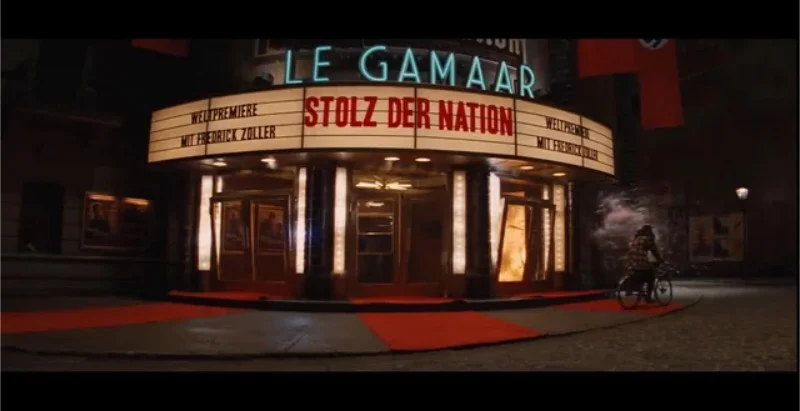
Shoshanna lives in Paris under the name Emmanuelle Mimieux and operates a theater open to the public. Daily life under occupation required identity papers, ration cards, and work permits, and spot checks were common. Operating a licensed cinema also placed a person in regular contact with municipal offices and police.
Film exhibition fell under the German Propaganda office and French administrative oversight. The owner of a venue handled permits, inspections, and film allocations. A Jewish escapee maintaining a public facing business across months without sustained background verification conflicts with how documents and surveillance operated in the city.
Perfect Sense: Propaganda machine on screen
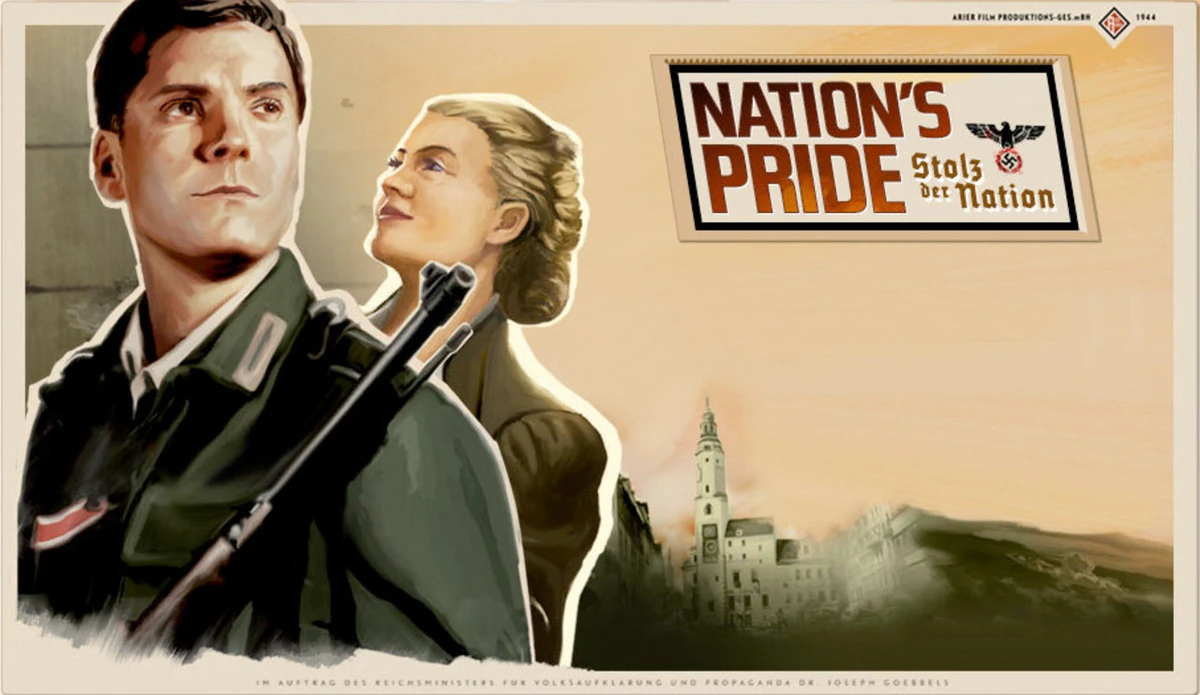
‘Nation’s Pride’ fits the propaganda model the ministry pushed. The story of a decorated sniper framed as national hero lines up with how newsreels and features elevated individual soldiers to boost morale and shape public perception. The film within the film shows applause cues, hero shots, and battlefield montage that were standard tools.
Premieres were political events with uniforms, speeches, and enlisted guests used as living symbols. Germany controlled production and distribution and also used French cinemas for approved programming. The atmosphere in the theater and the official guest list reflect that culture of staged celebration tied to the war effort.
Zero Sense: The basement rendezvous
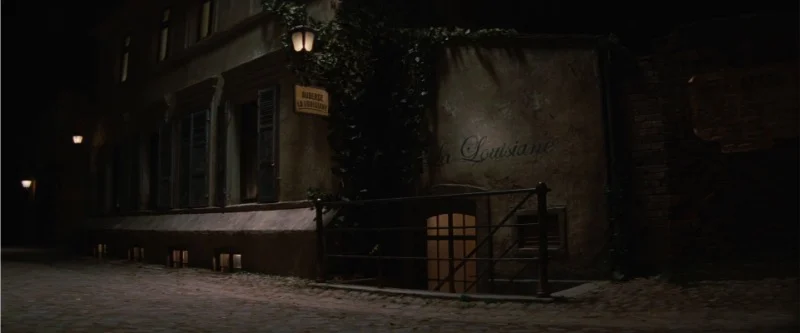
The resistance meeting and Allied liaison take place in a basement tavern packed with soldiers. A single exit, heavy noise, and unpredictable foot traffic raise the chance of compromise. The setting makes surveillance easy for anyone already inside and limits escape options if a search begins.
Resistance tradecraft favored private safe houses, short meetings, and multiple exit routes. Public spaces were used for brush passes and brief exchanges, not long briefings. Choosing a crowded basement for a sensitive meeting runs against basic guidance for clandestine work in a city under occupation.
Perfect Sense: Languages used as tactics
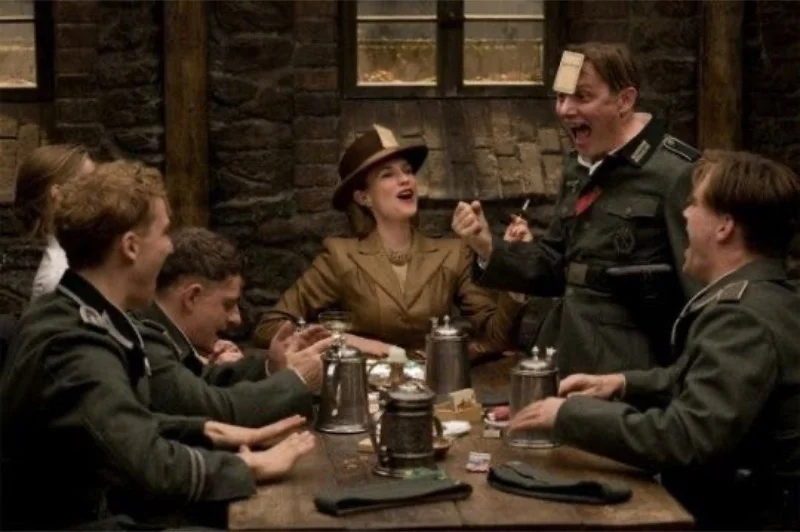
The opening chapter shows Hans Landa switching languages to control who understands the conversation. He speaks polite French to build trust, then moves to English so the people hiding below the floor are less likely to follow the discussion. Language choice becomes a tactical tool, not just a stylistic flourish.
Throughout the story characters gain or lose advantage based on fluency, accent, and code switching. That reflects real conditions in occupied Europe where multilingual communities, border dialects, and migrant workers created both opportunities and risks for intelligence work. The script uses that reality to drive plot turns.
Zero Sense: Landa’s field deal
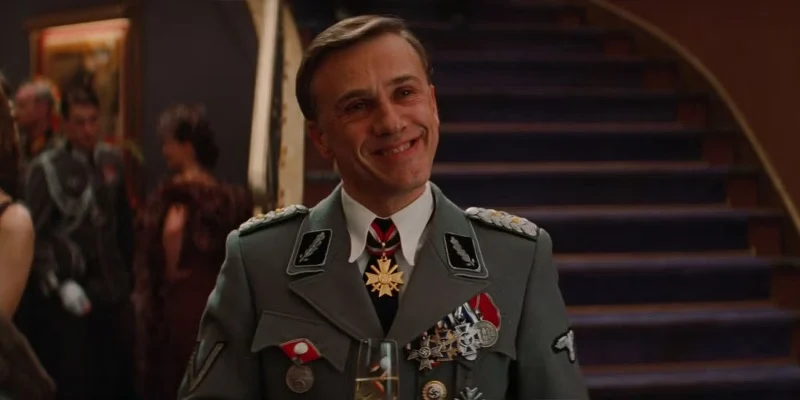
Landa negotiates personal immunity, a new identity, and property in exchange for allowing the plan to proceed and arranging a surrender. Field officers could open talks, but only senior political and military authorities granted safe conduct and legal protection. Blanket guarantees from an ad hoc radio call sit outside normal procedure.
Allied policy toward ranking Nazi officials included arrest, interrogation, and potential prosecution for crimes. Special cases existed, but they moved through authorized channels with documentation and oversight. A self negotiated package that includes freedom from prosecution and a comfortable resettlement does not align with standard practice.
Perfect Sense: Period kit and props
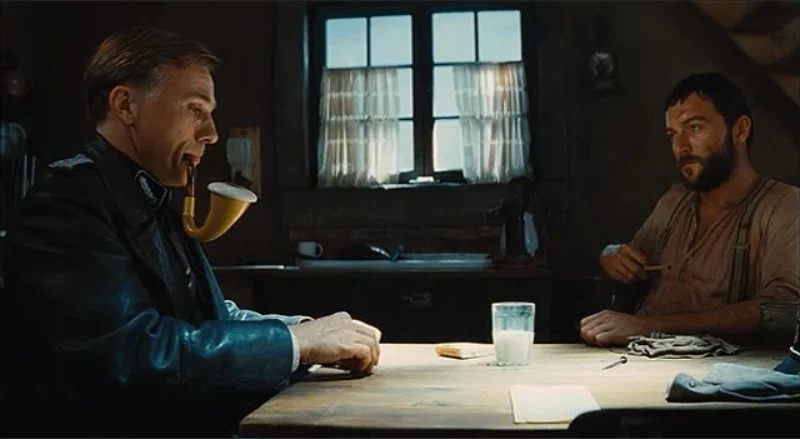
Weapons and kit on both sides match common issue. German personnel carry MP 40 submachine guns and Karabiner 98k rifles, and officers use Walther sidearms. American forces use the Thompson submachine gun and other service weapons that were widely issued in European operations. Those choices align with unit type and theater.
Uniform details also track with the period. You see field gray tunics, branch insignia, service caps, and armbands that reflect organizational structure. Rank tabs, eagles, and shoulder boards appear in the right places, which helps viewers read who holds authority and how that authority moves within the story world.
Share your own picks from ‘Inglourious Basterds’ in the comments and tell us which moments felt confusing and which details landed perfectly.