5 Ways ‘Blade Runner’ Aged Poorly (& 5 Ways It Aged Masterfully)

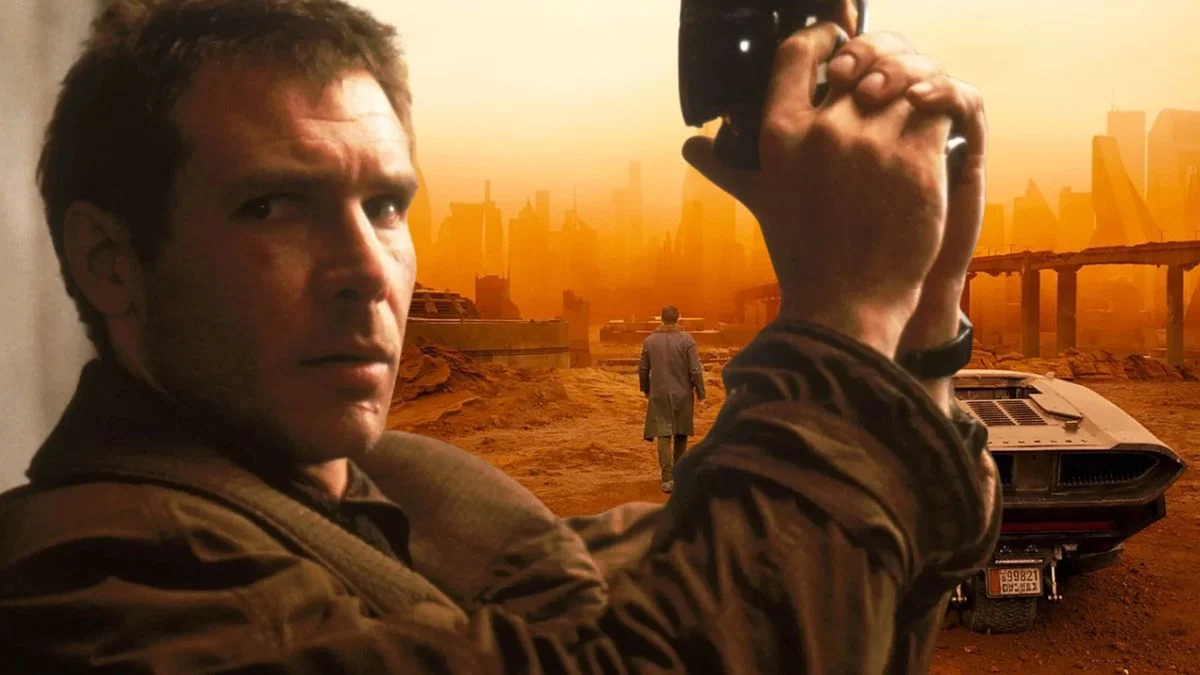

Released in 1982 and directed by Ridley Scott, ‘Blade Runner’ imagines Los Angeles in 2019 with bioengineered replicants, flying cars, and a city of towering pyramids and neon. The film evolved through several versions, including the 1982 theatrical cut, the 1992 release that removed narration, and the 2007 Final Cut supervised by the director. Its look came from futurist Syd Mead and a team that fused practical effects with intricate production design.
How it holds up today reaches beyond surface style. Time reveals where forecasts missed and where ideas, craft, and influence kept paying off. The entries below outline concrete elements that faltered and others that continue to inform technology debates, visual design, and science fiction storytelling.
Aged Poorly: Near future tech and brand forecasts
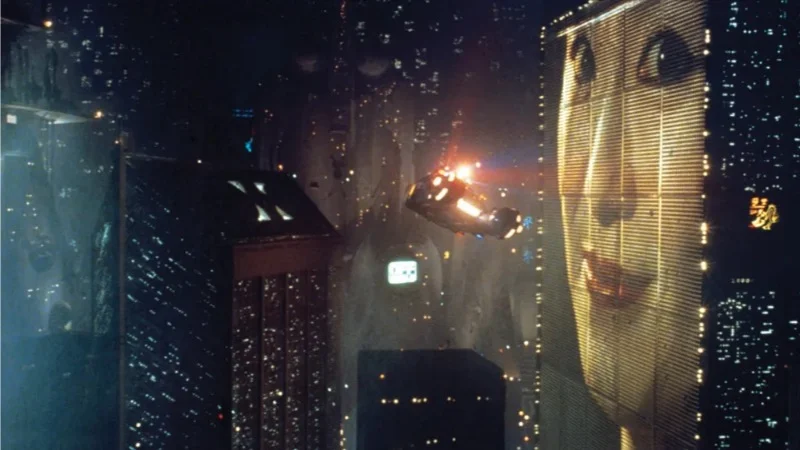
The film’s 2019 features public pay phones, CRT screens, and analog photo enhancement rather than small personal devices and always connected networks. It places mass advertising for companies such as Atari, Pan Am, and Bell in the skyline, yet several of those brands either shrank or disappeared long before the real 2019. Its city shows giant video billboards and geisha imagery but omits everyday smartphones and broadband use that define modern urban life.
Key world details also diverge from later reality. Off world colonies and routine flying cars are presented as established infrastructure, while interplanetary civilian travel did not exist in that year. Police computers read like standalone terminals, and the Esper device magnifies a physical print rather than a digital file, which reflects a different trajectory from actual imaging and data systems.
Aged Masterfully: Production design and worldbuilding
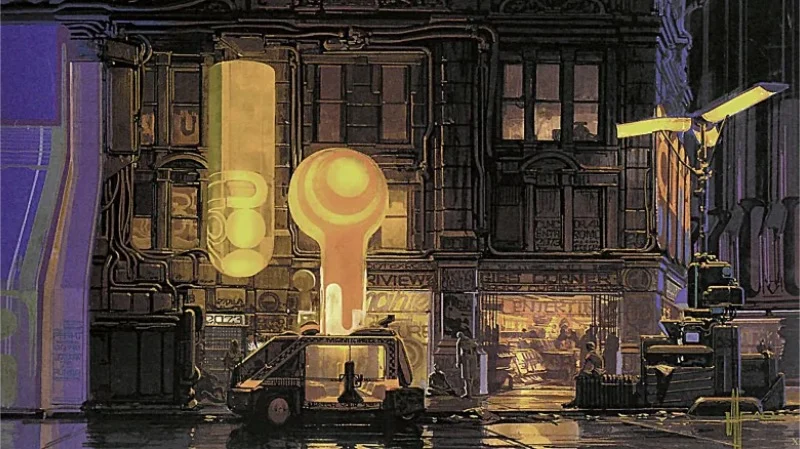
Syd Mead, Lawrence G. Paull, and David Snyder built a layered city that mixes retrofitted buildings, industrial grime, and dense signage to visualize social stratification. Miniatures of the Tyrell pyramids and the surrounding skyline were photographed with controlled lighting and combined through optical work to create believable scale and depth.
Interiors such as the Bradbury Building and large soundstage sets used practical rain, smoke, and reflective materials to sell mass and texture. The approach gave the environments a physical presence that continues to guide how films and games depict dense future cities, from storefront clutter to rooftop silhouettes.
Aged Poorly: Gender portrayal and power dynamics
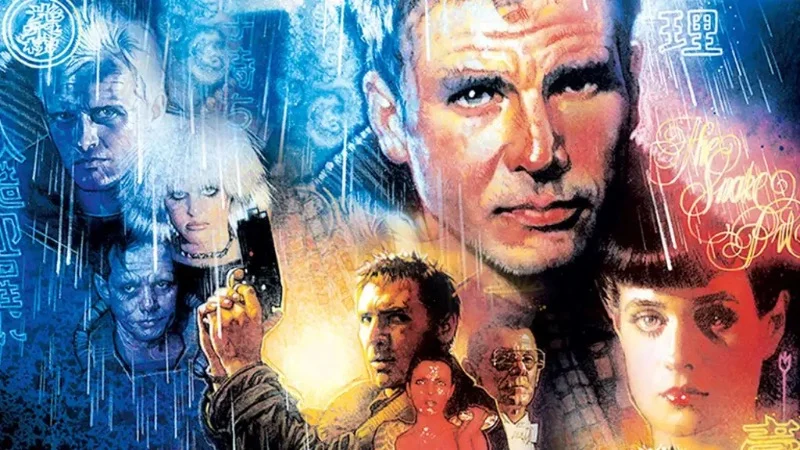
The plot follows a male investigator while the primary women on screen are Rachael, Pris, and Zhora, who enter the story as targets or as someone evaluated for identity. Their arcs remain tied to his assignments and decisions, and the narrative positions their key scenes within pursuit, interrogation, and confrontation.
An apartment sequence shows the lead blocking a door and instructing Rachael to stay and repeat lines while he initiates a kiss. The film does not provide parallel moments in which she sets terms or holds institutional authority, and the structure of these scenes reflects common patterns in early 1980s thrillers where male leads drive intimate encounters.
Aged Masterfully: AI ethics, empathy tests, and memory
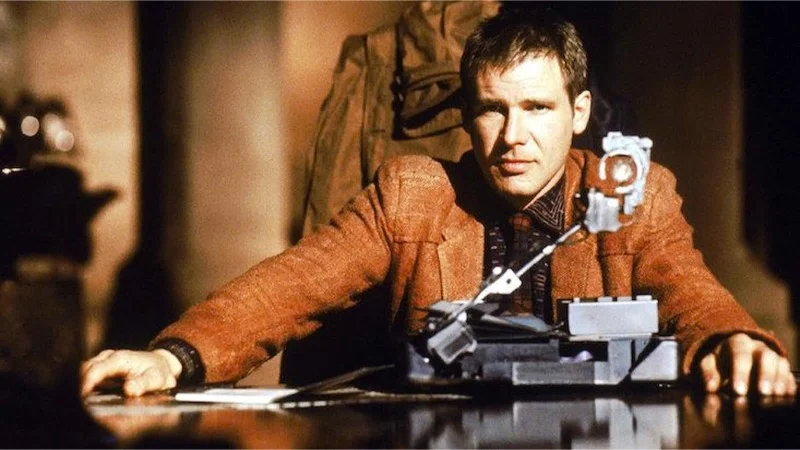
The Voight Kampff procedure uses physiological responses and pupil reactions to screen for replicants and frames empathy as a working threshold for personhood. The story centers on limited life spans and the search for extended longevity, which keeps mortality, consent, and autonomy in focus rather than only action beats.
Implanted memories appear through Rachael, who trusts photographs and childhood recollections that were engineered. These plot devices map cleanly to modern topics in AI and bioengineering, including tests for sentience, alignment of goals, and the reliability of personal data and records.
Aged Poorly: Narrative pace for contemporary viewing habits
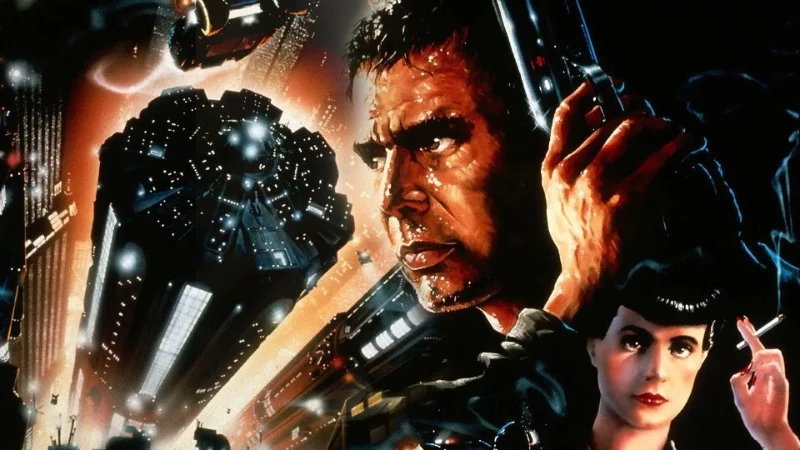
Large portions of the film unfold through long establishing shots, quiet surveillance, and slow investigative steps rather than rapid cross cutting. The Esper photo analysis proceeds in small moves over several minutes as the protagonist issues commands and reviews incremental changes, which reflects a patient investigative style.
Theatrical runtimes vary by version, yet each leans on ambient city noise and visual detail to carry stretches without explanatory dialogue. Audiences who regularly watch short clips and fast cut action sequences encounter a different cadence here, which makes the storytelling rhythm stand apart from many current studio releases.
Aged Masterfully: Practical visual effects that scale to modern formats
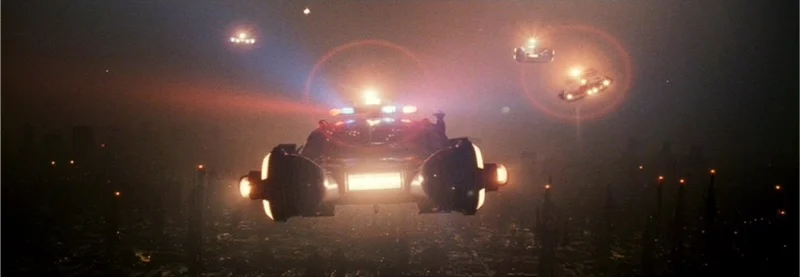
Douglas Trumbull and Richard Yuricich staged miniature photography and optical compositing to place Spinner vehicles and city canyons on screen without digital tools. Multiple passes for signage, rain, and atmospheric elements were layered to keep grain and motion blur consistent, which helps shots read as single in camera moments.
High resolution remasters preserve the texture of building surfaces, neon reflections, and weather effects because the source elements were captured with real light. The result is that flyovers, rooftop chases, and streetscapes maintain clarity on modern displays, and the physical models continue to feel weighty and present.
Aged Poorly: Scientific timelines and the urban environment
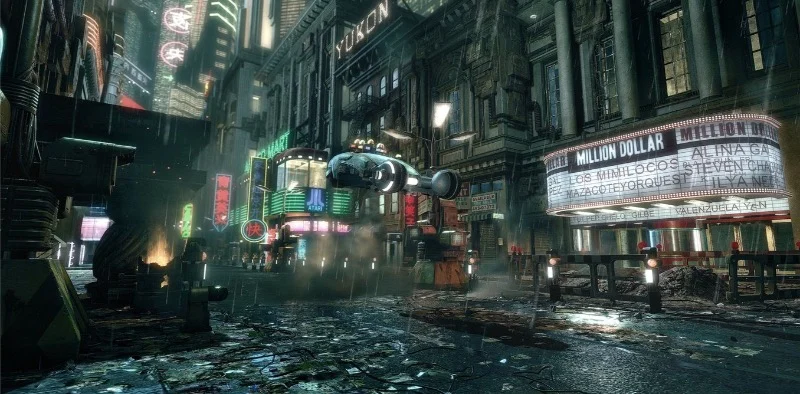
Within the story’s timeline, Nexus 6 replicants operate off world and return to Earth by 2019, which implies advanced bioengineering and regular interplanetary travel by that date. In the real 2019, civilian spaceflight was limited and humanlike engineered workers with comparable capabilities were not part of daily life.
The film shows nearly constant rain, heavy smog, and crowded markets packed with multilingual signage. While smog events are part of Los Angeles history, persistent precipitation functions as a stylistic choice rather than a representation of typical local weather. These environmental details signal a mood rather than a forecast that came to pass.
Aged Masterfully: Cultural influence across film, TV, and games
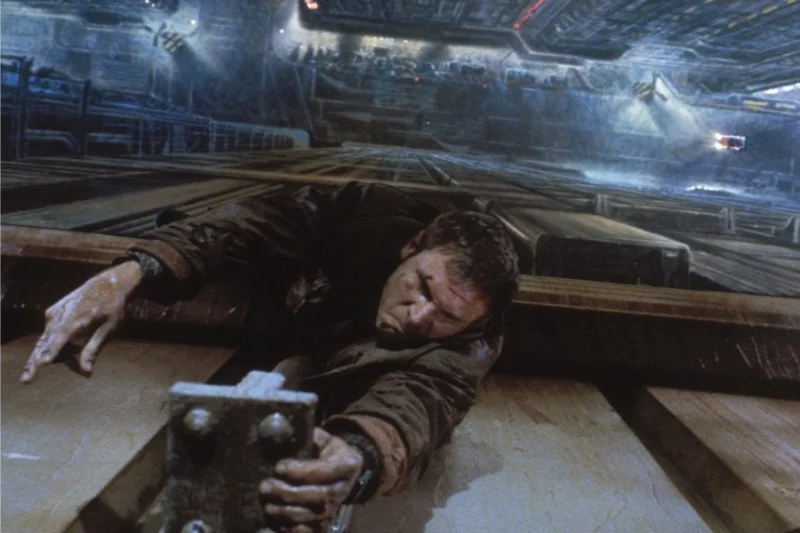
The movie’s imagery and city grammar informed later works such as ‘Ghost in the Shell’, ‘Akira’, ‘The Matrix’, ‘Minority Report’, and ‘Altered Carbon’. Production teams frequently cite the stacked signs, street level steam, and monolithic corporate towers when designing near future settings.
Game and animation art often reuses Spinner like silhouettes, rain slick streets, and retrofit architecture that echo the 1982 film’s vocabulary. Film and design courses continue to teach its sets and effects as case studies, which keeps its methods and visual strategies in active circulation for new creators.
Aged Poorly: Cut history, narration, and release confusion
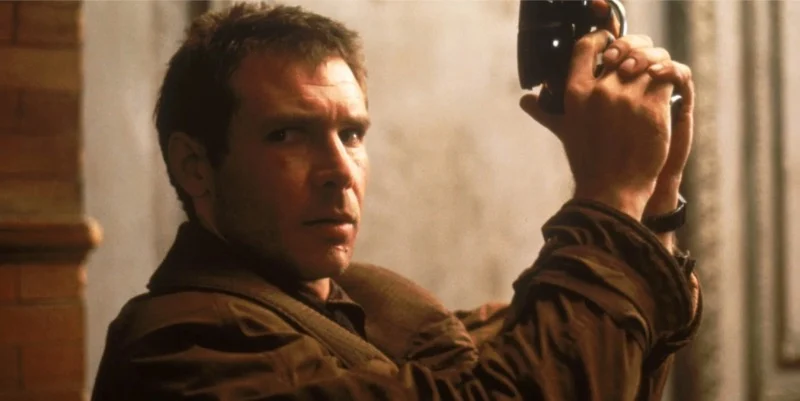
The 1982 theatrical version included a voiceover and an ending assembled with aerial footage from ‘The Shining’. A 1992 release removed the narration and added the unicorn daydream, and the 2007 Final Cut applied corrections and became the only version finished entirely under the director’s supervision.
Multiple widely available cuts mean that first viewings differed for audiences who encountered the film in different years. Physical media and streaming menus list several editions, which can make it harder to identify a single canonical version without referencing the release history.
Aged Masterfully: Sequel continuity and world expansion
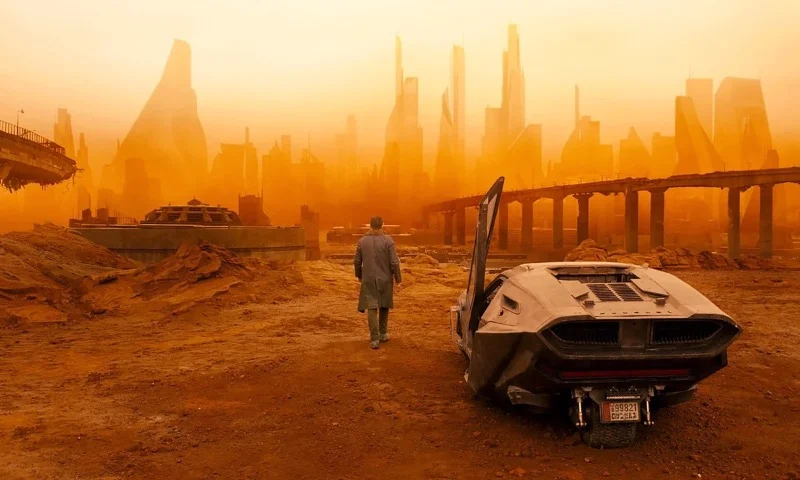
‘Blade Runner 2049’ arrived in 2017 with Denis Villeneuve directing, Ryan Gosling starring, and Harrison Ford returning as Deckard. The story moves forward three decades while keeping key visual markers such as Spinner vehicles, giant projections, and vast corporate structures that tie back to the 1982 film.
The sequel deepens the treatment of implanted memories and replicant status, maintains names and institutions from the original, and aligns production design across both films. This continuation shows that the original world supports new plots and characters without discarding its established rules or look.
Share your own take on what held up and what did not in the comments.