5 Things About ‘Twin Peaks’ That Made Zero Sense and 5 Things About It That Made Perfect Sense

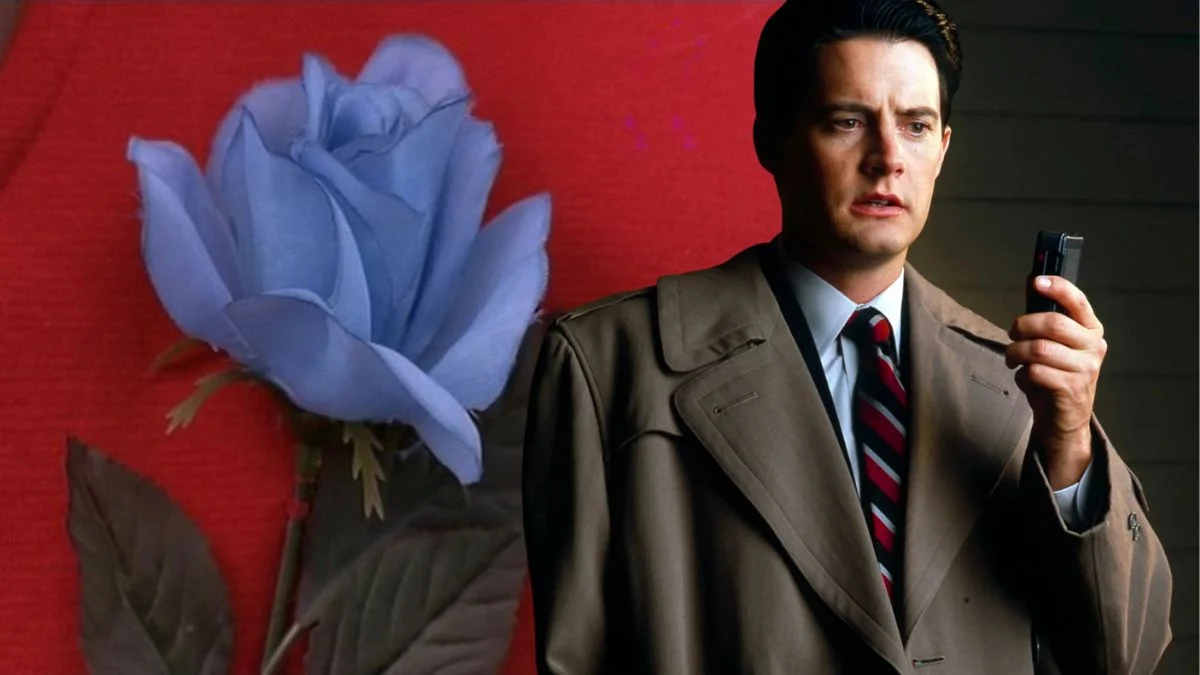

The world of ‘Twin Peaks’ blends crime drama with otherworldly horror, which means some details land with crisp clarity while others feel like a riddle that never stops shifting. Viewers meet a small town full of secrets, then find a story that reaches into dreams, alternate spaces, and a haunting past that never seems to stay buried. The show moves from a grounded investigation to a mythic struggle that touches many lives across decades.
Across its seasons and related film, the series adds rules, symbols, and timelines that invite close reading. Some parts build a strong internal logic that keeps paying off, while others contradict earlier information or leave outcomes unclear. Here are five moments that made zero sense and five that made perfect sense, presented in a simple back and forth.
Zero Sense: Shifting rules of the Black Lodge
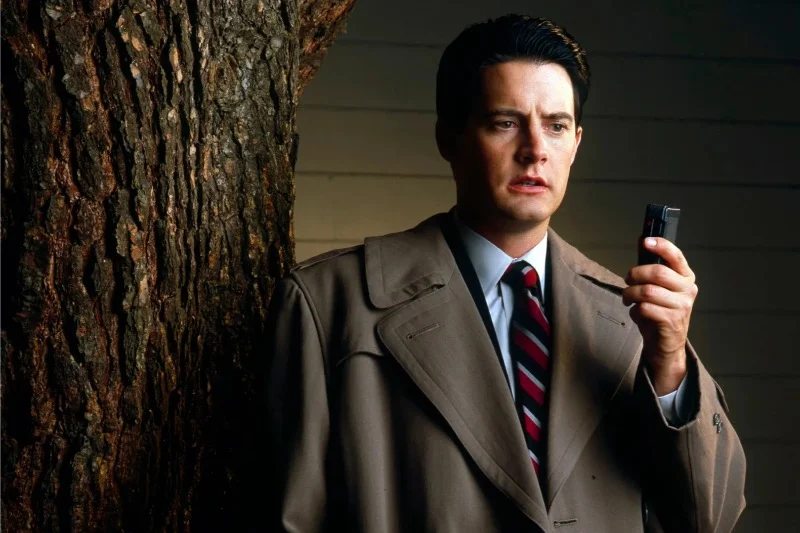
The Black Lodge is presented as a place with specific rules, yet those rules change when the story needs to move. Possession by BOB is linked to a host who either invites or becomes vulnerable, then the show implies that a possessed host can be replaced by a double while the original is trapped. The early explanation frames the Lodge as a moral test, but the later portrayal treats it as a transit station that lets different versions of people pass through without stable criteria.
Agent Cooper leaves the Lodge at the end of the original run while his double escapes, which sets up a twenty five year gap where the rules of exit and entry should be clear. When the story returns, entry can be achieved through curtains in a room, through a glass box in a city, or through a portal in the woods, and each route follows different triggers. The lack of a consistent mechanism makes it hard to track who can cross, who pays a price, and how time moves inside or outside the Lodge.
Perfect Sense: The murder mystery as a town wide X ray
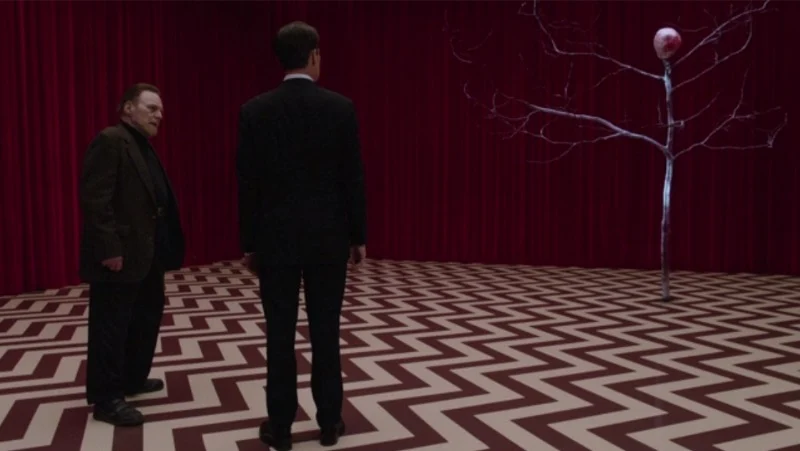
The Laura Palmer case functions as an engine that exposes the hidden life of a community. The investigation reaches the lumber mill, the high school, the diner, and the sheriff’s station, which lets the story map how money, romance, and addiction connect. Each location yields evidence that ties characters together in a network, and those links give the case a steady path from clues to suspects to a final reveal within the town.
This structure explains why the show can pause for scenes that seem small at first. A diary page, a necklace, a safe deposit slip, and a bloody shirt move the plot while also revealing how adults and teens share spaces and secrets. The case becomes a record of how the town manages grief and guilt, so the detective work always leads back to everyday places that hold what everyone tried to hide.
Zero Sense: Audrey’s isolated storyline in ‘Twin Peaks: The Return’
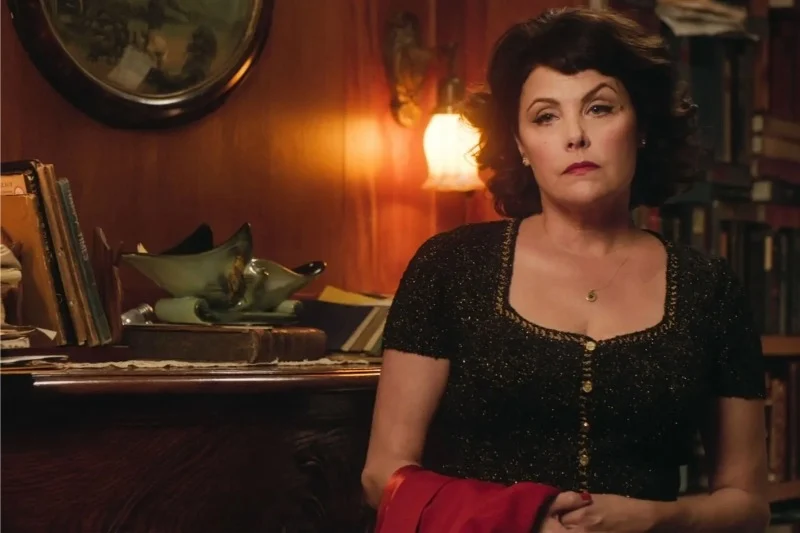
Audrey Horne appears in a run of scenes that do not connect to the main plot until a cut that ends her arc without context. She speaks with Charlie about starting the night, then stalls for reasons that are never explained, and her scenes do not share sets or supporting characters with the federal investigation or the town’s new events. When Audrey finally dances at the Roadhouse, the sequence breaks and she wakes in a white room, which provides no timeline or bridge to her earlier life.
The lack of anchors makes it impossible to place these scenes within the shared reality of the season. Other characters who return receive markers that tie them to known locations and dates, while Audrey’s thread uses private spaces and a closed loop of dialogue that never points outward. The result is a character who feels removed from the calendar of events, so viewers cannot confirm where she has been or what happened after the cut.
Perfect Sense: Laura Palmer as the fixed center of the story

Laura remains the focus across the series and the film ‘Twin Peaks: Fire Walk with Me’. The film details the week leading to her death and shows how abuse, addiction, and fear shape her choices, which turns the mystery from a puzzle into a portrait. This information deepens the early clues from the show and aligns each clue with a pattern of control and secrecy in her home and social circle.
The later season keeps Laura at the core even when the plot jumps to new states and times. Characters speak about her as a force that matters beyond the town, and the story returns to her image and her voice in key moments. This consistent gravity explains why new cases and new villains still point back to the original victim, since the series treats her life as the key that unlocks every door.
Zero Sense: Time shifts in the finale of ‘Twin Peaks: The Return’
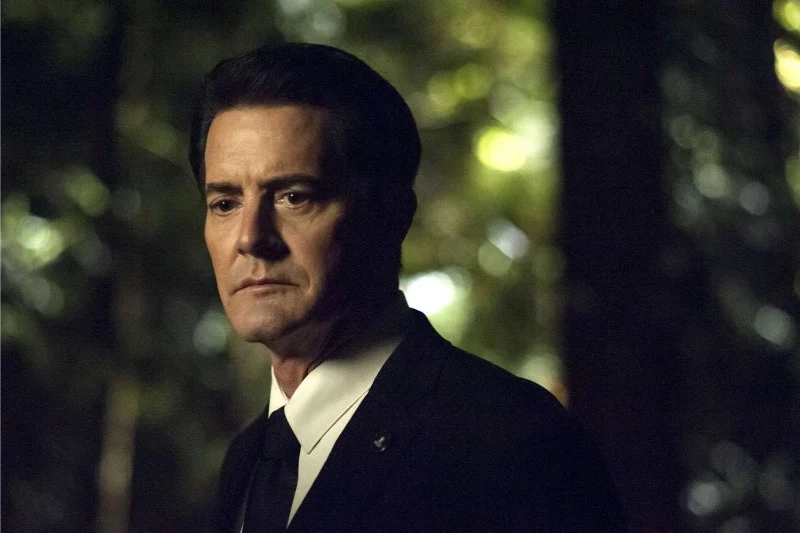
Agent Cooper attempts to change the night of Laura’s death, then finds that the world does not settle into a clear new path. He leads Laura through the woods, she vanishes with a scream, and the town appears to bear both the old memory and the new absence. Odessa appears as a possible new setting, yet names, addresses, and family histories do not align with earlier records.
The final trip to the Palmer house creates more conflict with prior dates and identities. The woman who answers the door carries a different name and ownership record, which implies a change in history that removed the family, yet Cooper and Laura still find each other on the street. Without a stable rule for cause and effect, the timeline reads as overlapping layers that never form a single corrected version.
Perfect Sense: Dream logic as an organizing method
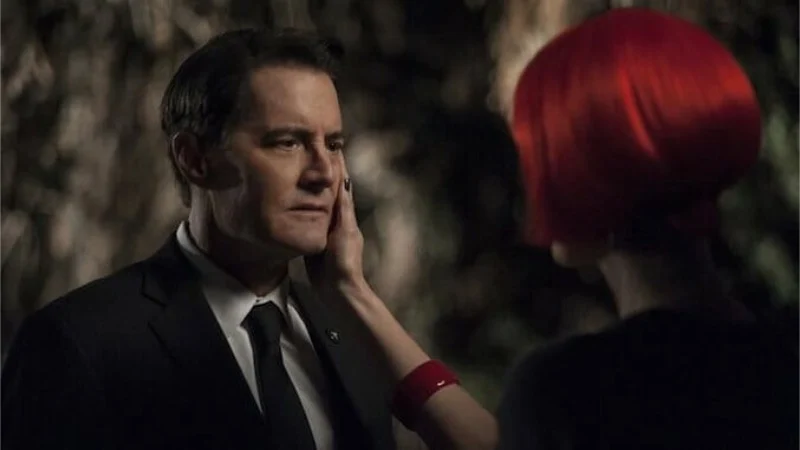
The series uses dream logic in a repeatable way that viewers can track. Clues arrive in dreams, music guides action, and symbolic rooms hold conversations that later prove literal in the waking world. The Red Room, the chevron floor, and the repeating hand gestures act as signals that the scene follows dream rules, which allows dialogue to move by image and rhythm before matching up with evidence later on.
Electricity, static, and recorded sound carry messages across distance, which gives the dream system a material channel. Tape recorders, intercoms, phone lines, and humming lights guide characters to the next step, and the same signals appear during Lodge scenes. When the same images repeat across dreams and reality, the show builds a single method for how information travels, so the surreal material does not float away from the case work.
Zero Sense: The Owl Cave ring and its changing effects
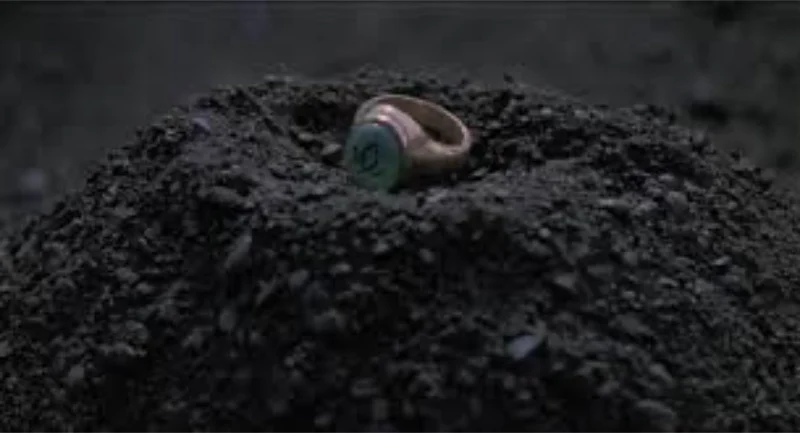
The ring appears in ‘Twin Peaks: Fire Walk with Me’ as an object that marks a wearer and alters fate, then later seems to protect or endanger different people without a consistent rule. One character dies after contact, another vanishes from a jail cell, and another returns to a room after a death that should be final. The same object triggers opposite outcomes, which breaks the idea that a talisman should behave in one way.
Chain of custody also changes without a full account of how the ring moves. It sits in a trailer park, appears in a Lodge related space, and then rests on a finger in a morgue, yet the path between these places is never shown. When a tool can jump locations and flip effects, it becomes hard to use it to predict risk or safety for any character who wears it.
Perfect Sense: Music as story structure
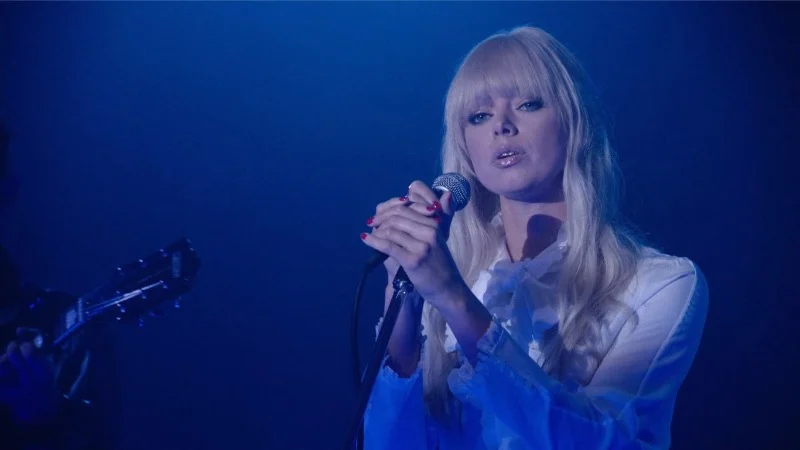
Angelo Badalamenti’s themes set emotional cues that the plot follows scene to scene. Laura’s theme cycles through quiet chords into a swell that marks discovery and grief, and that pattern matches the steps of the investigation. Jazz cues for the diner, the Great Northern, and the Sheriff’s station return with enough regularity to tell the viewer what kind of scene is about to unfold.
In ‘Twin Peaks: The Return’ the Roadhouse performances serve as chapter markers. Episodes end with full songs that close threads or hint at the next set of events through placement of cast members in the crowd. This regular musical frame keeps the season organized while other parts move in time and space, which helps the audience track progress even when dialogue grows sparse.
Zero Sense: Character ages and calendar mismatches
Dates tied to the original investigation sit near the end of one school year, but later references do not always align with school calendars or birthdays that were noted earlier. Timelines that count twenty five years do not match the real world gap in every scene, and some characters appear to have advanced in career or family status at different speeds than their classmates. These shifts create gaps between records and on screen presentation.
Documents shown on screen add more friction. Entries in a diary, a hospital chart, or a traffic report point to precise days, then a later scene places the same event on a different day with no on screen correction. When records change without a narrative reason, the timeline loses its reliability, which affects how viewers weigh alibis and travel times during key sequences.
Perfect Sense: The Blue Rose framework and federal procedure

The show builds a clear bridge between small town policing and a federal unit that studies unusual cases. Gordon Cole and Albert Rosenfield bring lab work, chain of custody, and interview standards that show how the station gathers and preserves evidence. Their methods explain why certain clues travel to federal offices and then return with lab results that push the case forward.
Project Blue Book mentions and the Blue Rose label provide a way to file events that exceed normal rules. This gives the team a reason to track symbols, dreams, and cross state patterns with the same care they use for physical evidence. When the investigation reaches Lodge related material, the Blue Rose framework keeps the work within a documented system, which allows the story to treat the uncanny as part of a real case file.
Share your own picks for what made zero sense and what made perfect sense in the comments.