10 Best Episodes of ‘Sherlock’

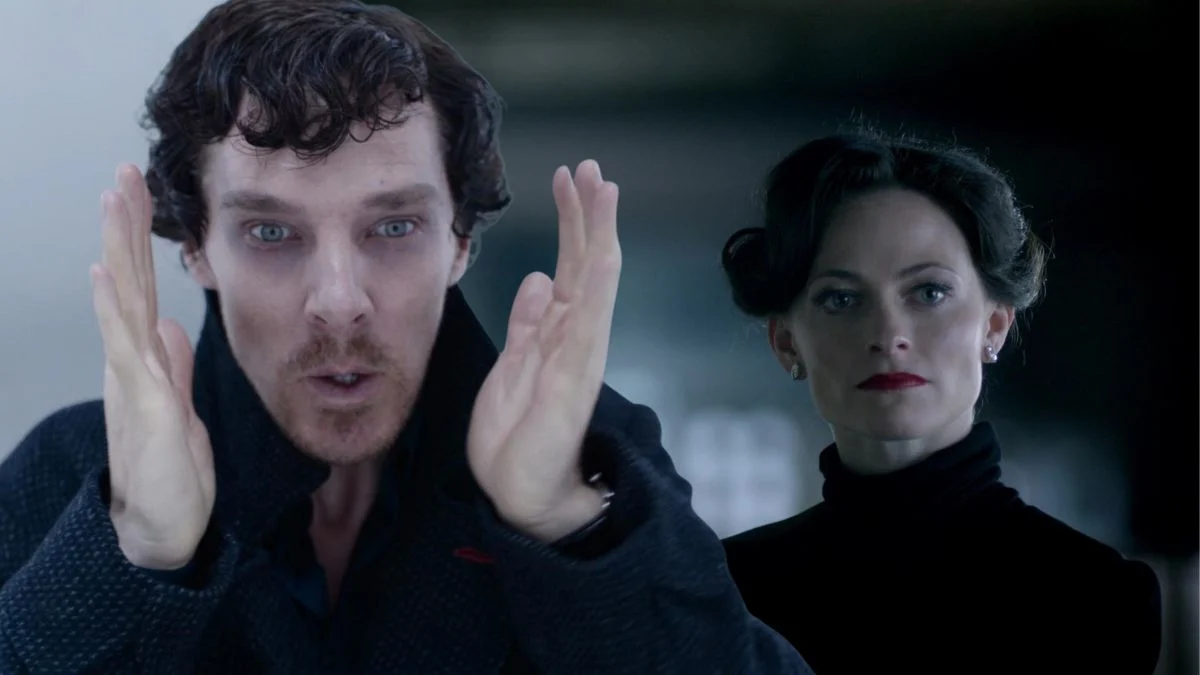

Tight mysteries, playful deductions, and bold reinventions of Arthur Conan Doyle’s stories turned ‘Sherlock’ into event television. Each feature length case blends modern forensics with classic sleuthing, then anchors it all with the partnership between Sherlock Holmes and John Watson in contemporary London.
Across four series and a special, the show built serialized arcs around nemeses, family secrets, and government intrigue while still delivering complete stand alone cases. Below are ten standout episodes that showcase major plot turns, smart adaptation choices, memorable guest performances, and important milestones in the lives of the characters.
A Study in Pink
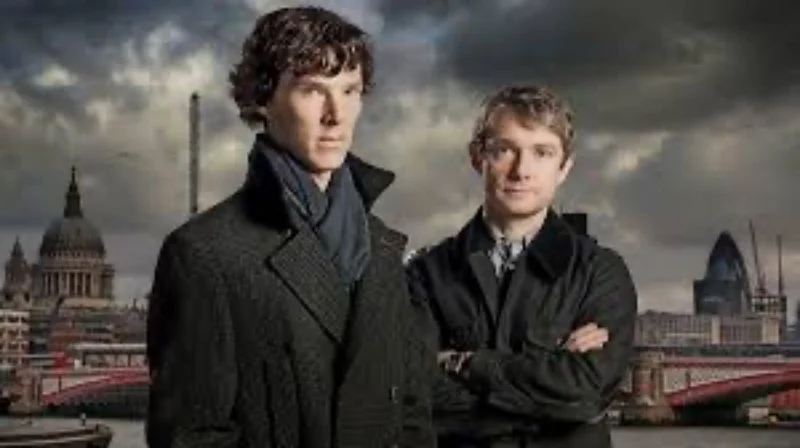
This opener introduces Sherlock as a consulting detective and John as an army doctor newly back in London. The case focuses on a string of apparent suicides that share the same telltale details, leading the pair to a cab driver named Jeff Hope who forces victims to play a deadly game. Viewers meet key figures who become series mainstays, including Mrs Hudson, DI Lestrade, and Mycroft Holmes.
Production began with a different unaired pilot before this version set the show’s visual grammar with text on screen, rapid montages, and sharp location work around North Gower Street for 221B and St Bartholomew’s Hospital. The episode takes its name and core idea from A Study in Scarlet while changing the motive and method to fit the modern setting.
The Great Game
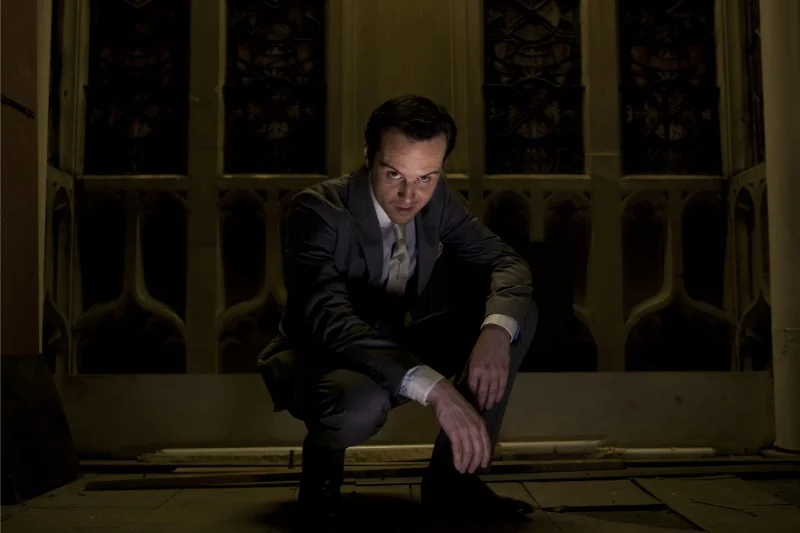
Sherlock receives a series of bomb threats that force him to solve multiple mini cases against the clock. The investigations range from a vanished security guard to a museum theft and gradually point to the mastermind orchestrating the puzzles. The final scene reveals Jim Moriarty at a swimming pool and sets up a life or death cliffhanger.
The structure stitches several Conan Doyle tales into one pressure cooker narrative and introduces the show’s signature red laser vest device. Andrew Scott’s first full appearance as Moriarty establishes the adversary who drives the overarching conflict through the next run of stories.
A Scandal in Belgravia
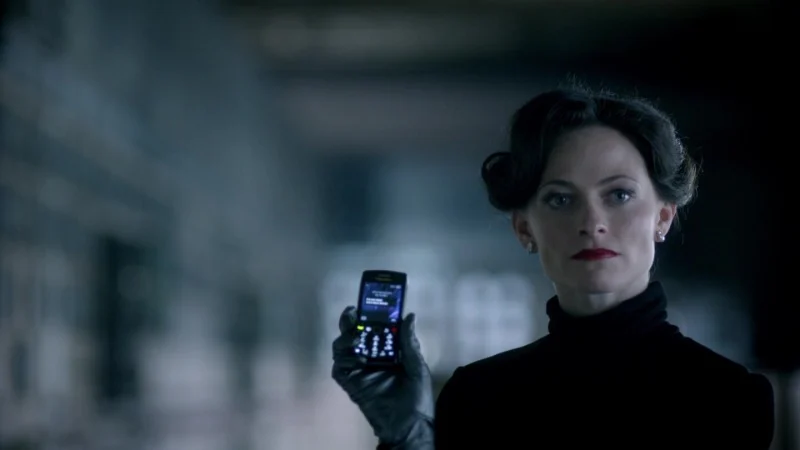
The government asks Sherlock to retrieve a camera phone tied to Irene Adler, whose clients include high ranking figures and foreign interests. Sherlock and John navigate break ins, code breaking, and diplomatic fallout while Mycroft attempts to manage the damage. The plot threads connect to international operations that reach beyond London.
This adaptation remixes A Scandal in Bohemia with a camera phone passcode that becomes a central motif. Lara Pulver’s Irene Adler joins the series gallery of recurring characters, and the story introduces the deerstalker to the in universe tabloid image of Sherlock. A flashback coda clarifies a rescue that reframes a crucial scene earlier in the episode.
The Hounds of Baskerville
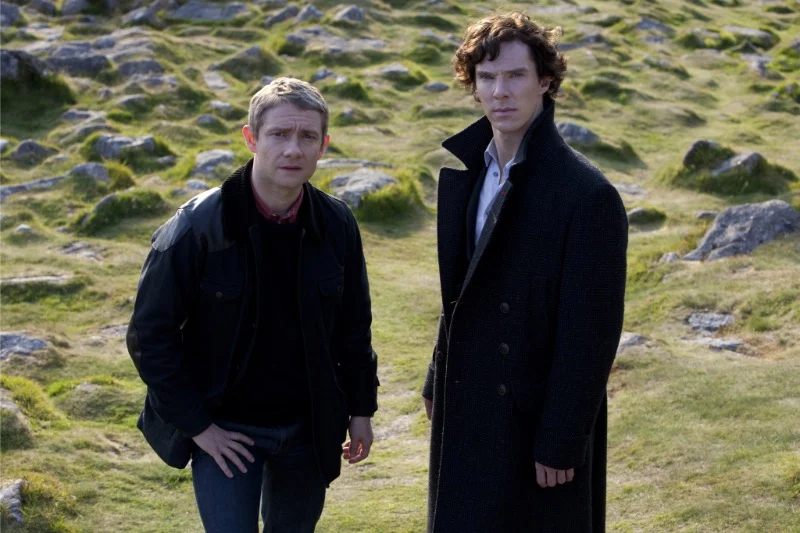
A traumatized Henry Knight seeks help after seeing a terrifying animal on Dartmoor near a restricted research facility called Baskerville. Sherlock and John trace rumors of a monstrous hound to secret experiments, psychological triggers, and a buried childhood memory. The moorland setting gives the investigation a stark, isolated backdrop.
The episode repurposes The Hound of the Baskervilles with the H.O.U.N.D. project as a modern explanation for fear and sightings. Russell Tovey guest stars as Henry, and the production uses fog, night shoots, and sound design to emphasize uncertainty while the plot unravels the science behind the legend.
The Reichenbach Fall
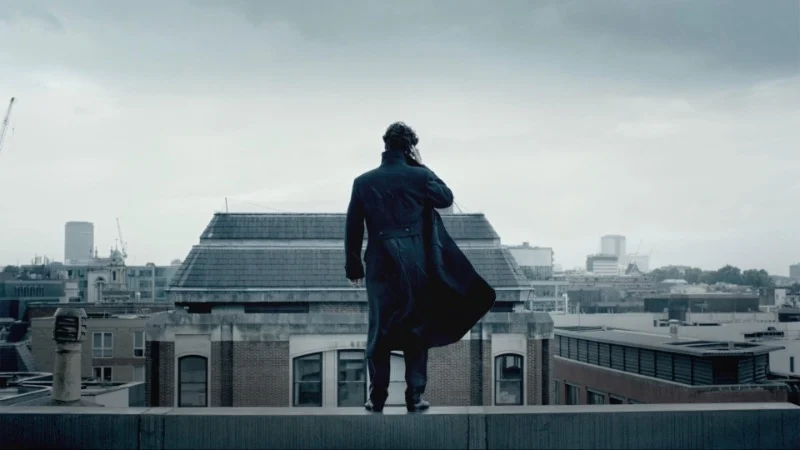
Moriarty stages spectacular break ins at national institutions then turns public opinion and the legal system against Sherlock. Fabricated evidence and media manipulation push events toward a rooftop confrontation at St Bartholomew’s. Sherlock appears to fall to his death while John watches from the street.
Elements from The Final Problem are reworked into a contemporary scandal featuring the Rich Brook cover story and tabloid campaigns. The closing minutes plant clues that support later explanations, including details with the cyclist collision and the positioning around the hospital. The episode closes the second series while keeping the central mystery alive.
The Empty Hearse
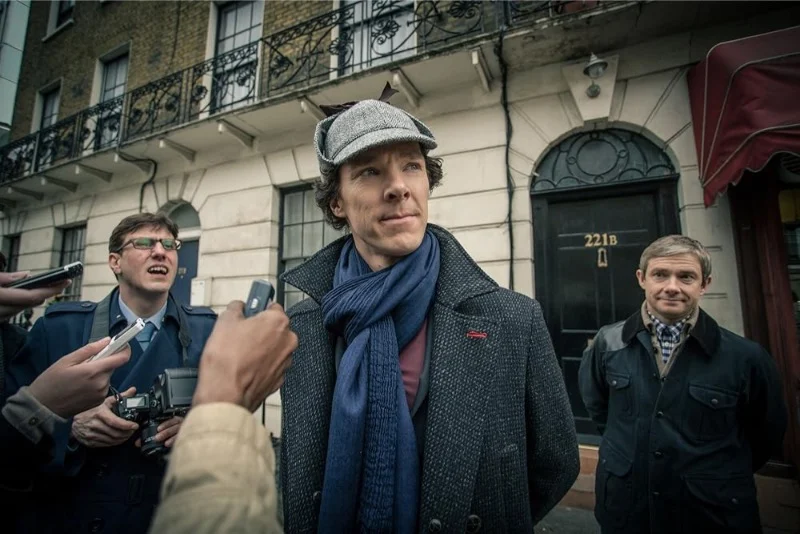
Two years after the fall, Sherlock returns to London as a new terror threat emerges involving the Underground. John has rebuilt his life and plans a future with Mary Morstan, which adds personal stakes to the reunion. The case uncovers a hidden rail car and a plot timed to a major public event.
The episode features multiple competing theories for how Sherlock survived, presented as playful reconstructions inside the narrative. Mary is introduced as a quick study who can keep pace with the investigations, and the story reconnects the main trio while reopening unanswered questions from the previous finale.
The Sign of Three
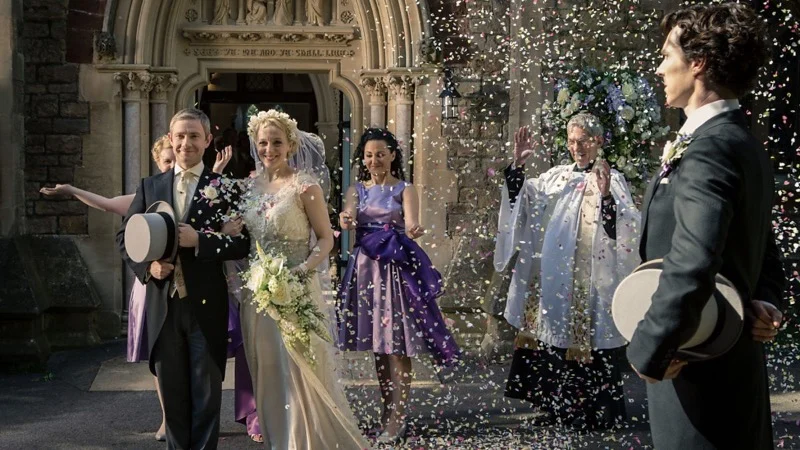
John and Mary’s wedding frames a series of interlinked cases that Sherlock pieces together during his best man speech. Threads include a near invisible stabbing of a Guardsman and a string of dates tied to a man whose identity shifts from encounter to encounter. The deductions point to a threat inside the reception.
This installment adapts ideas from The Sign of the Four while focusing on friendship, loyalty, and past military ties through Major Sholto. The structure moves between banquet hall storytelling and flashbacks to cases, then lands on a solution built around a compression belt and timing that only reveals itself once the speech draws all clues together.
His Last Vow

Media mogul Charles Augustus Magnussen leverages personal secrets to control politicians and business leaders, which pulls Sherlock and John into a confrontation with a blackmail empire. Mary’s history surfaces during an operation that places Sherlock in mortal danger and forces John to reevaluate his marriage.
The episode reimagines Charles Augustus Milverton by turning the famous vault of files into a human memory system at Appledore. Key reveals include Mary’s past as an agent tied to the codename AGRA and the truth behind Magnussen’s leverage. The closing scenes reset the status quo with a high profile act that triggers a new message from an old foe.
The Abominable Bride
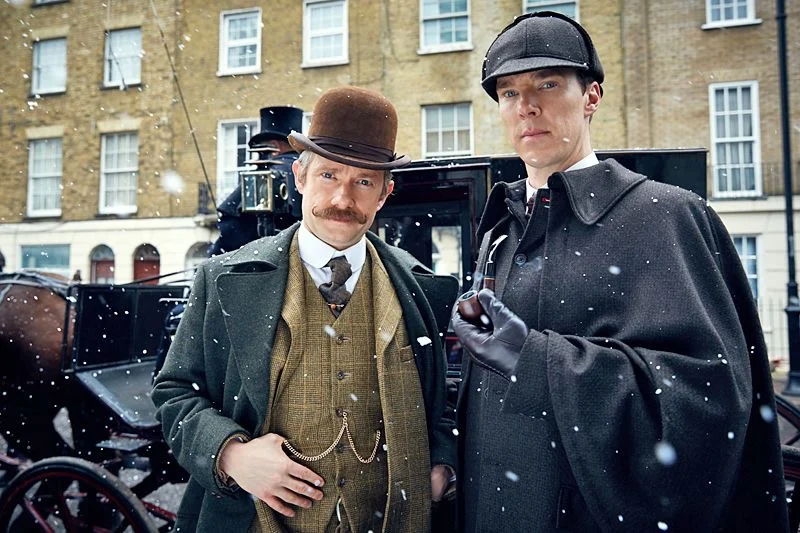
A Victorian setting hosts a case about Emelia Ricoletti, who reportedly commits suicide then appears to murder her husband hours later. The mystery unfolds with familiar faces in period roles as Sherlock works through the paradox of a killer who should be dead. Scenes cross cut with present day threads that place events inside Sherlock’s mind.
The special serves as a bridge between ongoing arcs by using a drug fueled deep dive to test whether Moriarty could have survived. It nods to multiple Doyle stories with fog drenched streets, a corpulent Mycroft, and a return to the Falls. The production also reached cinemas in select markets as an extended cut.
The Lying Detective
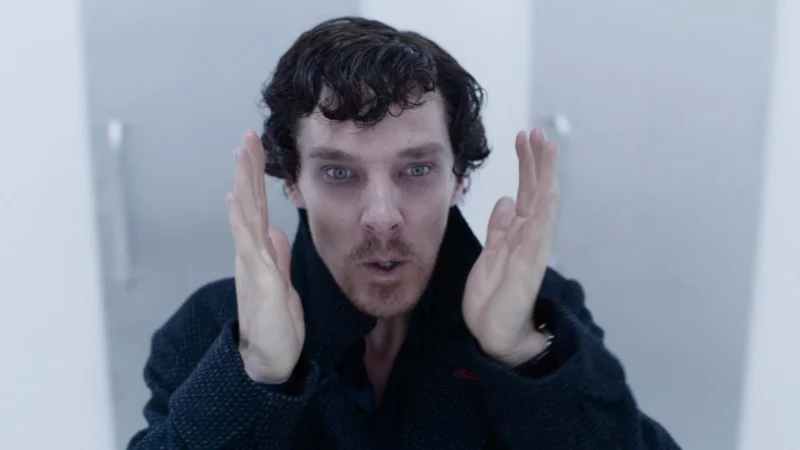
Billionaire philanthropist Culverton Smith confesses his violent impulses in private while maintaining a public image that protects him. Sherlock, spiraling through substance abuse, pursues Smith with help from John and a mysterious therapist who appears at key moments. The investigation zeroes in on a hospital where Smith exerts influence.
The plot draws from The Adventure of the Dying Detective and uses unreliable perception to blur what Sherlock knows and what he performs. Toby Jones guest stars as Smith, and the final act exposes a family secret that paves the way for the next case while resolving a rift between the leads.
Share your own picks for the best episodes of ‘Sherlock’ in the comments.