10 Best Episodes of ‘Star Trek: The Original Series’


Across three seasons and 79 episodes, ‘Star Trek: The Original Series’ introduced core ideas and characters that shaped decades of science fiction. The adventures of Captain Kirk, Mr. Spock, Dr. McCoy, and the crew of the Enterprise took viewers from tense standoffs at the edge of known space to moral puzzles that still resonate today.
This roundup highlights ten standout hours that are frequently cited by fans and historians for their storytelling impact, world building, and franchise legacy. Each entry includes a short rundown of what happens, along with production details, guest stars, and the long tail each episode had on the wider ‘Star Trek’ universe.
The City on the Edge of Forever

Kirk and Spock pursue an accidentally drugged McCoy through a time portal known as the Guardian of Forever. They arrive in Depression era New York, where Kirk meets Edith Keeler and learns that saving her life will erase their future, forcing a choice that restores the original timeline.
The episode was written by Harlan Ellison and directed by Joseph Pevney, with Joan Collins guest starring as Edith Keeler. It introduced the Guardian of Forever, earned major science fiction award recognition, and remained a touchstone for later appearances and references across ‘Star Trek’ media.
Balance of Terror
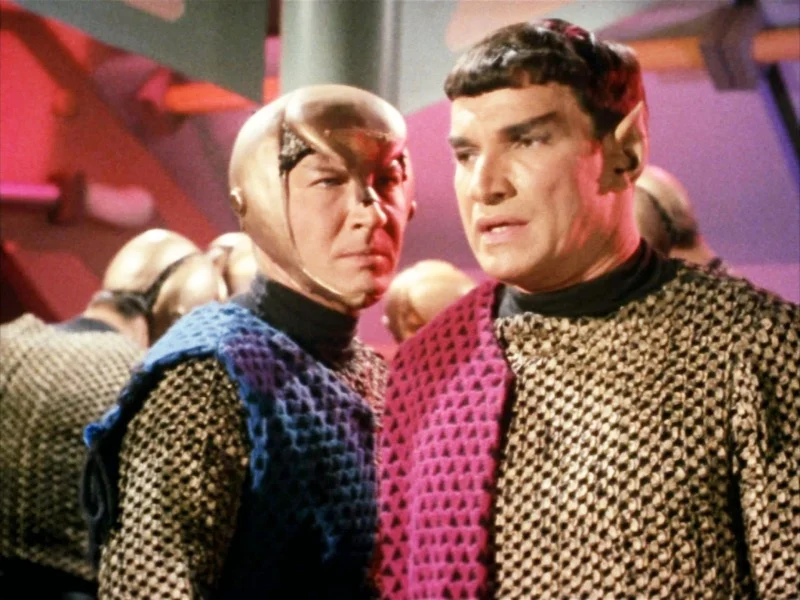
The Enterprise investigates destroyed outposts along the Neutral Zone and engages in a tense cat and mouse duel with a Romulan Bird of Prey. Visual similarities between Romulans and Vulcans fuel suspicion on the bridge while Kirk and the Romulan commander test each other’s tactics across empty space.
Written by Paul Schneider and directed by Vincent McEveety, the episode introduced the Romulans, the Neutral Zone, and early use of a cloaking device. Mark Lenard appeared as the Romulan Commander and would later portray Sarek, adding a notable link between the two cultures that the franchise continued to explore.
Amok Time
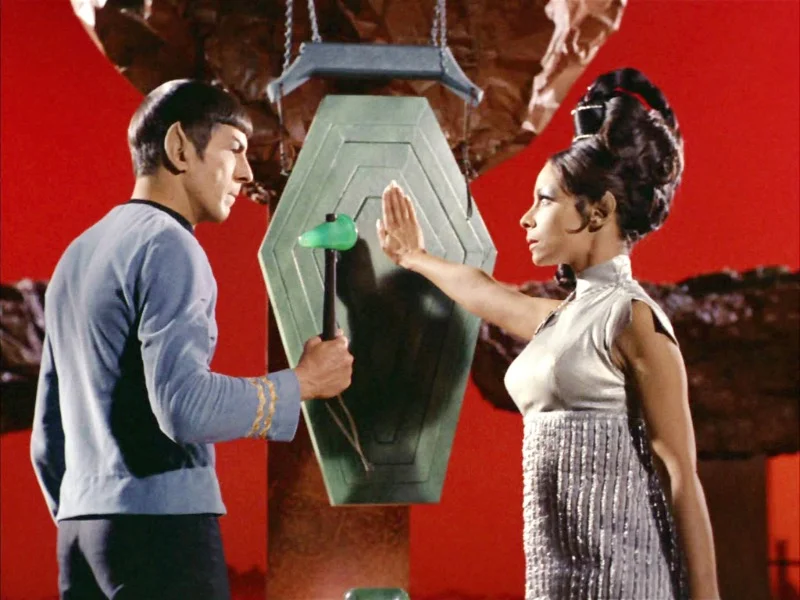
Spock experiences pon farr and must return to Vulcan to undergo an ancient ritual that will either join him with his intended partner or force a combat challenge. Kirk agrees to accompany him and unexpectedly becomes Spock’s opponent in a ceremonial fight with life altering stakes.
Theodore Sturgeon wrote the story and Joseph Pevney directed, with Celia Lovsky as T’Pau and Arlene Martel as T’Pring. The episode delivered the first on screen visit to Vulcan, introduced core Vulcan customs such as the salute and parting phrase, and established cultural details that shaped later shows and films in ‘Star Trek’.
Mirror, Mirror

A transporter accident during an ion storm swaps Kirk, Uhura, McCoy, and Scotty with their counterparts in a brutal parallel reality known as the Mirror Universe. The team must pass as their doubles while searching for a way back, all under the scrutiny of a bearded Mirror Spock.
Jerome Bixby wrote the episode and Marc Daniels directed, creating the template for future Mirror Universe stories that returned in ‘Star Trek’ series for decades. The concept introduced the Terran Empire and devices like the agonizer, giving the franchise a recurring alternate timeline with its own politics and iconography.
The Trouble with Tribbles

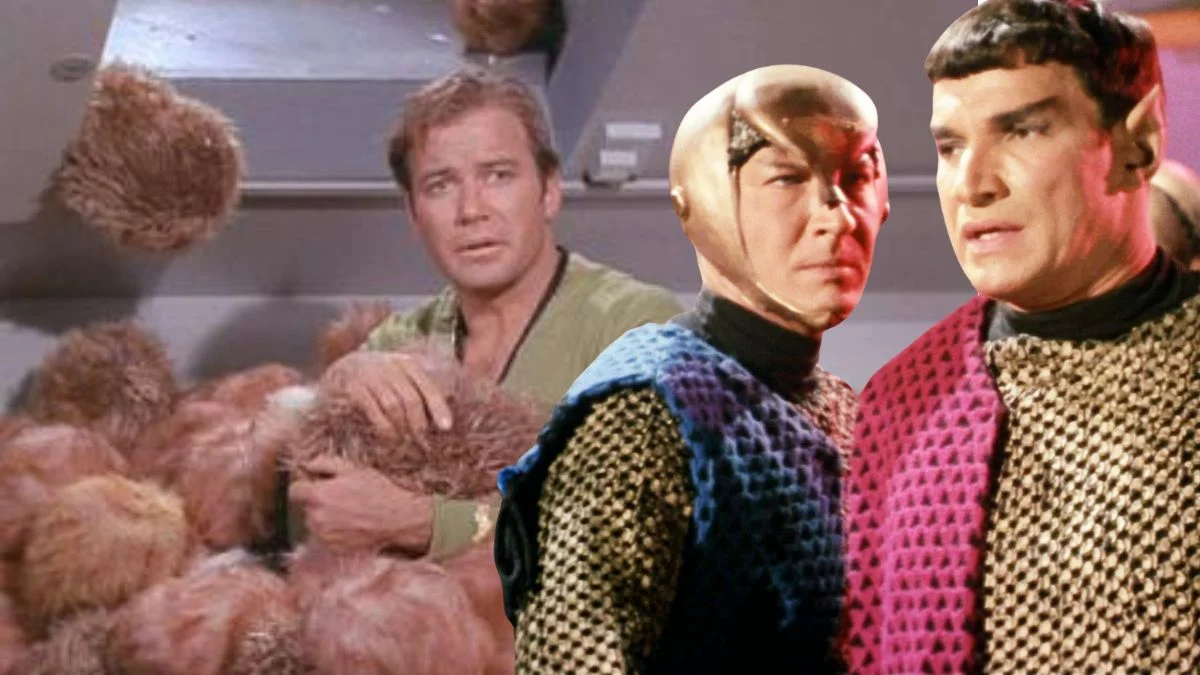
The Enterprise responds to a priority call at Space Station K7 and ends up dealing with tribbles that reproduce at a startling rate. As the fuzzy creatures flood compartments and disrupt operations, they also reveal a saboteur targeting a grain shipment intended for Shermans Planet.
Written by David Gerrold and directed by Joseph Pevney, the episode featured William Campbell as the Klingon captain Koloth and introduced quadrotriticale as the contested cargo. Its events were revisited in the ‘Star Trek’ timeline through later stories, and tribbles became one of the most recognizable species in the franchise.
Space Seed

The crew discovers the SS Botany Bay and revives Khan Noonien Singh, a genetically engineered tyrant from Earth’s past. Khan attempts to seize the Enterprise with help from historian Marla McGivers, prompting Kirk to outmaneuver him and decide his fate rather than bring him back to Earth for trial.
Carey Wilber developed the story with teleplay work by Wilber and Gene L. Coon, and Marc Daniels directed. Ricardo Montalbán’s portrayal introduced one of ‘Star Trek’ most significant antagonists and led directly to the events of ‘Star Trek II: The Wrath of Khan’, cementing continuity that bridged series and film.
The Doomsday Machine

The Enterprise finds the USS Constellation devastated and learns that a planet killing device is moving through space consuming everything in its path. Commodore Matt Decker becomes obsessed with destroying the machine as Kirk risks the Enterprise to stop the advancing threat.
Norman Spinrad wrote the episode and Marc Daniels directed, with William Windom guest starring as Decker. The story delivered one of the series most memorable starship confrontations, added the Constellation to fleet lore, and inspired multiple follow ups and references in later ‘Star Trek’ television and novels.
Journey to Babel
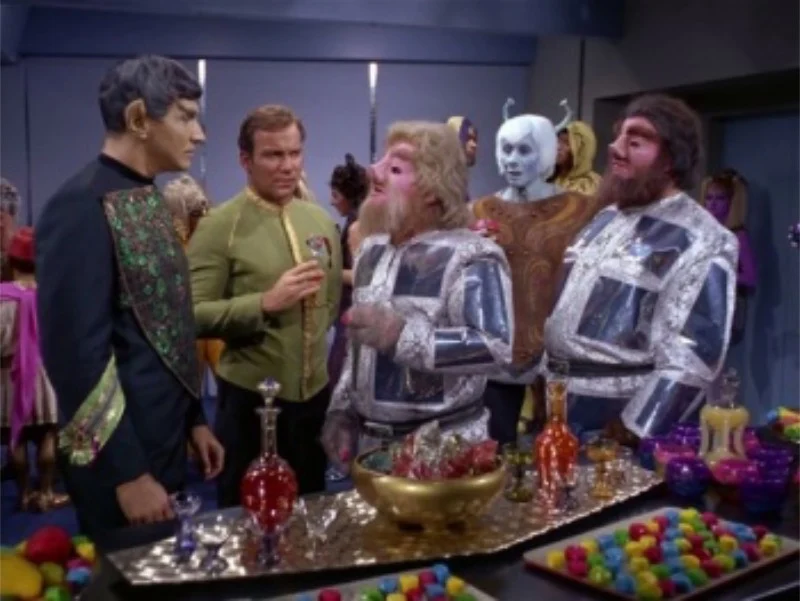
The Enterprise hosts a diplomatic conference where tensions erupt among Andorians, Tellarites, and other delegates. Amid the negotiations, an Orion operative works to destabilize talks while Spock faces a personal crisis when Sarek requires surgery that only he can support.
D. C. Fontana wrote the episode and Joseph Pevney directed, introducing Spock’s parents Sarek and Amanda portrayed by Mark Lenard and Jane Wyatt. The story expanded the Federation’s political map with Andoria and Tellar as key member worlds, and it established family dynamics that shaped Spock’s arc across ‘Star Trek’.
The Devil in the Dark

Miners on Janus VI are attacked by an unknown creature that leaves bodies with burned tunnels and corrosive residue. Investigation reveals a silicon based lifeform called the Horta that is protecting its nest, which leads to a negotiated solution rather than continued conflict.
Gene L. Coon wrote the episode and Joseph Pevney directed, with the Horta suit effects and Spock’s mind meld becoming standout elements. The narrative emphasized discovery and communication with nonhuman life, a theme that recurred throughout ‘Star Trek’ as a core principle of exploration.
The Menagerie

Spock diverts the Enterprise to Talos IV while transporting a badly injured Christopher Pike, then submits to a court martial to explain his actions. The hearing reveals Pike’s earlier encounter with the Talosians and the reasons Spock believes Pike belongs on Talos IV.
Gene Roddenberry assembled the two part story using extensive footage from the unaired pilot ‘The Cage’, with direction credited to Marc Daniels for the framing plot. It became the only two part installment in ‘Star Trek: The Original Series’ and earned major science fiction award recognition, while establishing Talos IV as a prohibited world that continued to echo through later series.
Share your favorite moments from these episodes in the comments and tell us which ‘Star Trek: The Original Series’ hour you think deserves a spot here.