Things That Only Happen in Hollywood Films

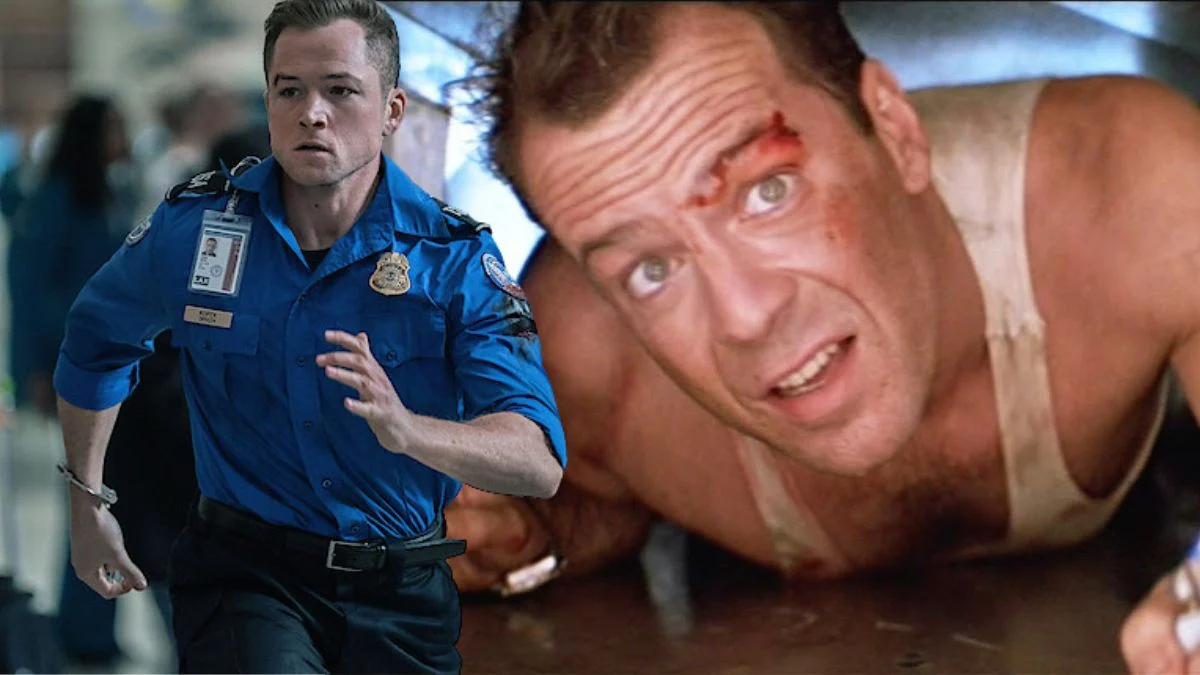

Big screen storytelling runs on shortcuts that keep plots moving and stakes high. Over the years certain patterns have become familiar enough to feel like rules. These show up across genres because they solve practical problems like explaining complex plans fast or turning quiet moments into clear visual beats that anyone can follow.
These tropes were shaped by production realities and audience expectations. They favor clarity over technical accuracy and speed over the slower pace of real procedures. You will see them in action films, thrillers, comedies, and even family movies, often supported by effects, editing, and sound design that make the improbable look effortless.
Everyone Makes It To The Gate At The Last Second
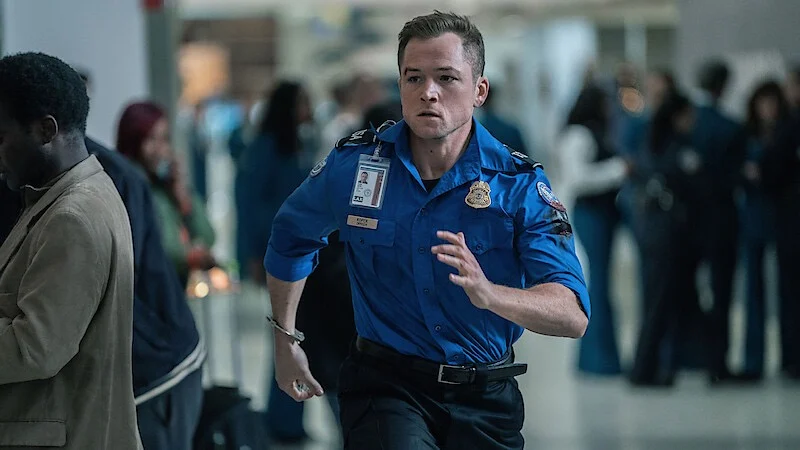
In many films a character sprints through a terminal, bypasses long lines, and talks their way past a closed door. Real airports use layered security, locked jet bridges, and strict boarding cutoffs that are recorded in airline systems. Once a door is closed it rarely reopens because it disrupts ramp operations and requires additional checks.
Movies use this setup because it compresses travel logistics into a clear race against time. Scenes in titles like ‘Love Actually’ and ‘Catch Me If You Can’ show long terminal chases that end with direct access to the gate area. Productions can stage these by shooting in closed sections or using sets, which lets actors move freely without the real checks that slow travelers in daily life.
The Villain Explains The Whole Plan

Antagonists often pause to outline motives, methods, and next steps while the hero is restrained. This practice comes from stage melodrama and detective fiction where a spoken confession delivered essential exposition. On camera it doubles as a recap that confirms what the audience should know before the finale.
You can see playful versions of this in ‘The Incredibles’ and ‘Austin Powers’, where characters even comment on the habit. Spy adventures such as ‘Spectre’ use it to turn complex conspiracies into simple beats that fit the running time. The pause also gives editors room to cut to reaction shots and inserts that set up the escape that follows.
Unlimited Ammo Without Reloading
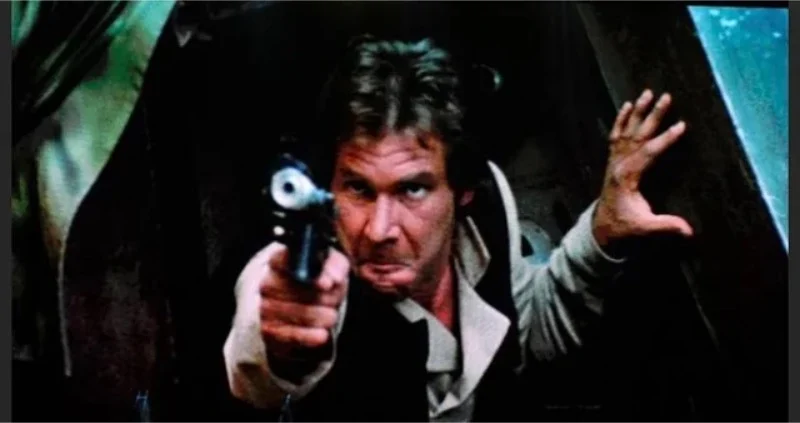
Action scenes often feature long firefights with few visible reloads. Real firearms have limited magazine capacities and reloading under stress is slow and error prone. Productions hide reloads with edits or block action to keep hands out of frame, while sound teams layer continuous effects to maintain momentum.
Some films lean into realism and show detailed reload choreography, as seen in ‘John Wick’. Others deliver extended bursts for spectacle, like ‘Commando’ and ‘Scarface’. Armorers supply blank adapted weapons or replicas while muzzle flashes and ejected casings can be enhanced in post, which helps sell the illusion of nonstop fire.
Instant Image Enhance On A Computer
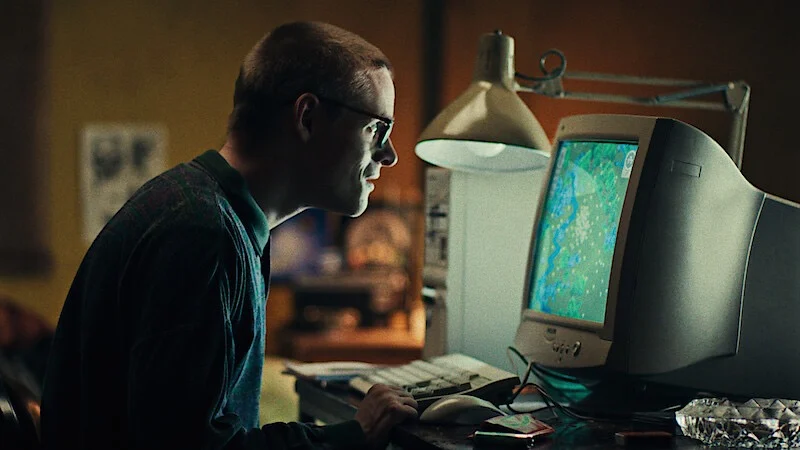
Investigators in films frequently zoom into blurry photos to reveal crisp text or faces. Real image enhancement can clean noise, sharpen edges, and interpolate missing pixels, but it cannot invent detail that was never captured. Professional tools improve clarity in small steps and usually trade artifacts for readability rather than creating perfect new information.
Police procedurals such as ‘CSI’ and techno thrillers like ‘Enemy of the State’ popularized the instant enhance sequence. Earlier examples include the iconic voice guided zoom in ‘Blade Runner’. These scenes give editors a simple way to move from uncertainty to discovery, and the on screen progress bars or beeps tell viewers exactly when to expect a reveal.
Cars Explode From Small Crashes
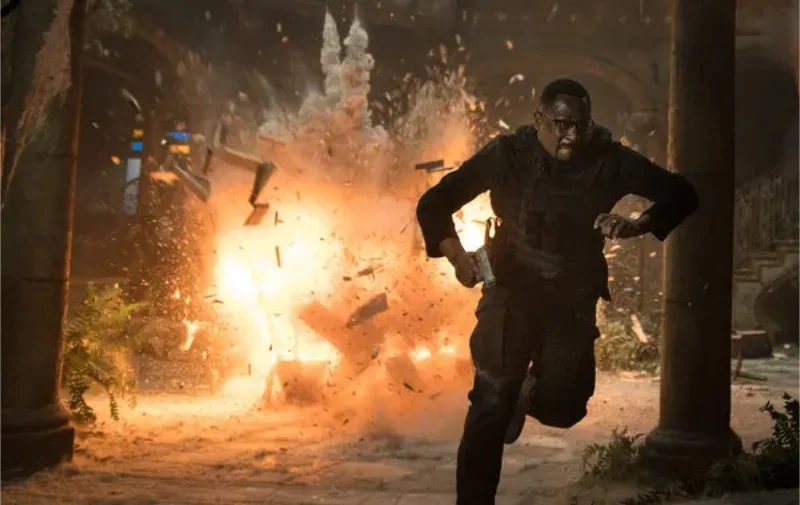
Screen crashes often end in large fireballs. In everyday incidents gasoline burns rather than detonates and modern fuel systems include safety features that reduce ignition risks. Real post crash fires usually start with leaks, heat, and sparks, and they develop over time rather than erupting at impact.
Films achieve the effect with controlled pyrotechnics and gas mortar rigs timed to the stunt. Chase heavy titles such as ‘Bad Boys II’ and entries in ‘The Fast and the Furious’ series use these tools to turn collisions into clear visual climaxes. The fireball reads instantly on camera and helps sell distance and danger in wide shots.
Air Ducts Work As Secret Highways
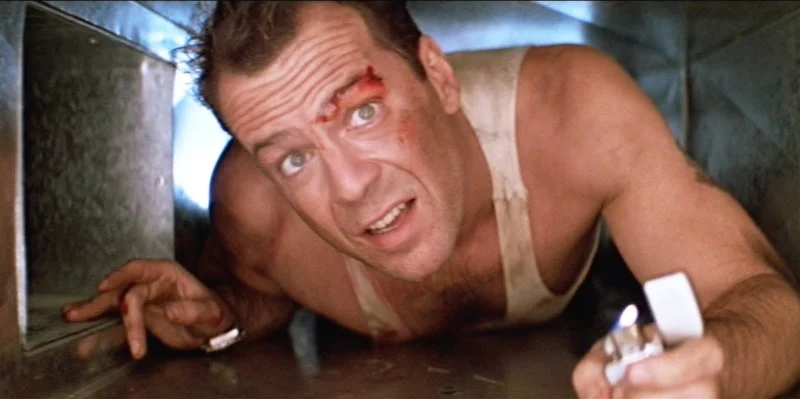
Characters often crawl through building ducts to move unseen. Most ducts are thin sheet metal, lined or insulated, and supported to carry air rather than people. They include dampers, filters, and fans that block passage, and the panels and grilles are fastened in ways that resist quick entry.
The image persists because it solves a staging challenge inside secure spaces. ‘Die Hard’ made the idea famous with its tight vents and flashlight shots, and ‘Mission Impossible’ uses overhead routes to place agents above guarded rooms. Sets built on stages let crews remove sides for cameras, which turns cramped shafts into workable corridors.
CPR Works Like A Magic Reset
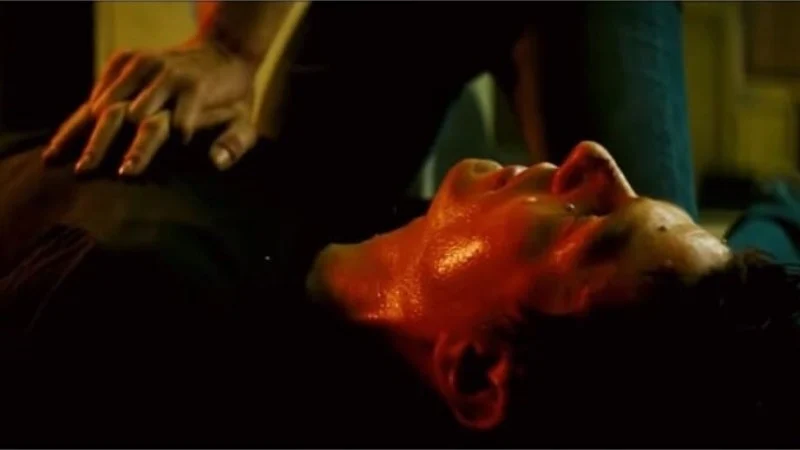
Movie CPR often brings a person back within seconds, usually with a gasp and a quick recovery. In real resuscitation even prompt chest compressions and defibrillation have limited success and survivors who regain a pulse often need ongoing care. Training emphasizes continuous compressions, proper depth, and early access to advanced support rather than dramatic awakenings.
Beach and rescue stories such as ‘Baywatch’ show fast recoveries for pacing and tone. Adventure films like ‘The Abyss’ stage extended efforts that still resolve quickly by the clock. Productions typically avoid medical detail because accurate timelines would stall a scene, while the quick gasp signals safety in a way viewers understand at once.
Silencers Make Gunshots Nearly Silent
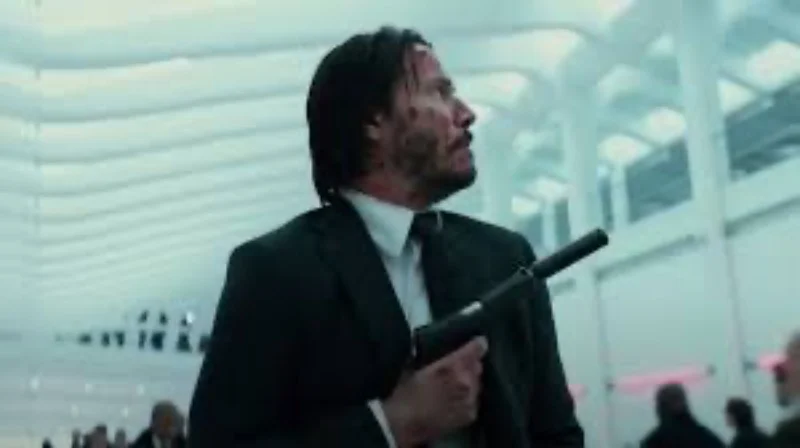
Movies present suppressors as devices that reduce a shot to a soft whisper. Real suppressors lower sound by venting gases and work best with subsonic ammunition, yet the result remains loud enough to damage hearing in enclosed spaces. They also change weapon balance and can affect reliability depending on the platform and ammo.
Assassination scenes in ‘No Country for Old Men’ and set pieces in ‘John Wick’ use the quiet shot to keep action moving in busy areas without drawing crowds on screen. Sound design blends reduced blasts with room tone so a suppressed shot feels discreet while still reading as a firearm to the audience.
Bombs Come With Beeping Timers And Colorful Wires
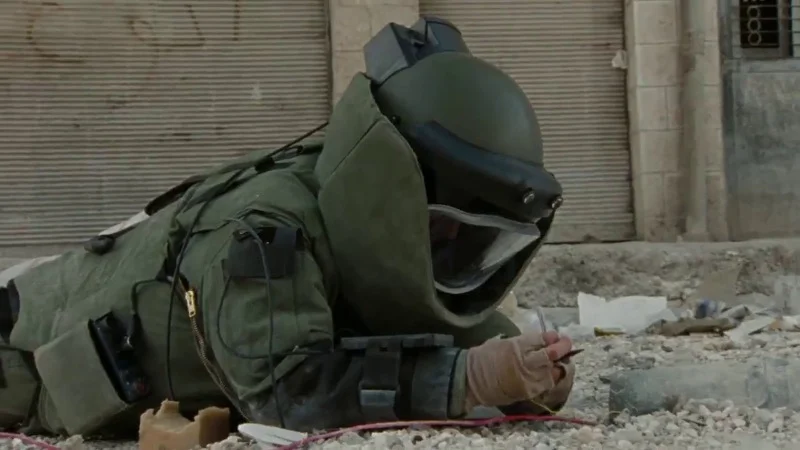
Defusing scenes often center on a digital countdown and a choice between bright wires. Actual devices vary widely, and many lack visible timers or simple color codes. Disposal teams prioritize evacuation, x ray imaging, and remote tools, and they favor containment over cutting lines at the last second.
Films use the timer because it creates a clean clock for the audience. Examples include ‘Speed’ and ‘The Dark Knight’, where ticking numbers drive cross cutting and raise suspense. The red and blue wire choice simplifies complex electronics into a single decision that can be photographed in close up and understood instantly.
Enhancing Audio To Perfect Clarity
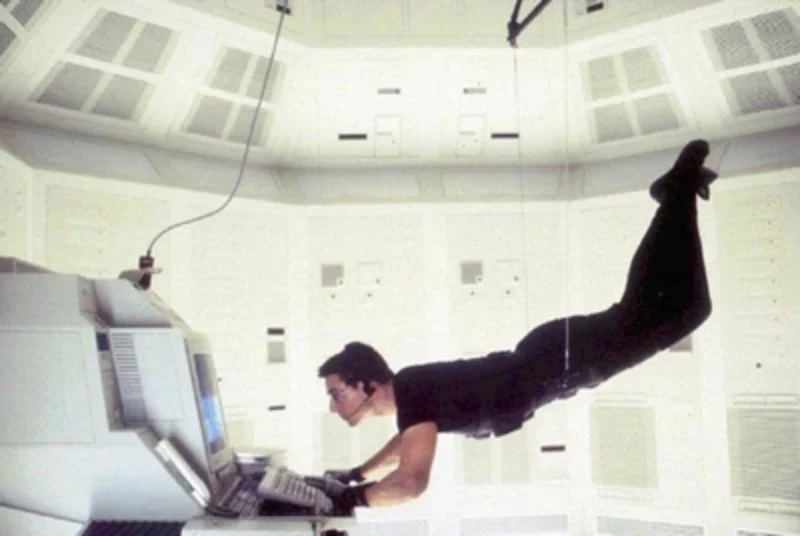
In many films a technician removes noise and isolates a voice to crystal quality. Real audio work can filter hum, reduce hiss, and separate some sources with spectral tools, but overlapping sounds and low sample quality limit what can be recovered. Improvements often trade distortion for intelligibility and rarely produce studio clean dialogue from a crowd recording.
Heist and spy stories such as ‘Ocean’s Eleven’ and ‘Mission Impossible’ rely on this move to extract a key phrase from a messy tape. Post production teams create the before and after versions in controlled conditions so the reveal lands immediately, which lets the plot advance without lengthy technical explanation.
Share the Hollywood only moments you have spotted in your favorite films in the comments.