Top 15 Giant Movie Monsters

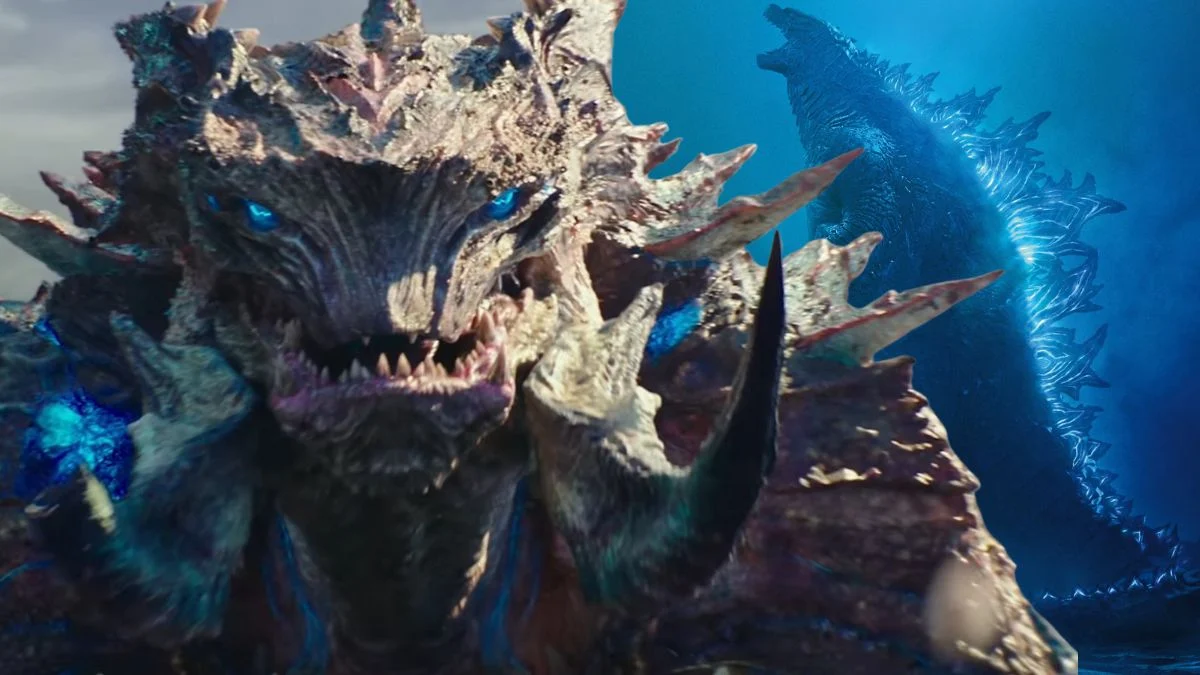

Giant creatures have loomed over cinema since the earliest days of special effects, and they keep returning with new designs, new scales, and new ways of challenging human ingenuity. These towering figures come from myths, radiation, alien worlds, deep oceans, and strange laboratories, which makes them a perfect mirror for the fears and fascinations of the eras that created them. Filmmakers have used miniatures, man in suit techniques, animatronics, cutting edge CGI, and every blend in between to bring them to life on screen.
This list gathers fifteen of the biggest and most influential beasts to stomp through theaters. Each entry points to specific films where the creature made a mark, notes size ranges or abilities when they are documented, and adds helpful production facts so you can trace how these giants moved from concept to spectacle. You will also see brief distribution context folded into the details so you know which companies carried these films to audiences without breaking the flow.
Godzilla
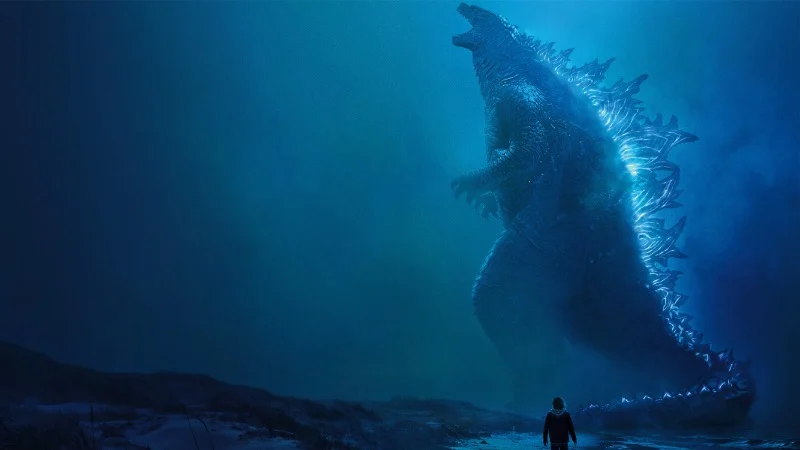
Godzilla first appeared in 1954 as a towering prehistoric reptile awakened by nuclear testing, with height and mass changing across eras from roughly fifty meters to well over one hundred. The character has headlined dozens of films across Japanese and American productions, often defined by atomic breath and city leveling confrontations in entries such as ‘Godzilla’ and later MonsterVerse films that reached theaters under a Warner Bros. banner while Toho guided the home legacy in Japan.
Effects techniques evolved from suit acting and optical composites to large scale digital simulations and performance capture. Modern teams build thermal plume simulations for the breath and debris interaction at city scale, while Toho’s stewardship keeps design touchstones like dorsal plate silhouettes consistent across eras that pass through different studio pipelines.
King Kong
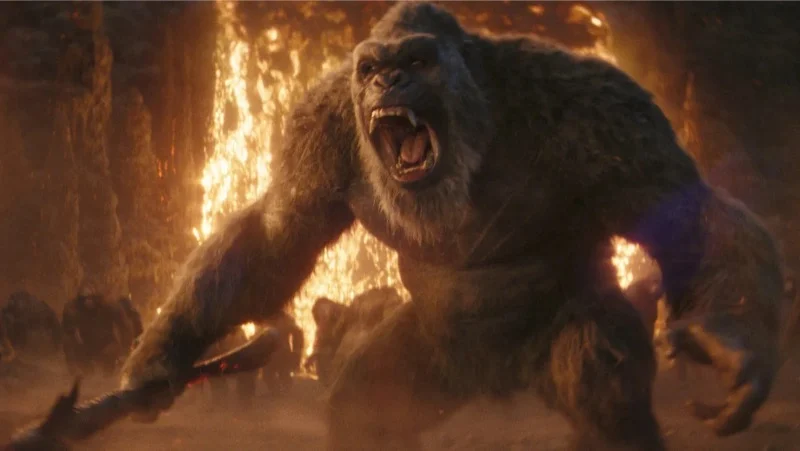
King Kong debuted in 1933 as a giant ape discovered on Skull Island and transported to New York, where a blend of stop motion and rear projection created then unprecedented creature performance. The character returned in reimaginings including ‘King Kong’ from 2005 that arrived through Universal and later MonsterVerse crossovers that reached global screens with Warner Bros. handling the rollout.
Sizes range from about eight meters in early depictions to over thirty meters or more in contemporary versions to match new story needs. Modern productions combine large animatronics for close shots with motion capture driven CGI for full body movement, enabling fur dynamics, facial micro expressions, and weather interaction that read cleanly in daylight.
King Ghidorah
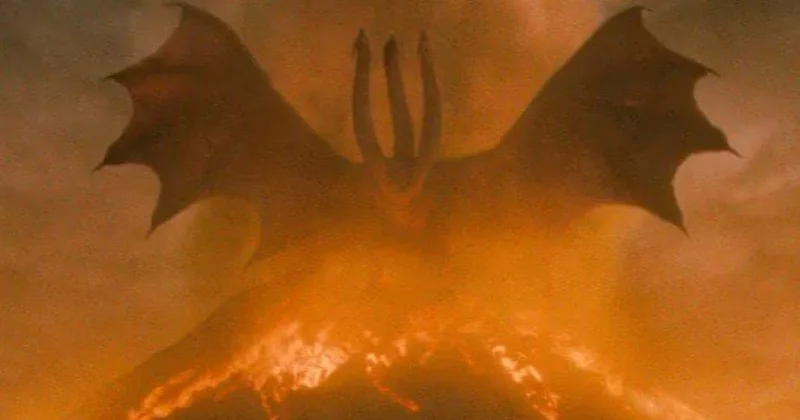
King Ghidorah is a three headed extraterrestrial dragon introduced in the 1960s as Godzilla’s most destructive rival, with independent neck motion and lightning like gravity beams from each mouth. Recent incarnations placed the golden dragon into the MonsterVerse where worldwide releases moved under Warner Bros. while Toho oversaw the domestic side.
Visual effects teams developed multi rig animation so each head could respond with distinct timing, and they coupled that with volumetric cloud and storm simulations to present the character as the center of an atmospheric supercell. The wing span and dual tails were scaled to skyscraper height to anchor aerial battles over dense urban grids.
Mothra
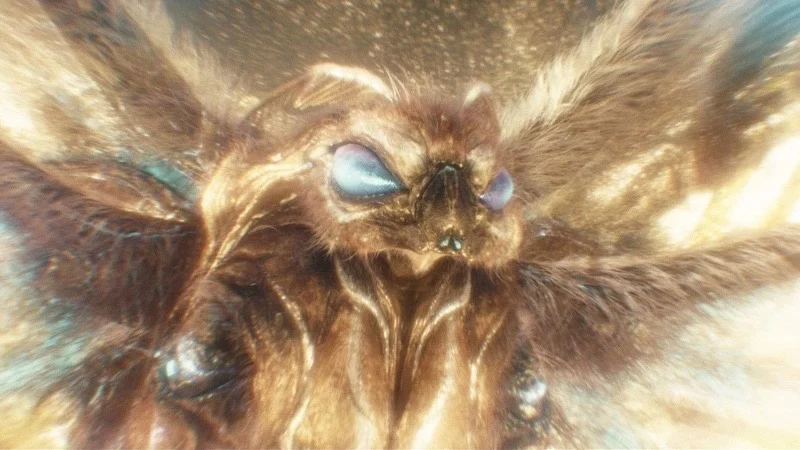
Mothra began as a divine giant moth with a protective role over humanity, usually emerging from a larval form before reaching full wingspan with patterned eyespots. Early appearances like ‘Mothra’ reached audiences in the West with Columbia handling the route, while later ensemble outings in the MonsterVerse traveled with Warner Bros. internationally and Toho at home.
Practical wing rigs, fiber optics, and digital shaders with iridescence models reproduce powdery scales and light scattering across the wings during flight. The character often appears alongside twin priestesses and brings silk emission, reflective scales, and blinding luminescence that editors use as visual punctuation during team ups.
Mechagodzilla
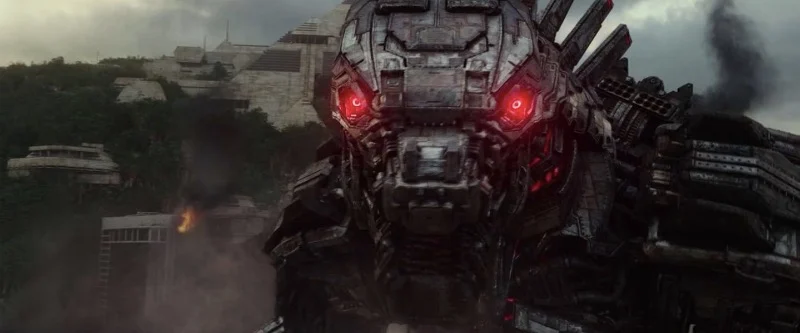
Mechagodzilla arrived in the 1970s as a mechanized counterpart to Godzilla, sometimes built by alien invaders and other times by human factions. A modern interpretation in ‘Godzilla vs. Kong’ reached theaters in a Warner Bros. rollout while Toho managed the character’s lineage and approvals.
Effects teams use hard surface modeling with nested control rigs to convey mass and to keep panels and pistons lagging under acceleration. Textures lean on grimy metal and heat tarnish so light rakes across edges, and animation blocks in mechanical recoil so missile ports, gimbals, and actuators read as industrial hardware rather than sleek fantasy.
Gamera
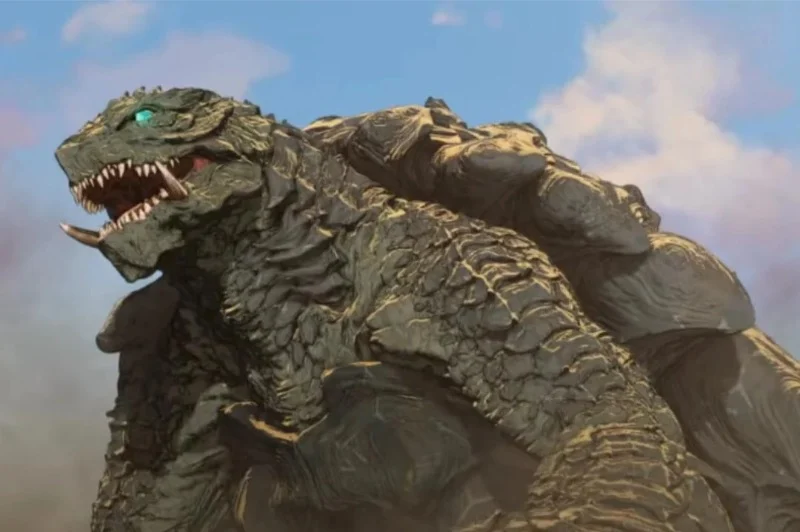
Gamera launched in the mid 1960s as a giant turtle capable of flight by venting jets from limb sockets, with a protector orientation toward children in early films and a more serious tone in the Heisei era trilogy. Japanese releases ran through Daiei in the classic period and later through Kadokawa, with overseas paths varying by territory.
The 1990s films are known for extensive pyrotechnics on large miniature streets, while digital compositing refined shell reflectance and atmospheric haze. Modern passes add heat blur to the jet powered spins and tune flame color to sit against night exteriors, which helps the flight silhouette hold in wide aerial plates.
Cloverfield Monster
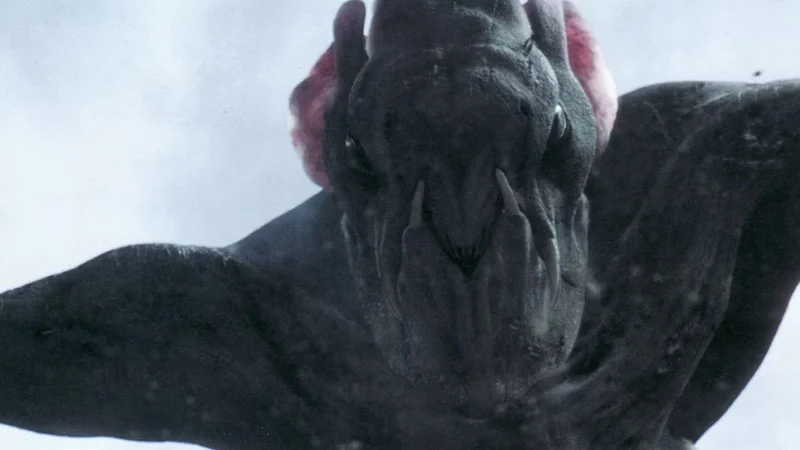
The creature in ‘Cloverfield’ appears during a found footage event in New York, portrayed as a juvenile of a much larger species with an upright posture and long forelimbs. Paramount brought the film to multiplexes while the production leaned on handheld camerawork and match moved CG to place the monster into real environments.
Designers built layered skin with translucent qualities to read under harsh searchlights, and parasite creatures drop from the body to create claustrophobic encounters in subway tunnels. Effects artists tuned debris and dust systems to the camera’s rolling shutter and compression artifacts so the footage kept a unified camcorded look.
The Megalodon
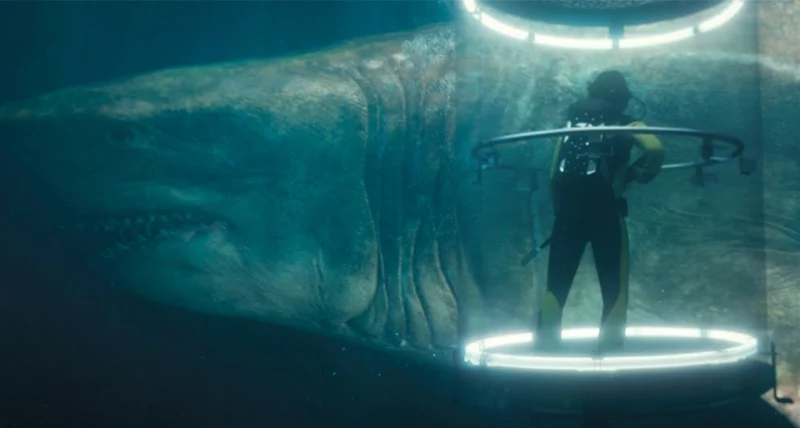
The megalodon in ‘The Meg’ revives the prehistoric shark at lengths exceeding twenty meters, surfacing from a deep habitat isolated by a thermocline that characters penetrate with a research sub. The film reached global screens via Warner Bros. as staged aquatic sets and digital water carried the action across beaches and boats.
Effects teams use fluid solvers to couple the shark’s body with surface disturbance and underwater bubble trails. Editors match the rhythm of surface shots and submerged beats so the size of the animal reads clearly, while stunt units coordinate practical splashes and debris cannons to sell momentum on contact.
Balrog
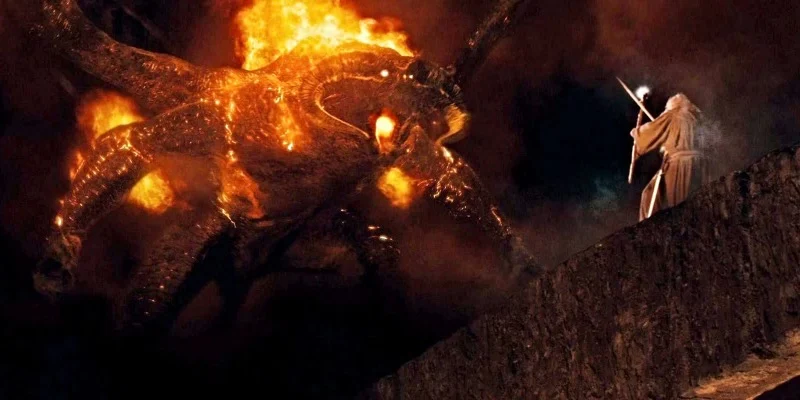
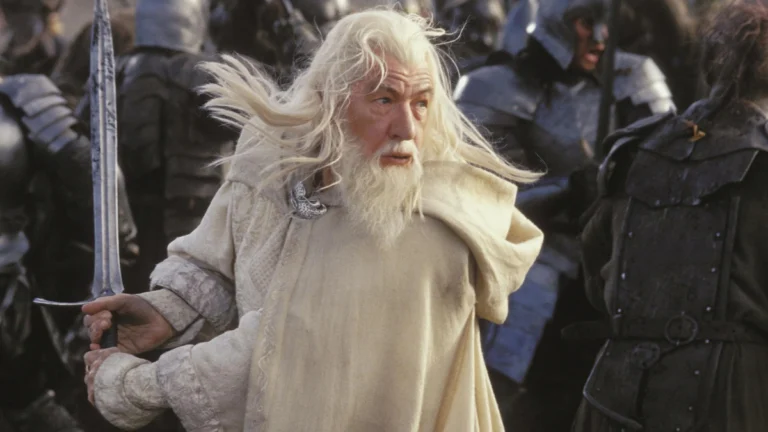
The Balrog in ‘The Fellowship of the Ring’ is presented as a towering demon of shadow and flame that dwells under the Misty Mountains, armed with a fiery sword and a many tailed whip. New Line shepherded the film to theaters while Weta Digital combined motion capture reference with keyframe animation to maintain a heavy gait.
Volumetric fire shaders ride over a charcoal body so the creature does not flatten in the darkness of Moria. The bridge collapse uses rigid body and cloth simulations that let embers illuminate rock surfaces and drifting ash, with sound layers that mix low rumbles with whip cracks to anchor weight.
Sandworms of Arrakis
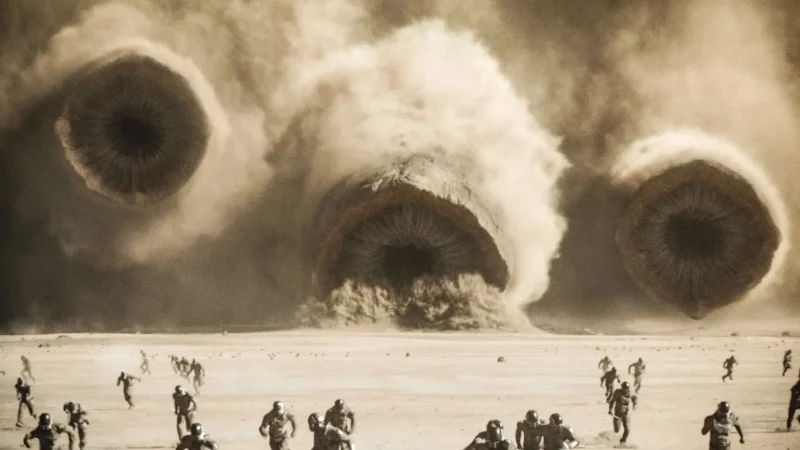
The sandworms in ‘Dune’ are colossal desert dwellers that navigate by sensing rhythmic vibrations, producing towering sand plumes when they breach. The modern films traveled to audiences through Warner Bros. as on location photography captured real dust and heat shimmer to ground the scale.
Granular solvers drive avalanching sand that flows around the worm body and interacts with vehicles and thumpers. Sound teams blend low frequency rumbles with filtered wind so the approach is felt as pressure before the creature breaks the surface, and the ringed mouth anatomy was sculpted to read in full sun.
Stay Puft Marshmallow Man
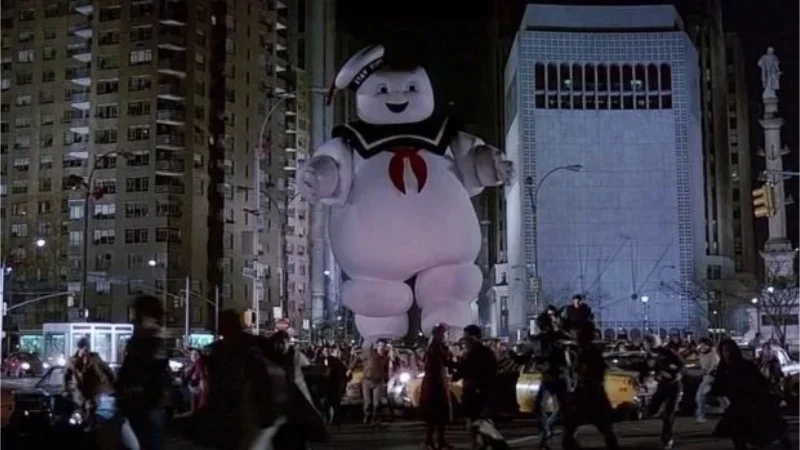
The Stay Puft Marshmallow Man closes ‘Ghostbusters’ as a confectionary mascot enlarged into a soft but massive threat that walks through Manhattan streets. Columbia ushered the film into wide release while suit performance on scaled sets provided a bouncy gait and compressible surface.
Miniatures for buildings pair with full size street pieces so smoke and lighting match angles between plates. The finale layers foam and dyed syrup to achieve melting and drenching shots that cover vehicles and costuming, which keeps the texture readable even as the creature breaks apart.
Tyrannosaurus Rex
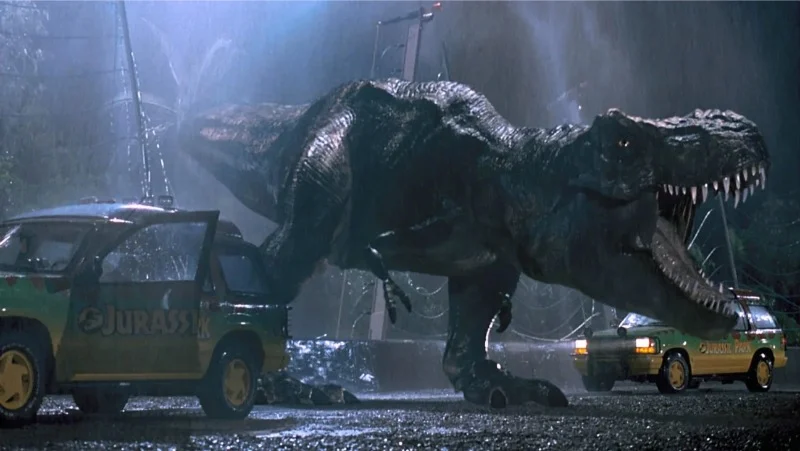
The Tyrannosaurus in ‘Jurassic Park’ is showcased with a full scale animatronic for close shots and a digital model for sprinting and wide angles. Universal carried the film worldwide while Industrial Light and Magic pioneered techniques for muscle and skin sliding on a large predator that had to sustain long runs on screen.
The rain soaked breakout required water resistant servos, controlled drip patterns on skin, and interactive lighting tied to lightning flashes. The hybrid pipeline set a template where animatronics provide tactile presence and CG covers movement across hazardous terrain, which many later dinosaur films adopted.
Kraken
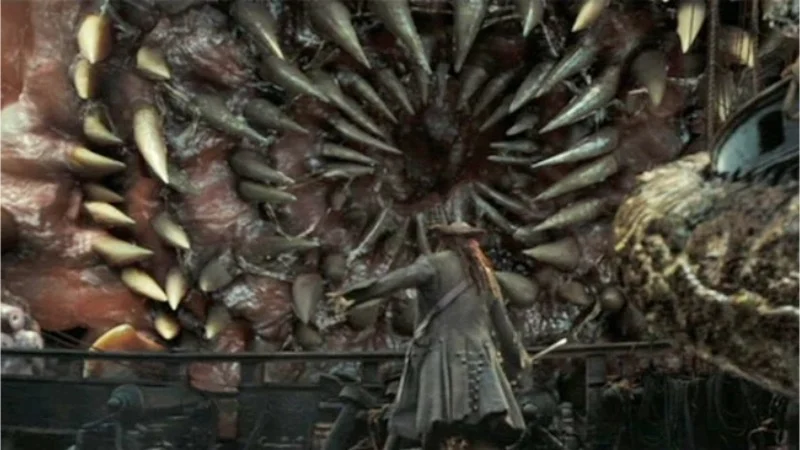
The Kraken in ‘Pirates of the Caribbean’ presents an enormous cephalopod that attacks ships with long tentacles and a central beaked maw. Disney steered the franchise to theaters while effects teams delivered dense fluid interaction and complex rigging for suction and corkscrew wraps around masts.
Animators coordinate tentacle timing so ship components fail progressively and deck tearing exposes multiple levels of interior. Water simulations with particle foam match practical wave tanks, and sound design layers groans of stressed timbers with low frequency pulses to convey underwater mass.
Slattern
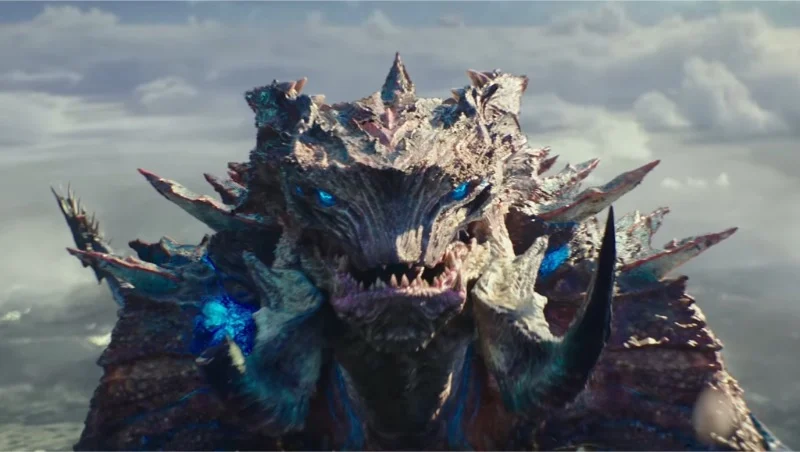
Slattern is the first Category Five kaiju encountered in ‘Pacific Rim’, distinguished by a manta like profile, bioluminescent patterns, and a triple tail weapon. The film reached many markets with Warner Bros. guiding the release while creature work integrated scaled water displacement that matched the volumetric size.
Bioluminescence maps respond to stress and aggression, which gives editors visual cues to cut between pilot perspectives and wide battle shots. Underwater visibility solutions keep silhouettes clear amid silt and bubbles, and the triple tail rig anchors melee beats against the Jaegers.
The Host’s River Monster
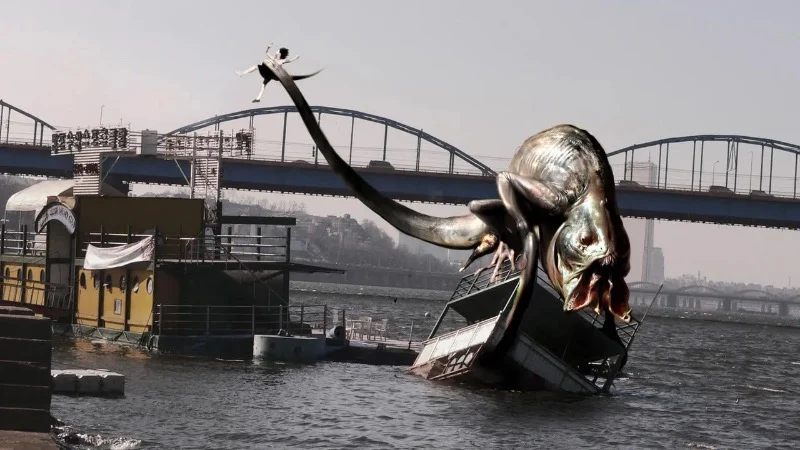
The mutated river creature in ‘The Host’ emerges from the Han River with an agile build, long tail, and a maw that opens along multiple hinges. Showbox brought the film to domestic screens while other regions used partners suited to local markets.
The narrative follows a family crossing quarantine cordons and sewers as the monster moves along riverbanks and under bridges, so location photography guides interaction with wet surfaces and concrete textures. Designers emphasize asymmetry and malformed fins to reflect chemical mutation, and daylight attacks showcase skin translucency and muscle movement without hiding in darkness.
Share your favorite big screen behemoths we missed in the comments.