How Films Are Made Today: Remote Post-Production and the Training of Editors

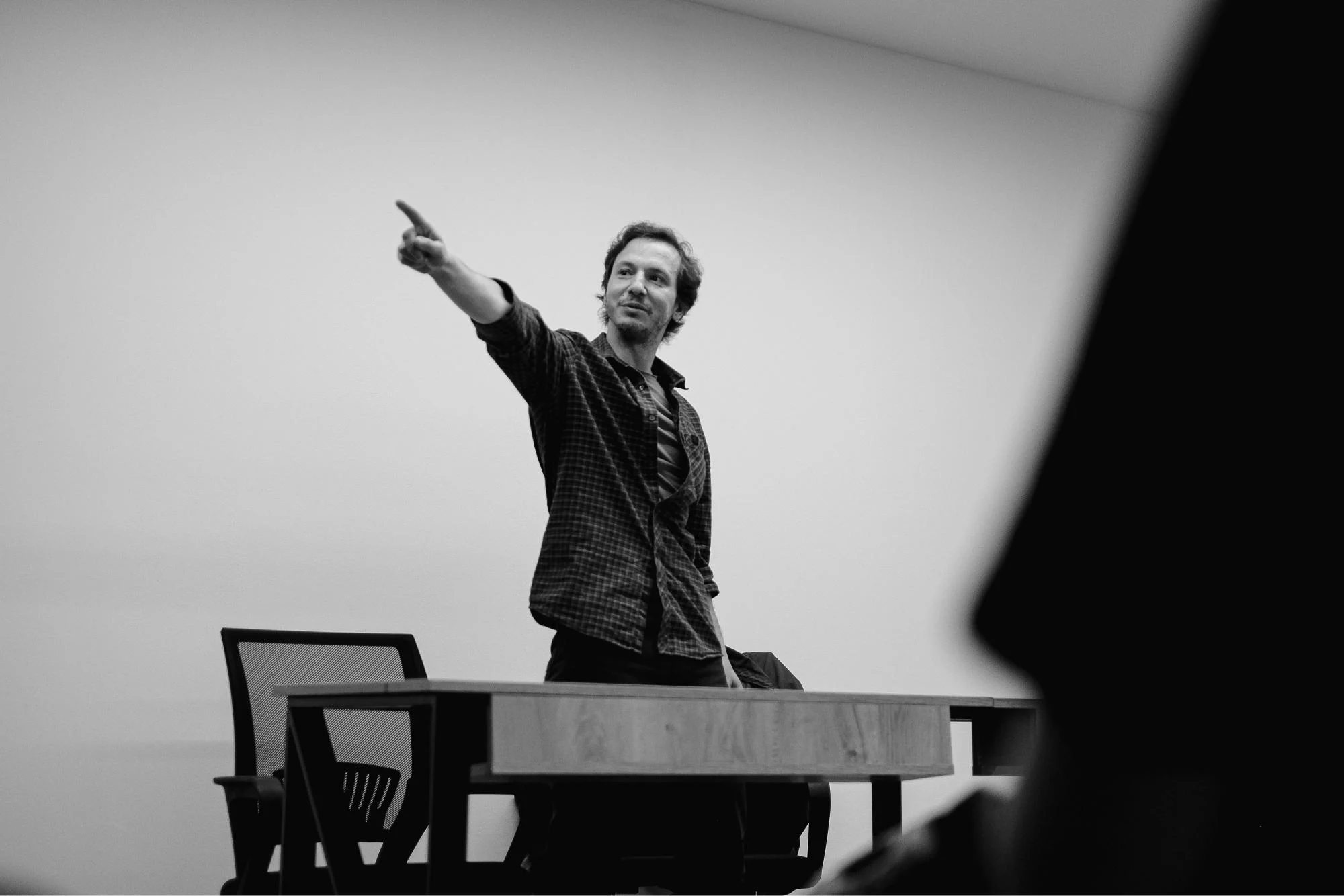

Vladimir Markov, film editing director and teacher of editing at an arts school, explains how film production works today and discusses three industry trends, questioning whether they are real or not.
Today, the film industry is often discussed through myths and assumptions. Some specialists argue that effective production is possible only when teams are gathered in large studios, working together in one physical space. Some experts suggest that artificial intelligence will soon replace editors in film and television. Others raise questions about professional education: should future editors still dedicate years to mastering technical aspects of the craft if software can already automate many routine tasks? These debates highlight the uncertainty surrounding how cinema is actually produced today. To examine where speculation ends, we spoke with film editor Vladimir Markov. With more than two decades of experience and over twenty films and series in his portfolio, he has worked across different formats and workflows. At present, he coordinates fully remote post-production teams, teaches author’s courses in editing and follows closely how artificial intelligence is being integrated into professional practice. In this article, he offers his perspective on three defining trends of modern film production.
Remote Editing: From Studio Lots to Home Computers
When we imagine film production, we tend to picture massive studios filled with dozens of specialists gathered around monitors, debating scenes and making creative decisions. Until recently, that was exactly the case, recalls film editor Vladimir Markov. The pandemic, however, showed that remote work in cinema is not a temporary solution but a full-fledged production model.
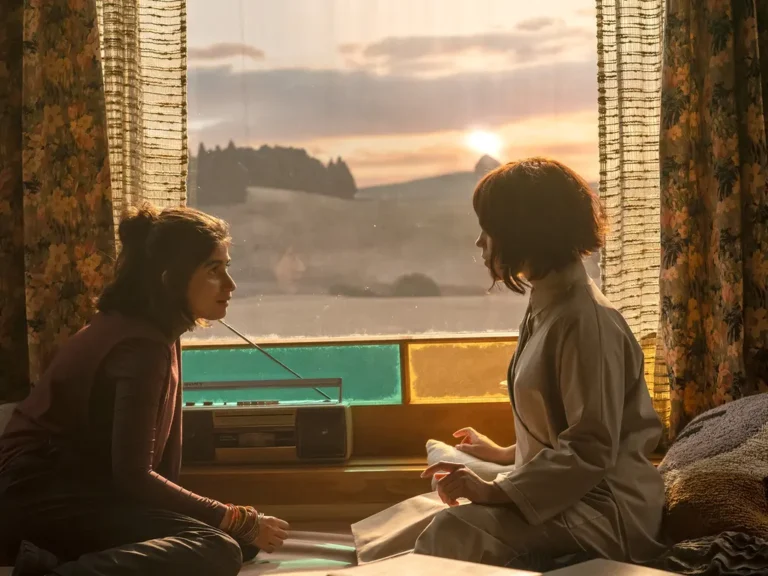
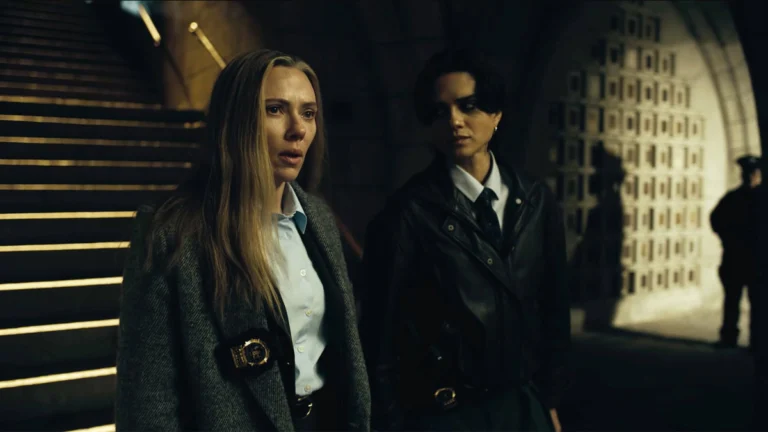
Vladimir Markov organized fully remote post-production teams for the series “Out of the Comfort Zone” and “Sleepwalkers.” As process coordinator, he built a production pipeline where specialists were located in different cities and even countries, but worked as a unified team.
“We all turned out to be ready for remote work. The production chain in cinema is structured so that everything, except for the actual shooting, can be done remotely.” — Vladimir Markov explains.
Vladimir Markov’s experience showed that the technical foundation for this format had existed for decades. For smaller projects such as commercials and trailers, remote collaboration had long been working flawlessly. Editing requires only a standard computer; the footage is transferred online, and revisions are exchanged by email.
For feature films, however, there had always been a psychological barrier. Until the pandemic, everyone assumed such intensive creative work demanded physical presence, Vladimir Markov recalls. An editor is not just a technician stitching scenes together. They are an artist shaping the film’s dramaturgy, rhythm, and emotional impact. At the “director’s cut” stage, the editor works closely with the director, and this creative process had long seemed impossible without in-person collaboration. Traditionally, the director and editor would sit side by side in front of the same monitor, working almost literally “with four hands”, debating each shot and arguing over artistic choices. But once the teams were forced into separate rooms, it turned out that all it really took was a shared screen.
Today remote workflows have become the new industry standard. Remote workflows open opportunities for international projects, as professionals can now collaborate with teams worldwide. Geography no longer limits creative potential, and the film industry has fully embraced a decentralized production model.
Teaching Editors to Tell Stories, Not Just Cut Footage
With technology more accessible than ever and a flood of online tutorials available, the expectations for film editing education have changed significantly, observes Vladimir Markov. He teaches at an arts school, offering courses on editing and other aspects of film production.
In the past, studying editing often meant learning how to splice shots together — essentially, on the technical mechanics of the craft. Today, that approach feels outdated, Vladimir Markov notes. Everyone has a phone with a camera, people are constantly filming and even doing some basic editing, and the internet is full of guides that explain the technical side.
In Markov’s courses, which have attracted more than a hundred students over the past two years, the real demand lies elsewhere: how to turn striking footage into a story, and how to organize a professional workflow that scales to larger productions.
“My students want to work in the cinema industry, the technical part is easy for them to master, but most of them have never actually seen how real film production works,” Vladimir Markov reflects
For Vladimir Markov, the primary objective in his courses involves not teaching software or technical techniques, but demonstrating to students how to work with time and space in cinema and construct narrative. This represents a crucial approach to contemporary editor education.
Modern film education, he believes, is about moving beyond cuts and transitions toward understanding how to build stories. Editing cannot be learned through theory alone; it requires hands-on practice, testing ideas, discarding weak ones, and keeping the solutions that truly work.
Artificial Intelligence in Editing: Assistant or Competitor?
The use of AI in film production has become a pressing issue across the industry, yet the reality is more complex than headlines suggest. Vladimir Markov, who has worked in editing for more than twenty years and witnessed the steady introduction of new technologies, approaches the subject from a practical perspective. He proposes dividing editing into technical and creative tasks, while acknowledging that such a distinction is far from absolute.
In professional film production, where Vladimir Markov works, AI is hardly used for creative decisions. Even tasks that could theoretically be automated are still performed manually, since every frame must be considered in the context of the overall story.
“A film made entirely by a machine seems questionable to me. Cinema should communicate and evoke emotions,” says the expert.
The main limitation for AI lies in understanding the language of cinema. Markov often refers to the Kuleshov effect, a fundamental principle of editing he applies in nearly every project. The effect shows how combining two shots produces a third meaning that is absent from either shot on its own.
“In editing, one plus one is always more than two. The question is whether AI can first read individual images and then combine them into something coherent. So far, the results suggest otherwise — AI editing tends to look like a random set of shots,” Vladimir Markov observes.
Vladimir Markov does not dismiss the role of chance in creativity. At times, he deliberately introduces randomness into his process to break through a creative block, combining shots in search of unexpected solutions. But this is a conscious technique used by a professional who can evaluate the outcome and build on successful discoveries. AI, by contrast, produces random combinations without understanding their meaning, and the likelihood of generating something valuable remains very low.