15 Greatest Gods & Deities in Anime


From cosmic creators to local shrine protectors, anime is full of deities that shape worlds, guide mortals, and embody ancient myths in fresh ways. Some rule on a multiversal scale with a snap of their fingers, while others watch over harvests, rivers, and neighborhoods, balancing the sacred with the everyday. Together, they show how flexible “divinity” can be when filtered through different genres—fantasy epics, slice-of-life stories, and even school comedies.
This list gathers gods and god-like beings across anime who are depicted as deities within their stories—whether they’re overseeing the flow of souls, carrying out cosmic maintenance, or accepting offerings at a shrine. You’ll find figures drawn from Japanese tradition, reinterpretations of global mythologies, and originals created just for series like ‘Dragon Ball Super’, ‘Noragami’, and ‘Saint Seiya’, each with defined roles, powers, and lore inside their worlds.
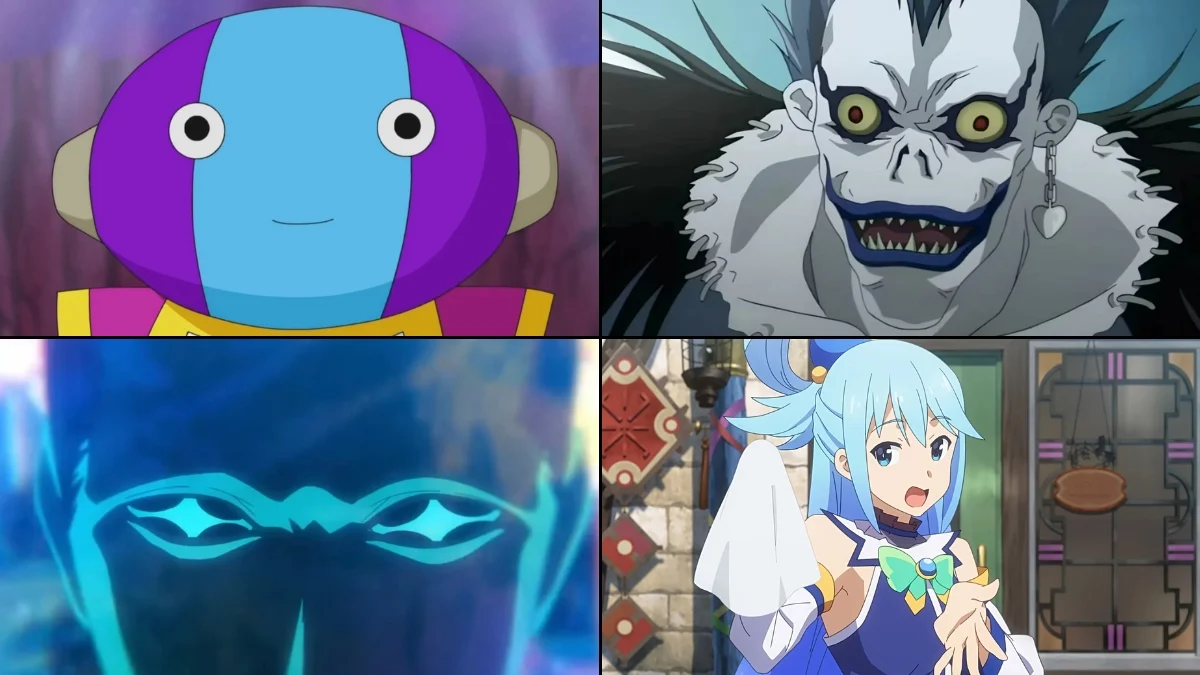
Zeno

In ‘Dragon Ball Super’, Zeno—also called the Omni-King—is the supreme ruler of all universes, with authority over gods of destruction, angels, and kai. The series depicts Zeno’s power most starkly through his ability to erase entire timelines or universes from existence, a capability shown during the universe-spanning tournaments where he enforces rules and outcomes without appeal.
Zeno’s role is administrative and absolute rather than combative; he is guarded by attendants and advised by the Grand Minister, while beings like Beerus carry out destructive balance at the universe level. Protocols among divine hierarchies revolve around him, and even deities treat his edicts as final, illustrating a cosmology where creation, destruction, and governance are separated into distinct offices.
Beerus

Beerus is the God of Destruction for Universe 7 in ‘Dragon Ball Super’, tasked with eliminating planets, civilizations, or threats to maintain cosmic balance. He operates alongside the angel Whis, who mentors him and enforces divine rules, while the Supreme Kai represents the creation side of the universe’s cycle.
Beerus’s divine status is institutional: he is one of multiple destruction gods, each paired with an angel and a kai set. His sleep cycles, food-motivated visits, and formal duels show how destruction is treated as scheduled maintenance for the universe rather than random calamity, grounding his godhood in a clear job description within the franchise’s divine bureaucracy.
Arceus

Arceus is presented in ‘Pokémon’ as the creator of the Pokémon world’s fundamental forces, associated with the Original One who shaped time, space, and antimatter through beings like Dialga, Palkia, and Giratina. Plates or type-altering items linked to Arceus reflect its mastery over elemental attributes.
Across ‘Pokémon’ media, Arceus’s lore connects to temples, myths, and artifacts that communities preserve, tying its divinity to cultural memory within the setting. Its appearances often trigger cosmological events or restore balance when distortions occur, underlining a creator-deity role that explains the world’s origin and structure.
Haruhi Suzumiya

In ‘The Melancholy of Haruhi Suzumiya’, Haruhi is a high-schooler whose unconscious reality-warping reshapes the world according to her whims, a concept the narrative treats as literal godhood. Organizations like the Agency and factions of espers, time travelers, and aliens monitor her emotional state because it can rewrite physics and history.
Haruhi’s “divinity” is framed as unintentional; she remains unaware of her power while the SOS Brigade’s activities keep her engaged and the world stable. This setup makes her a deity of possibility and narrative focus—the universe bends around her expectations, and the plot revolves around protecting that equilibrium.
Madoka Kaname

‘Puella Magi Madoka Magica’ elevates Madoka to a conceptual deity—the Law of Cycles—after she wishes to erase the tragic fate of magical girls across all timelines. The series depicts this divinity as a universal rule that intervenes at the point of despair, removing witches from the system.
Madoka’s transformation restructures reality’s mechanics: contracts still exist, but the endpoint changes, and historical records adjust to the new rule. Characters remember or sense her differently depending on their connection to magic, illustrating a godhood that is metaphysical law rather than a throne-sitting entity.
Yato

In ‘Noragami’, Yato is a wandering god who takes odd jobs for offerings, aiming to build a shrine and stable following. He wields a regalia named Yukine, a spirit whose name grants weapon form, and must maintain a healthy bond to avoid blight—a corruption that reflects divine–human discord.
The series anchors godhood in names, shrines, and worship: when people know and call a god, that god gains substance and continuity. Yato’s past as a war god contrasts with his modern quest for recognition, showing how relevance and memory determine a deity’s power and survival.
Holo
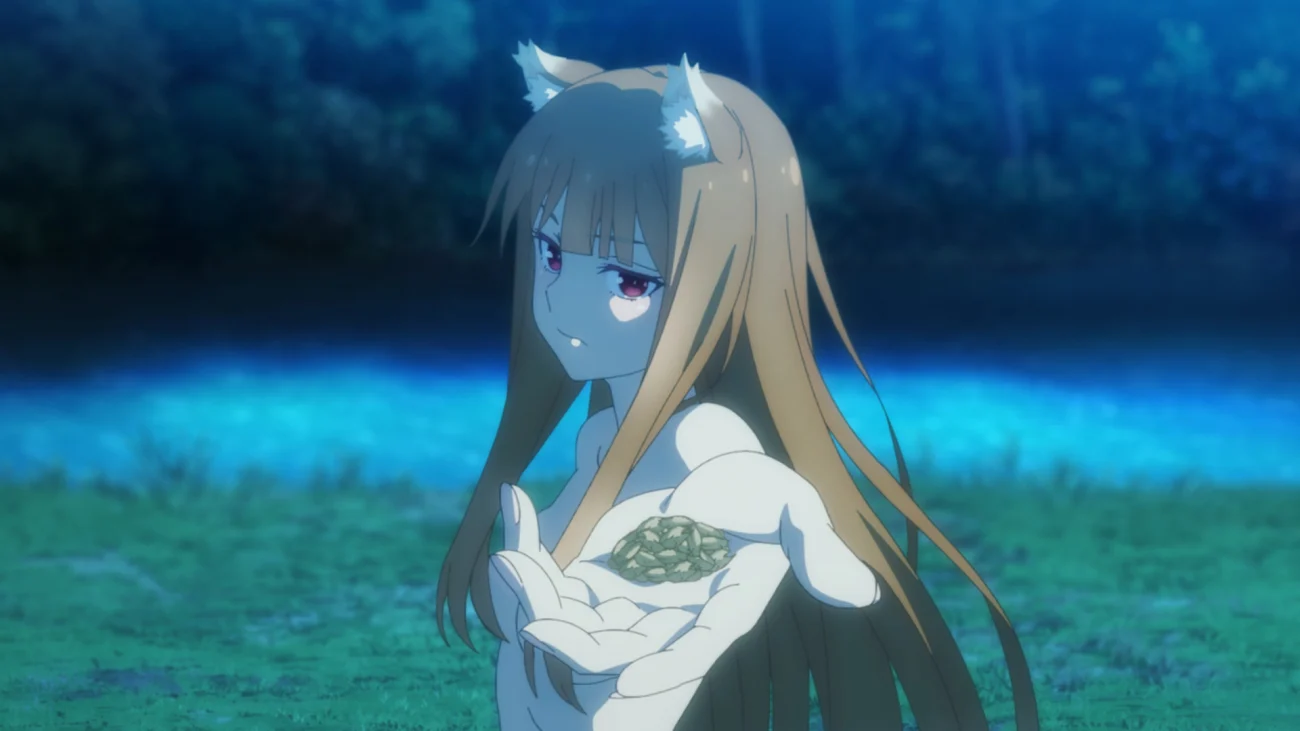
Holo, from ‘Spice and Wolf’, is a wolf harvest deity tied to the town of Pasloe, ensuring bountiful yields in exchange for faith and ritual. She travels with a merchant, revealing a divine nature that includes sharp senses, transformation into her true form, and knowledge of older pacts between humans and gods.
Her status illustrates how local deities operate within economic and social systems: as agriculture modernizes and towns outgrow myths, the terms of protection and worship shift. Holo’s lore connects to the land’s cycles and communal agreements, grounding godhood in contracts and tradition rather than cosmic spectacle.
Aqua
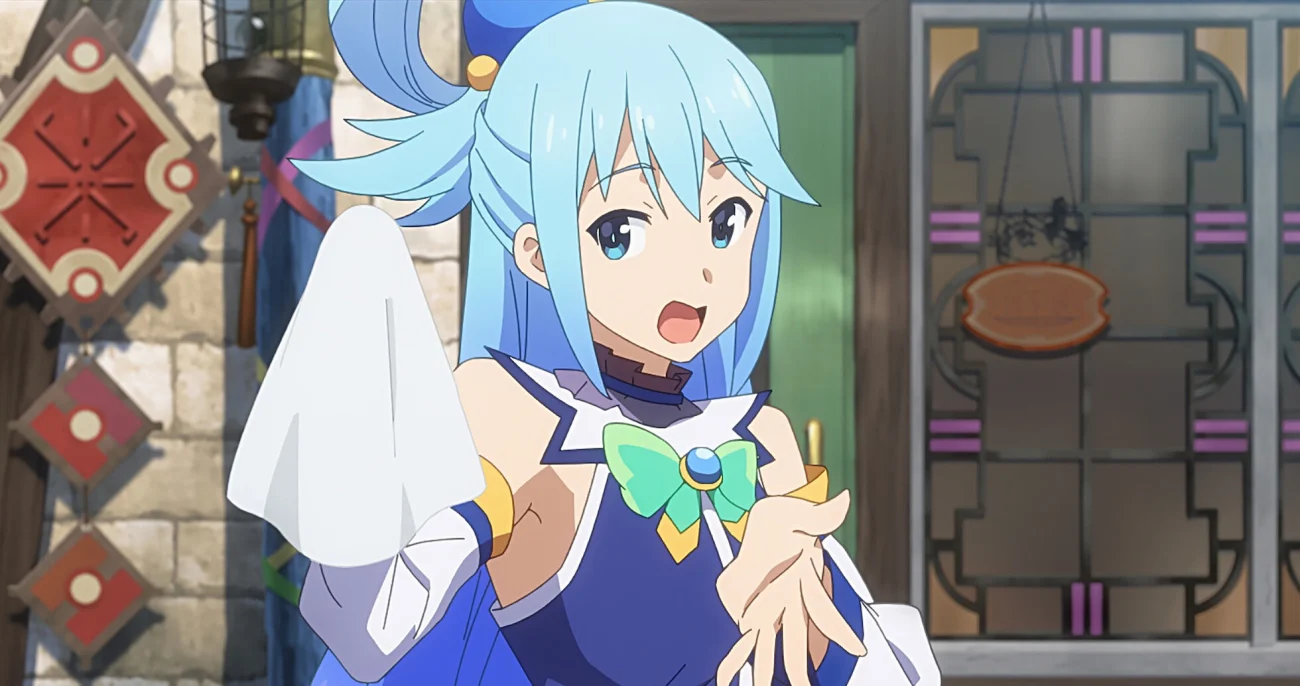
In ‘KonoSuba: God’s Blessing on This Wonderful World!’, Aqua is a water goddess responsible for guiding souls to reincarnation. She accompanies the protagonist into a fantasy world, where her divine portfolio includes purification, resurrection under conditions, and control over water and undead.
Aqua’s priestess-driven worship and connection to Axis Church institutions show how her divinity is formalized through doctrine, temples, and rites. The story details practical limits and requirements for miracles, presenting godhood as a mix of sacred authority and rule-bound spellcasting within its RPG-like setting.
Belldandy
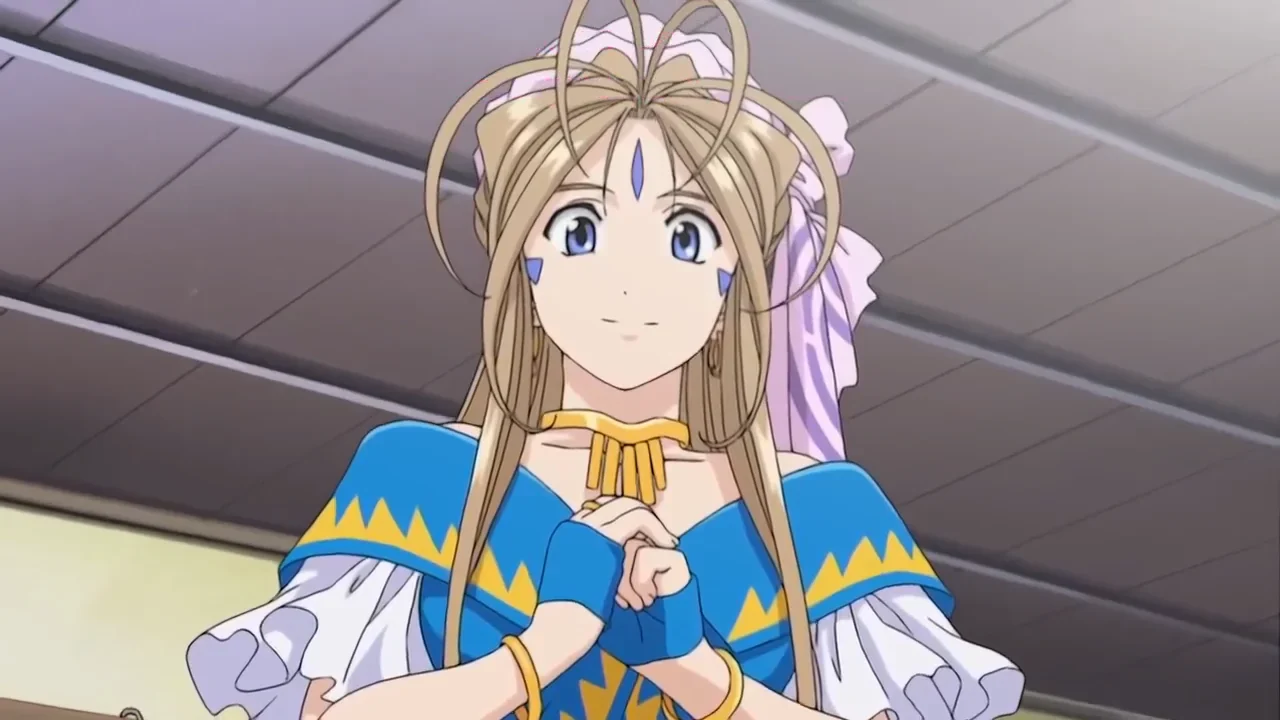
Belldandy, from ‘Ah! My Goddess’, is a goddess who answers wishes through a heavenly office that dispatches divine assistance to mortals. System administrators, bugs, and rule sets govern what she can grant, and her magic interacts with contracts and permissions.
The series explains heaven as a structured organization with licensing, limitations, and even system outages, which frames Belldandy’s powers inside clear regulations. Her miracles often require proper authorization or balance checks, presenting a procedural model of divinity that operates like a cosmic service desk.
Ryuk
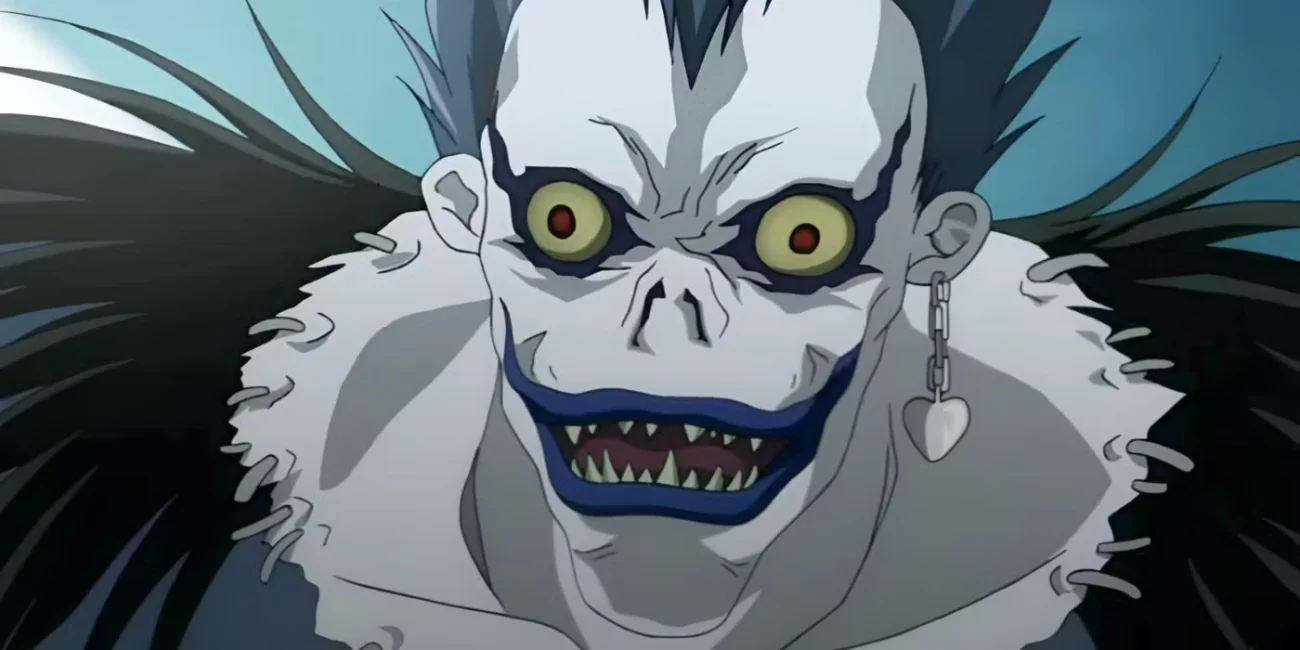
In ‘Death Note’, Ryuk is a shinigami—a god of death—who extends life by writing human names in a Death Note, harvesting remaining lifespan. He drops a notebook into the human world out of boredom, setting off a chain of events tied to strict rules inscribed in the book.
Shinigami live in their own realm with its own decay and politics, and Ryuk’s interactions establish legalities around ownership, memory, and transactions of the Death Note. The series treats death-god power as contractual and codified, with loopholes and exceptions that can be exploited but never ignored.
Athena (Saori Kido)
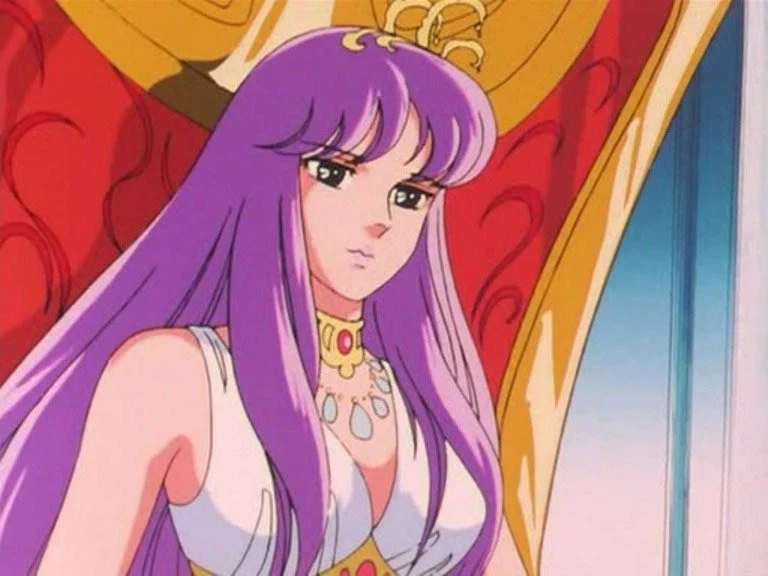
In ‘Saint Seiya’, Athena reincarnates as Saori Kido, presiding over a sanctuary of Saints who don constellated Cloths to protect Earth. Her divine cosmos manifests in barriers, healing, and authority recognized by both human and divine factions.
Conflicts with other gods—such as Poseidon and Hades—are waged through champions and sacred armors, linking Athena’s godhood to mythic warfare, oaths, and lineage. Temples, prophecies, and the hierarchy of Bronze, Silver, and Gold Saints outline a religious–military institution built around her protection.
Shishigami (Forest Spirit)
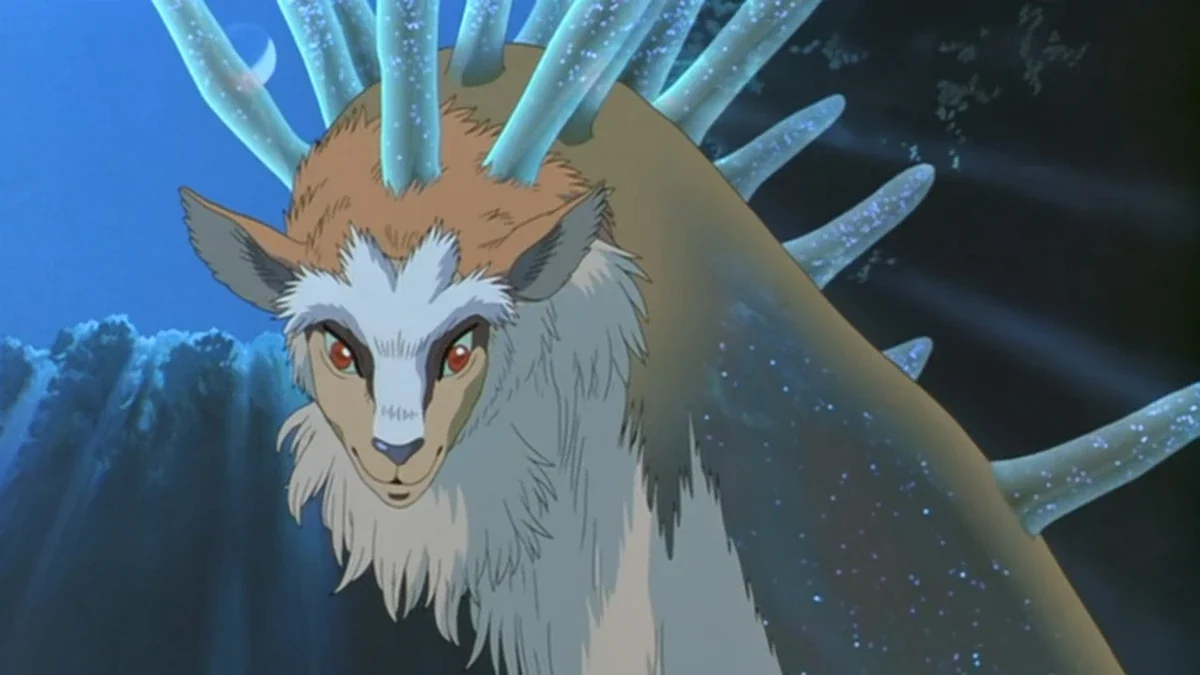
In ‘Princess Mononoke’, the Forest Spirit—Shishigami by day and the Night-Walker by night—embodies life and death in the natural world. Its presence rejuvenates flora and fauna, and its injury or death has immediate, wide-ranging ecological consequences.
The film presents this deity as a neutral, cyclical force rather than a partisan guardian. Shrines, sacred groves, and the respect or fear shown by humans and animal gods alike define how societies relate to it, making clear that reverence or violation directly changes the land’s fate.
Soul King
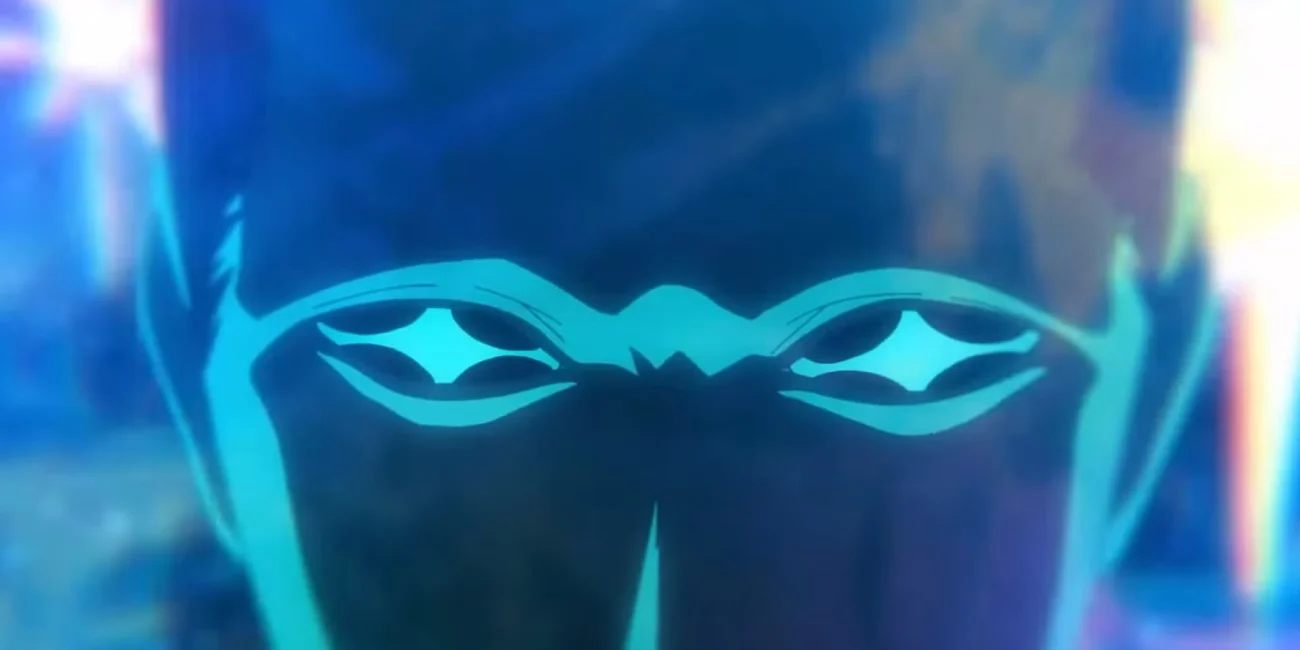
‘Bleach’ presents the Soul King as the linchpin that stabilizes the worlds of the living, the Soul Society, Hueco Mundo, and the Dangai. He is sealed and largely immobile, with his existence acting as a keystone that keeps realms from collapsing or merging.
His body parts, guards, and royal realm form a specialized system around that stabilizing function. Events involving the Soul King revolve around succession, protection, and the consequences of tampering with the cosmos’ “anchor,” underscoring a depiction of divinity as necessary structure rather than active rulership.
Nanami Momozono
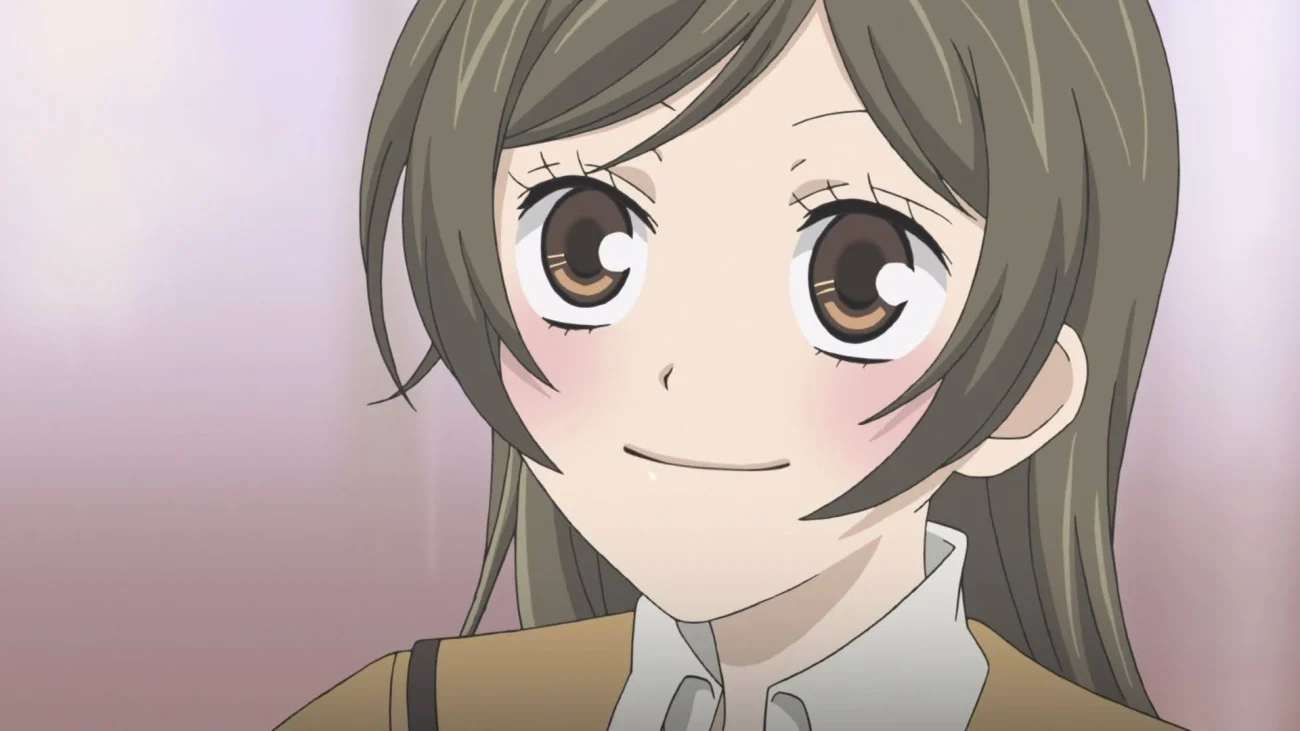
In ‘Kamisama Kiss’, Nanami becomes a land god after receiving a shrine and its mark from the previous deity, Mikage. She gains authority over the shrine’s territory, contracts a familiar named Tomoe, and learns rituals that govern purification, barriers, and blessings.
The series explains how land gods draw strength from worshippers, talismans, and properly kept grounds. Seasonal festivals, offerings, and the bond with familiars determine how effectively a deity can protect a domain, making Nanami’s godhood a study in stewardship and community ties.
Il Ilah
In ‘Magi: The Labyrinth of Magic’, Il Ilah is a primordial god tied to the creation of rukh and the metaphysical framework that shapes fate across worlds. Historical accounts within the story describe how ancient civilizations revered Il Ilah as the source of life and guidance, and how contact with this divinity set the foundation for magoi, rukh flow, and the principles that govern magic.
The narrative traces catastrophic consequences when rulers and sorcerers attempt to manipulate Il Ilah’s power, linking theology to political ambition and large-scale upheaval. Even after cataclysms reshape societies, Il Ilah’s influence persists through dungeons, metal vessels, and the guidance of rukh, defining how magicians, kings, and ordinary people interact with destiny in the series.
Share your favorite anime deities in the comments and tell us which ones you think deserve a shrine on this list!