Top 15 Terrifying Giant Monsters in Anime

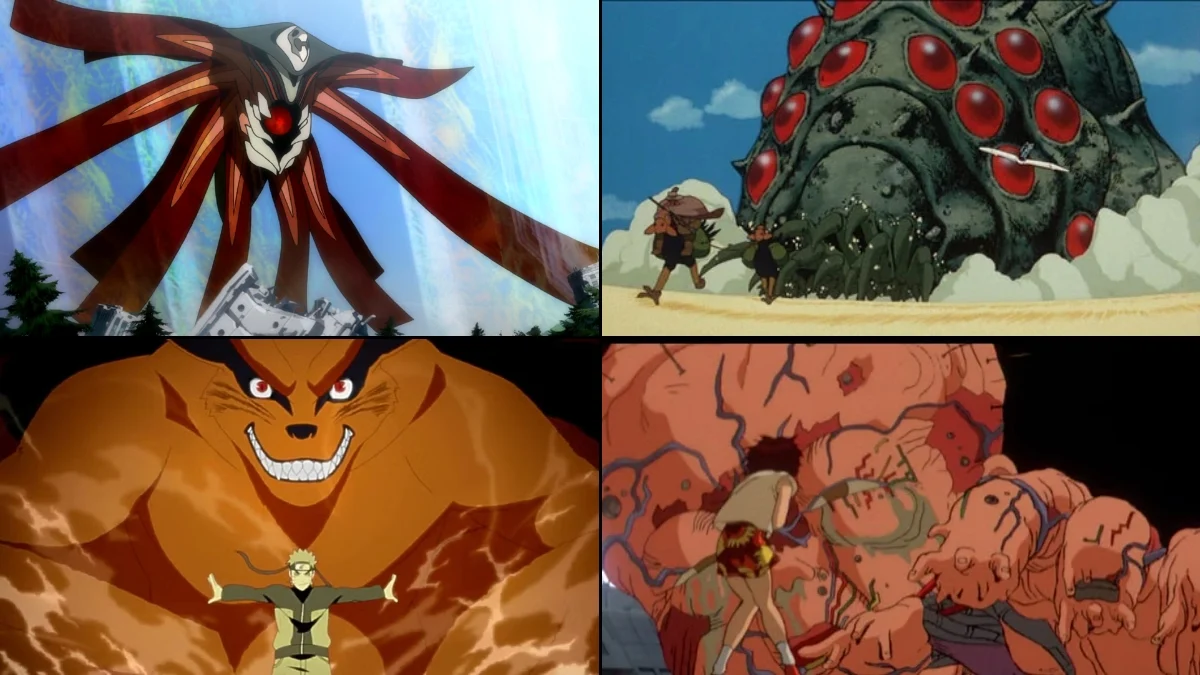

Giant monsters are baked into anime history, stomping through cityscapes, reshaping worlds, and forcing heroes to rethink what “power” even means. Across series and films, creators have imagined kaiju, titans, angels, eldritch organisms, and mythic beasts that are as memorable as any protagonist. These creatures aren’t just big—they’re loaded with lore, biology, and rules that make their stories click.
This list rounds up fifteen of the most formidable giants and pinpoints what they actually do in their worlds: how they were made, what powers they use, and why their presence changes everything around them. You’ll find titans that rewrite bloodlines, angels that fight with geometry, and ancient bio-weapons that still scorch the earth long after their creators are gone.
Colossal Titan
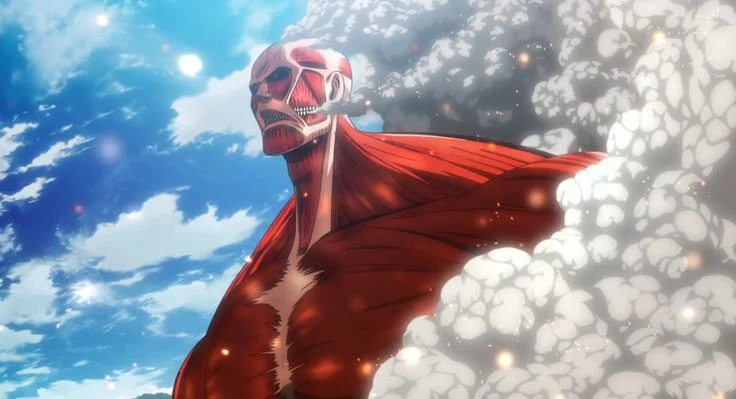
The Colossal Titan in ‘Attack on Titan’ is a one-of-a-kind form known for instant, explosive transformation that releases superheated steam capable of repelling attackers and igniting structures. Its immense height allows it to overtop defensive walls, and its muscle mass and heat output let it “vent” to push enemies away without moving much. The transformation’s blast radius functions like a tactical weapon, flattening fortifications the moment it appears.
Multiple inheritors have wielded this power, and its usage follows the series’ Titan-shifter rules involving spinal fluid, lineage, and a limited lifespan of the power’s holder. The form’s battlefield role is siege-breaking: breach, overwhelm with heat and shock, and withdraw before conventional forces can respond. Its visibility also makes it a strategic signal in conflicts, marking the start of major offensives.
Beast Titan
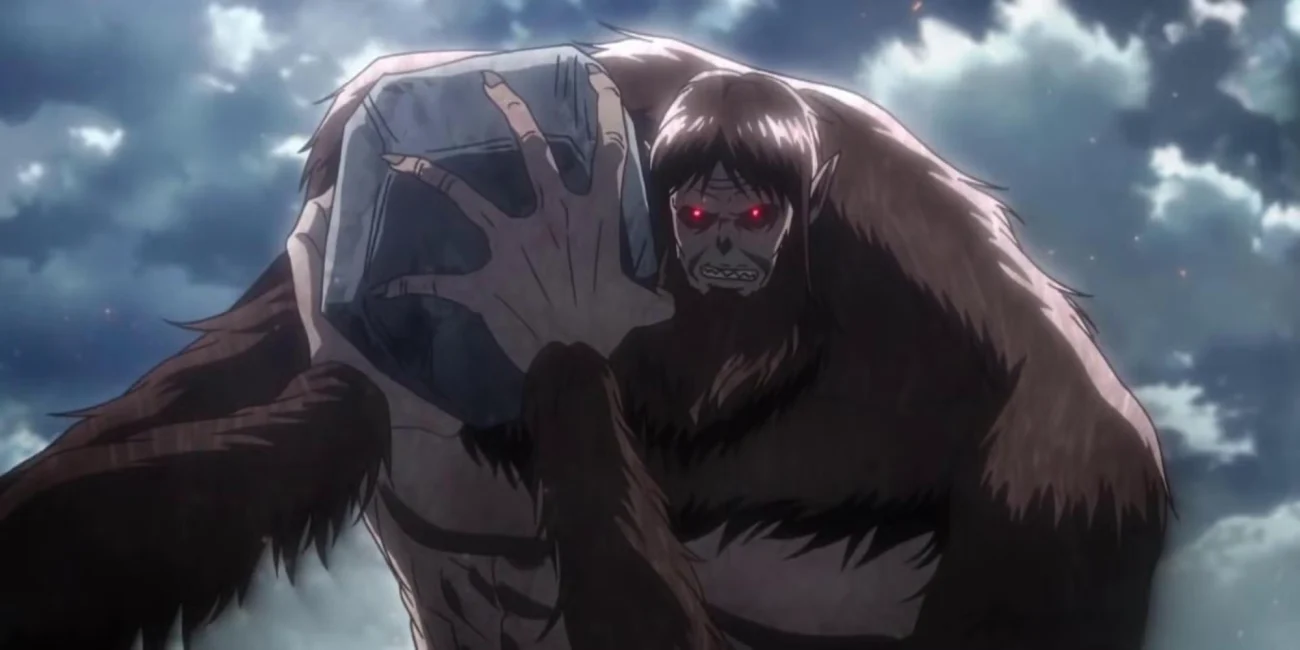
The Beast Titan in ‘Attack on Titan’ is defined by its simian morphology and long-range combat style, with thrown projectiles accelerated to lethal, artillery-like velocities. The shifter’s specialized laryngeal structure allows for issuing commands to Pure Titans under certain conditions, turning nearby titans into a controllable force multiplier. Its forearms and shoulders are adapted for fast, repeatable throws with devastating accuracy.
The form’s abilities vary slightly by inheritor, but its tactical footprint is consistent: field leadership, ranged suppression, and strategic control over titan behavior. In the series’ military calculus, it enables bombardment without cannons and opens engagements by destroying enemy formations before close-quarters combat begins.
Founding Titan
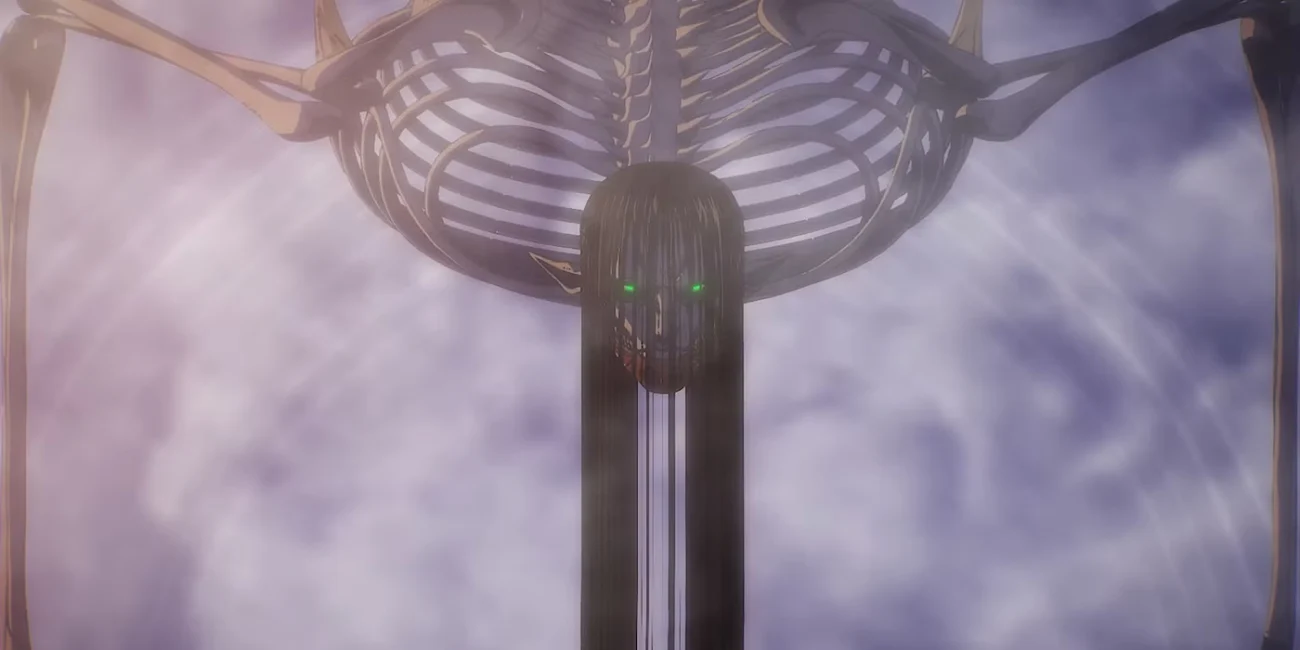
The Founding Titan in ‘Attack on Titan’ manipulates Subjects of Ymir at a biological level, enabling memory alterations, coordinated commands to other titans, and changes to physiology across a population. Activation requires specific bloodline conditions and, in many cases, contact with a royal. Its power extends through paths that connect Eldians, allowing instantaneous influence regardless of distance.
Because it can reconfigure entire societies’ memories and bodily traits, the Founding Titan functions as governance by biology. Nations plan around whether it’s active, who holds it, and how its rules for activation are satisfied. Its existence underpins the series’ political order, making it a strategic resource rather than a conventional battlefield unit.
King Ghidorah
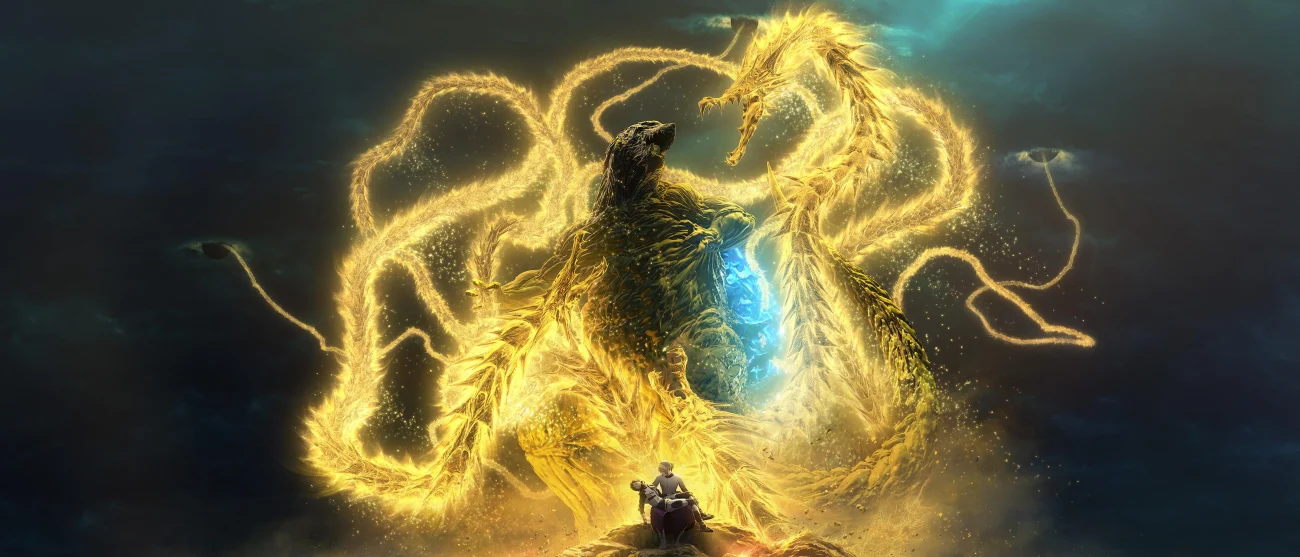
King Ghidorah’s anime portrayal—prominently in ‘Godzilla: The Planet Eater’—presents a multi-headed entity linked to non-local physics, entering reality in ways that bypass standard causality. Each head acts semi-independently but stays coordinated, enabling simultaneous assaults and energy absorption that disrupts defensive systems. Conventional matter interaction is limited or selectively permitted, complicating direct attacks.
This interpretation emphasizes Ghidorah as an extradimensional predator that preys on civilizations through cultic or technological gateways. Response strategies focus on severing the connection that anchors it rather than brute force. Its arrival typically coincides with social destabilization, as factions attempt to use the creature’s power for control.
Ohmu

Ohmu in ‘Nausicaä of the Valley of the Wind’ are massive arthropods that govern the Sea of Corruption’s ecological balance. Their compound eyes change color with agitation, and when enraged they can stampede as a coordinated mass that overruns terrain and settlements. Their bodies resist toxins and serve crucial roles in recycling pollutants within their biome.
Communication with Ohmu is possible through empathic or environmental cues, and their behavior functions as an indicator of ecological stress. Human communities track Ohmu migrations, eye color shifts, and trail patterns to predict events. The narrative uses them to demonstrate how macro-scale organisms can maintain equilibrium in a poisoned world.
God Warrior

The God Warriors in ‘Nausicaä of the Valley of the Wind’ are engineered bioweapons from a lost civilization, capable of emitting concentrated energy blasts that vitrify landscapes. Their incomplete or degraded reactivations show unstable physiology, with tissue breakdown occurring under sustained output. Even in partial operation, a single unit can alter regional geography.
Recovered relics, containment units, and activation artifacts are treated like weapons of mass destruction. Political entities in the story attempt to control or revive them, knowing that a functioning God Warrior can end conflicts through overwhelming firepower. Their presence reshapes diplomacy, archaeology, and military planning in surrounding nations.
Zeruel (14th Angel)

Zeruel in ‘Neon Genesis Evangelion’ is an Angel with reinforced, paper-thin appendages that extend as cutting limbs, severing armored targets at range. Its core is heavily shielded, and its energy output allows for high-intensity particle beams that breach fortified barriers. The Angel advances directly, prioritizing speed of penetration over evasive tactics.
Defensive operations against Zeruel rely on layered barriers, sacrificial stalling, and timing attacks during its appendage extension cycles. Because its offensive suite defeats most static defenses, countermeasures focus on mobility, coordinated strikes from Eva units, and exploiting narrow windows when its core becomes partially exposed.
Kurama (Nine-Tails)

Kurama in ‘Naruto’ is a tailed beast composed of dense chakra, granting massive destructive output, rapid regeneration, and the ability to form chakra constructs like tails and arms at scale. Sealing techniques bind or partition its chakra, enabling hosts to access portions of its power under strict conditions. Its negative emotional energy can influence environments and hosts.
Ninja villages calibrate sealing methods, jinchūriki training, and battlefield doctrine around Kurama’s potential release or controlled deployment. Medical and sensory-nin track chakra signatures to detect fluctuations, and treaties consider tailed beasts as deterrents comparable to strategic weapons. Kurama’s chakra can be distributed or shared, altering team-level capabilities during critical engagements.
Great Ape (Oozaru)

The Great Ape form in ‘Dragon Ball’ is triggered in Saiyans with tails when exposed to sufficient Blutz Waves from a full moon or artificial source. The transformation drastically increases size, durability, and power, while amplifying vocalized energy attacks. The tail remains a weak point; removal or damage can reverse the form or incapacitate the user.
Tactically, Oozaru transformations force opponents to adjust to city-scale combat and environmental hazards like shockwaves and ground rupture. Countermeasures include eliminating the Blutz Wave source, severing the tail, or using energy techniques that target joints and sensory organs. Training regimens and scouters account for the exponential power spikes associated with this state.
Zunesha

Zunesha in ‘One Piece’ is an ancient, colossal elephant that continuously walks through the ocean, carrying the island of Zou on its back. Communication with Zunesha requires the Voice of All Things, and its movement follows orders from a remote authority or specific commands, implying a long-standing punishment or geas. Its height and leg length let it traverse deep waters while supporting a settlement above.
Naval powers map shipping lanes around Zunesha’s path, and the Mink Tribe structures their society to withstand sea spray, wind, and seismic sway from each step. When authorized to attack, Zunesha uses a trunk strike with enough force to alter fleet dispositions in a single motion. Its existence affects geopolitics and trade routes across nearby seas.
Sea Kings

Sea Kings in ‘One Piece’ are enormous marine organisms that inhabit the Calm Belt and other waters, posing persistent threats to standard ships. They vary in morphology but share size, bite force, and resilience beyond ordinary sea life. Their behavior can be influenced by certain individuals with Conqueror’s Haki or unique communicative abilities, enabling temporary coexistence or coordination.
Maritime technology in the setting—like seastone hulls and paddle-driven ships—evolved partly to avoid Sea King detection and compensate for windless zones where they thrive. Cartographers mark Sea King territories, and naval tactics include using larger vessels, decoys, or sea-route stacking to minimize encounters. Their role makes open-ocean travel a strategic challenge for most factions.
Menos Grande (Gillian)

Menos Grande in ‘Bleach’ are the lowest class of Menos but still tower over cityscapes, formed from the aggregation of many Hollows into a single, mask-bearing giant. They fire Cero energy blasts capable of broad destruction and exhibit hive-like internal conflicts for control, which can occasionally lead to evolution into higher Menos classes. Their slow gait is offset by their reach and area-of-effect attacks.
Soul Reapers treat Gillians as threats requiring coordinated squads or captain-class intervention depending on conditions. Engagements aim to disrupt Cero charging cycles and break masks to purify the massed souls within. Their emergence signals instability in the boundary between worlds, prompting containment operations and investigations into Hollow population surges.
Gauna

Gauna in ‘Knights of Sidonia’ are space-dwelling lifeforms with core “placenta” and protective “ena” layers, often assembling into massive shapes that dwarf human ships. They adapt rapidly to weapon types, necessitating specialized lances and explosives designed to penetrate the ena and destroy the core. Their biology supports long-distance space travel and vacuum survival without conventional metabolism.
Humanity’s defense relies on mecha sorties, formation flying, and coordinated strikes that exploit brief openings after outer-layer breaches. Gauna can mimic human forms or generate composite structures like colony-sized masses, forcing continuous updates to tactics and materials science aboard the Sidonia. Strategic planning centers on ammunition logistics and core-tracking during multi-vector assaults.
Tetsuo’s Amorphous Form

In ‘Akira’, Tetsuo’s uncontrolled psychic escalation culminates in an amorphous, ever-expanding mass that engulfs structures and machinery. The growth stems from runaway cellular proliferation governed by psionic output, overriding normal biological limits. Mechanical objects incorporated into the mass become fused frameworks, altering mobility and leverage as the form spreads.
Containment efforts revolve around isolating the event zone, managing civilian evacuation, and attempting to stabilize Tetsuo’s output with counter-psionic interference or targeted strikes. The phenomenon illustrates the series’ link between psychic power and catastrophic somatic change, with thresholds that, once crossed, remove conventional medical or military options from consideration.
Shin Godzilla (Final Form)

‘Shin Godzilla’ presents a Godzilla with adaptive, self-evolving biology that reconfigures morphology mid-battle, including phased dorsal salvos and a concentrated heat beam with precision control. The organism self-coagulates after severe damage and can enter periods of dormancy while planning new responses at a cellular level. Its internal reactor-like processes enable sustained, high-energy attacks.
Countermeasures in the film focus on coagulation agents delivered via synchronized civil-engineering operations, using trains, cranes, and bombardment to immobilize the creature long enough for chemical intervention. Urban planning data, evacuation corridors, and power-grid control become as important as military firepower in neutralizing the threat within a densely populated area.
Got a favorite giant monster we missed or a detail you’d add? Share your picks and insights in the comments!