Top 10 Coolest Things About Thor



Thor in Marvel Comics launched as a fusion of myth and superhero storytelling, arriving fully formed as the thunder-wielding protector who straddles Earth and Asgard. From the start, the character centered on a simple, durable premise: a champion who answers threats too large for mortals while staying closely tied to humanity through long-running connections to doctors, soldiers, and scientists in New York.
Across decades, writers have expanded that core with a consistent toolset—Mjolnir, weather control, flight, immortality-adjacent longevity—plus evolving roles as Avenger, prince, and king. Milestone arcs, new wielders of the hammer, and cosmic escalations keep the mythology moving, while supporting casts and villains give clear continuity threads through crossovers and solo runs alike.
Comic-Book Debut and Creation
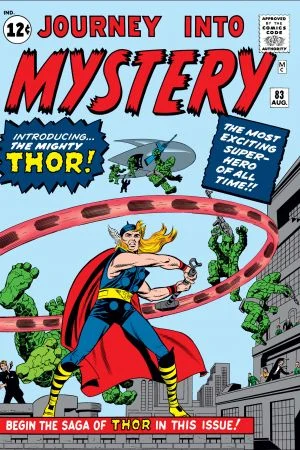
Thor first appeared in ‘Journey into Mystery’ #83, created by Jack Kirby, Stan Lee, and Larry Lieber, introducing the hammer, the worthiness enchantment, and the Earth–Asgard link that powers most Thor stories. That debut established a visual language—winged helmet, crimson cape, circular disk armor—that artists iterate on while keeping the character immediately recognizable.
The early anthology format let the series drop Thor into self-contained adventures against stone men from Saturn, enchantresses, and giants before building longer sagas. Those foundations defined a pattern the comics still use: introduce a threat, reveal a mythic or cosmic wrinkle, and resolve it with a mix of brawn, stormcraft, and Asgardian lore.
Founding Avenger and Team Roles
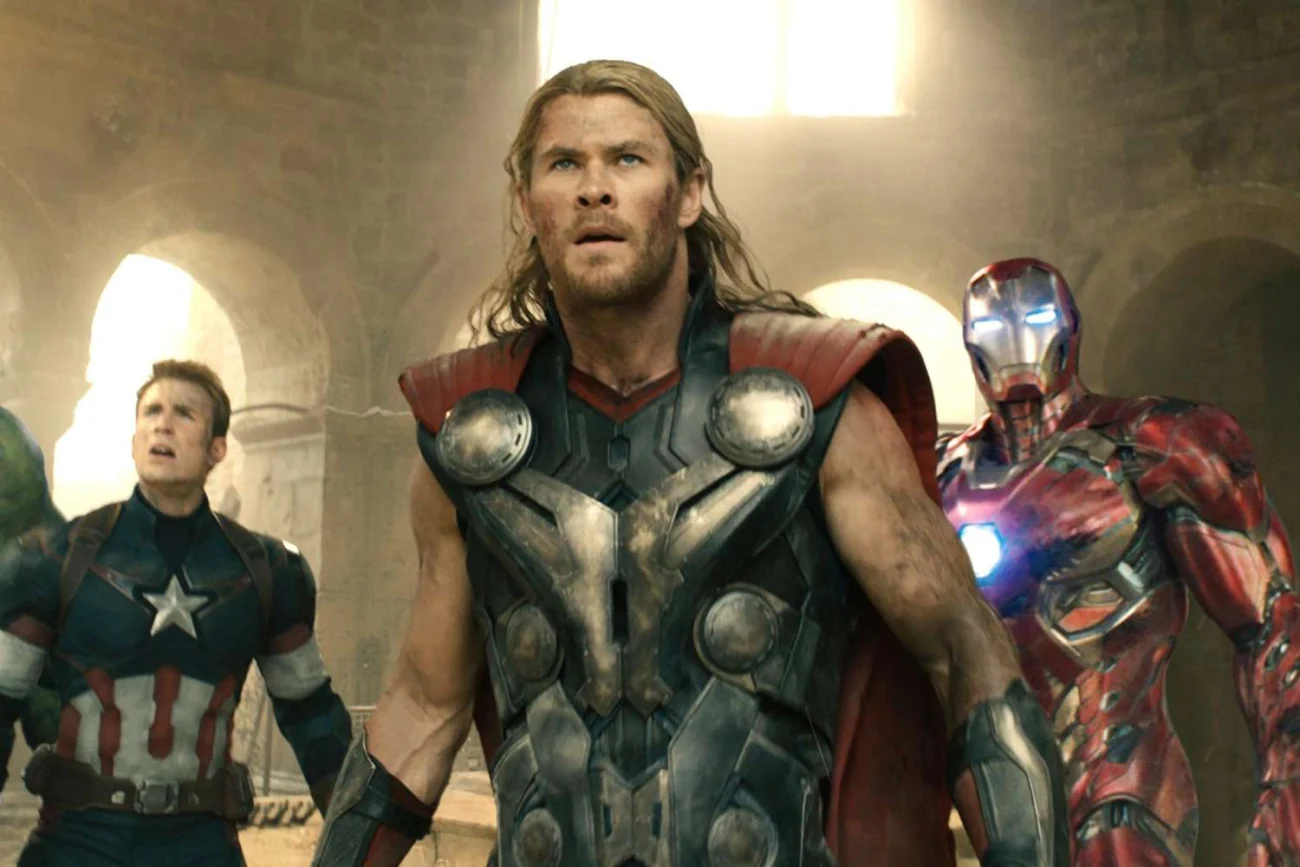
Thor is a founding member of the Avengers, placing him at the center of Earth’s response to world-ending crises alongside scientists, spies, and other enhanced heroes. His presence covers heavy-hitter duties—absorption of energy blasts, battlefield control with storms, and rapid redeployment via flight and Bifrost access.
Team stories consistently use Thor as a pivot for interrealm escalations, because Asgardian diplomacy and family politics often spill into Earth. Membership also ties Thor to ongoing initiatives like shared training, base defense, and emergency protocols, giving the character regular entry points into cross-title events.
Mjolnir’s Enchantment and Abilities
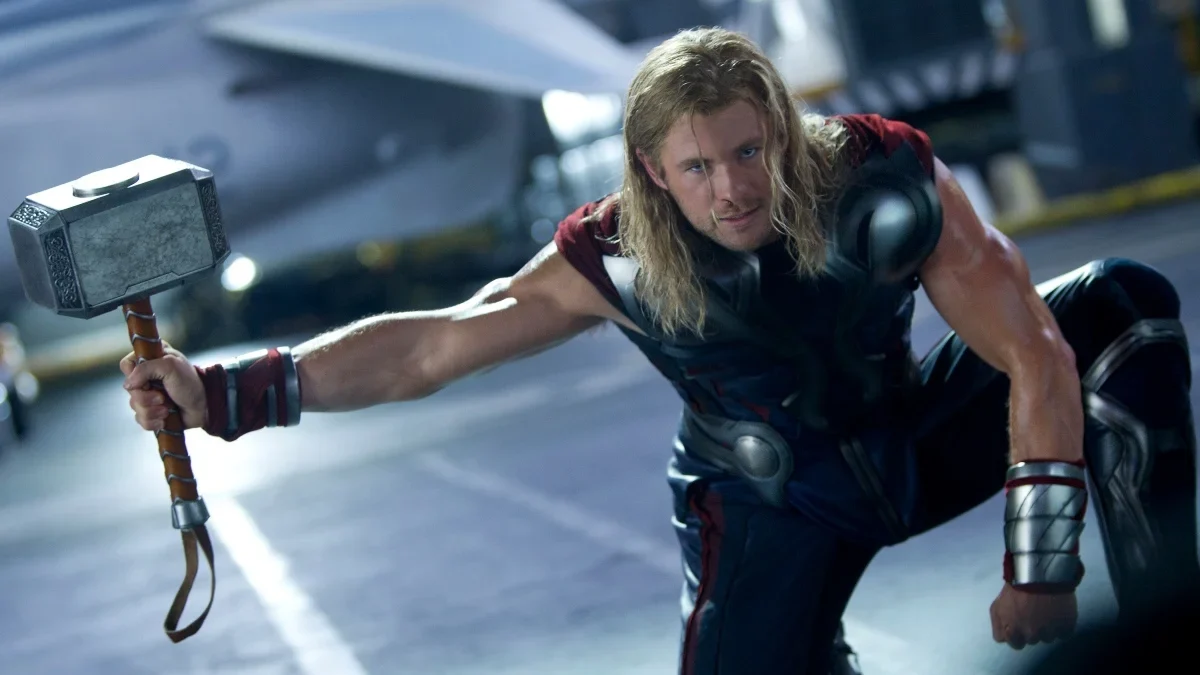
Mjolnir’s worthiness enchantment restricts who can lift the hammer and, once wielded, grants flight, weather manipulation, energy projection, and dimensional traversal. The hammer returns to the thrower’s hand, can be called across distances, and serves as both conduit and regulator for large energy discharges that would otherwise harm nearby allies.
In combat and travel logistics, Mjolnir functions as a precision instrument: it channels targeted lightning, deploys barriers against energy attacks, and opens portals aligned to known coordinates like Asgard or other realms. Outside combat, the hammer’s enchantments enable ceremonial roles, sanctifying oaths and recognizing successors to Asgardian offices when stories require it.
Worthiness Arcs and ‘The Unworthy Thor’
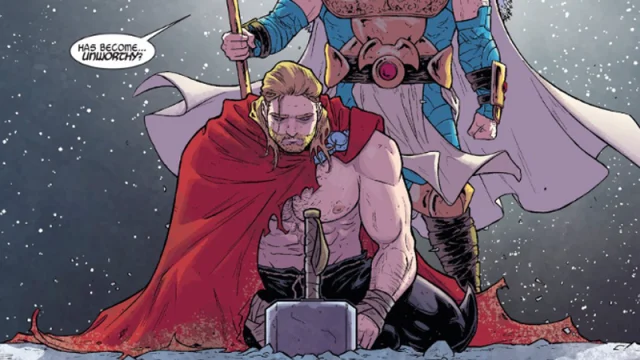
Thor’s history features multiple worthiness tests where he loses access to Mjolnir and must redefine his role. ‘The Unworthy Thor’ tracks a period when the hammer is out of reach, forcing reliance on alternate weapons, allies, and raw stormcraft while the narrative examines the criteria and consequences of worthiness.
These arcs standardize a continuity mechanism for changing wielders or equipment without erasing Thor’s status. They also allow parallel stories—searches for lost artifacts, confrontations with rivals for the mantle, and investigations into what the hammer considers valor, humility, and responsibility—while keeping the Asgard–Earth protector mission active.
Beta Ray Bill and Stormbreaker
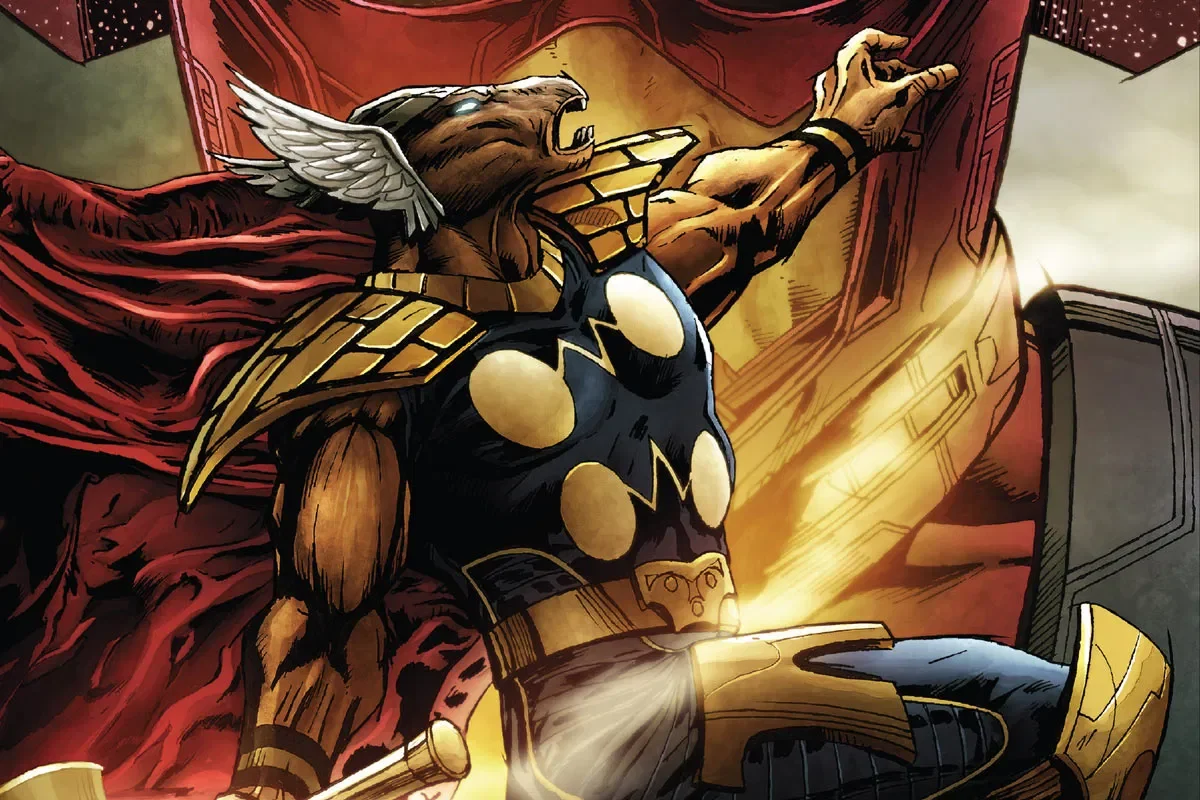
Beta Ray Bill enters through a trial-by-combat scenario that proves him worthy to wield a hammer’s power, leading to the forging of Stormbreaker as his signature weapon. Bill’s introduction clarifies that worthiness is not species-specific and that Asgardian artifacts can be duplicated or re-enchanted to serve new champions.
Thor’s interactions with Bill formalize cross-ally protocols for shared threats and interstellar evacuations, since Bill’s responsibilities extend to his own displaced people. Stormbreaker’s presence in the lore gives writers a second hammer-class artifact for tactical scenarios, hand-offs, or joint operations where two worthy wielders coordinate battlefield control.
Donald Blake and the Alter-Ego Evolution
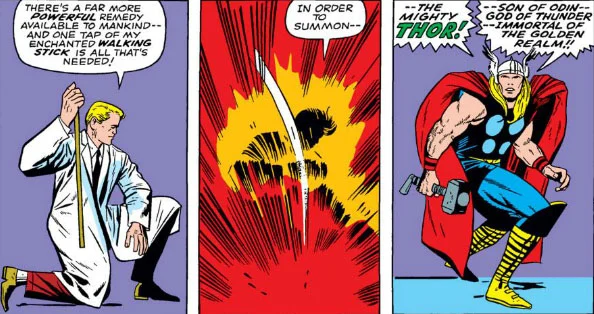
Early stories bound Thor to physician Donald Blake, using a staff-to-hammer transformation to switch between identities and anchor the god to a human perspective. The setup provided a narrative pipeline for medical settings, hospital-based rescues, and moral dilemmas involving patient care and superhero triage.
Later retcons reframed Blake as a construct with agency issues that eventually turn adversarial, culminating in storylines where Blake confronts Asgardians after long isolation. This evolution preserves the medical and human-scale roots of the myth while updating the alter-ego concept into a modern conflict with clear rules and consequences inside the Asgardian system.
King of Asgard and the Odinforce/Thorforce

When Thor assumes the throne, he inherits the Odinforce—often termed the Thorforce under his stewardship—which amplifies energy manipulation, foresight, and reality-adjacent feats. The upgrade shifts responsibilities from frontline fighter to strategist-monarch, with duties that include resource allocation across realms and treaty enforcement.
This role formalizes command structures for the Einherjar, Valkyrie deployments, and Bifrost access, aligning military decisions with cosmic obligations. It also introduces constraints—succession law, council advisories, and civilian welfare—that shape how and when Thor can intervene directly on Earth or in other realms.
Jane Foster’s Tenure as ‘The Mighty Thor’

During a key mantle-shift, Jane Foster becomes the wielder of Mjolnir in ‘The Mighty Thor’, establishing a precedent for non-Asgardian champions adopting the role when worthy. The era codifies how the hammer interprets courage, sacrifice, and duty, and it details the physiological costs and benefits of wielding Asgardian power.
For continuity, this period documents how laws, titles, and battlefield command adapt when someone new carries the hammer. It also clarifies the difference between being Thor—the mantle—and being Odinson—the person—so later stories can reassign roles without disrupting established alliances and responsibilities.
Rogues, Sagas, and Realm-Threats
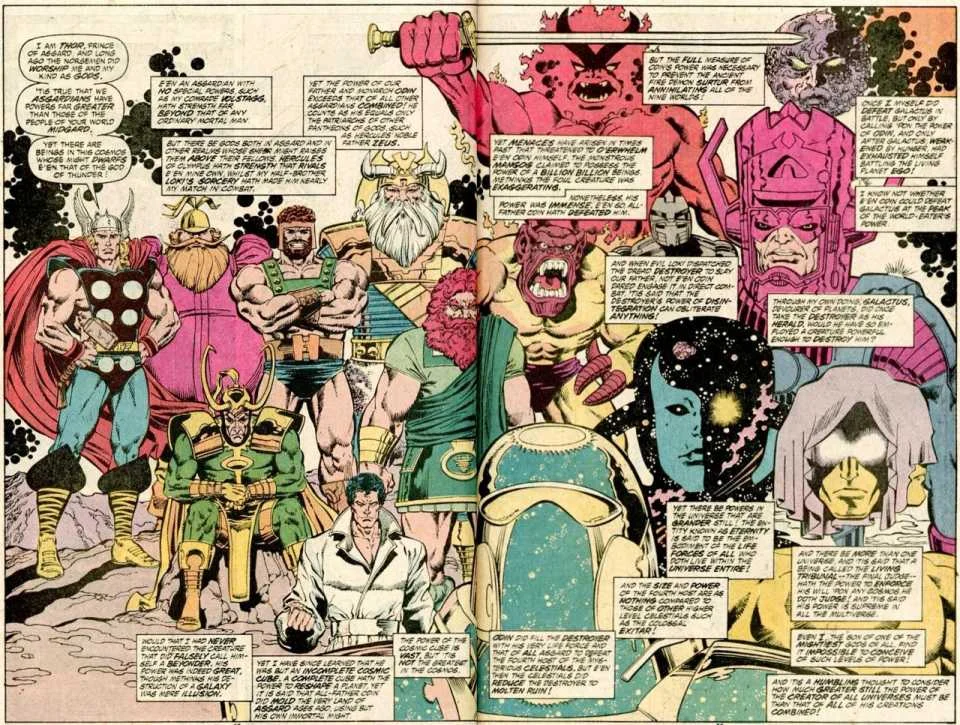
Thor’s rogues and antagonists cover sorcery, giant-kind, and cosmic predators, including Loki, the Enchantress, Hela, Surtur, Mangog, and Gorr the God Butcher. These foes create recurring test cases for storm control, enchantment countermeasures, and artifact security, ensuring the books cycle through magic, muscle, and philosophy-driven conflicts.
Event-scale stories—such as ‘God of Thunder’, ‘War of the Realms’, and other Asgard-centric arcs—show standardized escalation: realms fall, Bifrost is contested, and Earth becomes a strategic hub. These sagas document logistics like refugee management across realms, coalition building with other heroes, and artifact deployment under crisis protocols.
Alternate and Enhanced Incarnations
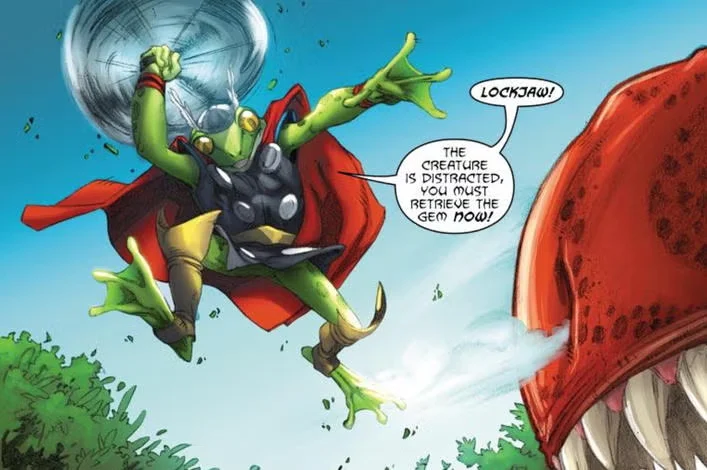
Marvel continuity catalogs multiple versions and power states, including Rune King Thor, Ultimate Thor, King Thor, and unusual cases like Throg. Each version documents different ceilings on energy manipulation, durability, and dimensional awareness, giving writers calibrated options for cosmic-scale or street-level plots.
These incarnations also function as reference models: they demonstrate how runes, royal power, or altered histories change the limits and responsibilities of the mantle. When mainline Thor accesses new states—through runic knowledge, the Odinforce, or cosmic pacts—past variants provide established benchmarks for capabilities and risks.
Share your favorite Marvel Thor storyline—or the moment that made you a fan—in the comments!