Top 10 Coolest Things About Naruto Uzumaki



Naruto Uzumaki’s journey runs through the full timeline of ‘Naruto’, ‘Naruto: Shippuden’, and into ‘Boruto: Naruto Next Generations’, tracing how a loud, lonely academy student became the Seventh Hokage who helped end a generations-long cycle of war. Along the way, he learned techniques that redefined how shinobi fight, forged alliances with beings people only feared, and took on responsibilities that shaped the modern ninja world. The highlights below stick to what he actually does—how the abilities work, when they show up, and why they matter in-world.
Because this is about Naruto himself rather than a list of shows, the focus here is on specific skills, powers, and milestones with concrete details—how the Shadow Clone feedback loop shortens training, what makes Rasenshuriken different from Rasengan, how Sage Mode changes sensory range, and what the Six Paths blessing unlocks during the Fourth Great Ninja War. If you’re revisiting the series, these are reliable signposts for the progress he makes and the tools he brings to every major battle.
Shadow Clone Mastery

The Multiple Shadow Clone Technique lets Naruto split his chakra into dozens—or even thousands—of solid clones that can move, fight, and perform jutsu. He first learns it from the Forbidden Scroll early in ‘Naruto’, and his unusually large chakra reserves let him use a jutsu most shinobi avoid due to the risk of dangerous chakra depletion. Clones disperse into chakra when hit, and all their field experience—including sensory impressions and muscle memory—returns to the original.
Naruto applies this property to gain massive parallel practice, using swarms of clones to rehearse chakra control tasks and nature transformation in hours instead of weeks. In combat, he layers deception on top of mobility, mixing real bodies with clones to bait counters, flank opponents, or prepare complex setups like surprise Rasengan strikes. He also employs clones for logistics—scouting, message-running, and rescue—so that a single mission can cover many objectives at once.
Rasengan and the Wind Release: Rasenshuriken
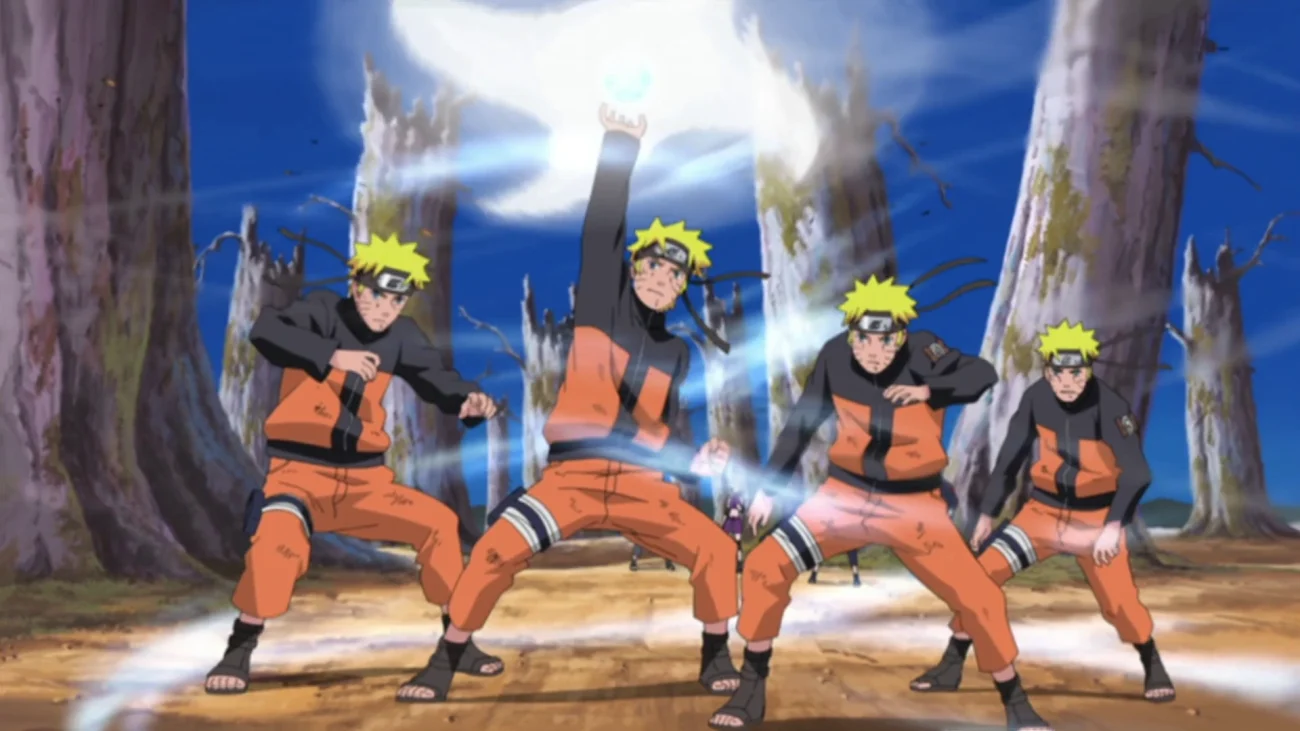
Rasengan is a high-level technique created by Minato Namikaze; it’s a dense, rotating sphere of chakra formed without hand seals and designed to grind at a target on contact. Under Jiraiya’s training in ‘Naruto’, Naruto learns to shape the sphere consistently, then later evolves it by adding his natural chakra element. That evolution—Wind Release: Rasenshuriken—turns the sphere into a bladed storm of microscopic wind chakra that attacks at the cellular level.
Initially, using Rasenshuriken at close range risks damage to the user due to its internal shredding effect. After Naruto gains Sage Mode in ‘Naruto: Shippuden’, he can form larger variants, throw them as ranged projectiles, and reduce self-harm. Over time, he adds further extensions such as Giant Rasengan, multi-clone assisted variants, and tailed-beast-enhanced Rasengan forms suited for large-scale battles.
Kurama Partnership and Tailed Beast Mode
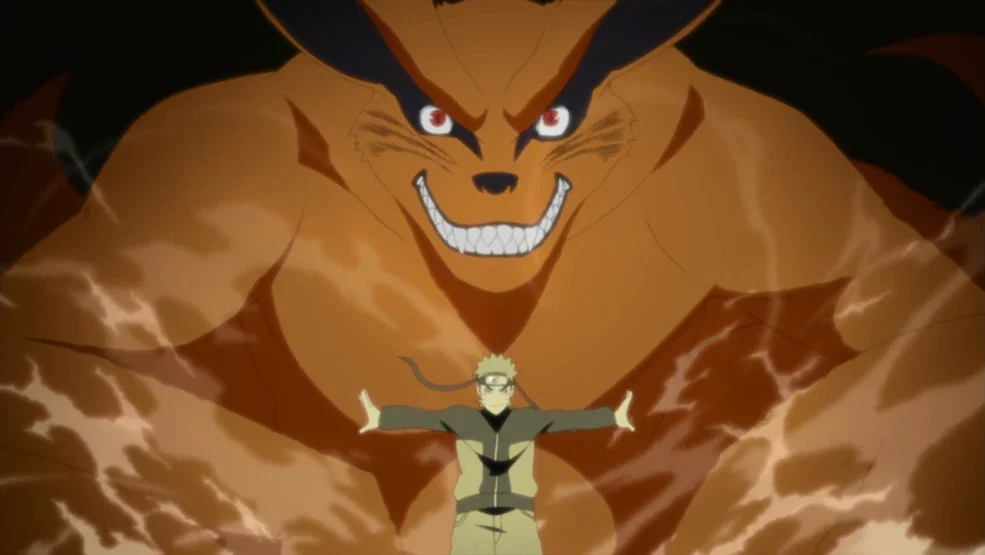
At birth, Naruto becomes the jinchūriki of Kurama, the Nine-Tails, sealed by his parents to save the village. Early on in ‘Naruto’ and into ‘Naruto: Shippuden’, the fox’s chakra leaks out under stress as a corrosive cloak that boosts power but shortens control and can injure allies. Through disciplined training and crucial reconciliations, Naruto transitions from forcibly drawing on Kurama’s chakra to cooperating with the beast.
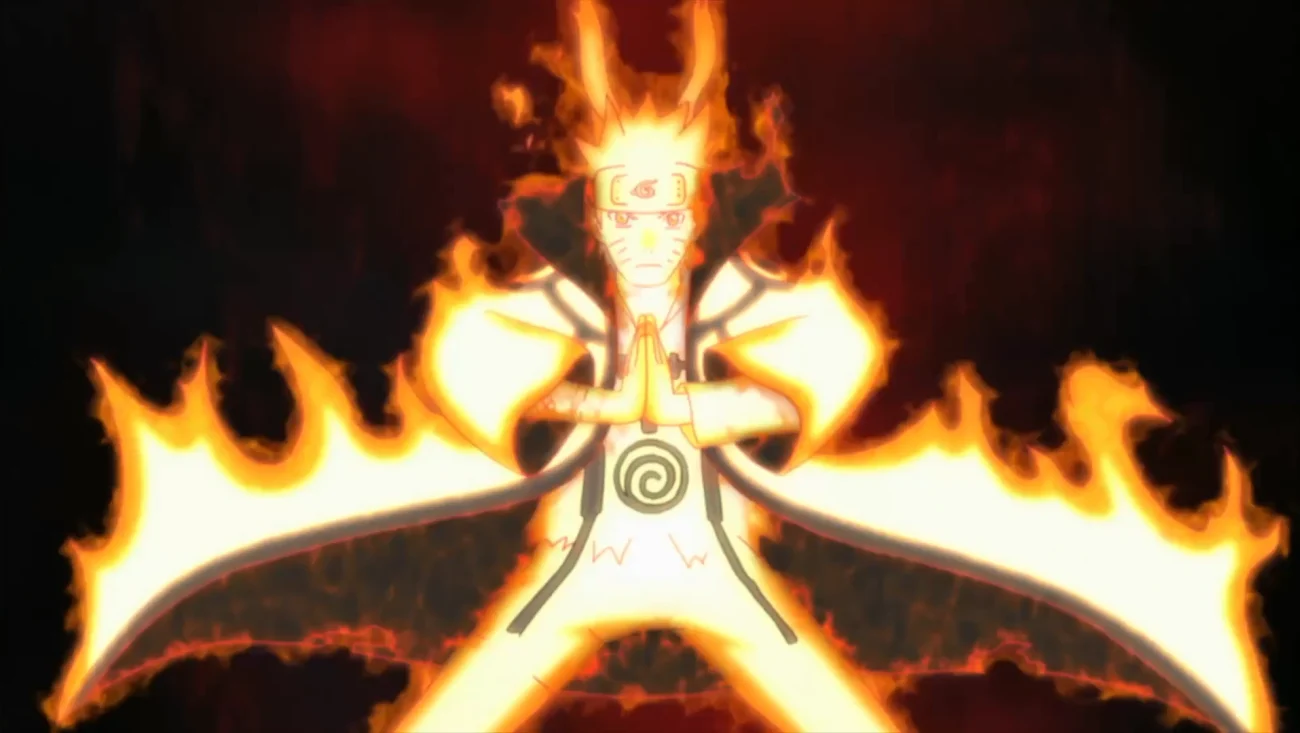
Once they form a true partnership, Naruto accesses a golden chakra mantle and full Tailed Beast Mode, gaining massive strength, speed, and regeneration, along with long-range chakra arms and the Tailed Beast Ball. The partnership also grants enhanced sensory abilities, including detection of negative emotions across distance, which he uses for battlefield awareness and locating hidden threats during the Fourth Great Ninja War.
Sage Mode and Frog Kumite
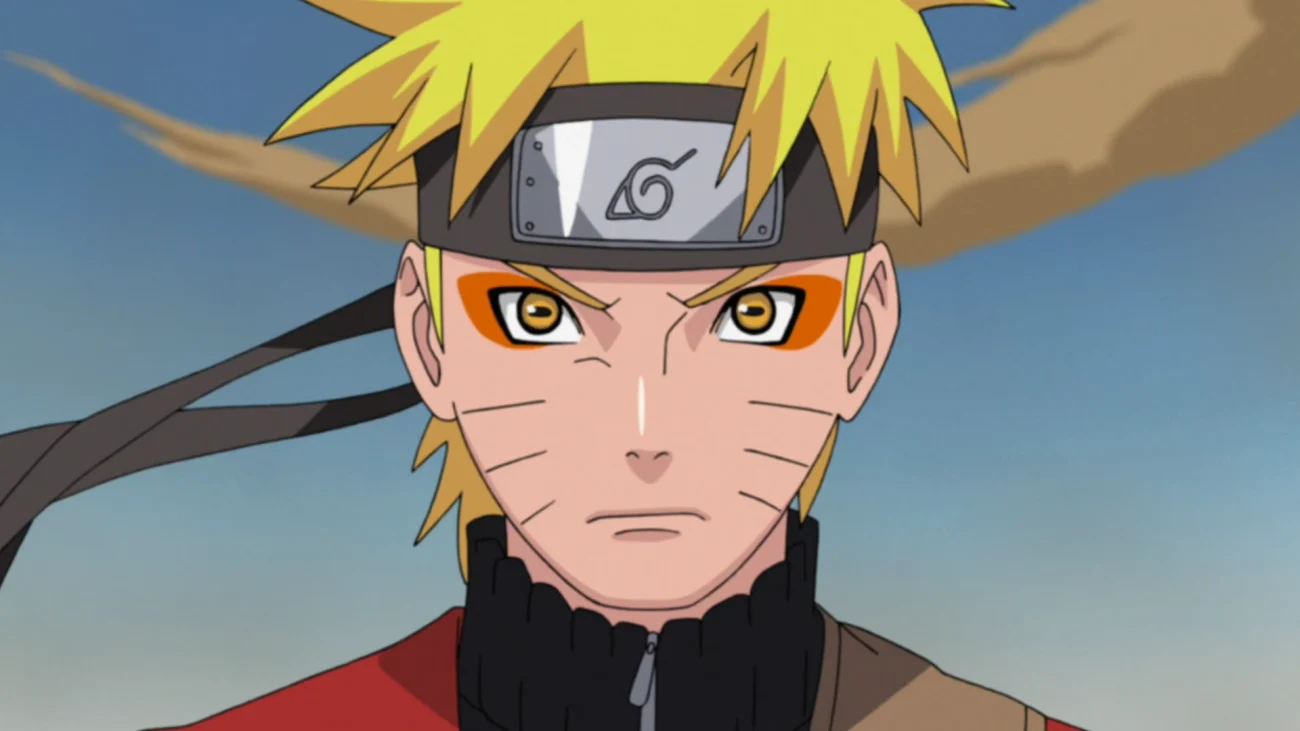
Under Fukasaku at Mount Myōboku in ‘Naruto: Shippuden’, Naruto learns to blend natural energy with his own, achieving Sage Mode. This state increases physical strength, durability, and reaction speed, while dramatically expanding sensory range; he can sense chakra signatures and incoming attacks through environmental cues. The technique requires stillness to gather natural energy, so Naruto uses clones stationed safely away to accumulate it and dispel to refresh him mid-fight.
Sage Mode enables Frog Kumite, a close-quarters style that extends the reach of physical blows with natural energy aura, letting strikes connect even when they appear to miss. Naruto also uses Sage Art techniques such as a Sage-enhanced Rasengan set and improves summoning synergy with the toads, coordinating with Gamabunta, Gamaken, and others for combined offense and defense against large opponents.
Six Paths Sage Mode and Truth-Seeking Balls
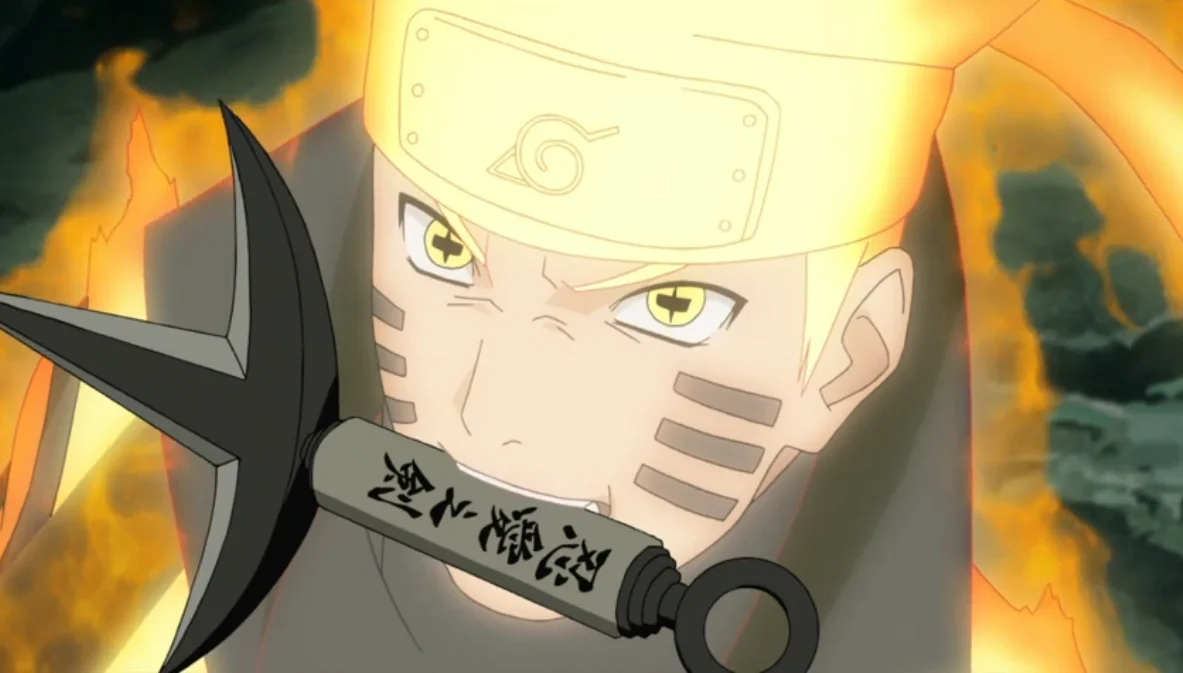
During the Fourth Great Ninja War in ‘Naruto: Shippuden’, Naruto receives chakra from Hagoromo Ōtsutsuki, unlocking Six Paths Sage Mode. This upgrade refines his sensory perception further, enables limited levitation, and allows the use of Yin–Yang Release to nullify certain ninjutsu effects. In this state, Naruto manifests Truth-Seeking Balls—orbs of malleable chakra that can decompose targets on contact and reshape into staves, shields, or projectiles.
He uses the combination of Six Paths enhancements and tailed-beast chakra to counter intangibility, protect allies with rapidly deployed barriers, and adapt to reality-warping enemies like Kaguya. The markings and cloak associated with this power become visual cues for his highest output, and the mode’s properties explicitly interact with other divine-tier techniques during the war’s climax.
Tailed Beast Chakra Network and Diplomacy
Naruto’s interactions with the other tailed beasts evolve from adversarial clashes to mutual respect, culminating in exchanges of chakra that leave him with a “network” of each beast’s nature. In ‘Naruto: Shippuden’, this lets him mix specialized chakra signatures into techniques, reflected in unique Rasenshuriken variants and resistance to certain enemy abilities. It also allows instant rapport and communication when he encounters them again.
Beyond power-sharing, the cooperation stabilizes relations between villages by reframing tailed beasts as partners rather than weapons. Naruto’s role in freeing hosts from control and returning beasts to autonomy reduces incentives for jinchūriki exploitation and supports the post-war alliance. Practically, the chakra links provide rapid coordination across great distances in emergencies, functioning as a strategic communications web.
Summoning Technique: Mount Myōboku Toads
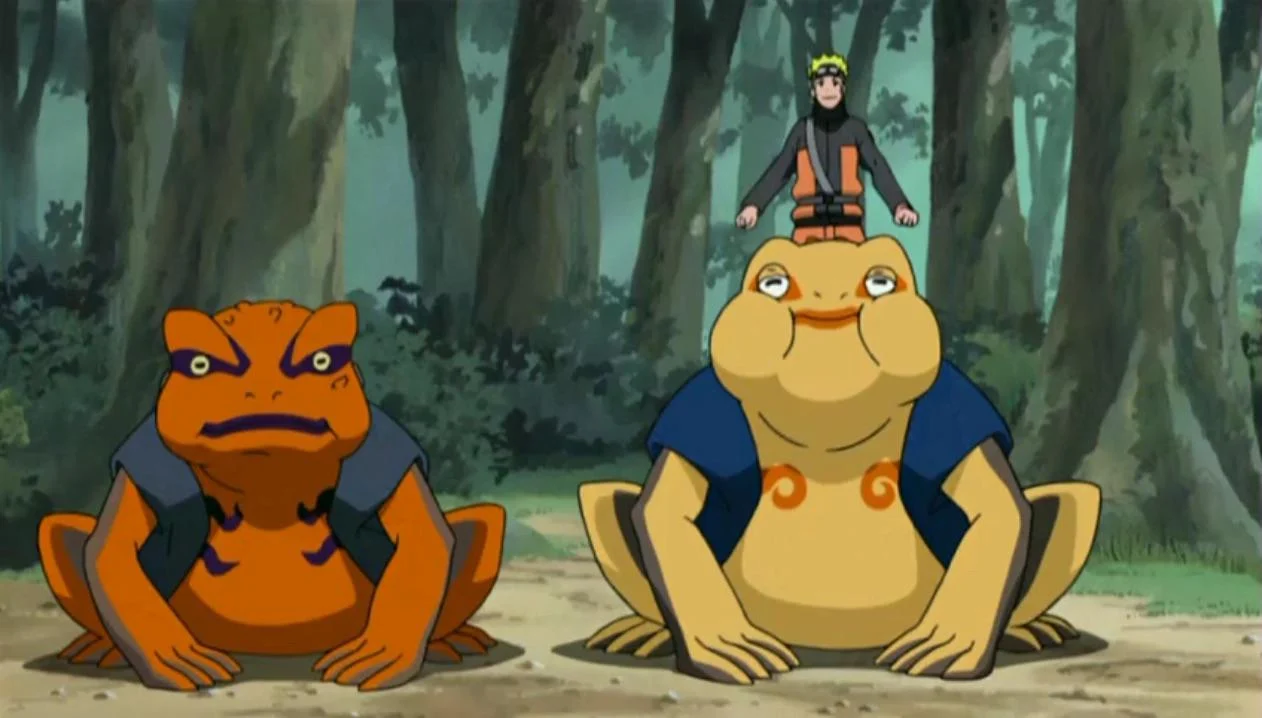
Naruto signs a contract with the toads of Mount Myōboku in ‘Naruto’, enabling him to summon allies like Gamabunta, Gamaken, and Gamahiro via blood and chakra. Large summons give him mobile platforms, area control, and weapon support—sword strikes, oil for combination techniques, and high jumps to reposition. Smaller toads, such as Fukasaku and Shima, bring utility through genjutsu vocals and battlefield analysis.
Summons integrate with Naruto’s other modes: Sage Mode harmonizes with the toads’ natural energy expertise, while Kurama’s chakra supplies the raw power to sustain large summons in extended fights. In siege scenarios, toad oil pairs with fire techniques from allies, and in stealth or infiltration, small toads handle reconnaissance and message-passing, expanding Naruto’s operational options beyond direct confrontation.
Strategic Use of Shadow Clones for Training and Intel
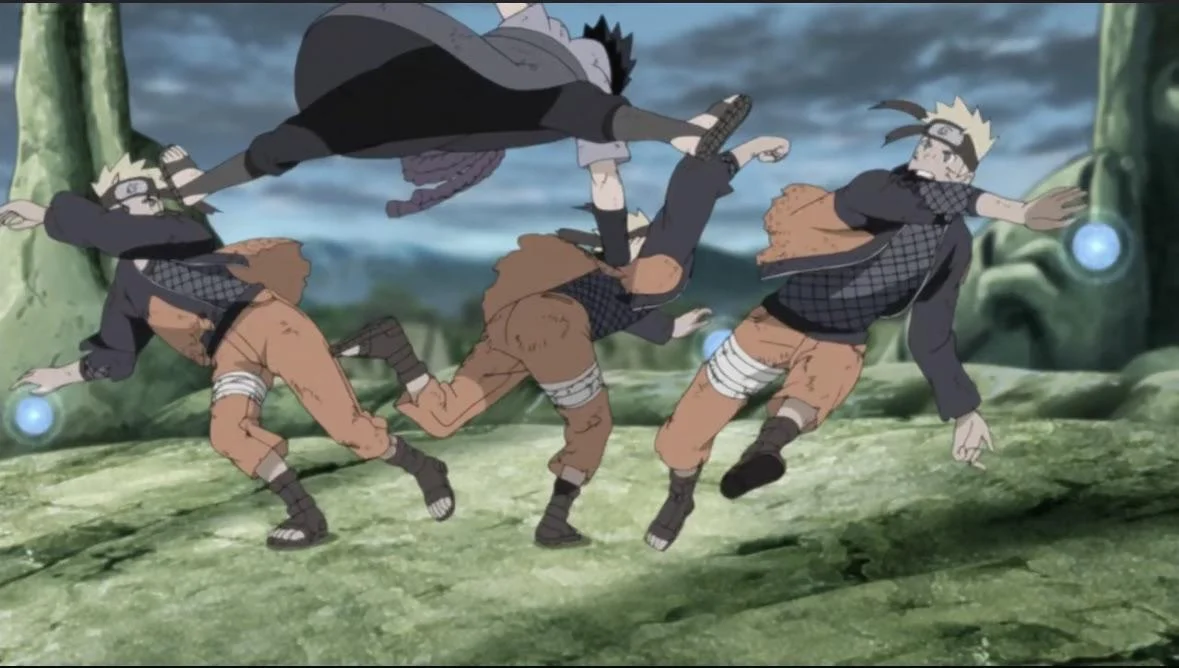
Naruto formalizes a training method where the experience of dispersed Shadow Clones feeds back to the original, multiplying practice time. In ‘Naruto: Shippuden’, he uses this to master wind-nature transformation by dividing tasks among clones, each iterating on form and rotation until the results converge. The same approach accelerates Rasenshuriken development and later supports learning to control Kurama’s chakra by isolating steps in parallel.
Operationally, he deploys clones as sensors, decoys, and field engineers. Clones can scatter to map terrain, test enemy responses, build defenses, and maintain supply lines while the original conserves energy or focuses on key targets. Because each clone can create more clones within safe limits, Naruto scales reconnaissance quickly, then consolidates findings for real-time strategy updates.
The Seventh Hokage and Modern Governance
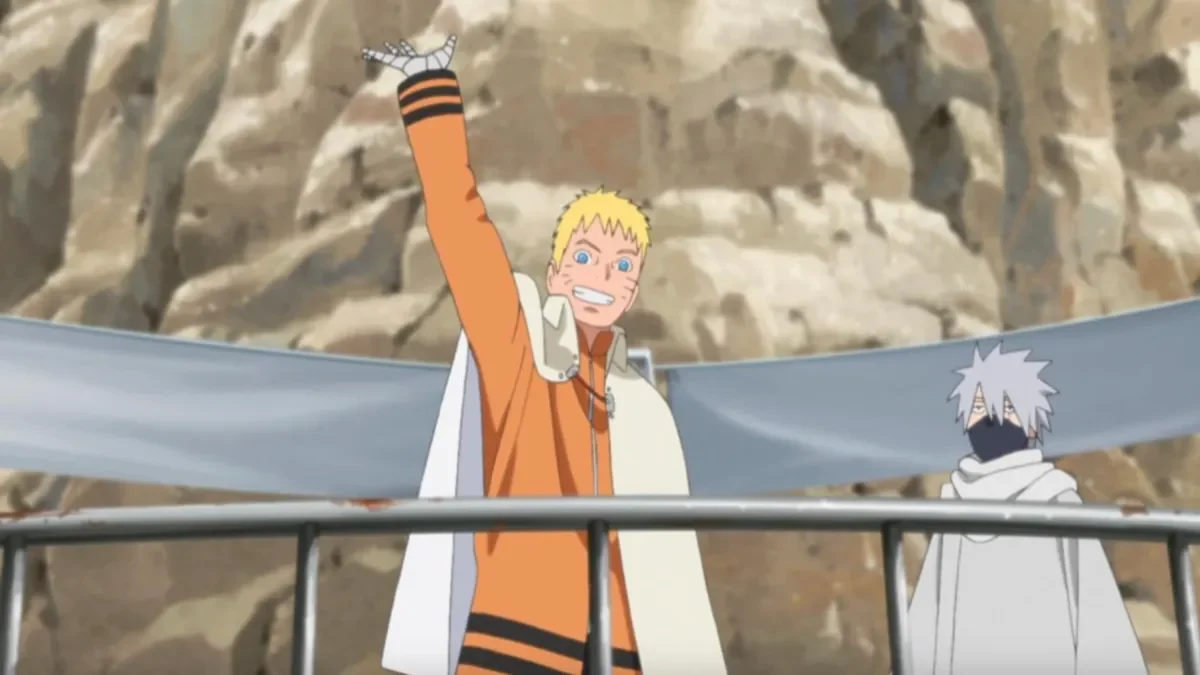
After the war, Naruto becomes the Seventh Hokage in ‘Boruto: Naruto Next Generations’, overseeing village security, diplomacy, and modernization. He manages Kage Summits that maintain the Allied Shinobi Forces framework and coordinates cross-village responses to new threats. Administrative duties include mission assignment, infrastructure planning, and support programs for orphans and war-affected families, reflecting reforms that stabilize the post-conflict era.
He uses Shadow Clones to attend simultaneous meetings, inspect public works, and respond to incidents without leaving core operations unattended. Under his leadership, the village integrates scientific ninja tools, standardizes cross-village training, and expands the Academy’s curriculum to reflect peacetime priorities. These changes reshape the shinobi profession with clearer legal oversight and cooperative protocols that reduce inter-village escalation.
Baryon Mode and Its Cost
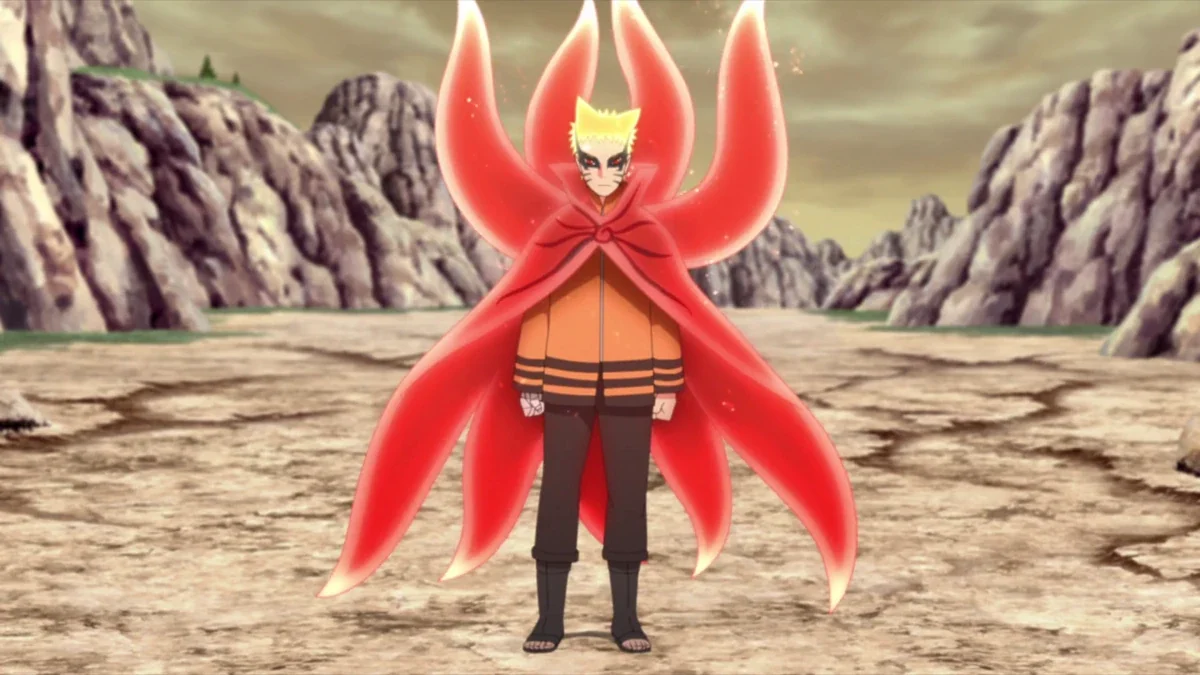
In a crisis depicted in ‘Boruto: Naruto Next Generations’, Naruto unlocks Baryon Mode, a transformation that fuses his chakra with Kurama’s to generate entirely new energy. The process continuously consumes both sources, dramatically boosting speed and power while shortening the opponent’s lifespan through contact attrition. Unlike previous modes, it has a hard time limit determined by how fast the fusion burns fuel.
The after-effect is irreversible loss: the energy draw exhausts Kurama’s life-force, ending Naruto’s access to Nine-Tails chakra and permanently altering his power profile. From that point forward, his combat planning adjusts to rely on remaining techniques—Sage Mode, Rasengan variants, and experience-based tactics—while his duties as Hokage continue without the safety net Tailed Beast Mode once provided.
Share your favorite Naruto moments or abilities in the comments—I’d love to hear which parts of his journey stood out to you!