15 Scariest Clowns in Movies and TV Shows


Clowns have shown up across countless stories, sometimes as pranksters and sometimes as the kind of figures you don’t forget after the credits roll. What follows is a guide to the characters themselves, where they appear, who portrayed them, and the concrete details that place each one in film and television history. You’ll find cast names, production facts, and release context so you can track each appearance across different versions or sequels without any guesswork.
To keep things simple, every entry focuses on the character’s on-screen timeline, signature scenes, and the people who built the performance, from actors and makeup teams to the writers who first put them on the page. For shows, you’ll see the home network woven in naturally. For films, the original distributor is mentioned quietly so you can connect the dots on where these releases first landed.
Pennywise the Dancing Clown
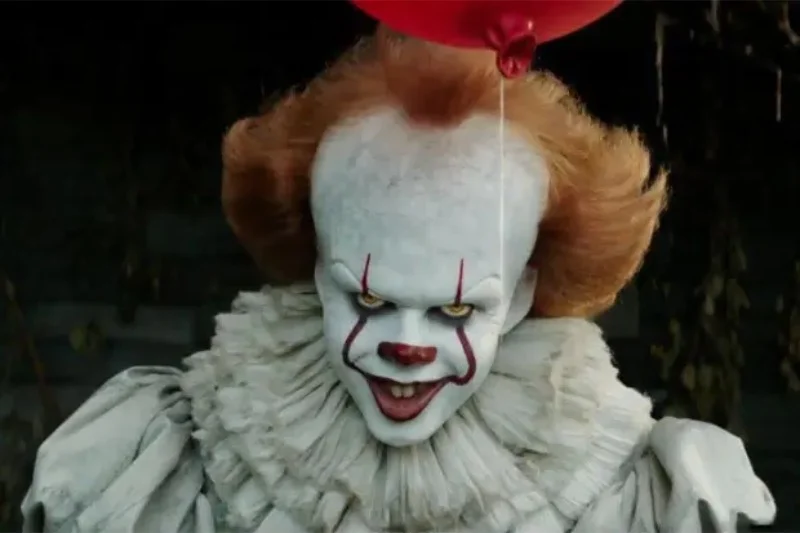
Pennywise appears in the two-part ABC television adaptation of ‘It’ (1990) portrayed by Tim Curry, and later in the theatrical films ‘It’ (2017) and ‘It Chapter Two’ (2019) with Bill Skarsgård. The character originates from Stephen King’s novel and is depicted as a predatory entity that awakens cyclically, with key set pieces centered around Derry’s storm drains, the Neibolt house, and the sewers beneath the town.
The 1990 miniseries first aired on ABC, while the feature films were released in theaters by Warner Bros. through New Line Cinema. Skarsgård’s version was designed with period circus influences, layered prosthetics, and a distinct drifting eye technique, and production notes highlight extensive practical and digital effects for the creature’s shifting forms.
Art the Clown
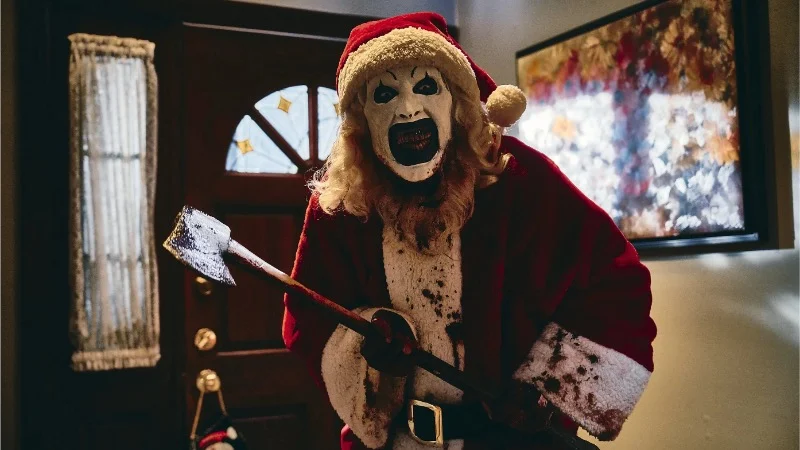
Art began as a background figure in the anthology ‘All Hallows’ Eve’ before headlining ‘Terrifier’ and ‘Terrifier 2’, portrayed by David Howard Thornton. The character is defined by silent-film style pantomime, a fixed grin, and a black-and-white costume that ties back to classic harlequin imagery.
The indie features were released theatrically in the United States by Iconic Events Releasing in partnership with Bloody Disgusting, with home distribution handled independently in multiple regions. Practical gore effects, minimal dialogue, and single-location set pieces create a recognizable production blueprint across entries.
Twisty the Clown
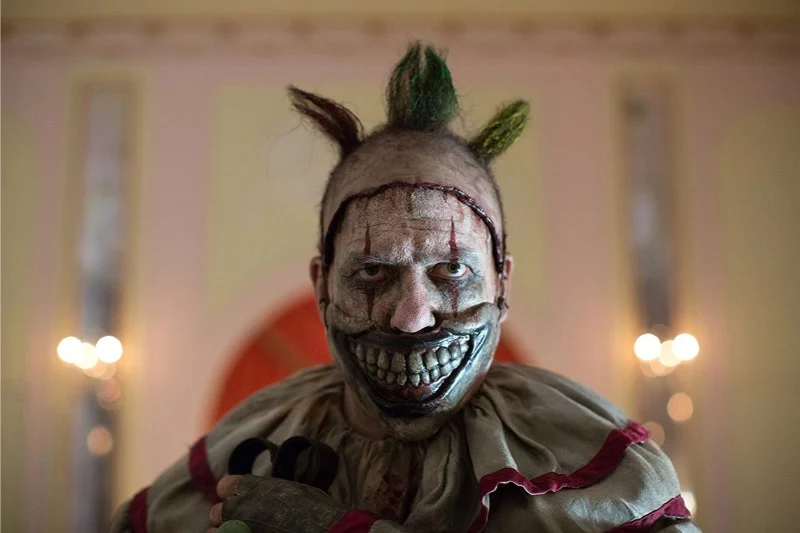
Twisty appears in ‘American Horror Story: Freak Show’ portrayed by John Carroll Lynch, with the character’s backstory explored through flashbacks that detail his life as a performer and the accident that altered his appearance. The show situates him around Jupiter, Florida, and integrates the character into the season’s carnival setting.
The series airs on FX, and makeup designer Eryn Krueger Mekash’s team developed Twisty’s distinctive mask and prosthetics. The production used a mix of period costumes and practical props to anchor the character in the 1950s troupe environment.
Captain Spaulding
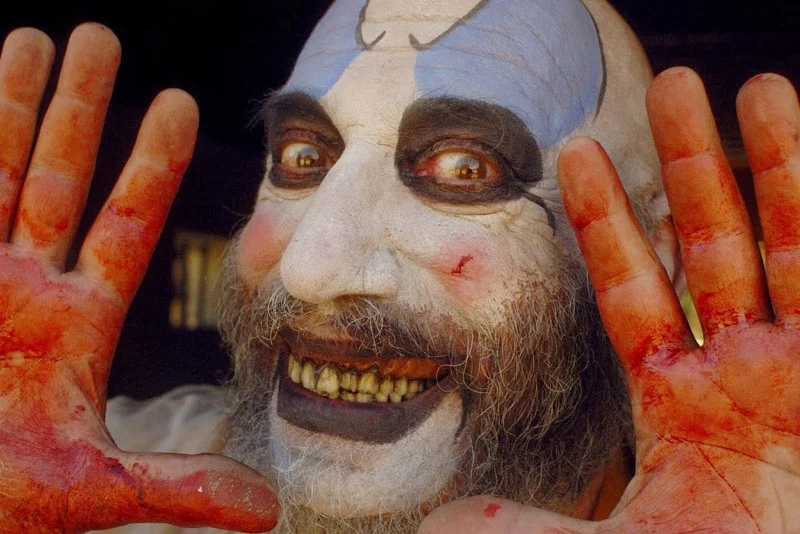
Captain Spaulding features in Rob Zombie’s ‘House of 1000 Corpses’, ‘The Devil’s Rejects’, and ‘3 from Hell’, portrayed by Sid Haig. He is presented as a roadside attraction owner with an iconography that includes greasepaint, a patriotic palette, and a carnival barker persona that ties the films together.
The trilogy’s theatrical releases were handled by Lionsgate in North America. Production leaned on gritty 16mm-style textures in the early film and expanded to wide-open desert and small-town exteriors later, with wardrobe continuity and character props maintained across sequels.
Joker
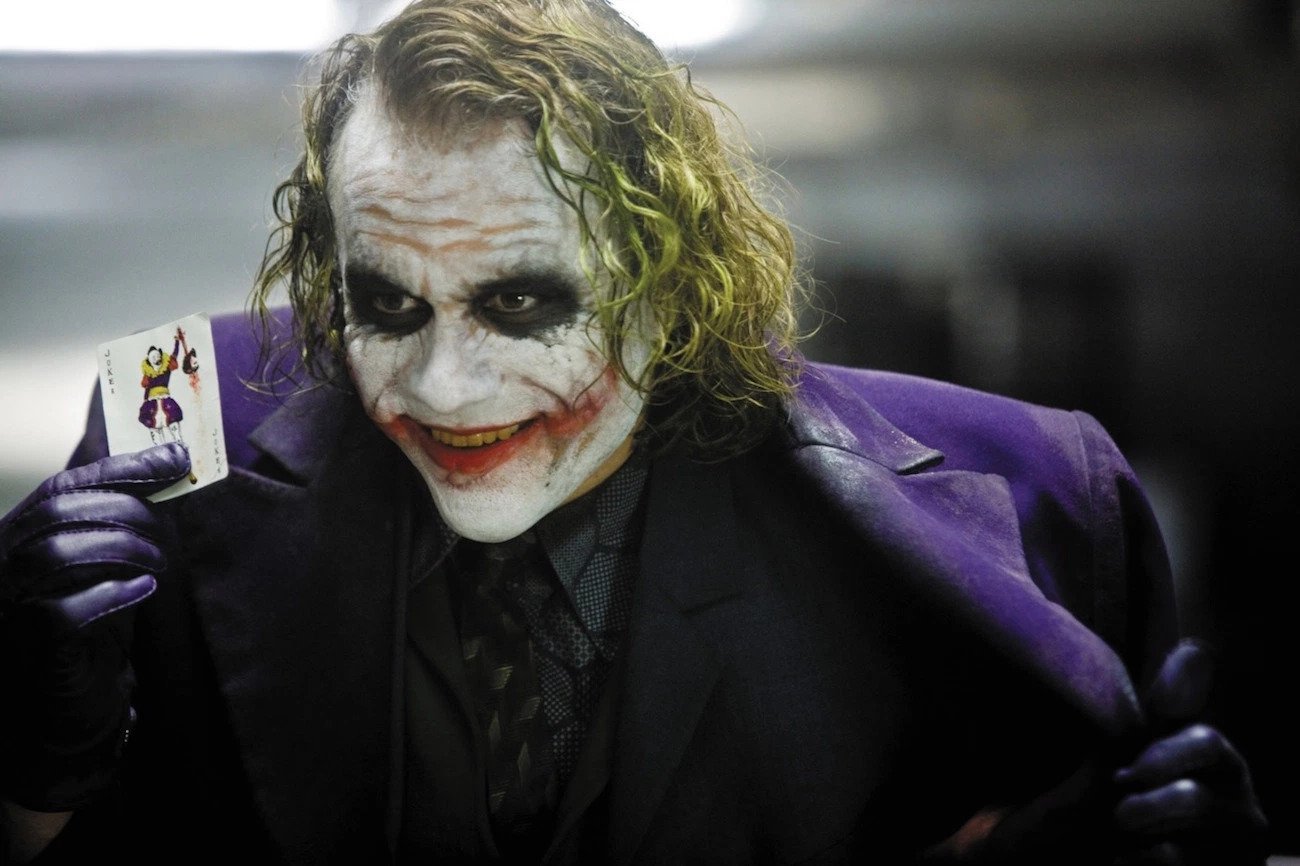
Joker’s clown-coded presentation appears across multiple films, including ‘Batman’ (1989) with Jack Nicholson, ‘The Dark Knight’ with Heath Ledger, and ‘Joker’ with Joaquin Phoenix. The character’s cinematic history tracks different origin approaches, from chemical accidents to social descent narratives, alongside recurring motifs like face paint, purple tailoring, and improvised weaponry.
These films were released by Warner Bros., and each production used distinct makeup philosophies, from Nicholson’s prosthetic grin to Ledger’s worn greasepaint and Phoenix’s period-inspired palette. Key sequences, such as televised studio moments and public transit set pieces, recur as staging grounds for the character’s transformation.
The Clown Doll from ‘Poltergeist’
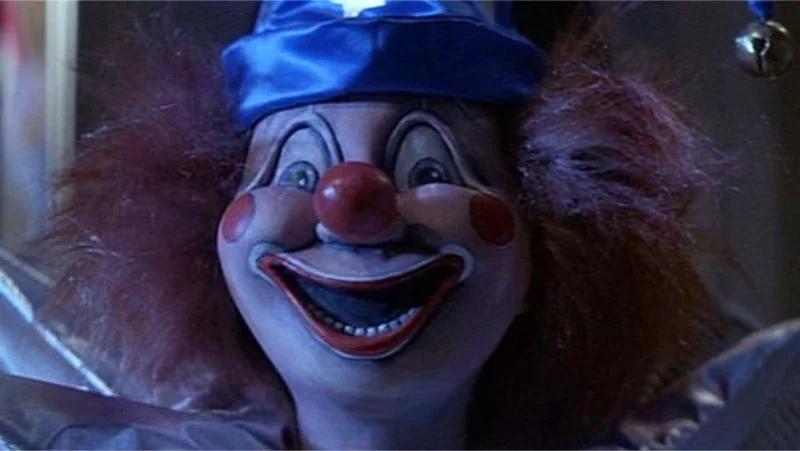
The porcelain clown doll appears in ‘Poltergeist’ as a bedroom prop that becomes central to a late-night sequence involving the family’s youngest son. Production notes detail animatronic rigs and reverse-motion techniques used to bring the doll to life within the practical effects framework of the film.
The movie was released by MGM in North America. The prop design was coordinated with the child’s room décor for contrast under low-key lighting, and the sequence was storyboarded to emphasize the bed, the chair, and the storm outside the window as spatial anchors.
The Killer Klowns
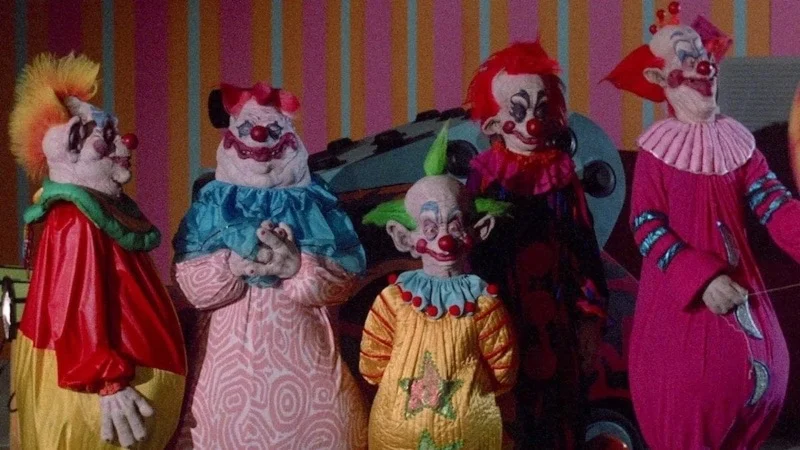
The extraterrestrial troupe in ‘Killer Klowns from Outer Space’ is realized through oversized foam latex suits, animatronic heads, and circus-themed weaponry adapted to science-fiction mechanics. The Chiodo Brothers created new gags around cotton-candy cocoons, popcorn critters, and a funhouse-style ship interior.
The film’s original U.S. theatrical release came through Trans World Entertainment. Special effects combined miniature work and matte paintings with full-scale sets, and the production’s color design centered on vivid primaries to match the carnival motif.
Violator, The Clown
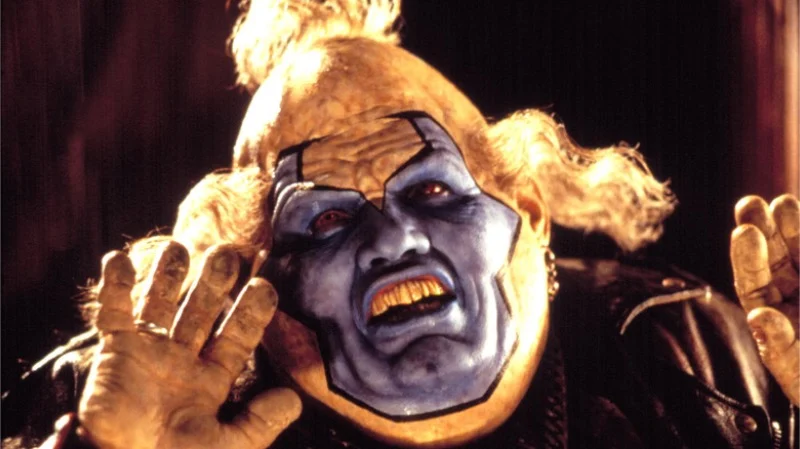
Violator, often appearing in a squat clown form, features in ‘Spawn’ with John Leguizamo in heavy prosthetics. The character shifts between demonic and clownish shapes, linking street-level scenes with larger supernatural conflicts from the comic source material.
The 1997 film was released by New Line Cinema. Makeup application reportedly required multiple hours daily, and the production used a blend of practical suits and late-90s CGI to depict the creature’s transformations.
Zeebo the Clown
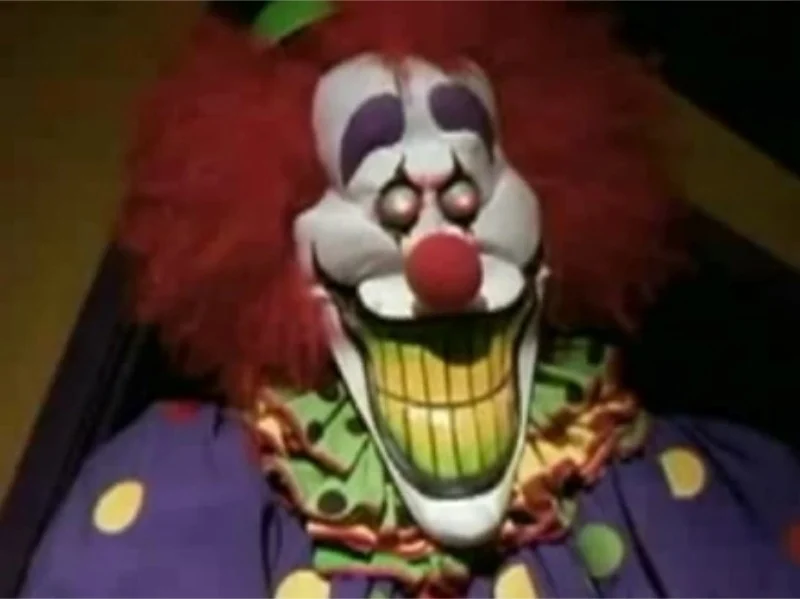
Zeebo appears in ‘Are You Afraid of the Dark?’ in the episode ‘The Tale of Laughing in the Dark’, centered on a funhouse attraction and a stolen cigar that ties to a local legend. The episode maps the funhouse layout, the prize counter, and the hall of mirrors to set up each encounter.
The anthology series aired on Nickelodeon. Production reused amusement-park locations and practical smoke effects to stretch the episode’s budget while keeping the funhouse set consistent for multiple camera setups.
Kent McCoy in ‘Clown’
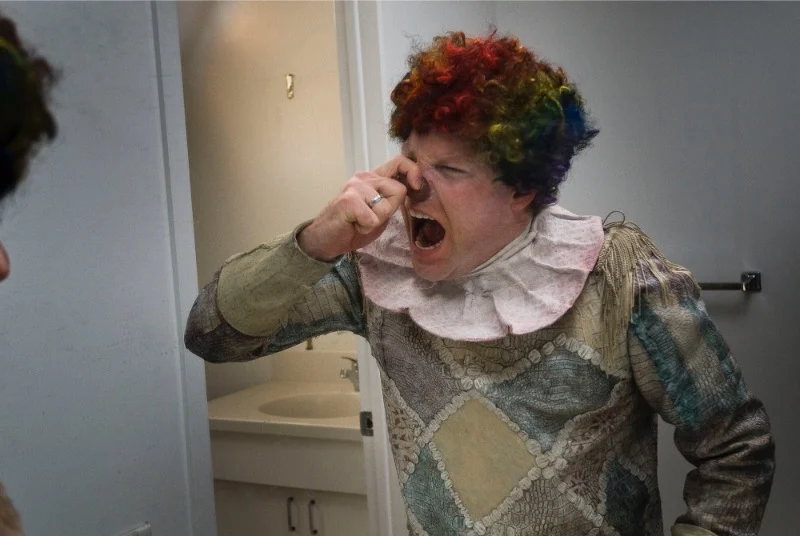
‘Clown’ follows real-estate agent Kent McCoy who dons a vintage costume that will not come off, connecting him to a Norse-inspired figure tied to a winter feast. The narrative tracks specific wardrobe changes, prosthetic progression, and the effect on Kent’s family as the suit tightens its hold.
The film was released in the U.S. by RADiUS-TWC. The production used incremental makeup stages to show physical changes scene by scene, and location choices favored suburban interiors to contrast the folklore elements.
Stitches the Clown
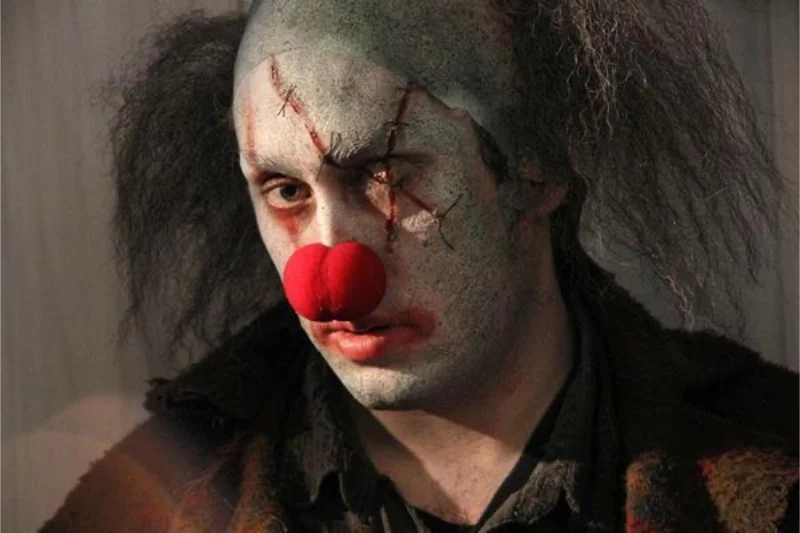
In ‘Stitches’, a party performer named Richard “Stitches” Grindle returns years after a fatal accident, with the character’s look built around exaggerated face paint and a patched costume. The story structure alternates between past and present day, using school hallways and a single-house party for most of its set pieces.
The movie reached U.S. audiences through Dark Sky Films. Makeup effects emphasized modular appliances for repeated gags, and the production scheduled elaborate sequences around night shoots to keep lighting continuity across exteriors.
Killjoy
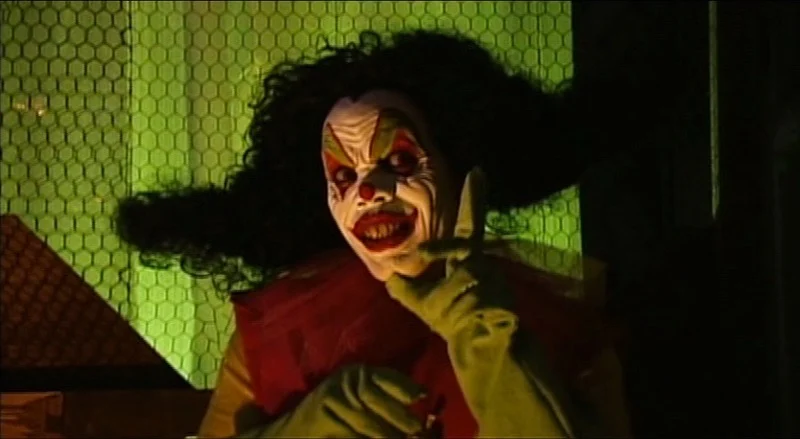
‘Killjoy’ introduces a summoned clown demon who appears when a ritual is completed, returning across multiple sequels with updated costumes and new supporting entities. The films track apartment blocks, alleys, and liminal warehouse spaces as recurring locations tied to the ritual framework.
The series is produced and distributed by Full Moon Features. Each installment adds practical creature suits and painted backdrops to expand the character’s realm while keeping the core street-level settings consistent.
The Clown Zombie in ‘Zombieland’
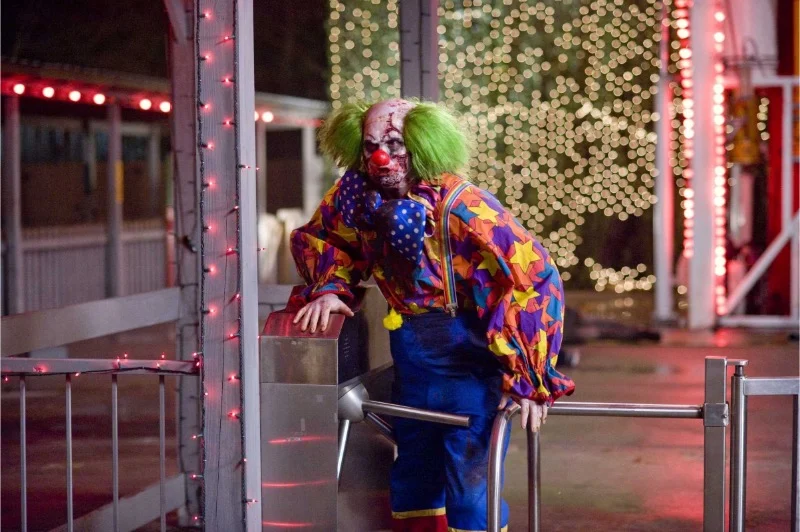
The amusement-park sequence in ‘Zombieland’ features a towering clown zombie that confronts Columbus near a ride queue. The role combines stunt performance, a padded suit, and dental prosthetics designed for wide-mouth close-ups under bright park lighting.
The film was released by Columbia Pictures, handled theatrically by Sony Pictures Releasing. The production built action beats around working coaster hardware and safety-rigged stunt falls, timing extras and ride cycles to meet night-shoot windows.
Giggles in ‘Amusement’
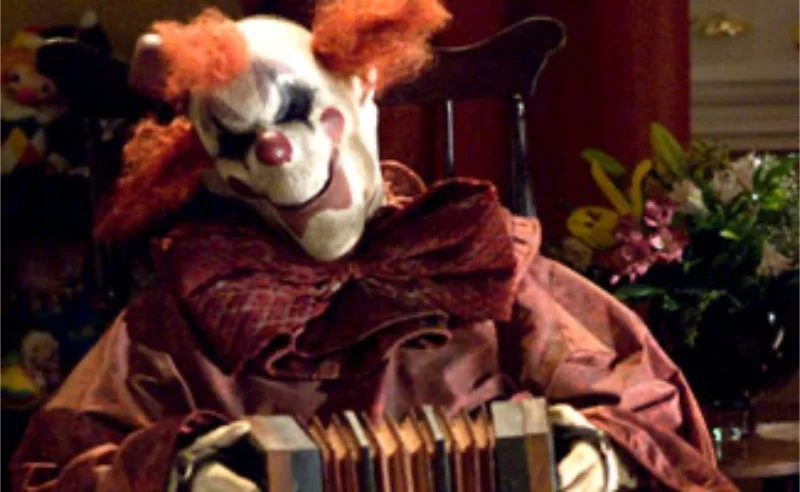
‘Amusement’ follows three women whose childhood encounter with a sadistic prankster evolves into a series of staged set pieces, with the villain adopting a clown persona in one of the film’s segments. The production intercuts hotel rooms, suburban homes, and an isolated farmhouse to track each target.
The film was released by Warner Bros. for home media after festival play. Makeup and wardrobe for the clown sequence used layered textures and practical grime to read clearly in low-light photography, and the sound mix leans on diegetic squeaks and toy rattles tied to props on set.
The Clown in ‘Haunt’
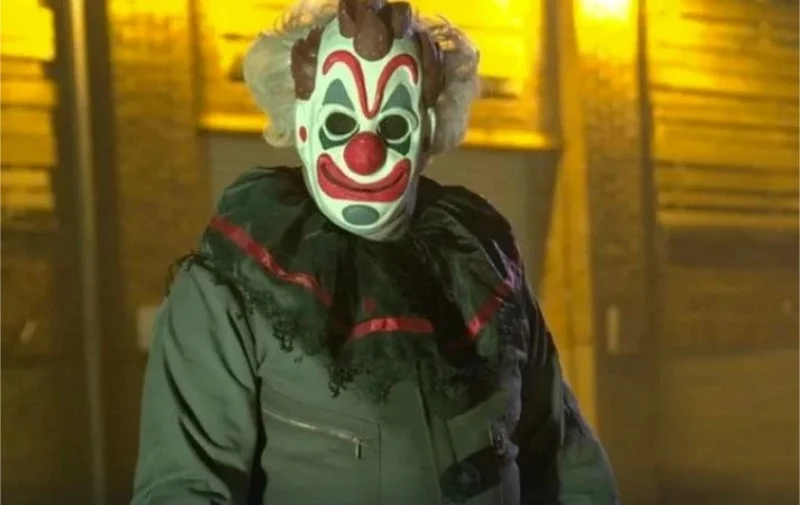
‘Haunt’ centers on a group navigating an extreme haunted house where masked performers, including a clown, remove their disguises to reveal altered faces beneath. The film blocks action through a linear maze with trap rooms, using the clown as one of several enforcers tied to specific hazards.
The movie’s U.S. distribution was handled by Momentum Pictures. The production team built modular hallway sections on stage so doors and walls could be rearranged quickly, keeping continuity for the clown’s chase beats while allowing resets between takes.
Share the one that unsettled you most in the comments so other readers can compare notes and trade recommendations.