Top 10 Coolest Things About Wednesday Addams



Wednesday Addams steps into her own story in the Netflix series ‘Wednesday’ with a sharp focus on school life, mysteries, and the complicated legacy of the Addams family. Season 1 sets up Nevermore Academy, her unusual talents, and a trail of clues that keep her busy inside and outside campus. The setting gives her room to test abilities, form alliances, and map out patterns that other students overlook.
Season 2 builds on those foundations with new threats and deeper ties to Nevermore’s past. Wednesday deals with consequences from earlier choices while refining the skills that kept her one step ahead. The show keeps returning to puzzles, secret societies, and family history, letting her use knowledge and practice to move investigations forward across both seasons.
Her Nevermore investigations

Wednesday runs structured investigations at Nevermore Academy using interviews, timelines, and evidence logs. In Season 1 she traces campus legends, suspicious attacks, and hidden motives by tracking footprints, decoding clues, and checking alibis between classes. She documents everything in notebooks so she can compare stories and spot contradictions quickly.
Season 2 keeps the format but raises the difficulty of the puzzles. Wednesday follows new leads through school archives, restricted rooms, and off campus locations, often coordinating with classmates for access. The show emphasizes methodical research, from piecing together maps and diaries to reexamining old case files connected to earlier events at Nevermore.
Psychic visions and pattern recognition

The series portrays Wednesday as a psychic with spontaneous visions that trigger when she touches objects or encounters people tied to a mystery. Season 1 shows her learning to interpret short, fragmented images by cross checking them with physical evidence, which helps her reconstruct the sequence of events behind multiple crimes.
In Season 2 the visions are still unpredictable but Wednesday becomes more proactive about managing them. She uses grounding techniques and careful note taking to separate symbolism from literal details, then validates those details against campus records and eyewitness accounts. The result is a tighter feedback loop that turns brief flashes into practical leads.
Mastery of the cello
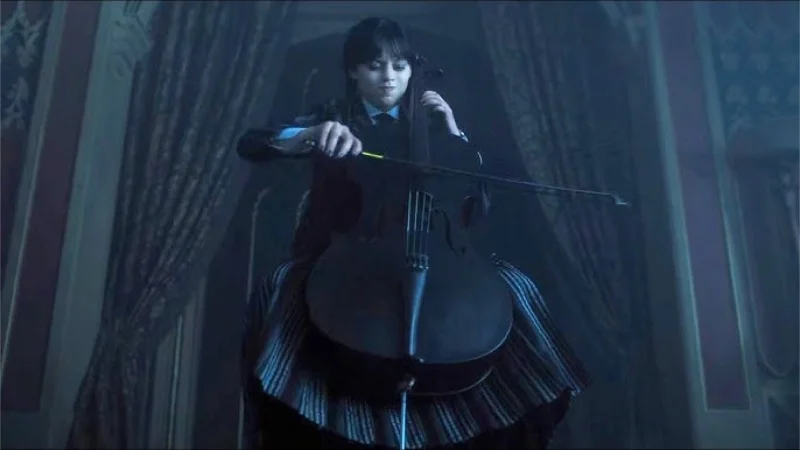
Wednesday’s cello practice is a recurring element that the show uses to reveal focus, memory, and discipline. Season 1 places her on campus spaces and town squares performing complex arrangements from memory. She uses these sessions to observe surroundings and nearby suspects without drawing attention to her surveillance.
Season 2 continues the practice schedule and shows how performance slots can double as cover for stakeouts. Wednesday uses acoustics, sightlines, and crowd flow to time conversations and watch meeting points. Sheet music, rosin, and instrument cases also function as props that conceal notes and small tools needed during investigations.
Fencing and physical training

Nevermore’s fencing program gives Wednesday a formal outlet for footwork, timing, and strategy. In Season 1 she spars under supervision, studies reach and tempo, and applies duel discipline to other confrontations on campus. The training ties directly into her ability to de escalate threats or create escapes inside tight corridors.
Season 2 keeps fencing in the toolkit while expanding her conditioning routine. Drills for balance, endurance runs around campus paths, and practice with protective gear prepare her for more demanding chases and confrontations. The show connects these sessions to later scenes where she must navigate obstacles and close distances quickly.
Partnership with Thing

Thing acts as Wednesday’s mobile assistant and lookout. In Season 1 he handles lock picking, message delivery, and silent observation in places where a student would stand out. Signals and hand taps form a communication system that lets them coordinate in crowded rooms without speaking.
Season 2 gives their partnership more tasks, including decoy maneuvers and multi room reconnaissance. Wednesday assigns routes, timed returns, and fallback signals so she can keep momentum during complex searches. With Thing handling entry points and surveillance, she can analyze documents or question suspects without losing track of the perimeter.
The Rave’N dance and social engineering

The Rave’N dance in Season 1 becomes a key social event that Wednesday uses to test routines inside a controlled environment. The episode maps out traffic patterns, chaperone positions, and exits while she moves between conversations to gather details for her case. The choreography also anchors a timeline of incidents that night.
Season 2 builds on this idea of using school events as information hubs. Wednesday treats gatherings, performances, and ceremonies as opportunities to place observers, swap notes, and time diversions. She logs who arrives together, who leaves early, and who avoids certain rooms so she can match behavior to ongoing leads.
Writing habit and evidence management
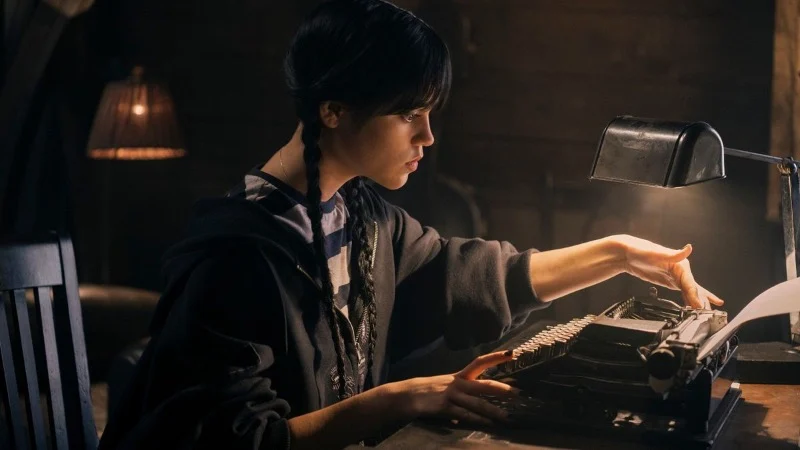
Wednesday writes every day and manages drafts for a novel alongside case notes. In Season 1 she uses a typewriter and color coded files to separate suspects, motives, and locations. She keeps a running index so she can return to old threads when new facts appear.
Season 2 expands the system with cross references, pinned maps, and copied records from school archives. Wednesday marks sources, timestamps, and reliability levels for each entry. When a new clue surfaces, she can pull the right folder and compare handwriting samples, symbols, or dates without wasting time.
Roommate dynamics with Enid
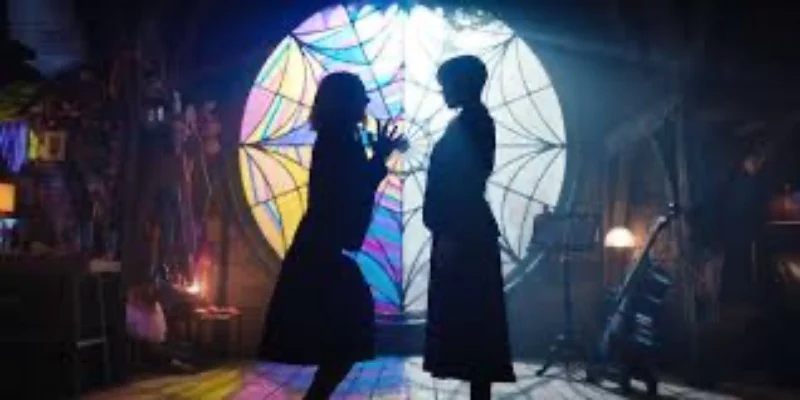
The shared space in Ophelia Hall pairs Wednesday with Enid Sinclair, which the show uses to cover schedules, curfews, and dorm security. In Season 1 their arrangement turns into a practical channel for information since Enid tracks school gossip and club activities that matter to ongoing cases.
Season 2 leans on coordinated planning. Wednesday and Enid divide tasks for research days, set wake up times that match patrol routes, and share coded notes to avoid eavesdropping. The room becomes a staging area for maps, evidence boards, and checklists that keep their efforts aligned when the campus situation escalates.
Family ties and legacy clues

Family history from ‘The Addams Family’ threads through the series as a source of maps, artifacts, and unfinished business. Season 1 introduces old rivalries, heirlooms, and records that explain Nevermore’s earlier conflicts. Appearances by relatives provide access to hidden knowledge and unusual tools.
Season 2 returns to that legacy with fresh documents and personal contacts tied to past incidents. Wednesday uses family stories to locate sealed rooms, trace ownership of objects, and identify long standing feuds. The family connection supplies context that helps her interpret symbols and inscriptions found around the academy.
Resourceful use of campus clubs and traditions
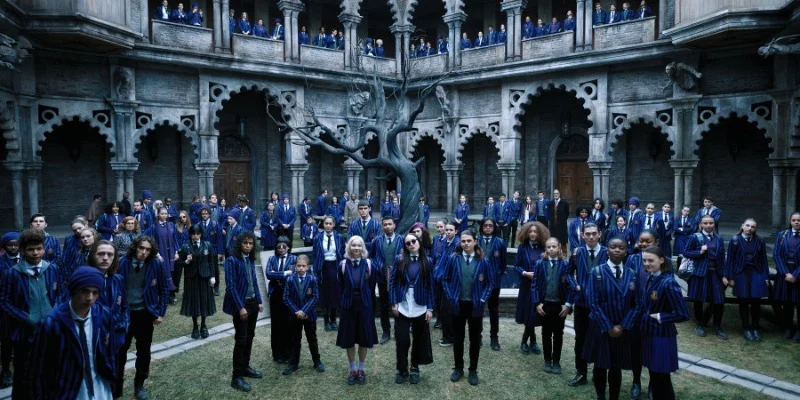
Nevermore’s clubs and traditions offer equipment, uniforms, and rules that Wednesday uses to move across restricted spaces. Season 1 shows her leveraging team roles, event rosters, and practice schedules to justify presence in areas that would otherwise be off limits.
Season 2 broadens the approach by using volunteer lists, maintenance windows, and rehearsal calendars to plan entries and exits. Wednesday requests access to storage rooms and workshops under ordinary pretexts, then uses those resources to copy keys, study artifacts, or test theories without disrupting the school day.
Share your favorite Wednesday moments from both seasons in the comments and tell us what we should spotlight next.