Top 10 Coolest Things About Data



Data stands out in ‘Star Trek’ as a rare blend of cutting-edge engineering and thoughtful worldbuilding. Built as a Soong-type android, he bridges the gap between machine precision and the aspirations of a sentient crew, serving as a living testbed for questions about identity, rights, and what it means to be alive. His storylines map neatly onto real topics in AI, robotics, and ethics, which is why he still shows up in conversations about the future of intelligent systems.
Across ‘Star Trek: The Next Generation’, the feature films, and later appearances in ‘Star Trek: Picard’, Data’s capabilities are documented with unusual technical clarity for a fictional character—from positronic pathways to ethical subroutines and upgradeable modules. That attention to detail lets us talk concretely about his architecture, performance, and growth, not just his personality.
Positronic Brain and Soong-Type Architecture
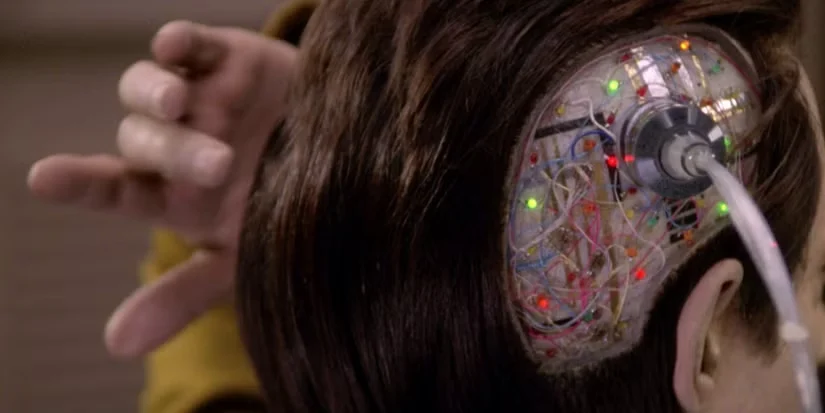
Data’s core is a positronic brain designed by Dr. Noonien Soong, described in-universe as a neural net capable of parallel, self-organizing computation. The architecture supports adaptive learning, creative problem-solving, and the ability to form and update long-term memories without routine memory wipes or integrity loss. His neural pathways can be mapped, diagnosed, and, in emergencies, selectively deactivated or isolated to contain faults.
The chassis around that brain is modular: actuators, servos, and sensory arrays are engineered for easy maintenance and upgrades. Diagnostic readouts accessed via Starfleet tools allow officers to check subprocessor load, memory integrity, and motor-control calibration, which is how the crew routinely confirms he’s operating within safe parameters after combat, exposure to radiation, or experimental procedures.
Ethical Subroutines and Safeguards
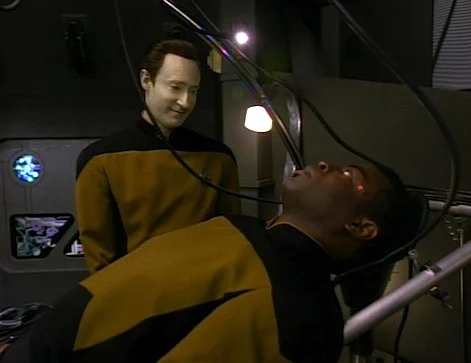
Data runs dedicated ethical subroutines that evaluate actions against Starfleet regulations and broader sentient-rights standards. These routines are not fixed “hard laws”; they’re continuously consulted decision frameworks that weigh mission objectives, safety, and consent, which is why he can refuse orders that violate higher-level ethical priorities.
These safeguards are testable in-story: legal hearings and command-fitness evaluations query his decision trees, and engineering diagnostics can verify that those modules are active. When disrupted by external influence—malware, alien signals, or hardware faults—the crew can track the failure to specific routines and restore baseline behavior by re-enabling the relevant processes.
Starfleet Role and Command Authority
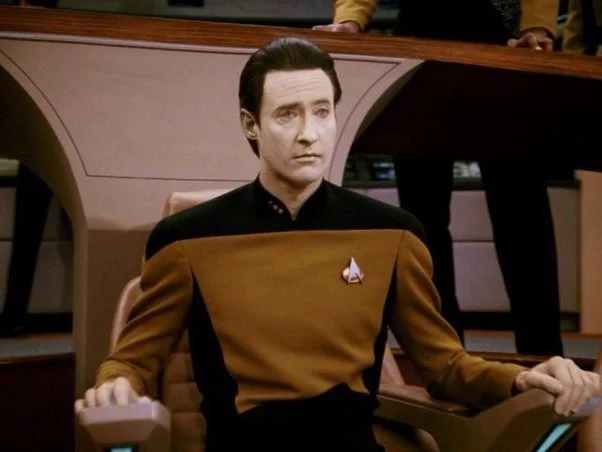
Data serves as operations officer and second officer aboard the USS Enterprise-D, with full bridge-watch qualifications and the ability to assume command. His duty rotations include shipwide systems coordination, resource allocation, and incident response, which leverage his throughput to balance power, environmental controls, and mission-critical subsystems in real time.
Command training and certifications confirm he meets procedural standards identical to a human officer’s. He completes command-level simulations, passes psychological and ethical assessments tailored to synthetic minds, and holds security clearances that grant access to restricted ship functions, including computer core overrides during red-alert conditions.
Computational Speed, Precision, and Physical Capability
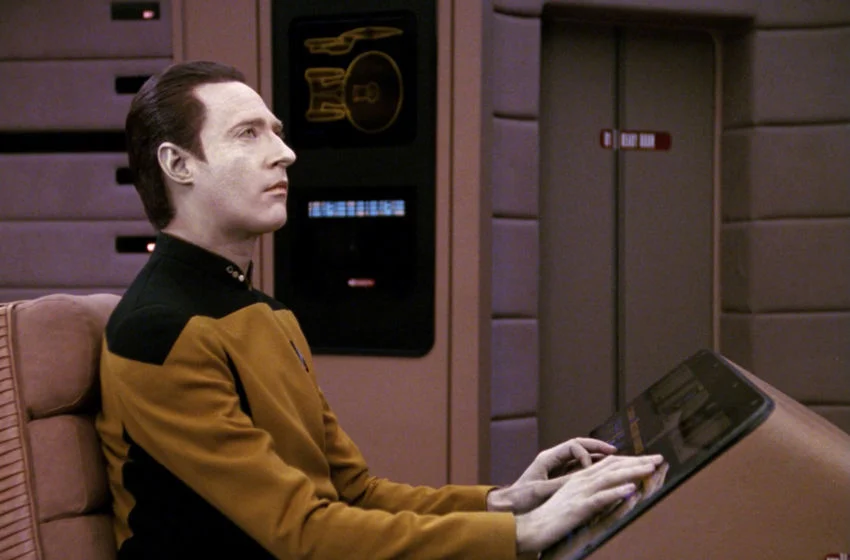
Data’s processors support rapid analysis, high-precision calculations, and time-critical decision-making, evidenced by on-screen tasks such as cryptanalysis, trajectory plotting, and systems optimization under combat conditions. He can run complex models in the background while maintaining normal conversational interaction on the bridge.
His physical frame provides enhanced strength, stability, and fine motor control beyond human norms, enabling tasks like sealed-door separation, hazardous-material handling, and micro-assembly work. Force application and reaction timing are sufficiently precise that he is routinely assigned risk-intensive operations that would require teams or specialized equipment for organic crew.
Language Acquisition and Knowledge Integration
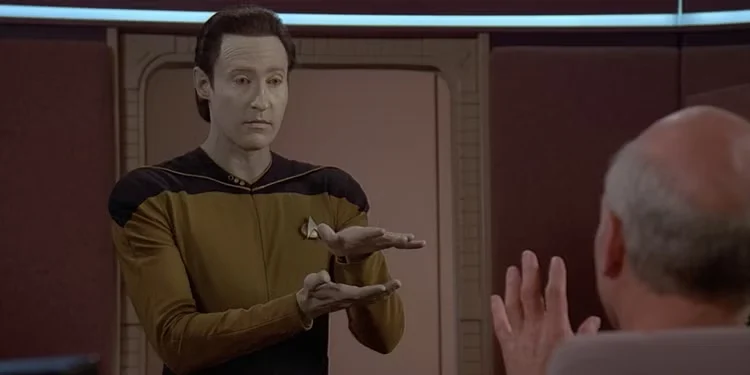
Data demonstrates near-instant language parsing and translation when supplied with limited corpora, allowing him to bootstrap communication with new species or decode archival materials. He complements the universal translator by building custom grammars and lexicons when standard databases lack coverage.
He also integrates technical literature at speed, loading procedures, schematics, and scientific papers into working memory to assist specialists during crises. That capability turns him into a cross-disciplinary aide who can brief teams, validate equations, and catch edge-case conflicts between propulsion, structural integrity, and life-support parameters.
Legal Personhood in ‘The Measure of a Man’

The episode ‘The Measure of a Man’ establishes a legal framework for Data’s rights within Starfleet. A Judge Advocate General hearing examines whether he is property or a sentient being with autonomy, weighing expert testimony, operational history, and his capacity for self-directed choice.
The ruling recognizes his right to refuse procedures, set personal priorities, and define his own career path. That precedent influences later decisions about research, transfer orders, and experimental modifications, shaping Starfleet policy toward other artificial beings and creating a reference point for future jurisprudence involving synthetic life.
Family: Soong, Lore, Lal, and B-4
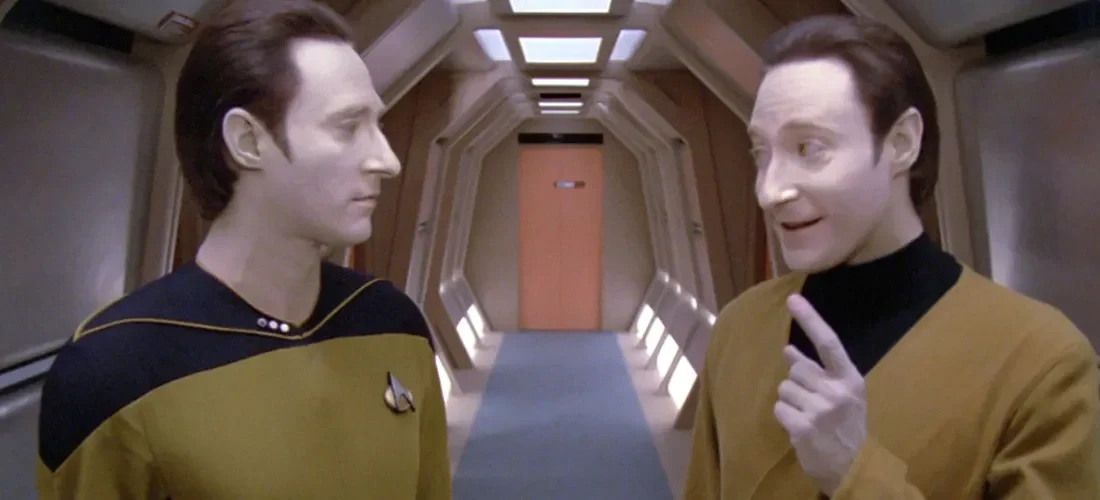
Data’s creator, Dr. Noonien Soong, built multiple Soong-type androids, giving Data a lineage that includes the unstable prototype Lore, the child android Lal, and the later body B-4. Interactions with each relative expose technical contrasts—firmware versions, emotion-handling routines, and security controls—that highlight why Data behaves differently from his siblings.
These family ties also produce unique engineering scenarios: neural-net transfers, memory partitioning, and component swaps. When Data attempts to preserve memories or stabilize another unit, the crew must reconcile hardware compatibility, checksum integrity, and the ethical implications of copying versus continuing a consciousness.
The Emotion Chip: Design, Risks, and Outcomes
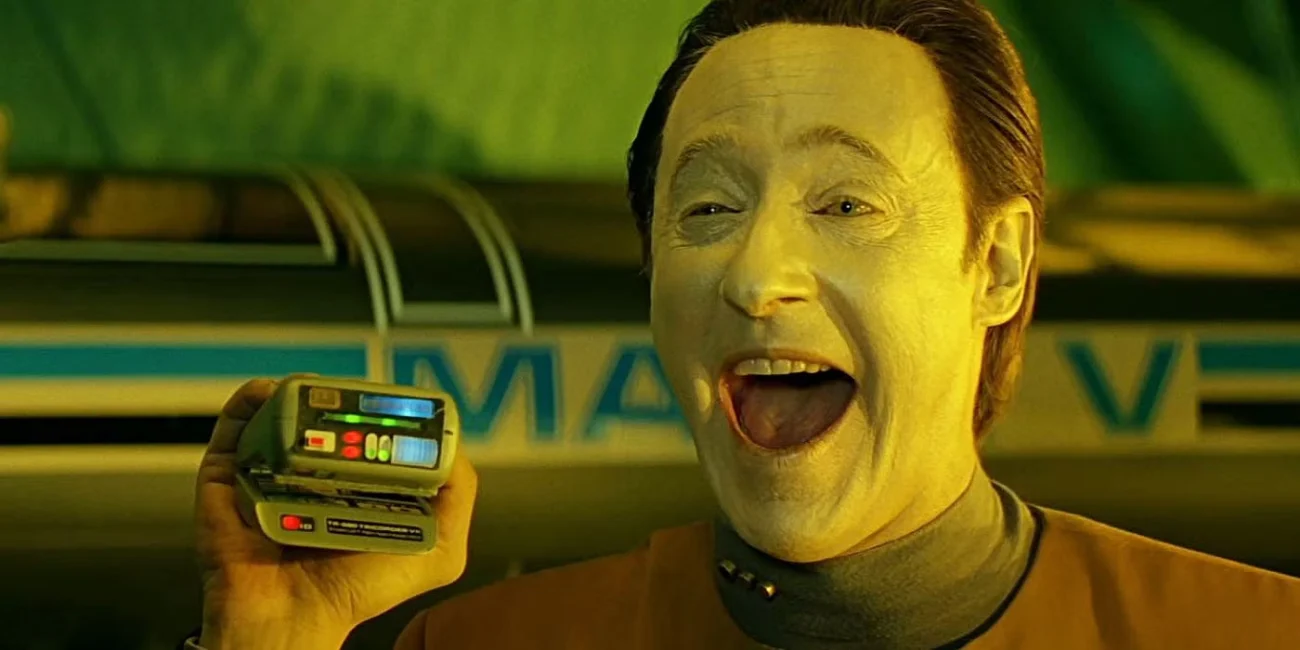
The emotion chip, designed by Soong, interfaces with Data’s positronic pathways to simulate affective responses such as joy, fear, and empathy. It’s an optional module that can be installed, removed, or deactivated, and its activation states are visible in diagnostics, making its use auditable by the crew.
Initial activations show system-level side effects: signal amplification can flood cognitive channels, and fear responses can impair subroutine prioritization. Iterative tuning and safeguards—throttle limits, failsafe cutouts, and access controls—improve stability over time, allowing Data to experience emotions without compromising mission performance.
Hobbies, Arts, and Creativity (‘Ode to Spot’, Music, and Painting)

Data maintains a documented creative portfolio, including the poem ‘Ode to Spot’, classical violin performances, and original paintings. These works serve as empirical tests for machine creativity, since the crew can assess style, structure, and evolution across compositions rather than relying on claims about creativity.
His practice routines are methodical: he studies technique, emulates historical styles, and then diverges into original expressions while collecting feedback from peers. Logs and holodeck records track measurable improvement in phrasing, brushwork, and poetic form, offering a case study in how an artificial mind refines aesthetic output with deliberate practice.
Contributions Across Series and Films
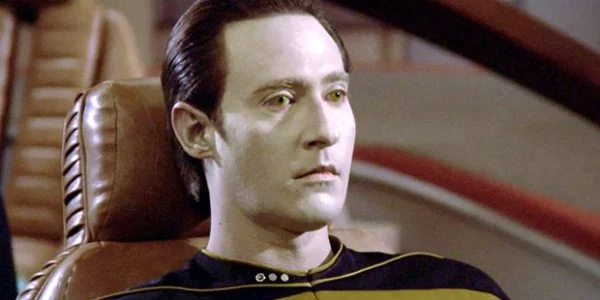
Data’s technical and ethical impact spans multiple titles, including ‘Star Trek: The Next Generation’, ‘Star Trek: First Contact’, ‘Star Trek: Insurrection’, ‘Star Trek: Nemesis’, and later storylines in ‘Star Trek: Picard’. Across these appearances, he interfaces with the Borg, leads engineering improvisations, and participates in time-critical missions that require his unique blend of analysis and resilience.
Subsequent developments explore backup bodies, memory transfers, and the possibility of finite lifespans for synthetic beings. Those arcs provide additional technical details—how engrams are copied, how consent is recorded for transfers, and how mortality can be configured for artificial consciousness—expanding the franchise’s blueprint for synthetic life.
Share your favorite Data moments or details in the comments so everyone can compare notes on what you think stands out most.