Animal Crossing: New Horizons’ Mistakes You’ll Never Be Able to Unsee


It is easy to get lost in the cozy rhythm of island life, then your eye catches a tiny oddity that never quite goes away. Once you notice these quirks you will spot them every time you walk past a bridge, chase a balloon, or chat with a villager in the plaza. They are small things that slip through the calm surface and they stand out precisely because the rest of the game is so polished.
This list pulls together ten repeatable slipups that you can verify in your own town. Each entry explains what happens and how the underlying rules create the effect, so you can reproduce it or work around it. None of these points require mods or tricks and all can be seen on a vanilla save using normal play.
Off center plazas and path grids

Resident Services and its plaza sit on a fixed footprint that does not align perfectly with the surrounding tile grid. The plaza edge curves and its center point does not line up cleanly with the tile center of nearby paths or furniture. This creates visible misalignment when you try to center path designs or decorative items to the exact middle of the plaza.
You can test this by laying down a straight path line through the plaza area and counting tiles to the building door. The line looks slightly offset even though the tile count says it is centered, because the plaza surface uses a nonstandard outline while your path uses exact tiles.
Bridge and incline symmetry that never quite matches

Bridges require specific river widths and straight river segments while inclines require a clear cliff face with strict clearance. Because these placement rules quantize to fixed tile counts, many river and cliff layouts cannot accept a perfectly mirrored pair on both sides of the island. The result is a layout that looks nearly symmetrical but lands one tile off.
To see this, try placing two identical bridges opposite each other on a river that bends near the middle of the map. Even with careful terraforming, the snap points allow only certain positions. Measuring with custom design tiles exposes the one tile discrepancy created by the placement grid and the river mouth offsets.
Balloon gifts that vanish over water

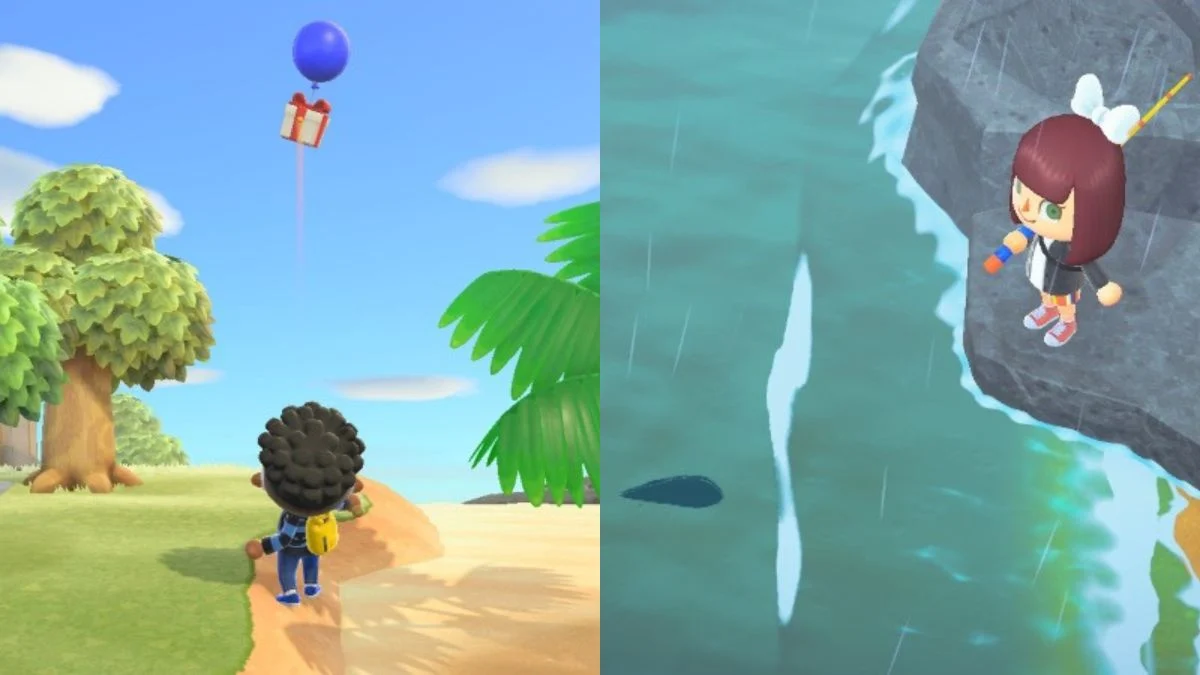
Popping a balloon when it floats above a river or the sea causes the present to fall straight down into the water and disappear. The game checks the tile under the balloon at the moment the slingshot connects, not where the player stands or where the balloon was a moment before. This makes some shots a guaranteed loss even with a perfect aim.
You can reproduce this by tracking the balloon shadow and firing right as it crosses the shoreline or a river center. The present makes the splash sound and no item spawns, confirming that the drop tile was water at impact time rather than land.
Message bottles that fail to spawn on cluttered beaches

Daily message bottles spawn on empty beach tiles during set windows, but the spawn check fails if every valid beach tile is occupied by dropped items or furniture. When that happens you simply do not get a bottle even though the daily timer passes as normal. The logic cares about open sand, not about the calendar promise of a bottle.
Clear space to test the difference. Leave shells and DIY junk along the entire shoreline one day, then pick up a stretch of sand the next day. On the cluttered day no bottle appears, while on the cleared day a bottle spawns on the first open stretch after the timer threshold.
Villager pathfinding that refuses single tile gaps

Villagers only use legal floor tiles and inclines and they do not jump single tile gaps or cut diagonally through tight corners. If you fence an area with one tile openings at awkward angles, residents bounce in place or re route in long loops. The system ignores ladders entirely and treats a two level height change as blocked unless there is an incline.
Build a decorative maze with alternating fences and one tile turns and start a conversation with a villager inside it. When the chat ends, watch them try to leave. They walk along the fence and turn back rather than slipping through diagonal corners, because their movement checks require a full orthogonal tile opening.
Fish shadow sizes that hide precise species

Fish spawns use a small set of shadow sizes, meaning several unrelated species share the exact same silhouette. A large shadow in the river can be one of many options and the ocean fin shadow covers multiple sharks. The display gives you a quick category, not an exact identity, so you cannot rely on the shadow alone for precise targeting.
You can confirm this during limited time fishing tasks. Stand on a river tile and log your catches by shadow size. You will record several species under each size, which shows that the silhouette is a coarse filter layered on top of season, weather, and location rules.
Weather seeds that lock in star shower patterns

Each island receives a fixed weather seed that controls cloud cover, rain probability, and the schedule of meteor showers. The seed makes star nights feel random across weeks, yet the pattern repeats on a long cycle that can be mapped. This is why some islands see clusters of shooting stars while others go long stretches without one.
Track your nights by date and note when Isabelle mentions celestial activity during the morning announcement. Over time you will notice repeat sequences with similar cloud timing and bell cricket ambience. The repetition follows the seed rather than a global random roll.
Turnips that spoil on time shifts and weekly reset

Turnips have a hidden timer that checks the weekly reset and any backward time jumps. If the in game clock passes the next weekly reset or detects a rollback before purchase time, all turnips rot at once. The system ties freshness to the clock boundary rather than player intention, so even a small backward shift can ruin a stack.
Buy turnips on Sunday morning and then adjust the system clock past the next Sunday or move the clock backward behind your purchase time. On loading the save, the inventory turnips and any stacks on the ground appear spoiled, proving the timer logic does not track real time minutes but calendar boundaries.
Art gallery quirks with uneven forgery coverage

Redd sells paintings and statues with visual tells, but not every artwork follows the same rule set. A handful of pieces never appear as forgeries while others have several variants, so the mix on a given boat visit can be skewed in odd ways. The museum accepts only genuine items and rejects any fake with a neutral message.
Keep a notebook of Redd visits and mark which titles repeat. Over many visits you will see certain works show up genuine every time while other categories rotate through altered versions, such as missing features or extra markings. The uneven distribution leads to long waits for specific genuine pieces.
Rock and tree spawn rules that fight your designs

The island tries to maintain a set number of rocks and uses strict spawn tiles that require clear space around the target. Dropped items, custom designs, and certain path types block new rock spawns, so random daily checks can fail for weeks if your layout leaves no legal tile. Trees follow their own spacing rules that also reject crowded patterns even when there looks to be room.
To prove this, break a rock and then blanket the map with custom designs leaving only a small cluster of open spots. The replacement rock appears only in those open tiles. Remove the designs and the next rock after a break has the full island again, showing how the blocking list controls the spawn rather than pure randomness.
Share the quirkiest mistake you have spotted on your island in the comments so everyone can compare notes.