‘Aladdin’ Mistakes You’ll Never Be Able to Unsee



Even beloved classics have tiny hiccups, and Disney’s ‘Aladdin’ is no exception—its fast-paced animation, wild musical set pieces, and era-hopping gags left a trail of continuity slips, anachronisms, and layout quirks that eagle-eyed viewers love to catalog. What follows is a tour of concrete, production-related glitches you can actually spot: background elements that change between cuts, props that swap sides because of flipped cels, and historical details that don’t line up with the world the film is evoking. Understanding why these things happen—tight schedules, multi-team workflows, and the limitations of hand-painted cels—makes them even more interesting to notice on rewatch.
The Sphinx Nose Gag That Breaks History
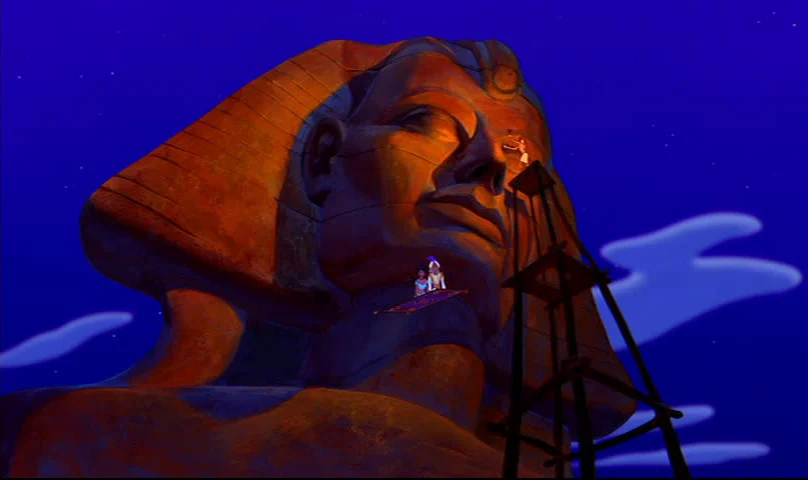
During the Magic Carpet escape, a sight gag shows the Carpet clipping the Great Sphinx and knocking off its nose. The joke ignores the well-documented fact that the Sphinx’s nose was lost centuries before the film’s setting, making the moment a playful but historical anachronism. It’s a classic case of prioritizing a quick visual laugh over period accuracy. Animators often lean on instantly recognizable landmarks, even when the timeline doesn’t quite fit.
The Vanishing-and-Reappearing Bread Loaf
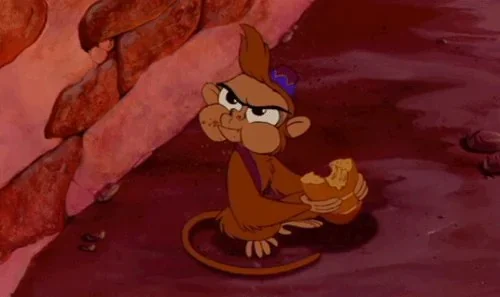
In the marketplace chase, Aladdin steals a loaf and later shares food with hungry children, but the size and shape of the bread shift noticeably across cuts. This kind of continuity drift is common in traditionally animated features, where separate teams handle adjacent shots. Layout notes and model sheets try to keep prop dimensions consistent, yet action-heavy sequences can lead to discrepancies. Quick cutting and overlapping production schedules amplify the effect.
Jasmine’s Earrings Don’t Stay Put
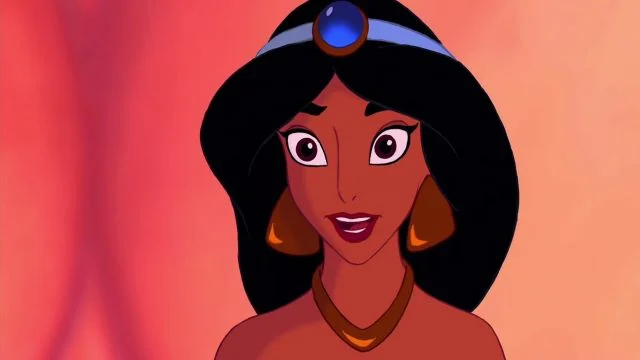
Jasmine’s gold hoop earrings sometimes disappear or change their visible shape between shots, especially during fast turns and hair animation. Hair volume, head angle, and the need to keep silhouettes clean often cause accessories to be simplified or dropped on a per-shot basis. In hand-drawn animation, tiny items can be lost when in-between frames favor clarity over detail. It’s a practical trade-off that occasionally produces blink-and-you-miss-it mismatches.
Moon, Sky, and Lighting Swap Mid-Scene
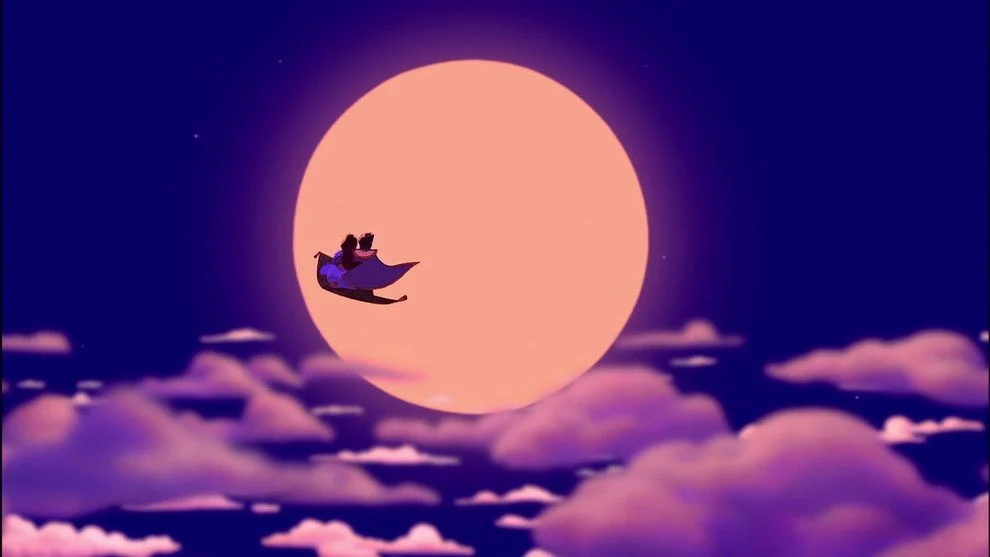
Exterior balcony scenes shift sky color and moon placement in ways that don’t follow real-time continuity. Backgrounds are painted per shot for mood, and night palettes are frequently re-graded to heighten emotion. When sequences are reordered late in the process, sky plates and lighting keys can drift. The result is emotionally coherent but geographically slippery nighttime continuity.
Carpet Pattern Symmetry That Doesn’t Always Match
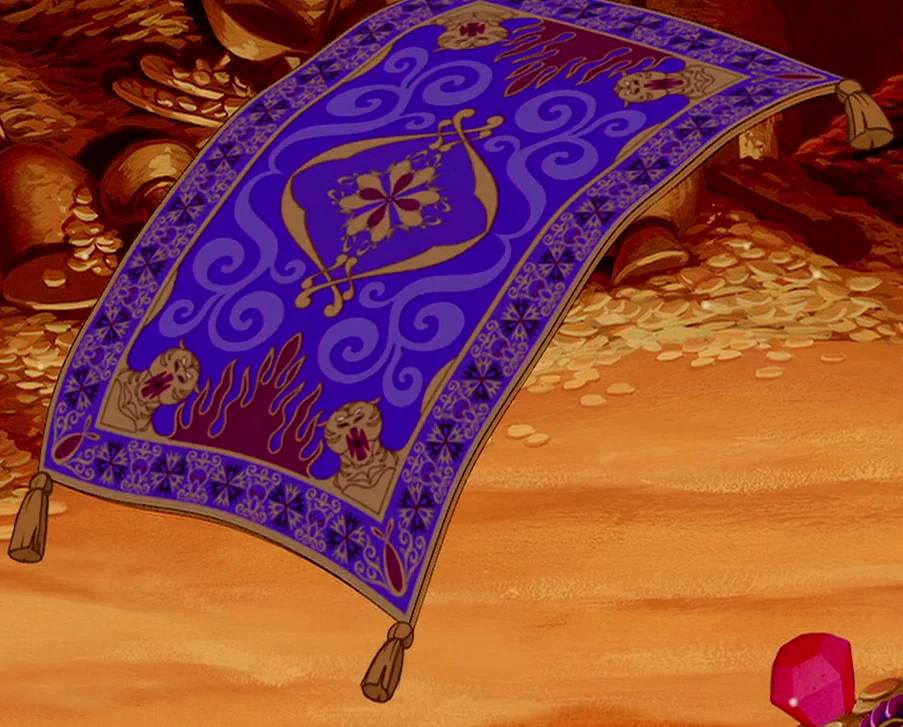
The Magic Carpet’s intricate weave is a symmetrical design, yet certain shots mirror or simplify the pattern. Complex textures are prime candidates for on-the-fly abbreviation so animators can keep motion smooth and on-model. When shots are flipped horizontally to fix staging, ornamental details end up reversed. These shortcuts keep action readable but create pattern mismatches across adjacent cuts.
Guards’ Swords and Badges Flip Sides
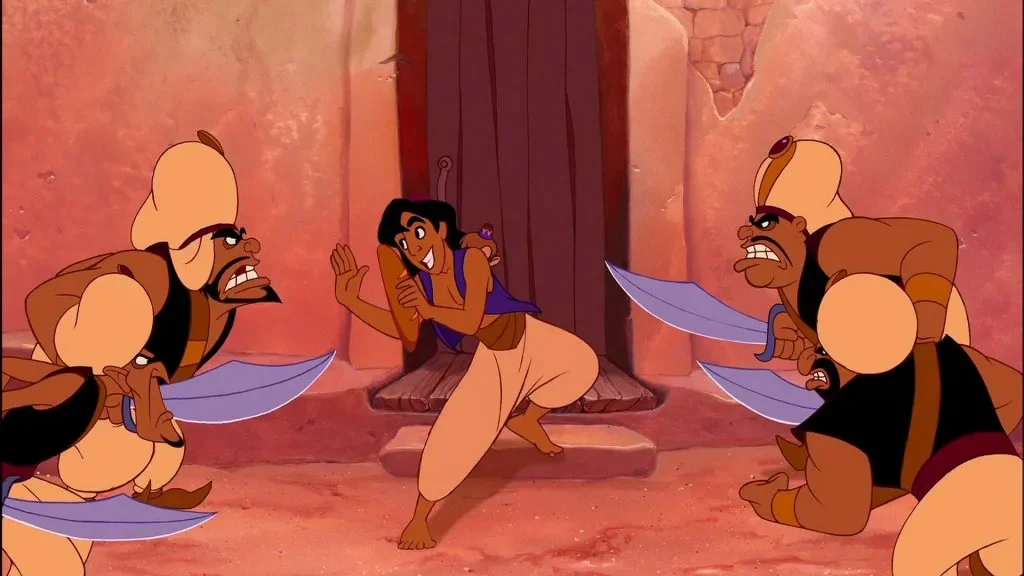
During chases, scimitars, scabbards, and uniform badges occasionally jump from one side of a character to the other. This is a telltale sign of flipped cels or mirrored digital composites used to preserve screen direction. Reversing a drawing solves staging problems quickly, but it mirrors asymmetrical props too. Unless corrected with redraws, those props “teleport” between frames.
Sultan’s Ring Changes Hands
Close-ups of the Sultan’s hands sometimes show his jeweled ring on alternating fingers or hands in back-to-back shots. Hand business is drawn by different artists across layout, animation, and cleanup, and small costume details can be reassigned inadvertently. Because hands often act—pointing, fidgeting, stacking toys—continuity notes can be missed under time pressure. The mismatch is most obvious in dialogue cutaways.
Background Script That Isn’t Real Arabic
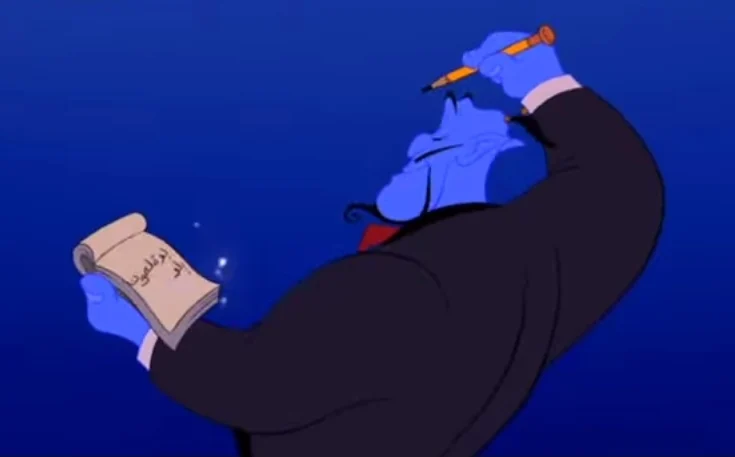
Some marketplace signage and decorative script render as stylized squiggles rather than legible Arabic, a common shortcut in background painting. Production designers aim for regional flavor while keeping backgrounds from stealing focus. When schedule or expertise is limited, teams use abstracted letterforms rather than accurate text. It reads as “ornamental writing” on screen but won’t stand up to close scrutiny.
Prince Ali Parade Numbers That Don’t Add Up
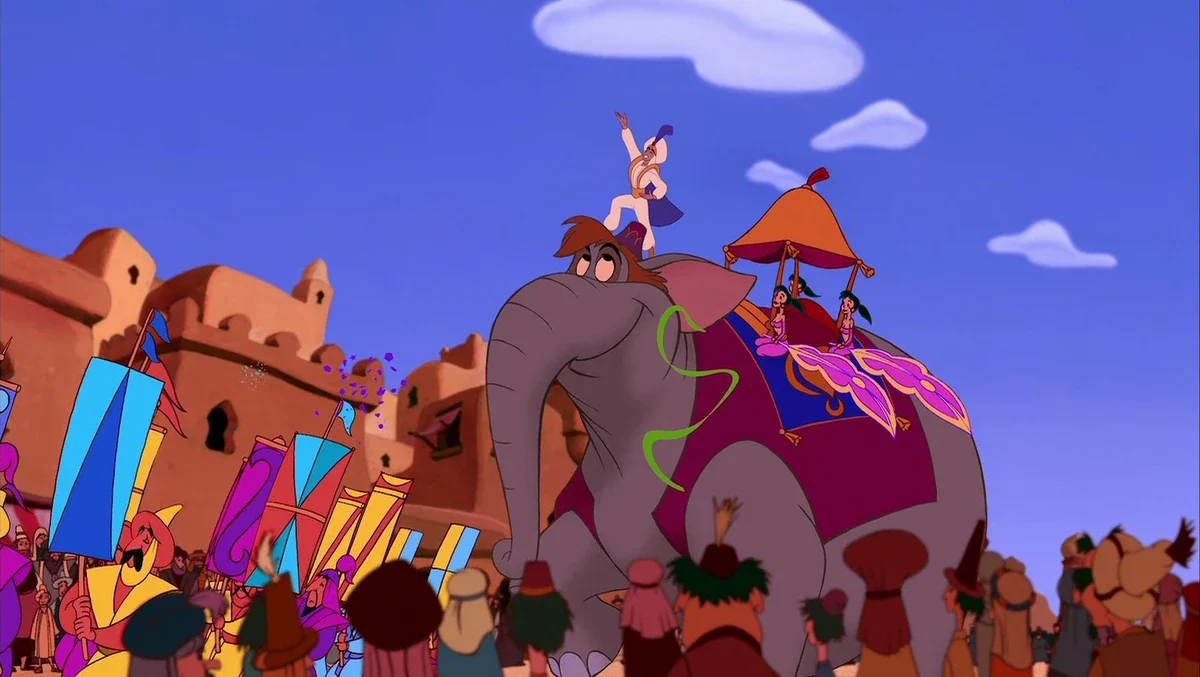
The ‘Prince Ali’ procession changes crowd sizes, animal counts, and float details from shot to shot. Musical montages favor rhythm and spectacle over strict continuity, and each vignette is boarded to hit beats in the song. With multiple units animating separate chunks, prop and crowd counts diverge easily. The sequence lands musically, even if its on-screen logistics can’t be reconciled.
Cave of Wonders Scale That Shifts Shot-to-Shot
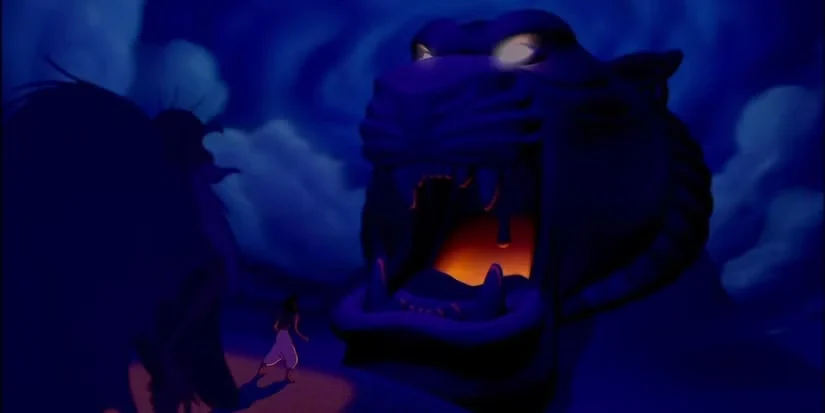
Inside the Cave of Wonders, the size relationship between characters, columns, and treasure piles varies across angles. Background painters create depth with forced perspective, and wide shots often exaggerate scale for grandeur. Cut to a medium or close-up, and those same elements are resized to keep characters readable. The evolving scale sells awe, at the cost of strict spatial continuity.
Share the mistake that jumps out at you most in ‘Aladdin’ in the comments!