15 Most Bizarre Hybrid Creatures in Mythology


From ancient epics to medieval bestiaries, cultures around the world dreamed up creatures stitched together from humans, animals, and sometimes outright fantasy—each with a job to do in its own story, whether guarding sacred spaces, testing heroes, or explaining the unknown. Hybrid beings often carried warnings about pride, curiosity, or trespass, and their mixed bodies signaled mixed meanings: danger and wisdom, power and taboo. Below are fifteen striking examples, with quick snapshots of what they were, where they came from, and why they mattered to the people who told their tales.
Chimera

In Greek mythology, the Chimera is a fire-breathing creature combining a lion’s body, a goat’s head rising from its back, and a serpent for a tail. It is said to be a child of the monstrous Typhon and Echidna and terrorizes Lycia until Bellerophon defeats it. Ancient depictions vary—some show the goat’s head on the withers, others emphasize the serpent-tail—but the tri-part mix remains consistent. The Chimera became a byword for impossibility in later literature, reflecting its stitched-together nature.
Manticore
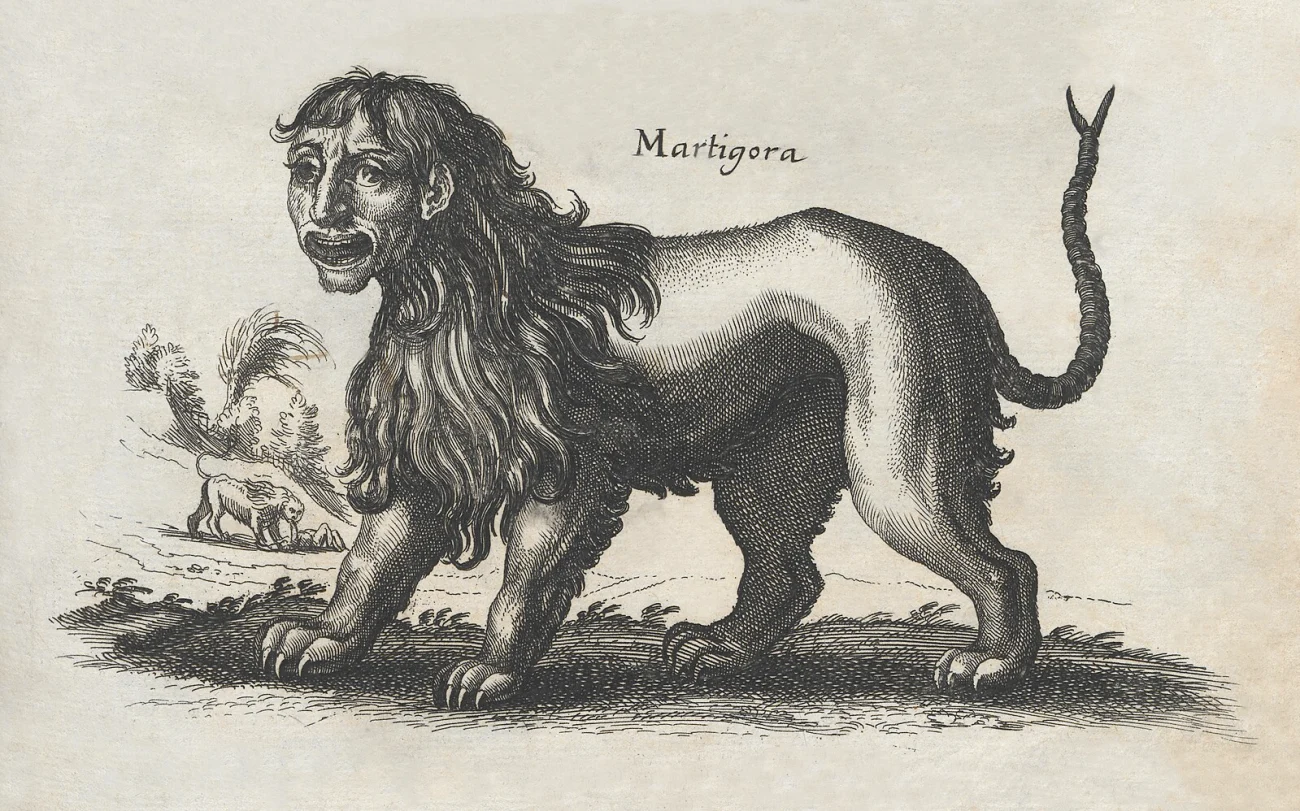
Originating in Persian lore, the Manticore typically has a human-like face, a lion’s body, and a tail armed with poisonous spines or a scorpion’s sting. Medieval sources add that it can shoot its tail-spikes like arrows, making it dangerous at range. The creature’s name likely derives from a term meaning “man-eater,” fitting its reputation for voracious appetite. Bestiaries used it to illustrate the perils of the wilderness and the limits of human mastery.
Sphinx

The Egyptian Sphinx combines a human head with a lion’s body, symbolizing royal power and protection; Greek tradition adds the riddle-giving Sphinx of Thebes. In the Greek story, the Sphinx blocks the road and destroys those who fail to answer its riddle until Oedipus succeeds. Egyptian sphinxes more often guard temples or avenues, stressing vigilance rather than menace. Across regions, the hybrid form marks sacred thresholds where knowledge and might intersect.
Minotaur

A hybrid of man and bull, the Minotaur dwells at the center of the Cretan Labyrinth constructed by Daedalus. The myth links it to King Minos and a divine bull, with the creature receiving sacrificial victims until Theseus kills it. The labyrinth’s winding paths mirror the Minotaur’s liminal identity—part human, part animal, hidden from ordinary society. Archaeological interest in Bronze Age Crete has long connected the story to bull-leaping imagery and palace complexes.
Harpy

In early Greek sources, Harpies are wind-spirits with the bodies of birds and the faces of women, known for seizing people or food by sudden gusts. They famously torment the seer Phineus by snatching or fouling his meals until the Boreads chase them off. Later depictions shift them toward more fearsome, taloned figures, but the bird-woman blend remains. Their role often explains abrupt, destructive winds and the swiftness of divine punishment.
Siren

Originally in Greek myth, Sirens are hybrids of woman and bird, stationed on rocky coasts and luring sailors with irresistible songs. Early art shows them with wings and bird legs, not fish tails. Their power lies in knowledge—promising to reveal hidden truths with their music—rather than physical aggression. Over time, their image merges in popular imagination with mermaids, but classical sources keep the avian features central.
Mermaid

Mermaids are human–fish hybrids found across world folklore, from the Near Eastern Atargatis traditions to later European sea tales. Stories range from benevolent warnings to doomed romances, but most emphasize the liminal space between sea and shore. Sailors’ reports, misidentified marine animals, and cautionary coastal legends fed the motif. The mixed form encodes both the allure and danger of the ocean’s unknown depths.
Lamassu

In Assyrian and Babylonian contexts, the Lamassu blends a human head with the body of a bull or lion and great wings, serving as a protective spirit. Massive Lamassu sculptures flanked palace gateways, combining intelligence, strength, and speed in a single figure. Inscriptions link them to royal authority and divine guardianship. Their composite anatomy signals completeness—human wisdom, animal might, and celestial mobility.
Hippogriff

A medieval and Renaissance invention, the Hippogriff mixes the front half of a griffin (itself an eagle–lion hybrid) with the hindquarters of a horse. The paradoxical pairing—eagle and horse were traditional enemies—made the creature a symbol of the unlikely turned real. Later literature uses it as a fantastic mount, emphasizing speed and cross-boundary travel. Its layered hybridity reflects evolving European tastes for elaborate chimeras.
Cockatrice

The Cockatrice is a serpent–rooster hybrid associated with a lethal gaze or breath and a body part bird, part reptile. Lore claims it hatches from a rooster’s egg incubated by a toad or serpent, reversing nature’s order as a sign of ill omen. Medieval texts prescribe weasels or the sound of a rooster’s crow as counters to its power. The creature’s hybrid birth and deadly look embody fears of unnatural generation and corruption.
Hippocampus

In Greek tradition, the Hippocampus has the forequarters of a horse and the tail of a fish, drawing the sea-chariot of Poseidon. Artists adorn pottery, mosaics, and reliefs with Hippocamps to frame marine scenes and deities. The form rationalizes the idea of a “sea-horse” by literally blending equine and aquatic traits. It often accompanies tritons and sea-nymphs, populating the mythic seascape with orderly hybrids.
Qilin

The Qilin is a composite creature in Chinese lore, commonly described with the body of a deer, scales, an ox-like tail, and sometimes cloven hooves and a single horn. It appears as an auspicious omen tied to the birth or rule of benevolent sages. Despite its fierce look, it is gentle—said to avoid harming even a blade of grass. The Qilin’s hybrid features express moral harmony rather than monstrosity.
Nue

In Japanese legend, the Nue has the face of a monkey, the body of a tanuki, the legs of a tiger, and a serpent for a tail, with a cry like a water rail. The ‘Heike Monogatari’ recounts a Nue haunting the Heian court until the archer Minamoto no Yorimasa slays it. The creature’s patchwork form underlines its role as a bringer of illness and unrest. Later retellings keep the composite anatomy while shifting details to local settings.
Buraq

In Islamic tradition, the Buraq is a radiant, winged steed—often described with a human-like face in some narratives—that carries the Prophet on the Night Journey. Descriptions vary by source, but speed and luminous beauty are constants. The hybrid elements mark it as a creature suited for sacred travel between earthly and celestial realms. Artistic depictions adapt features to regional styles while preserving its role as a vehicle of revelation.
Tikbalang

From Philippine folklore, the Tikbalang is a tall, lanky figure with a horse’s head and hooves and a human-like body, known for leading travelers astray. Stories place it at forested crossroads and mountain paths, where it confuses directions or plays tricks. Protective charms or wearing one’s shirt inside-out are traditional counters. The hybrid frame reflects the wild edge between village order and untamed terrain.
Share your favorite strange hybrid—or one we missed—in the comments!