15 Most Powerful Heroes in Norse Sagas, Ranked



From dragon-slayers to bear-warriors, the Norse sagas and legendary tales (Íslendingasögur and fornaldarsögur) preserve a who’s-who of formidable heroes whose strength, sorcery, and sheer stubborn grit shape early Scandinavian lore. Drawn from texts like ‘Völsunga saga’, ‘Njáls saga’, and ‘Hrólfs saga kraka’, these figures wield famed blades, call on hidden magic, and leave trails of oaths fulfilled and feuds concluded. Below is a countdown of fifteen standouts whose recorded deeds, weapons, and reputations anchor them in the tradition of saga-age power.
15. Kári Sölmundarson

Kári Sölmundarson appears in ‘Njáls saga’ as a swift and relentless warrior affiliated with the men of Bergþórshvoll. He survives the burning of Njáll’s farm and undertakes a far-ranging pursuit of the perpetrators across Iceland and abroad. Known for exceptional speed and prowess with weapons, Kári executes precise vengeance within the legal and honor frameworks of the saga world. His travels extend to the Orkneys and beyond, highlighting the saga’s broad geographic scope and the endurance necessary to see blood-feuds through.
14. Skarphéðinn Njálsson

Skarphéðinn, the sharp-tongued son of Njáll in ‘Njáls saga’, is marked by fearlessness and a cutting wit that often provokes enemies. He is frequently cited for decisive strikes in battle, including famously gliding over ice to deliver a lethal blow. His staunch loyalty to kin and adherence to honor codes situate him as a central actor in escalating conflicts. The saga preserves numerous instances of his tactical awareness and uncompromising courage in confrontations.
13. Gunnar Hámundarson

Gunnar of Hlíðarendi, from ‘Njáls saga’, is celebrated for unmatched skill with the atgeir and bow, along with extraordinary athletic ability. The saga notes his capacity to leap his own height fully armed and to fight multiple assailants effectively. Despite opportunities to avoid conflict, his commitment to honor and property defense draws him into deadly feuds. His famed last stand at Hlíðarendi underscores the lethal intersection of personal excellence and rigid social expectations.
12. Friðþjófr (Frithiof)

‘Frithiofs saga’ depicts Friðþjófr as a seafaring champion whose adventures span raids, shipwrecks, and courtly trials. His prized ship Elliði and steadfast love for Ingibjörg frame exploits that test resolve and diplomatic skill. Repeated encounters with kings and rivals show strategic adaptability as much as martial force. The narrative emphasizes loyalty, oath-keeping, and the political dimensions of heroism in turbulent waters and halls.
11. Ketill Hængr (Ketil Trout)

In ‘Ketils saga hœngs’, Ketill Hængr is introduced as a notable member of the Ketill family cycle, associated with fishing prowess and warrior strength. He undertakes expeditions that combine resourcefulness with decisive combat against trolls and adversaries in remote locales. The saga positions him within a network of kin whose deeds connect to broader legendary traditions. His epithet “Hængr” evokes both livelihood and might, reinforcing his standing among early Icelandic heroes.
10. Hrómundr Gripsson

‘Hrómundar saga Gripssonar’ recounts Hrómundr’s acquisition of the sword Mistilteinn after slaying the undead Þráinn. Mistilteinn, a weapon of storied lineage, becomes central to his subsequent victories over rival champions. The tale intertwines draugr lore with battlefield accomplishment, linking supernatural trials to human bravery. Through weapon-quest and duel, Hrómundr exemplifies the saga motif of power anchored in heirloom steel.
9. Örvar-Oddr (Arrow-Odd)

In ‘Örvar-Odds saga’, Oddr receives a prophecy foretelling death by his horse’s skull, prompting lifelong travels to evade fate. He becomes renowned for archery, long voyages, and encounters with giants, berserks, and exotic peoples. Companions like Hjalmar connect him to the Angantýr cycle, knotting separate traditions into one career of exploits. The saga ultimately fulfills the prophecy, underscoring the interplay of doom and renown in heroic narratives.
8. Egill Skallagrímsson

‘Egils saga Skallagrímssonar’ presents Egill as both skald and warrior, equally formidable in battle and verse. He composes ‘Höfuðlausn’ to save his life at King Eiríkr Bloodaxe’s court and is noted for complex drápur and runic knowledge. Martial episodes include duels, raids, and fierce engagements across Norway and England. The saga highlights his volatile temperament, deep family loyalties, and the cultural authority of poetry alongside arms.
7. Grettir Ásmundarson

‘Grettis saga Ásmundarsonar’ chronicles Grettir’s immense strength and prolonged outlawry, including famed fights against the draugr Glámr. The curse from Glámr darkens his fate, making him increasingly isolated despite heroic feats. Grettir’s endurance on the island of Drangey and his final siege showcase tactical resilience against superior numbers. His story examines the limits of physical might when set against ill-luck, law, and the supernatural.
6. Ragnar Loðbrók

Ragnar Loðbrók appears across legendary material as a sea-king conducting raids in Francia and England, linked genealogically to famed “sons” like Ivarr and Bjǫrn. Accounts describe marriages to figures such as Lagertha and Áslaug (Kraka), connecting him to Sigurd’s lineage. His death in a snake-pit under King Ælla becomes a central motif, echoed in later retellings and genealogies. The tradition positions Ragnar as a bridge between saga-age piracy, dynastic ambition, and later medieval historiography.
5. Starkaðr inn gamli (Starkad the Old)
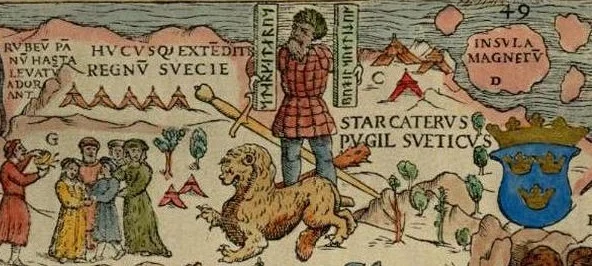
Starkaðr, featured in ‘Gautreks saga’ and Saxo Grammaticus’s ‘Gesta Danorum’, spans multiple lifetimes with Odin-granted gifts and curses. He participates in the service of several kings, shifting loyalties as fate and obligation dictate. The hero’s tri-armed depiction in some sources symbolizes multiplicity of deeds across eras. His biography blends divine intervention, moral ambiguity, and repeated battlefield distinction.
4. Böðvarr Bjarki

In ‘Hrólfs saga kraka’, Böðvarr Bjarki serves King Hrólfr and is associated with a bear-spirit that fights on his behalf. The saga’s climax at Lejre portrays his crucial, if contested, role in the defense against overwhelming foes. His origins trace to a heroic family, and his brotherhood with champions like Hjalti situates him in a cohesive war-band. The bear motif signals berserk-like force channeled through loyalty to a ring-giver.
3. Hervör

‘Hervarar saga ok Heiðreks’ recounts Hervör’s journey to the haunted barrow of her father Angantýr to claim the cursed sword Tyrfing. She confronts the barrow-wight and secures the blade, later living as a warrior and participating in raids and battles. The saga highlights her command capabilities and readiness to operate within traditionally male martial spheres. Tyrfing’s doom-laden power threads through her life and the fates of her descendants.
2. Hrólfr Kraki

King Hrólfr Kraki, central to ‘Hrólfs saga kraka’ and related traditions, is famed for generosity, elite champions, and a court at Lejre. His retinue includes figures like Böðvarr Bjarki and Hjalti, whose exploits reinforce the king’s status as a hub of heroism. Episodes detail feuds with Skuld and a final stand that cements his posthumous reputation. The saga preserves a model of idealized kingship intertwined with war-band solidarity and fatal tests.
1. Sigurðr Fáfnisbani (Sigurd the Dragon-Slayer)

‘Völsunga saga’ presents Sigurðr as the wielder of the reforged sword Gram, slayer of the dragon Fáfnir, and heir to the Völsung line. Guided by Reginn and informed by dragon-blood-won wisdom, he understands birds’ speech and navigates tangled loyalties. His relationship with Brynhildr and marriage alliances drive the saga’s tragic turns and later dynastic consequences. The figure’s weapon, deeds, and lineage became foundational for subsequent Germanic and Norse heroic literature.
Share which hero you’d place at the top and why in the comments!