20 Detective Games That Will Make You Feel Like A Genius



These detective games hand you the tools, clues, and systems to piece together the truth yourself—no glowing waypoints needed. From logic-grid deductions to time-loop investigations and FMV databases, each one rewards careful observation, note-taking, and that satisfying “aha” when everything finally clicks. You’ll comb crime scenes, parse testimony, decode languages, and present airtight conclusions using mechanics built for armchair sleuths. If you love connecting dots and proving your case, start here.
Return of the Obra Dinn (2018)

Lucas Pope’s first-person investigation tasks you with identifying the fates of 60 souls aboard a lost East India Company ship in 1807. Using the Memento Mortem pocket watch, you step into freeze-frame death scenes and cross-reference accents, uniforms, ledger entries, and relationships. A built-in book records evidence, sketches, and your deductions, validating correct triplets of identity, cause of death, and killer. Progression is knowledge-based, so methodical reasoning—rather than upgrades—unlocks the whole mystery.
The Case of the Golden Idol (2022)

This 18th-century anthology mystery has you reconstruct murders by collecting keywords and placing them into sentence blanks to form complete explanations. Each case is an open diorama where you scour notes, portraits, and ledgers to learn names, roles, and motives before solving the “who, how, and why.” A separate deduction screen lets you test hypotheses without penalty, encouraging experimentation. The story spans decades, with later cases reusing characters and facts, turning your own memory into a crucial tool.
Her Story (2015)

Built around a police database of interview clips, this FMV mystery is driven entirely by your search terms. You type keywords to surface new videos, then harvest names, events, and objects from those clips to refine subsequent searches. There’s no checklist or objective marker—understanding emerges from the fragments you choose to watch. The interface tracks viewed clips, letting you map connections and decide for yourself when you’ve solved the case.
Immortality (2022)

You investigate a missing actor by scrubbing through footage from three unreleased productions and “match-cutting” on faces and props to jump between clips. The timeline and clapperboard metadata help you place scenes in order and spot patterns across films and behind-the-scenes material. Hidden layers appear when you manipulate playback, revealing context that reframes earlier discoveries. The game preserves every clip you’ve found, so your evolving reel becomes the case file.
Paradise Killer (2020)

This open-world investigation drops you onto a surreal island where you gather evidence, interview immortal suspects, and hack into devices at your own pace. A caseboard tracks testimony, alibis, and found items, while fast travel and vantage points help you revisit scenes efficiently. When ready, you proceed straight to a trial and present proof for each charge in any order you choose. There are no fail states for exploring theories—your arguments succeed or fail on the strength of your evidence.
The Painscreek Killings (2017)
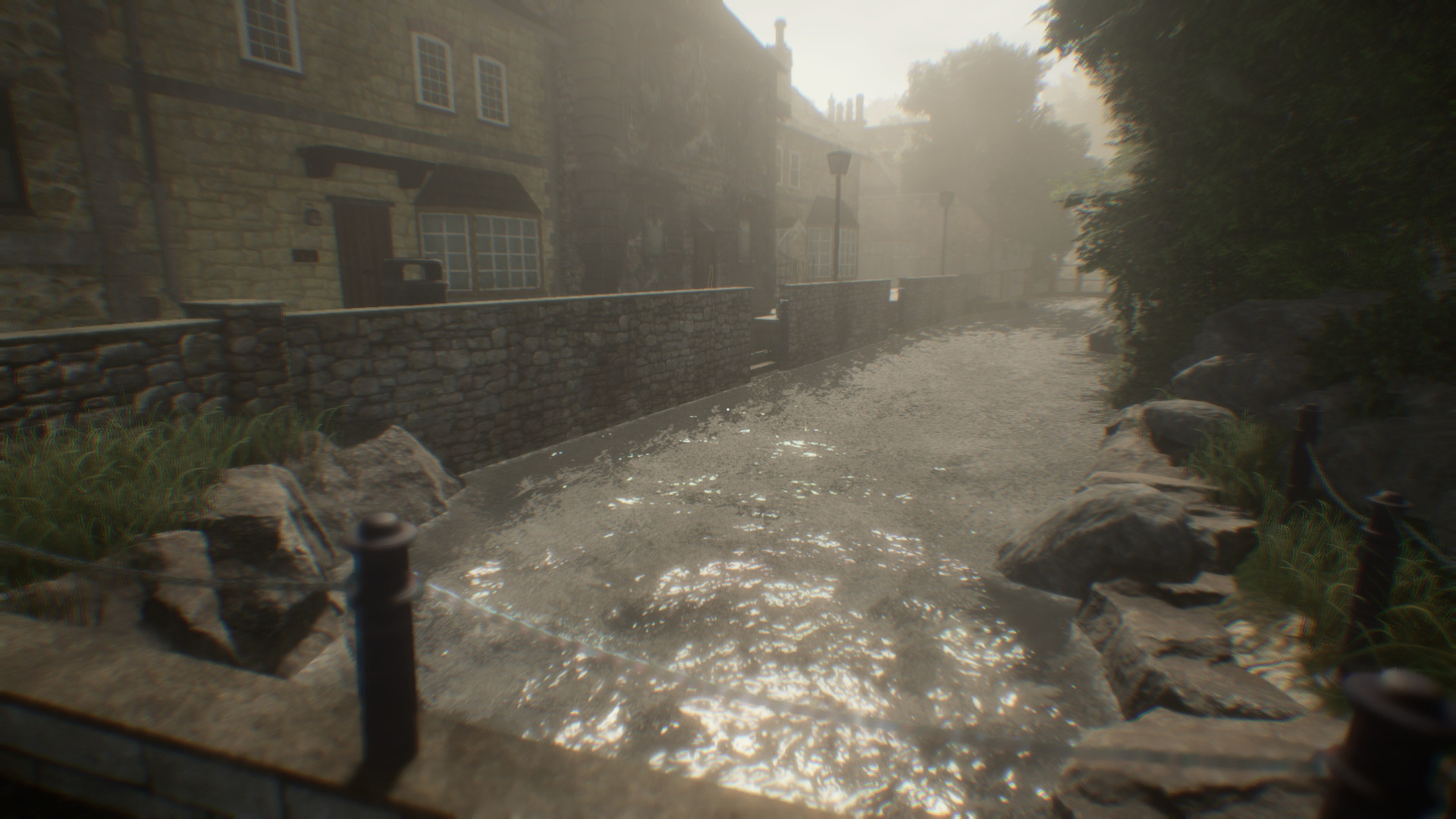
Set in an abandoned American town, this first-person mystery offers non-linear access to houses, offices, and municipal buildings full of diaries, codes, and keys. A camera and notebook support meticulous documentation, and many doors and locks require multi-step solutions rooted in local history. The game tracks no objectives, leaving you to establish timelines and motives from primary sources. Your final accusation is permanent, so complete research and corroboration matter.
The Forgotten City (2021)

Built around a time loop governed by a “Golden Rule,” this investigation lets you test suspicions, then reset the day while preserving knowledge and key items. Dialogue trees, logic puzzles, and forensics of cause-and-effect reveal who might break the rule and why. Multiple endings hinge on the sequence of revelations you bring back to town leadership. A quest log records leads but avoids spoiling solutions, keeping deductions player-driven.
Outer Wilds (2019)

A 22-minute time loop encodes a solar-system-wide archaeology project, where your ship’s log auto-maps discovered facts into a web of clues. You read alien texts, chart environmental hazards, and revisit locations at specific times to witness events. The log never tells you where to go next; it just documents what you know, letting you spot logical gaps. Advancement is purely knowledge-based—once you understand a mechanism, you can immediately act on it in the next loop.
Heaven’s Vault (2019)

You play an archaeologist-sleuth who deciphers a lost hieroglyphic language to uncover a centuries-spanning mystery. The translation system uses contextual guesses that persist across inscriptions, letting earlier hypotheses influence later readings. Conversations, route choices, and dictionary edits branch the narrative and can lock or unlock interpretations. A timeline codex records artifacts, sites, and relationships, enabling you to revise translations as your evidence base grows.
Disco Elysium (2019)

This narrative RPG frames detective work through 24 internal “skills” that interject insights, hunches, and contradictions during scenes. A Thought Cabinet lets you internalize ideas that modify checks and open new lines of inquiry. Evidence, footprints, and autopsy details are tracked in your case notes, and many leads require specific stats or clothing to pass skill gates. Non-linear investigations accommodate multiple solutions, including alternate timelines of events you reconstruct.
L.A. Noire (2011)

Set in a recreation of late-1940s Los Angeles, this case-based adventure blends crime scene forensics, clue cataloging, and witness interviews. MotionScan facial capture underpins interrogation mechanics that compare suspects’ micro-expressions with physical evidence you’ve collected. Case books log every discovered item and question, allowing re-reads of testimony for contradictions. Street crimes and desk promotions structure the campaign while keeping investigations modular.
Sherlock Holmes: Crimes & Punishments (2014)

Each case features a deduction space where you connect clue “nodes” into branching conclusions, many of which are plausible but mutually exclusive. You conduct chemical analyses, disguise work, and footprint comparisons using discrete minigames. Moral choices allow you to condemn or absolve suspects after forming your theory, with the game recording outcomes without declaring a single “correct” answer. Case summaries archive your reasoning path for review.
Phoenix Wright: Ace Attorney (2001)

This courtroom adventure alternates between investigation days and trial days, asking you to present evidence to expose contradictions in testimony. The Court Record stores profiles and items, and a Transcript lets you revisit statements to press or present at exact lines. Later entries add mechanics like psyche-locks and forensic tests, broadening the toolkit for uncovering motives and timelines. Save-anywhere play supports experimenting with different lines of attack on cross-examination.
AI: The Somnium Files (2019)

Investigation segments gather facts and contradictions, while Somnium dream dives use time-limited, logic-puzzle vignettes to extract hidden truths. A comprehensive flowchart records every branch you’ve reached, enabling targeted replays to explore alternate outcomes. The game links evidence to character profiles, making alibi verification and timeline assembly straightforward. Environmental scanning and conversational flags help you exhaust leads without guesswork.
Danganronpa: Trigger Happy Havoc (2010)

You explore crime scenes to collect “Truth Bullets,” then enter class trials where you fire those bullets at specific statements to refute contradictions. Case files document autopsy results, weapon details, and room states to support logical elimination. Trial segments include logic mapping, spot-the-lie sequences, and closing arguments where you reconstruct the crime in manga-style panels. A chapter structure ensures each mystery has its own complete evidence pack.
Ghost Trick: Phantom Detective (2010)
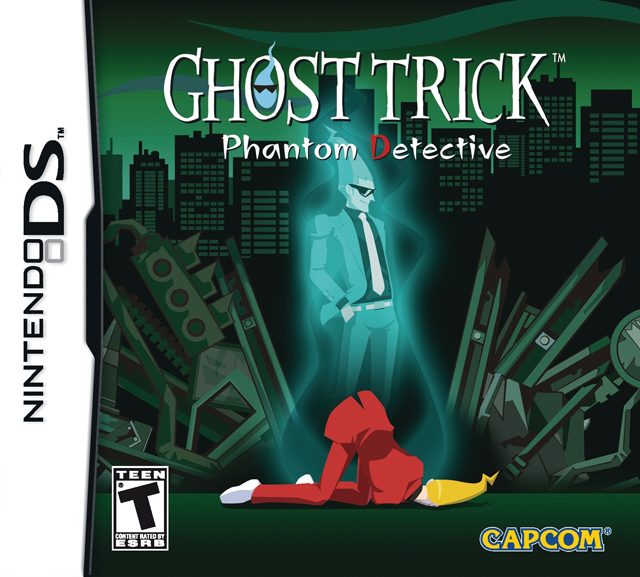
You manipulate objects as a recently deceased spirit, rewinding moments before a death to prevent it via timed, Rube-Goldberg-style interventions. A timeline interface shows event sequences, letting you test alternate chains until you uncover the culprit’s method. Character files update with relationships and movements, which you correlate across locations by jumping telephone lines. The remastered release adds modern platforms while preserving the puzzle logic and case chronology.
Professor Layton and the Curious Village (2007)

This adventure ties an overarching mystery to dozens of discrete logic puzzles, ciphers, and riddles embedded in the town’s residents and ephemera. Hint coins provide scalable assistance without revealing full solutions, preserving deductive satisfaction. A journal tracks discoveries, while puzzle lists let you revisit unsolved challenges at any time. Post-game content and bonus puzzles extend the investigative thread beyond the credits.
The Vanishing of Ethan Carter (2014)

You play a paranormal investigator who reconstructs crime sequences using “Sense” projections that must be placed in the correct chronological order. Environmental clues—blood spatter, tools, and text fragments—anchor each reconstruction. The game’s minimal UI means your notebook work and spatial memory drive progress. Case hubs open the path to a final synthesis that depends on which scenes you’ve correctly assembled.
Overboard! (2021)

A reverse-mystery set aboard a 1930s ocean liner, this game gives you a single morning to craft an alibi after committing a crime. Timetabled NPC routines and a compact map let you plan diversions, plant evidence, and steer gossip. A run log preserves discovered possibilities, encouraging iterative routes to a clean escape. Dialogue choices and item placement form the core deduction—only this time you’re engineering the investigation’s outcome.
Chinatown Detective Agency (2022)

Inspired by classic “travel-and-verify” mysteries, this adventure has you research real-world facts—quotes, stamps, timetables—to solve clients’ cases. Time and money management affect travel choices and lead prioritization from Singapore to global hubs. Clue boards and dossiers catalog suspects, locations, and codes you’ve cracked. Office upgrades and staff hires expand your capability to handle tougher, multi-stage investigations.
Pentiment (2022)

Set in 16th-century Bavaria, this historical narrative tracks a murder inquiry across years, with your research shaped by class, language, and access to institutions. You choose educational backgrounds that unlock dialogue options for theology, law, or languages, altering which leads you can pursue. Daily schedules and social networks govern who’s available, so building rapport affects evidence gathering. Case notes, marginalia, and manuscripts serve as your evolving archive of clues.
Share your favorite detective games—and the clever mechanics that hooked you—in the comments!