20 Games With the Most Inventive UI Cursors


Cursors don’t have to be basic arrows—many games turn the pointer itself into a core mechanic, a diegetic prop, or a playful character that teaches you how the world works. From god-hands to paintbrushes and pocket-watches, the examples below show how a simple UI element can carry real mechanical weight, enhance readability, or even become the star of the show. Here are twenty titles where the cursor isn’t just along for the ride—it’s doing real work on-screen.
‘Populous’ (1989)
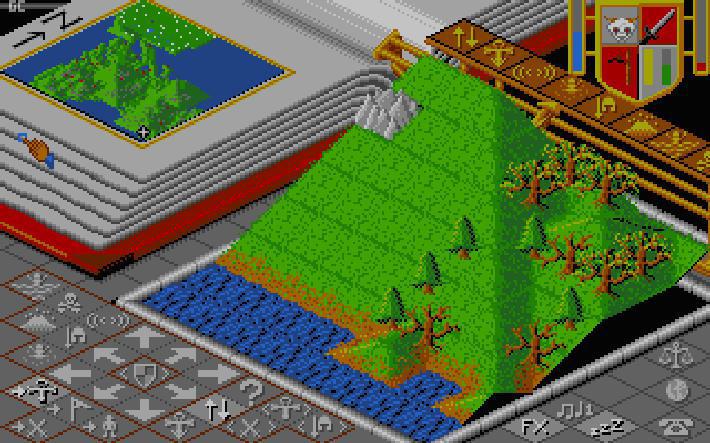
In ‘Populous’, the cursor functions as a literal tool of divine intervention, letting players raise and lower land in real time to shape settlements. Its context-sensitive states communicate terrain editing versus miracle targeting without extra HUD clutter. The minimalist feedback loop—hover, click, terraform—keeps attention on the map rather than menus. The game was developed by Bullfrog Productions, which built the interface to keep the “god game” concept readable at a glance.
‘Lemmings’ (1991)
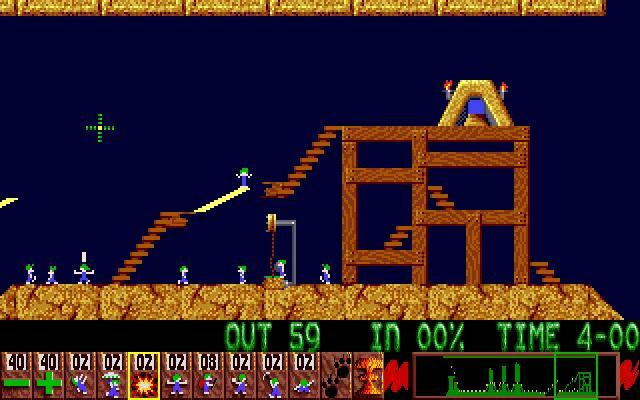
‘Lemmings’ uses a precise, mode-switching cursor to assign skills to individual units in crowded scenes. The pointer’s iconography changes to reflect the selected job, reducing misclicks when the screen is packed with moving sprites. High-contrast highlighting and a pause-and-plan rhythm make the cursor a planning instrument, not just a selector. The game was created by DMA Design, whose UI made micro-management possible on limited-resolution displays.
‘Theme Hospital’ (1997)
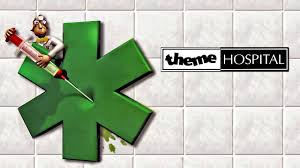
The gloved hand cursor in ‘Theme Hospital’ is a functional metaphor, picking up patients, staff, and objects directly from the simulation layer. Drag-and-drop placement, rotation hints, and snap-to tiles turn the cursor into a layout tool as much as a selector. Context changes—from grab to sell to build—are conveyed via reliable icon swaps. Bullfrog Productions designed the cursor to minimize modal windows and keep construction tactile.
‘The Sims’ (2000)
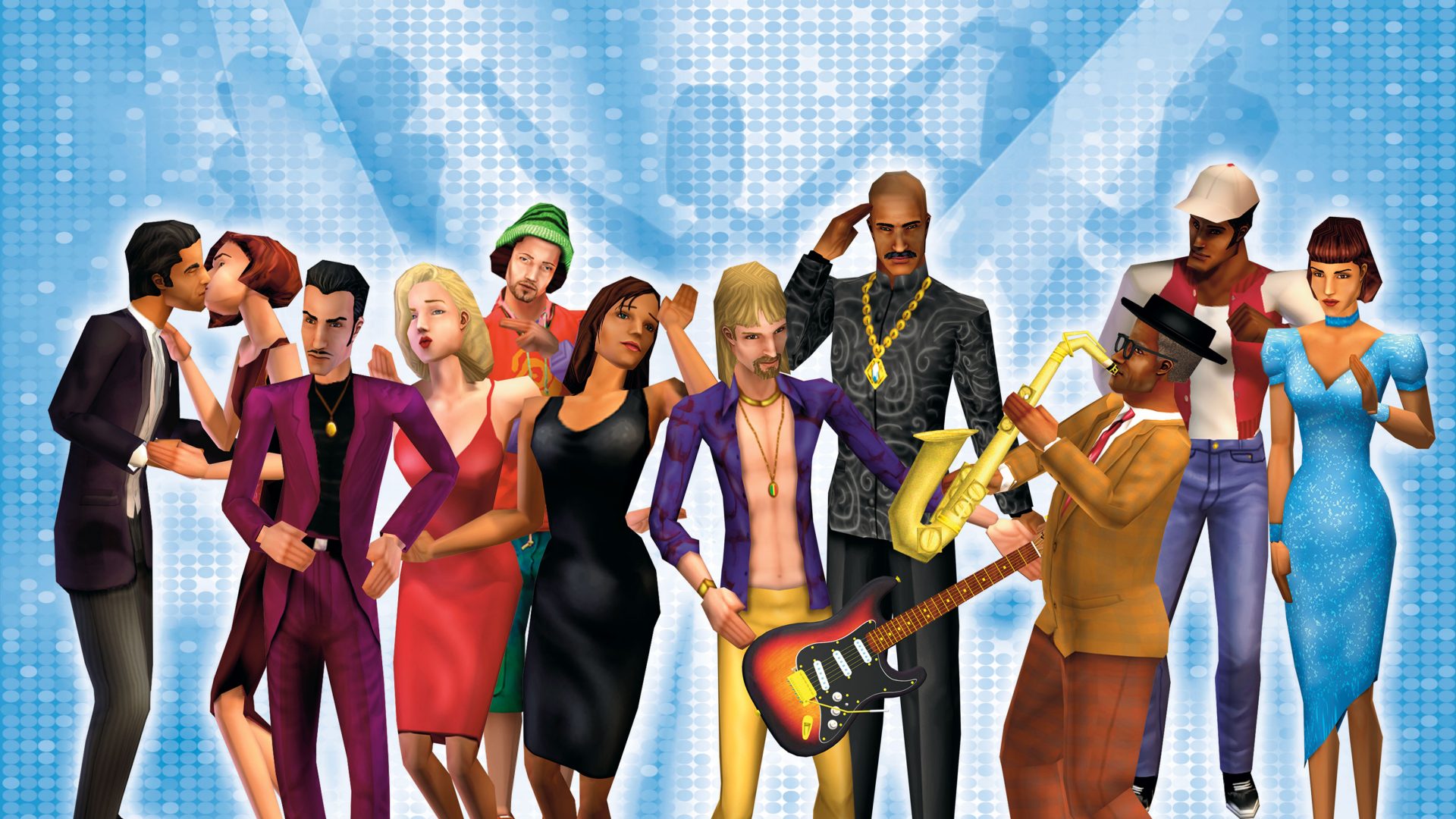
‘The Sims’ relies on a multi-role cursor that shifts between Live and Build/Buy modes, with tooltips and hover outlines clarifying interactions. Direct manipulation—grabbing furniture, resizing objects, rotating placements—keeps the cursor central to play rather than hidden in menus. Edge-scrolling, grid snapping, and price readouts are surfaced right at the pointer. Maxis developed these cursor behaviors to support a “hands-on” home editing loop.
‘Black & White’ (2001)
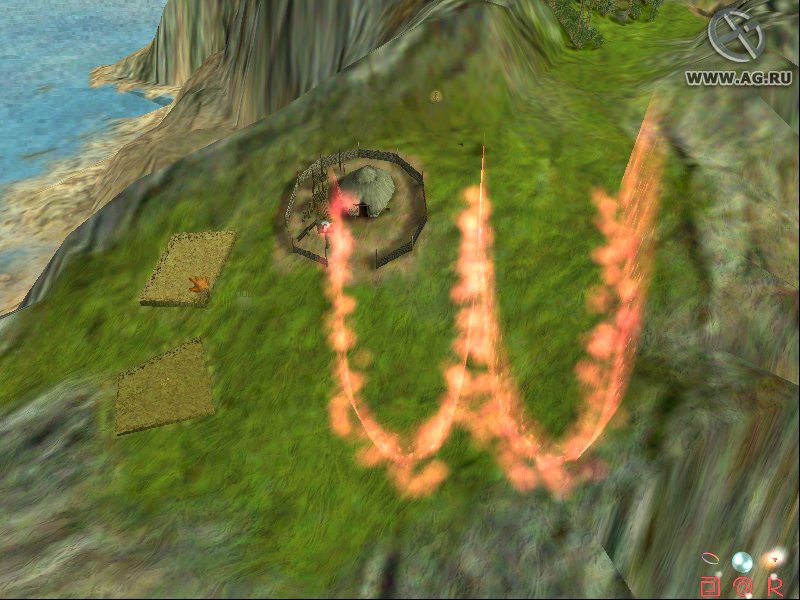
The player’s “god hand” is the cursor in ‘Black & White’, acting as a physical presence that strokes the Creature, picks up villagers, and casts miracles. Gesture recognition for spell shapes ties cursor motion directly to magic without a separate interface. Haptic audio cues—rumbles, chimes, and creature reactions—anchor the hand in the world. Lionhead Studios built the system so UI and fiction would be indistinguishable.
‘Arx Fatalis’ (2002)
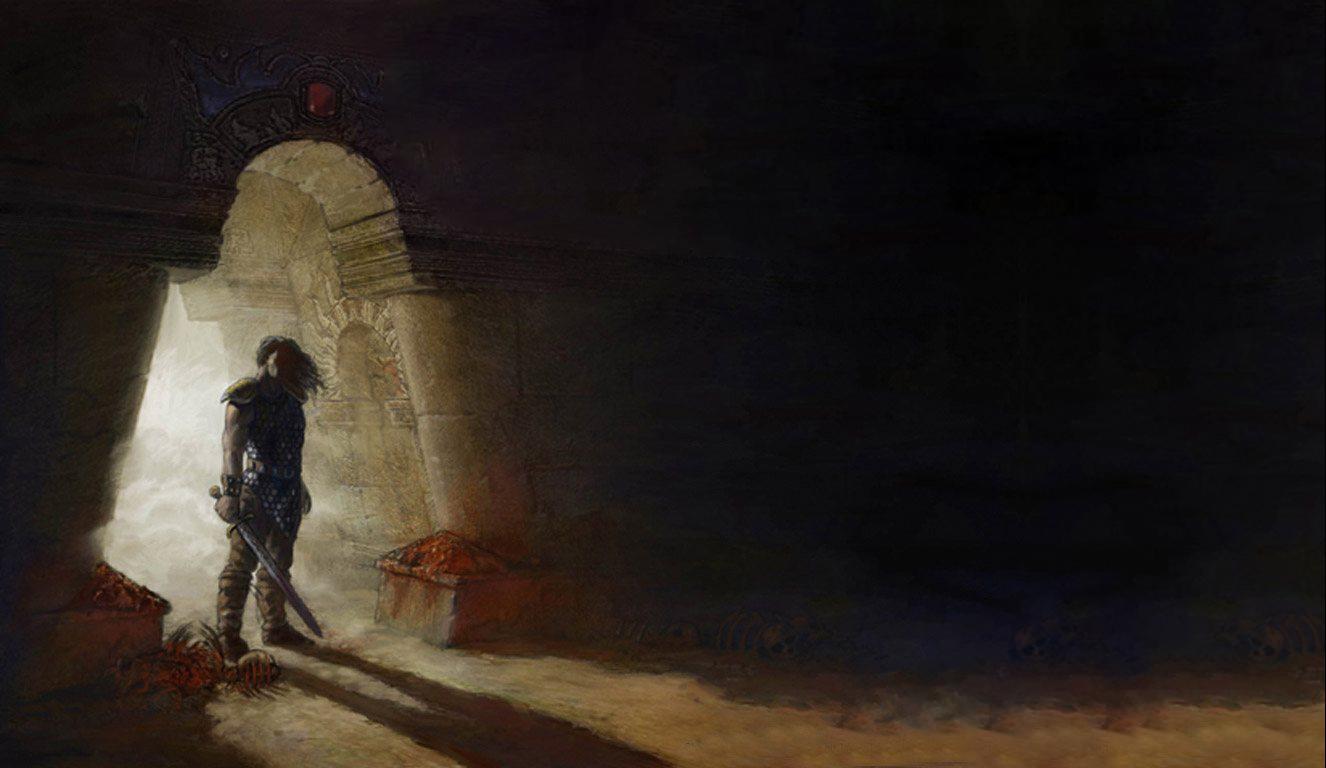
In ‘Arx Fatalis’, spellcasting happens by drawing runes with the cursor in first person, translating mouse paths into glyph recognition. The system supports partial matches and speed-sensitive input to keep combat responsive. Inventory and world interaction remain cursor-driven, making drawing gestures feel native rather than bolted on. Arkane Studios implemented this to merge traditional UI with diegetic magic.
‘Okami’ (2006)
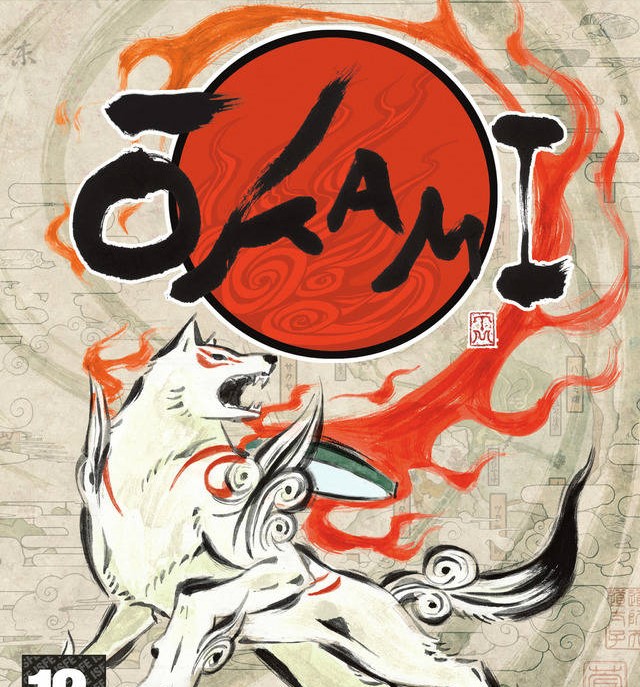
‘Okami’ turns the cursor into the Celestial Brush, letting players pause the world and paint strokes that cut, bloom, or bridge. Stroke order, thickness, and endpoints are evaluated to trigger effects, with on-stroke feedback confirming recognition. The brush icon contextually hints at valid interactions so experimentation stays readable. Clover Studio designed the mechanic so the cursor literally creates solutions on the canvas of the game.
‘The Legend of Zelda: Phantom Hourglass’ (2007)
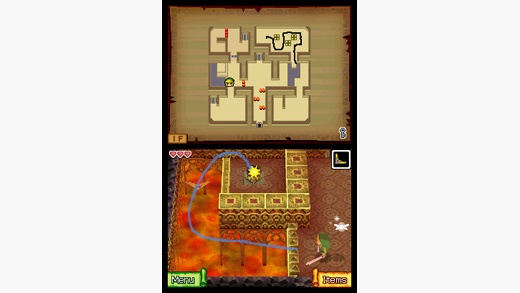
On Nintendo DS, ‘Phantom Hourglass’ uses a stylus-driven cursor to path Link, draw boomerang arcs, annotate the map, and solve symbol puzzles. The pointer switches from movement to interaction seamlessly, with icon prompts only when needed. Map notes—drawn freehand—persist as navigational aids, making the cursor a documentation tool. Nintendo EAD aligned every core verb around stylus precision to keep the UI consistent.
‘Super Mario Galaxy’ (2007)
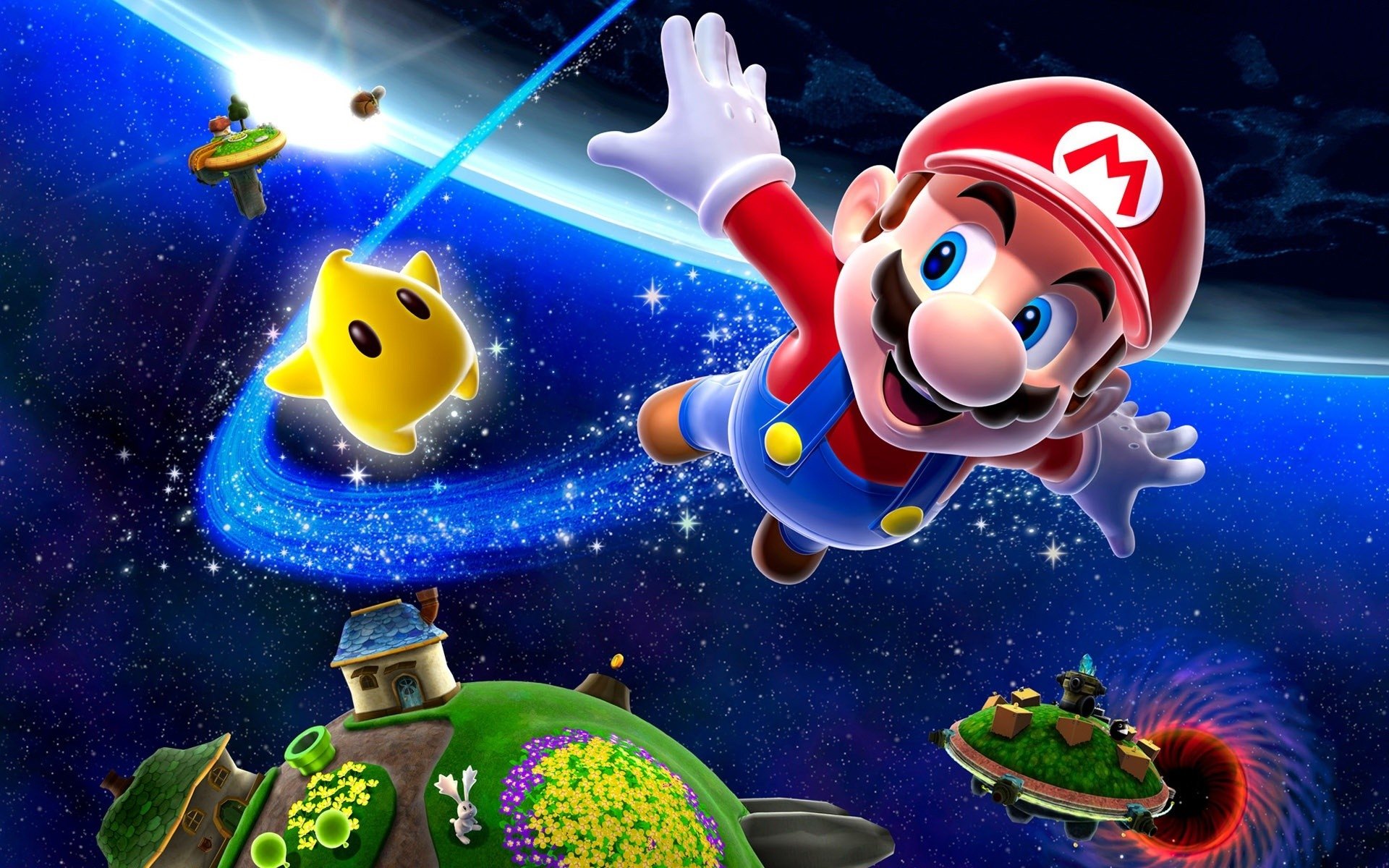
‘Super Mario Galaxy’ layers an on-screen Star Pointer controlled by the Wii Remote atop platforming, enabling star-bit collection and enemy stun without stopping movement. The pointer includes gentle magnetism and depth-aware hit testing so interactions are reliable on 3D scenes. Co-Star mode doubles the pointer for a second player, turning UI into cooperative input. Nintendo EAD Tokyo engineered the pointer to add utility without crowding the screen.
‘World of Goo’ (2008)
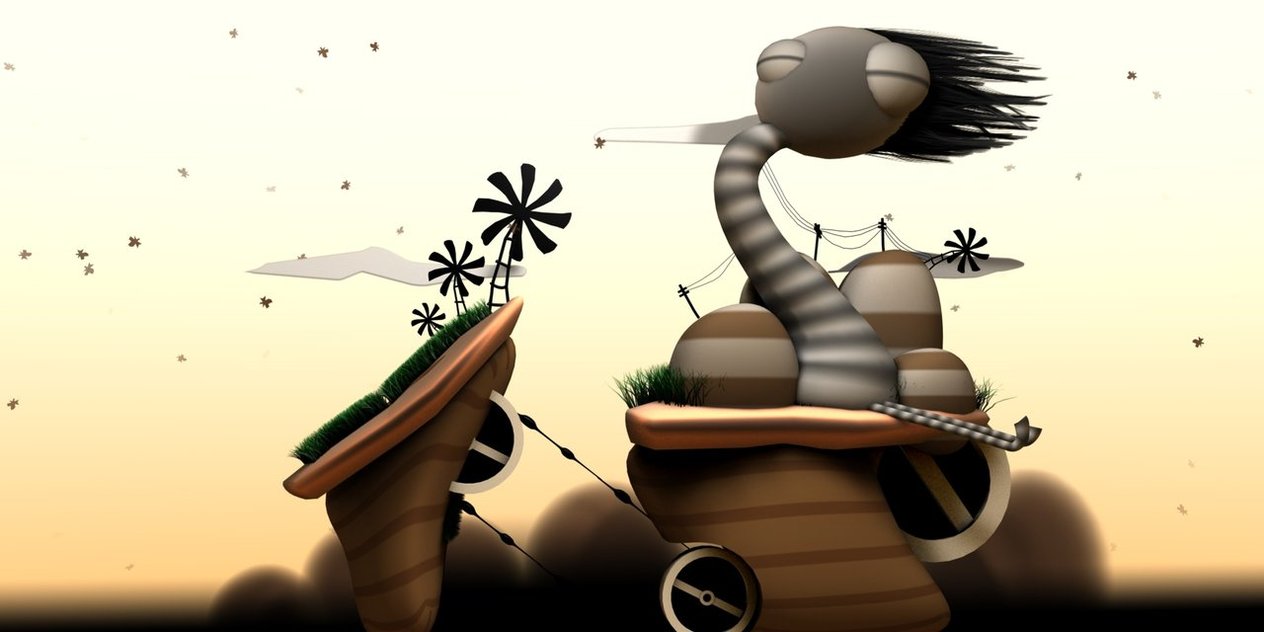
A skeletal hand cursor in ‘World of Goo’ communicates pick-up state, connection possibility, and structural stress through animation and color. Snap targets preview where goo balls will attach, and drag paths visualize intended spans before release. Failure and success are readable from the cursor alone, limiting the need for overlays. 2D Boy crafted the pointer as the chief construction instrument.
‘Dead Space’ (2008)

‘Dead Space’ removes a traditional mouse pointer but projects a diegetic aim-line and holographic reticles that act as the cursor within the world. Menus and inventories are angled holograms the player “points” at with weapon alignment, preserving spatial continuity. Object targeting snaps are tuned to limb-severing weak points, so the cursor communicates tactical intent. EA Redwood Shores (later Visceral Games) built this to keep UI and combat fully in-universe.
‘Ghost Trick: Phantom Detective’ (2010)
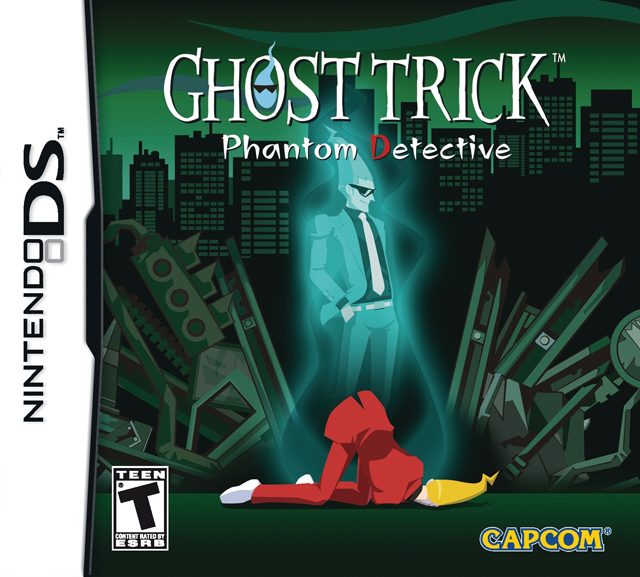
In ‘Ghost Trick’, the cursor traces “trick” paths between objects, with node highlights signaling valid jumps for the ghost protagonist. Timed segments split the screen so the pointer can queue multi-object manipulations in sequence. Clear snapping and icon changes reduce ambiguity during puzzle chaining. Capcom designed the system so the cursor visualizes the metaphysics of possession.
‘Little Inferno’ (2012)
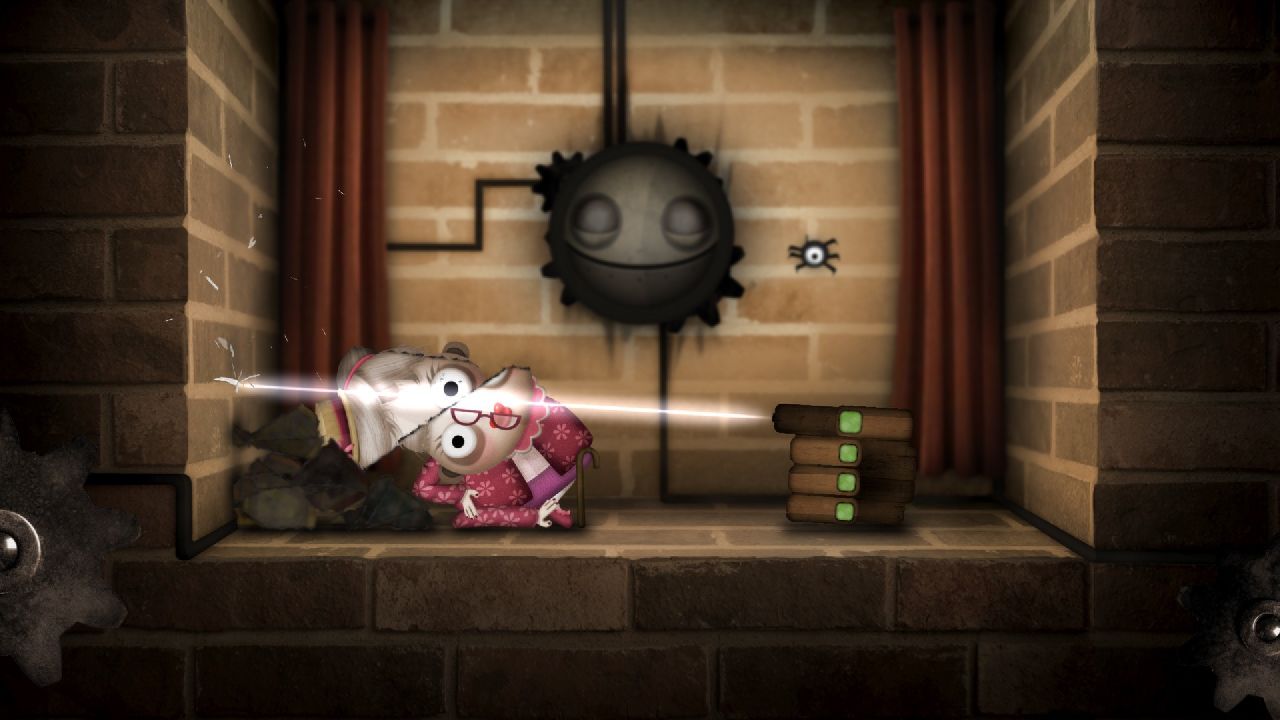
‘Little Inferno’ centers on a hand cursor that grabs, throws, and ignites objects directly in a fireplace sandbox. Heat and physics responses are tuned to cursor velocity, making input feel physical without extra UI. Combo discovery relies on precise placement and timing conveyed through hover states and drag feedback. Tomorrow Corporation built the entire loop around the cursor as the only “tool.”
‘Papers, Please’ (2013)

The cursor in ‘Papers, Please’ constantly swaps to stamps, inspection mode, rulebook, and scanners, with each tool state communicated by shape and sound. Dragging documents across zones triggers validation checks, and mismatch highlighting centers on the pointer’s focus. Time pressure is balanced by generous hitboxes so the cursor is fast but reliable. Designer Lucas Pope released it under 3909 LLC with the cursor as the workflow backbone.
‘Undertale’ (2015)
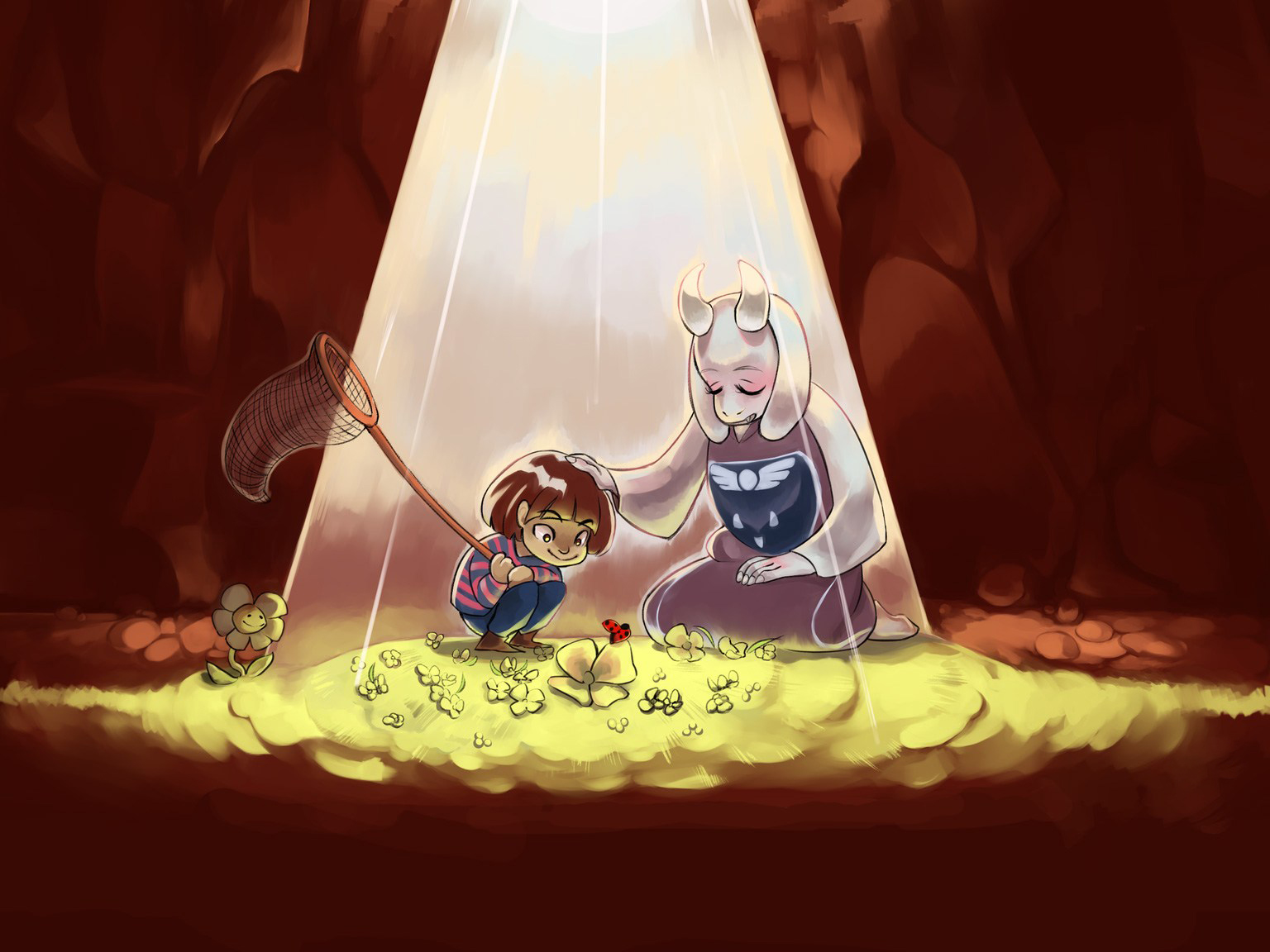
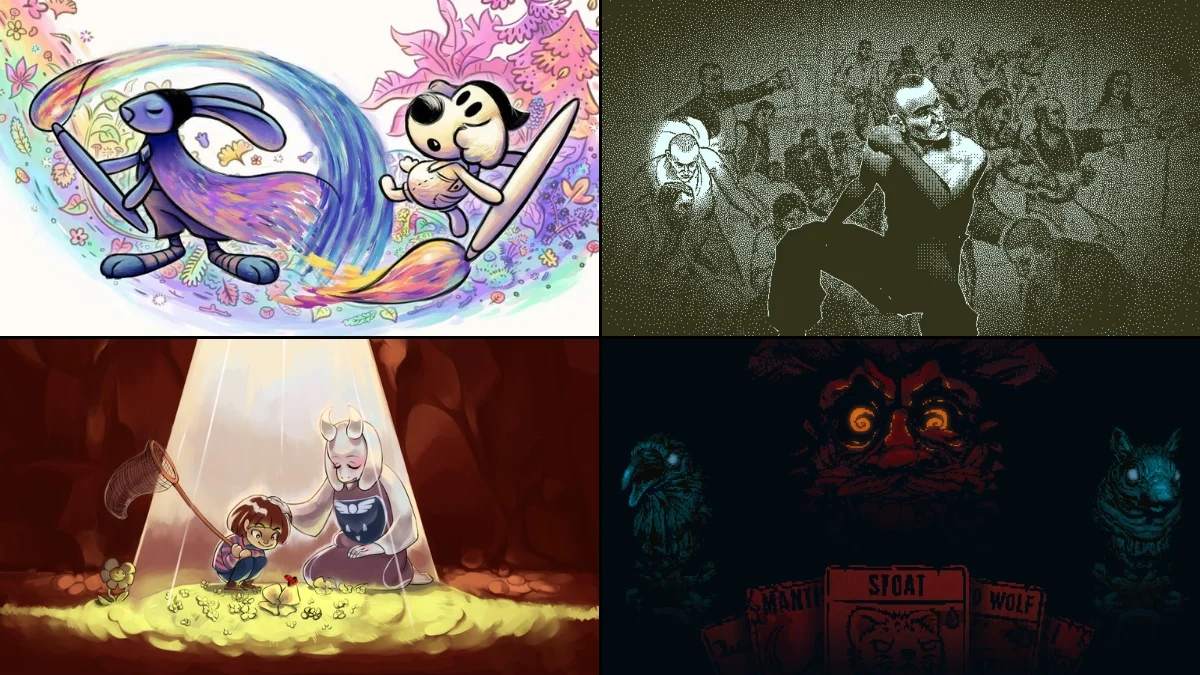
During battles in ‘Undertale’, the player’s soul appears as a heart cursor that must dodge bullet-hell patterns inside a framed box. The cursor changes color and movement rules with different “SOUL” modes, altering friction, gravity, and actions. The tight collision tuning and telegraphed patterns make cursor motion the primary skill expression. Toby Fox designed the system so UI movement is the combat mechanic.
‘Super Mario Maker’ (2015)
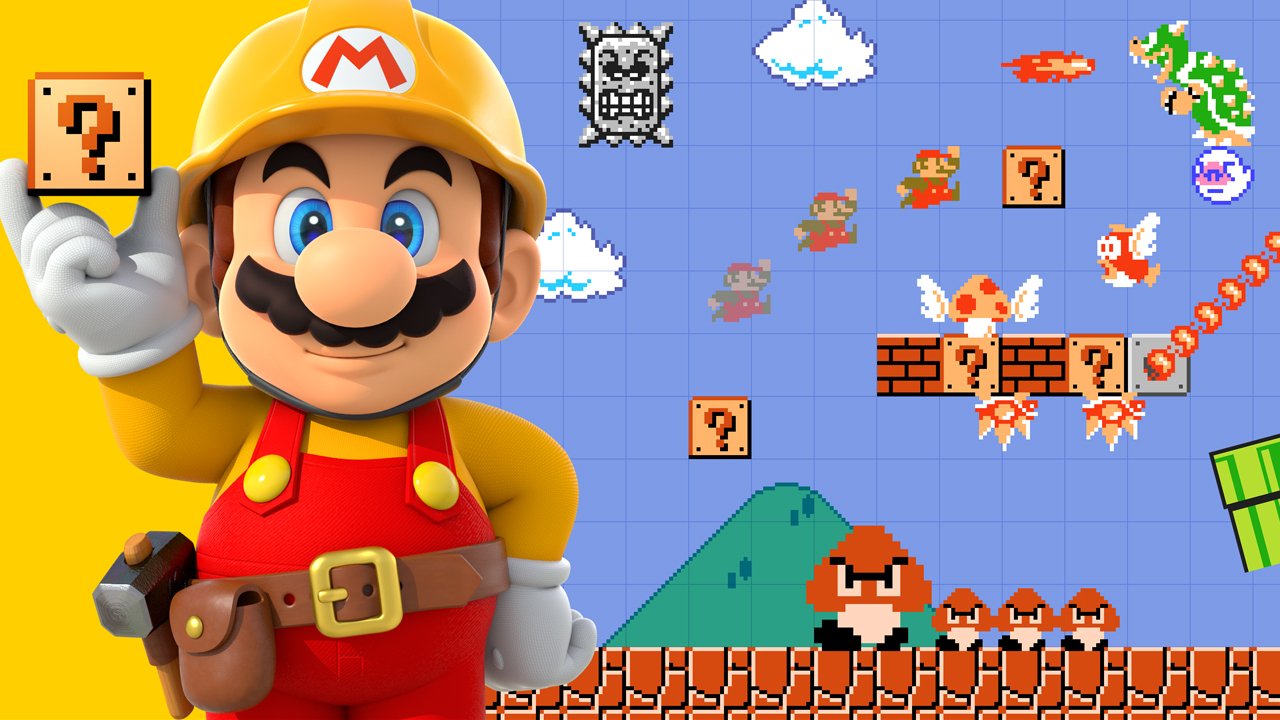
In ‘Super Mario Maker’, a gloved hand cursor places, stretches, and edits tiles with live physics previews and context tips. Dragging across gridlines drops repeated elements, while shake and long-press gestures apply transformations. Play-test is one tap away, so the cursor moves seamlessly between edit and validation. Nintendo EAD built the hand to make level building as immediate as drawing.
‘The Witness’ (2016)
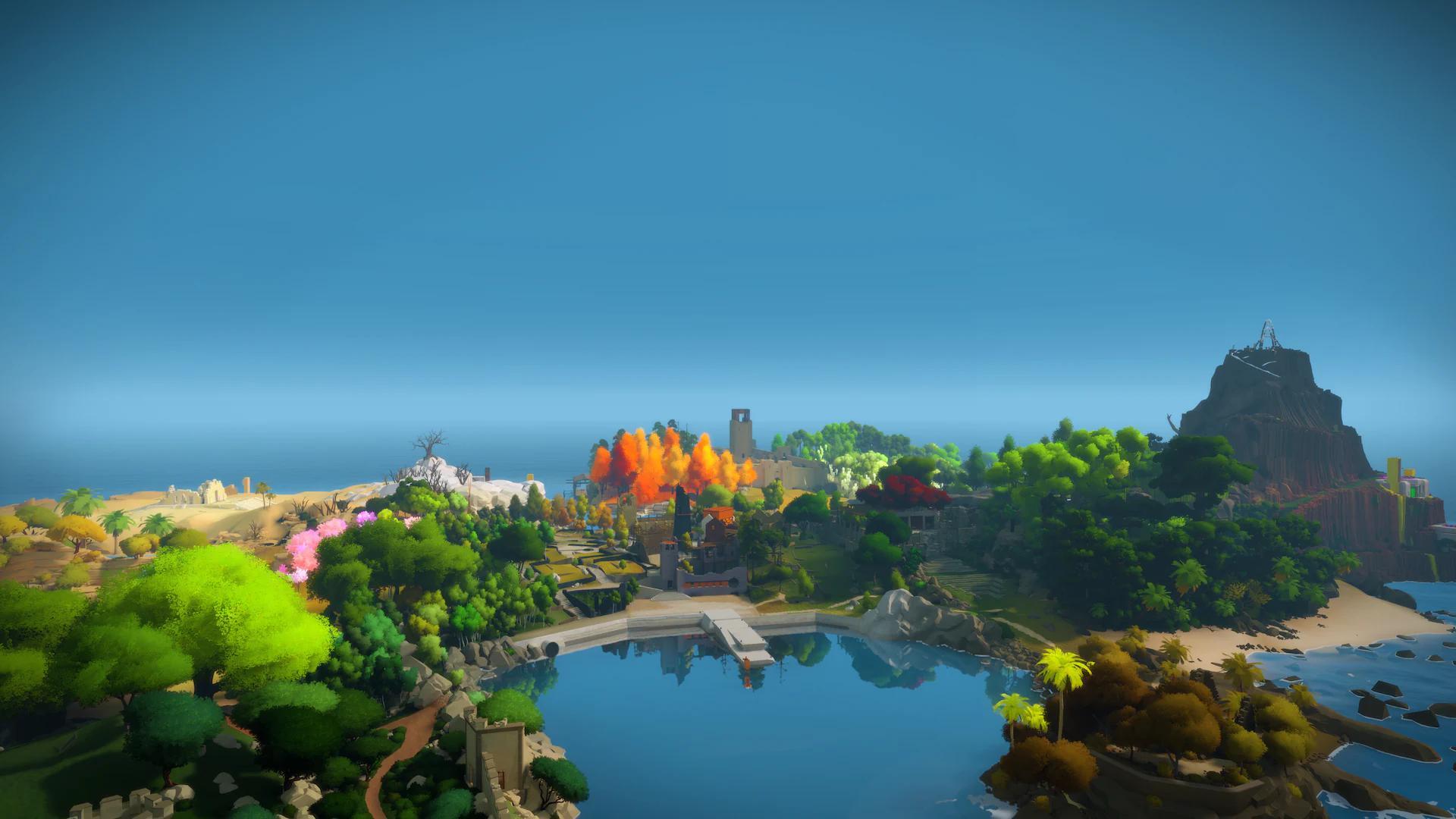
‘The Witness’ maps the cursor to a line-drawing reticle used to solve panel puzzles, with strict pathing rules communicated by the trace itself. Start and end nodes, constraints, and symmetry are taught through cursor-based experimentation rather than text. Subtle acceleration and cornering tolerance keep drawing smooth without sacrificing precision. Thekla, Inc. engineered the pointer to be the sole language of the game’s logic.
‘Return of the Obra Dinn’ (2018)
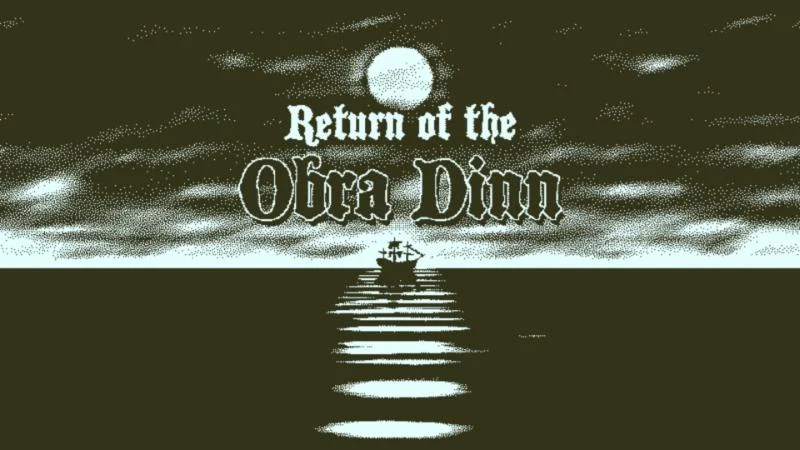
‘Return of the Obra Dinn’ uses a cursor that morphs into a pocket-watch interaction when a corpse is in range, gating memory dives with clear proximity feedback. Object labels and character IDs appear on hover, letting the pointer drive investigation without extra panels. The iconography matches the 1-bit aesthetic but remains readable across patterns. Lucas Pope, through 3909 LLC, tuned the cursor to keep deduction anchored to inspection.
‘Hypnospace Outlaw’ (2019)
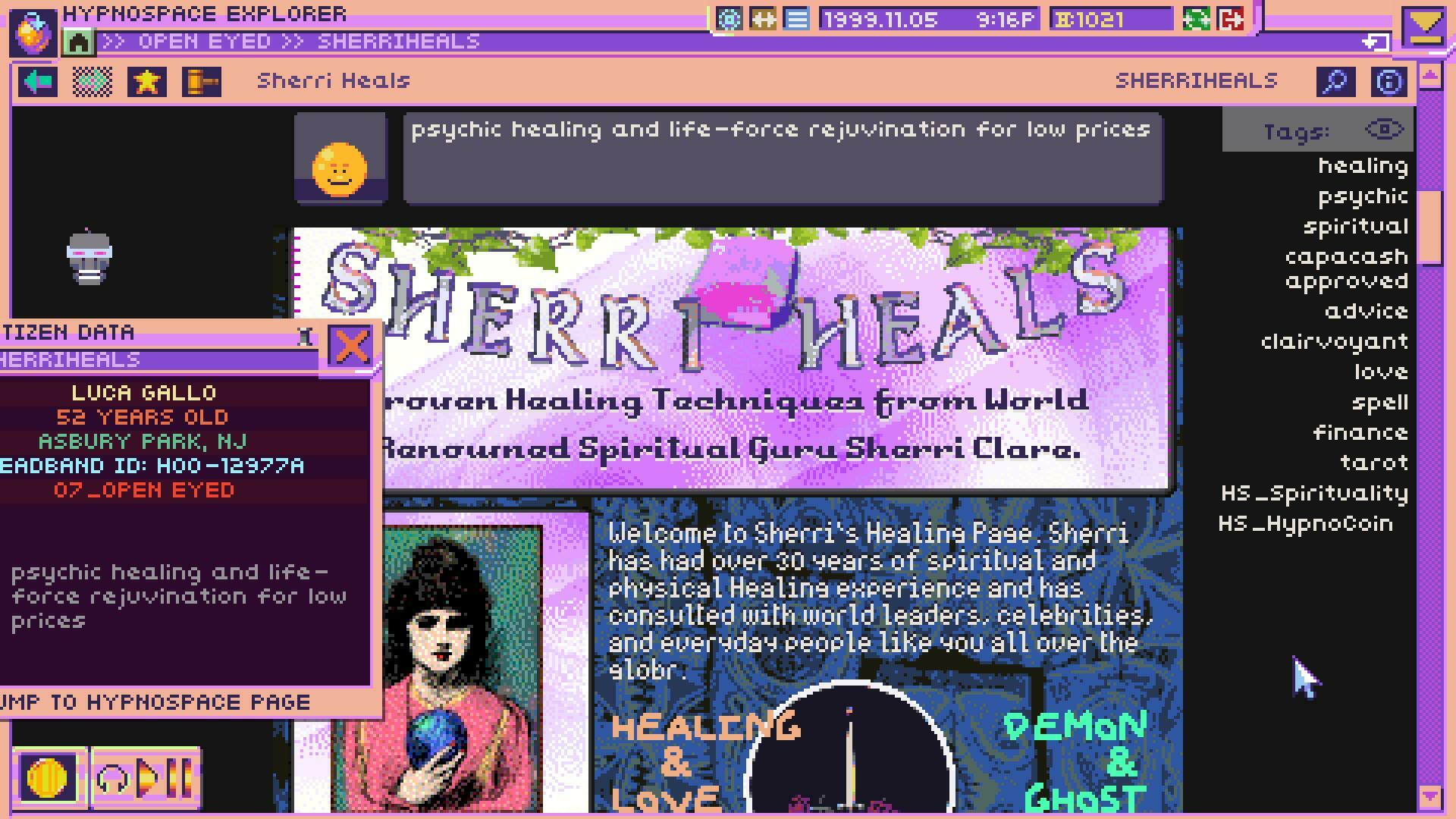
‘Hypnospace Outlaw’ treats the cursor like a late-90s desktop artifact, complete with skins, trails, and contextual tools for moderation tasks. File operations, downloads, and malware removals broadcast state at the pointer—spinners, progress ticks, and caution glyphs. The cursor is also a teaching device for the faux-OS, reinforcing navigation conventions. Tendershoot developed the title so the pointer could sell the alternate-internet illusion.
‘Inscryption’ (2021)
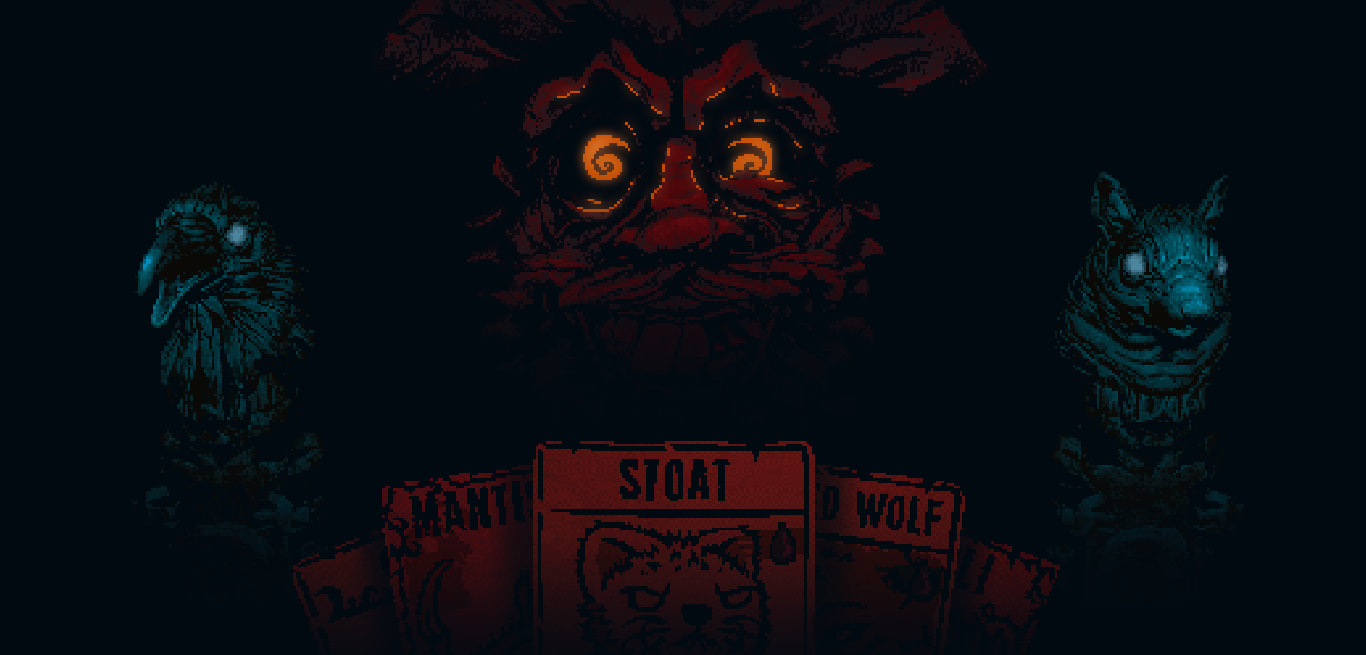
In ‘Inscryption’, the cursor is a first-person hand that picks up cards, manipulates scales, and interacts with escape-room props around the table. Hover states expose hidden interactivity, and depth-aware snapping prevents misplacement on the diorama board. The diegetic hand keeps UI consistent when the game shifts genres mid-play. Daniel Mullins Games built the system to unify card play and environmental puzzles through one cursor.
‘Chicory: A Colorful Tale’ (2021)
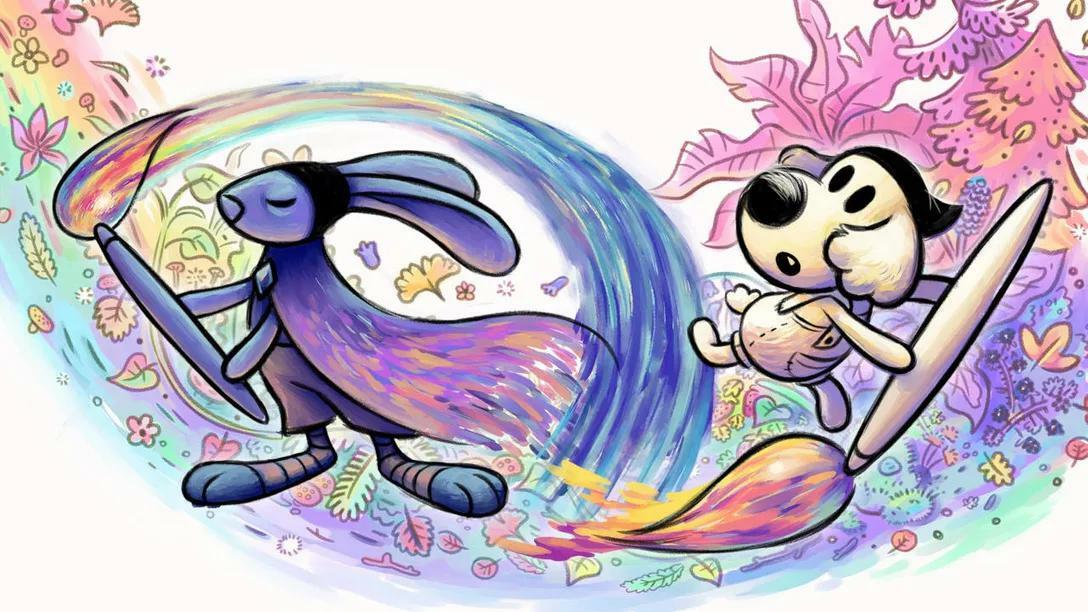
‘Chicory’ centers on a paintbrush cursor that fills, erases, and patterns environments, with brush size and texture bound to simple inputs. World progression—like revealing paths or activating devices—comes from where and how the cursor paints. On screen, color previews and edge tolerance keep art-making readable during puzzles. The game was created by Greg Lobanov and collaborators and published by Finji, with the brush designed as both tool and verb.
Share your favorite clever cursor moments below—what did we miss that deserves a spot in the comments?