10 Controllers That Were Designed For Aliens, Not Humans


Some game controllers feel like they were built for hands that do not exist on Earth. These wild designs often came from clever ideas that pushed hardware far past a standard pad. They added extra buttons, motion tricks, or entire panels of switches that changed how players interacted with games. Here are ten controllers that went all in on unusual shapes and inputs and the specific ways they worked with the consoles and games of their time.
Nintendo 64 Controller
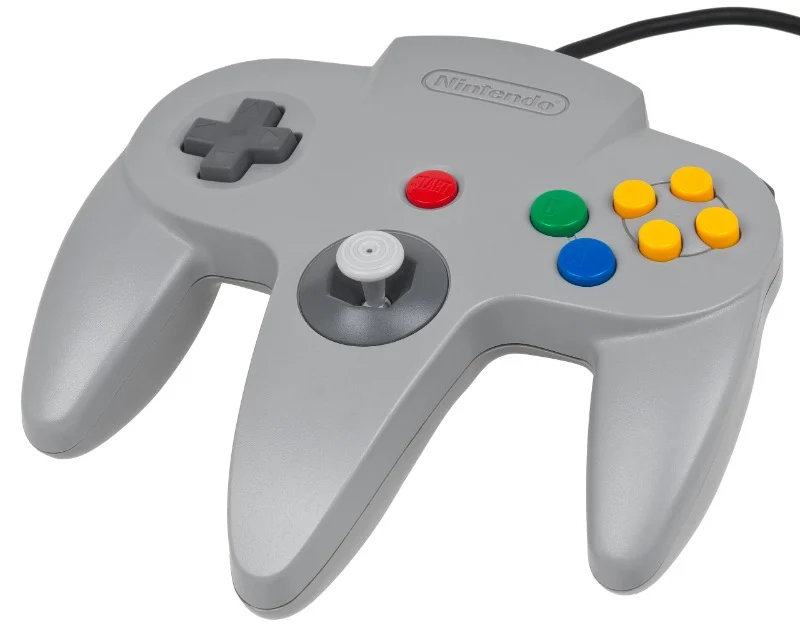
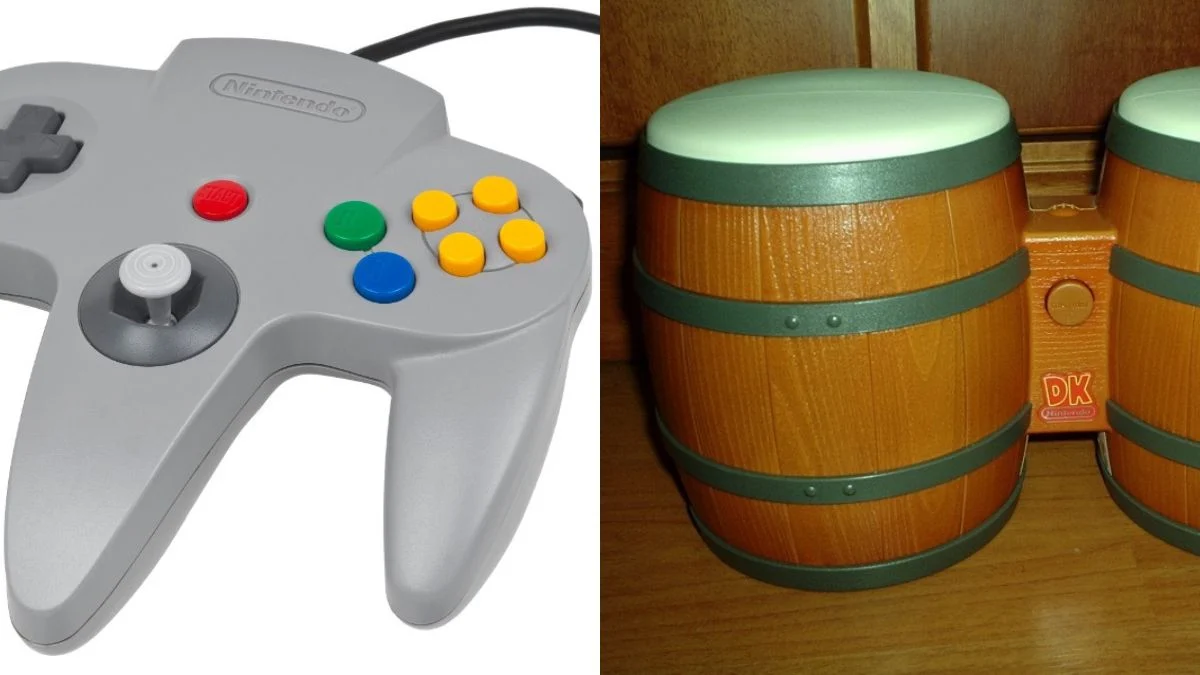
Nintendo launched this three pronged pad in 1996 with an analog stick set in the center grip and a trigger on the back called the Z button. Players could hold it in two different ways depending on whether a game used the analog stick or the directional pad. The controller introduced the expansion port that accepted the Rumble Pak and Controller Pak memory cards. Popular titles like ‘Super Mario 64’ and ‘GoldenEye 007’ were built around the stick and trigger layout.
Atari Jaguar Controller
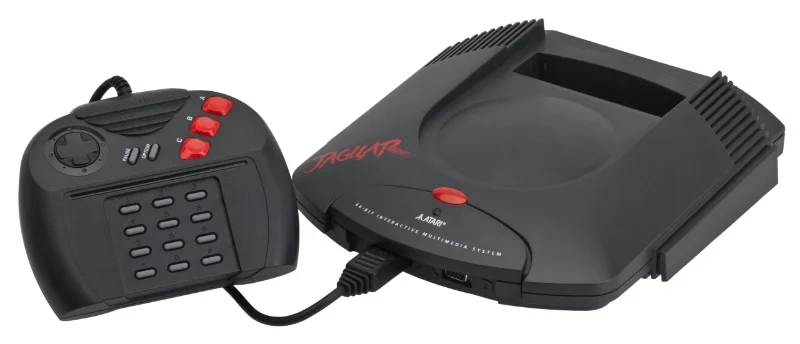
The Jaguar pad featured a standard D pad and three face buttons along with a large numeric keypad. Plastic overlays slipped over the keypad to map custom functions for each game. This allowed quick access to weapons or views without on screen menus. Games like ‘Alien vs Predator’ and ‘Tempest 2000’ made heavy use of the overlay system for extra commands.
Power Glove

This accessory for the Nintendo Entertainment System arrived in 1989 with a glove that tracked hand motions using ultrasonic sensors. A small keypad on the forearm handled button inputs while finger bends translated to directional movement. The glove connected through a receiver that sat near the television to pick up signals. Compatible software included ‘Super Glove Ball’ and a special mode for ‘Rad Racer’ that interpreted tilt and hand gestures.
U Force
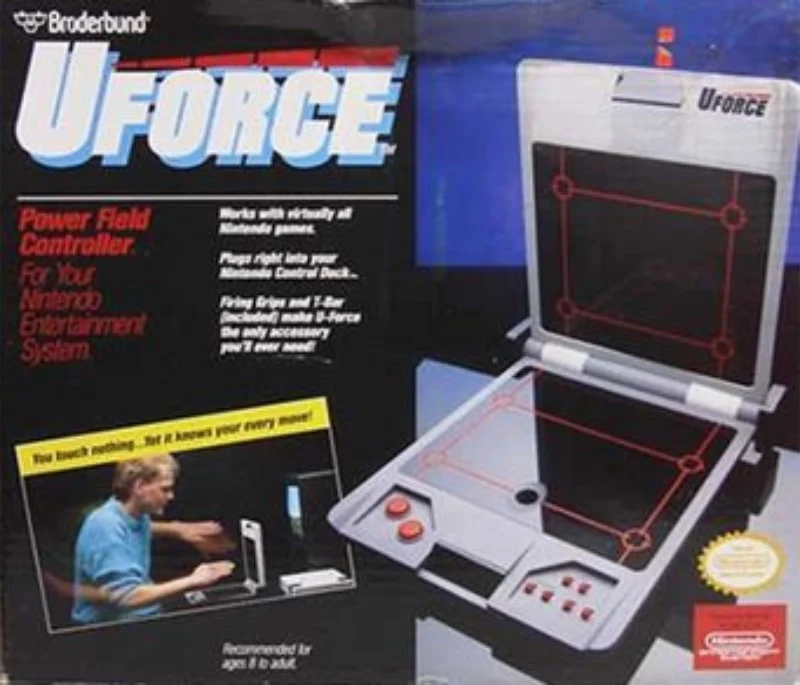
The U Force for the Nintendo Entertainment System used twin infrared sensor panels that detected hand position in mid air. Players hovered over invisible buttons rather than pressing physical keys. Sensitivity could be adjusted through built in controls to better read distance and speed. Supported games included ‘Top Gun’ and ‘Punch Out’ with custom profiles that mapped gestures to throttle and punch actions.
Steel Battalion Controller
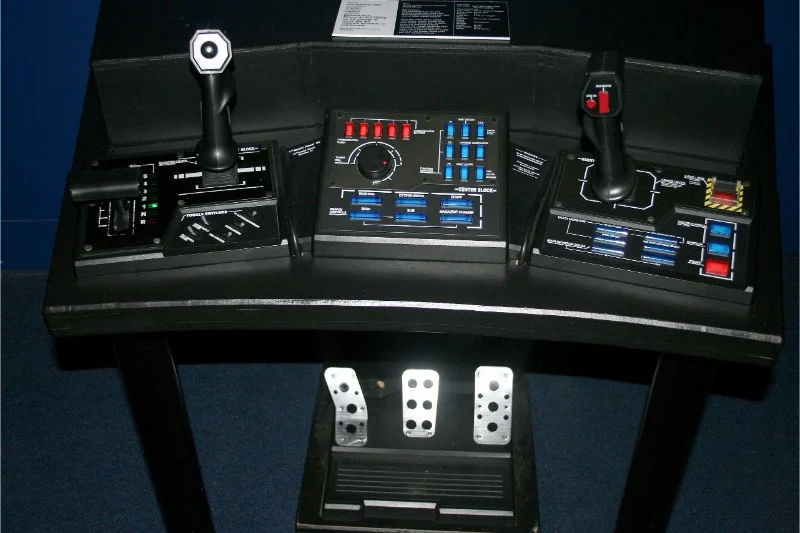
Capcom shipped a massive twin stick cockpit for the original Xbox in 2002 with more than forty buttons and three foot pedals. The control panel included toggles for ignition and wipers along with an eject button that had to be flipped open during emergencies. The layout mirrored the in game mech dashboard and required a learned startup sequence. It was designed specifically for ‘Steel Battalion’ and its online sequel content on Xbox Live.
Resident Evil 4 Chainsaw Controller

This GameCube and PlayStation 2 accessory took the shape of a chainsaw shell with an embedded D pad and analog sticks. The body included a clear window that showed fake internal gears for style while the cable exited from the handle. Functionally it mapped every standard button but placed triggers and face buttons along the sides. It shipped as a themed controller for ‘Resident Evil 4’ and came in platform specific colors.
Namco NeGcon
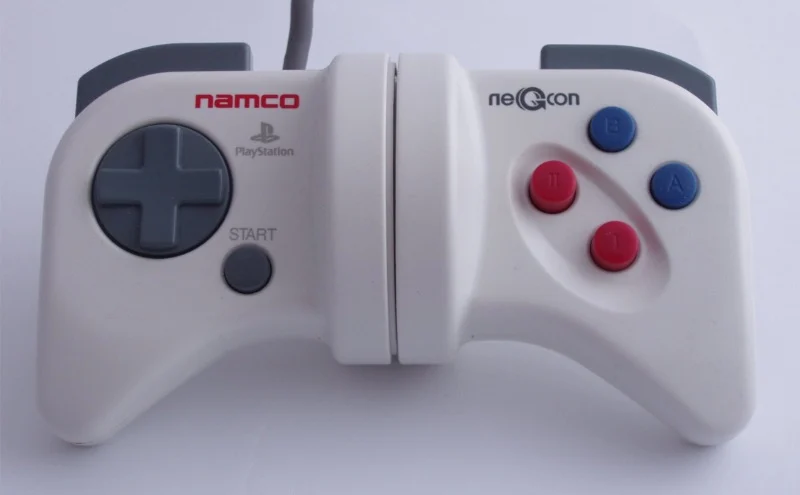
Namco created a twist controller for the original PlayStation with a hinge in the middle that sensed rotation. The analog twist offered very fine steering control for racing games beyond what a D pad could deliver. Two pressure sensitive buttons labeled I and II added variable throttle and brake input. Titles like ‘Ridge Racer Type 4’ and ‘Wipeout’ supported the twist mechanic for smooth cornering.
Dreamcast Fishing Controller

Sega released a rod shaped peripheral for the Dreamcast with a motion sensor and a spinning reel. Casting involved a forward swing that the sensor read as a throw while the reel handled line tension. A few face buttons sat near the handle for menu and lure selection. It worked with ‘Sega Bass Fishing’ and ‘Marine Fishing’ and also saw novelty support in ‘SoulCalibur’ through remapped inputs.
Donkey Konga Bongos
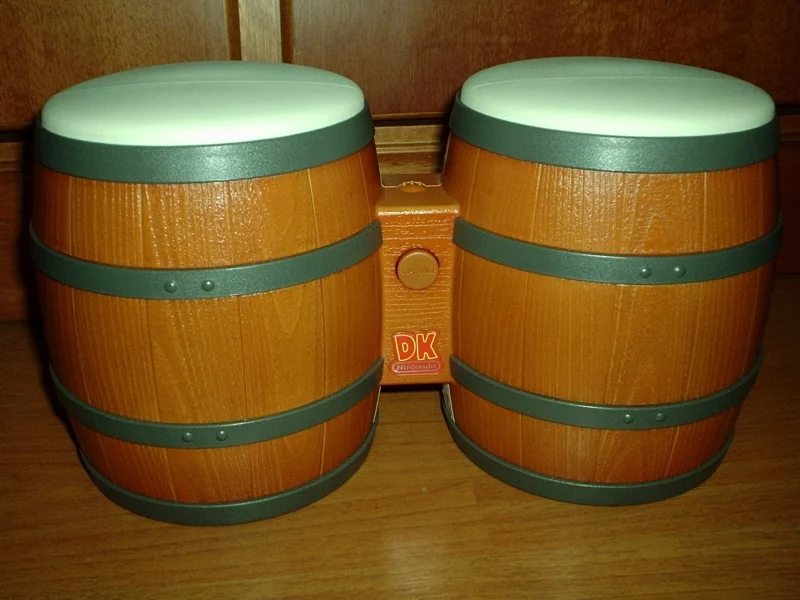
The GameCube bongos featured two drum pads and a microphone that detected claps. Rhythm games read left hits right hits and claps as distinct inputs. The controller plugged into a standard port and could be used in select platformers with custom mapping. Supported titles included ‘Donkey Konga’ and ‘Donkey Kong Jungle Beat’ which used drumming for movement and attacks.
Sega Activator
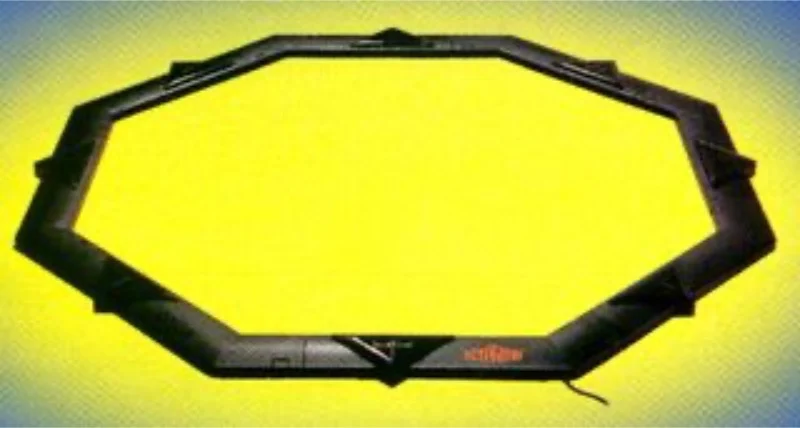
The Activator formed an octagonal ring on the floor and projected infrared beams upward. Breaking a beam with a hand or foot triggered a corresponding button input on the Sega Genesis. The ring mapped eight zones to the controller layout and allowed combinations for more commands. Fighting games like ‘Mortal Kombat’ offered preset profiles that linked strikes and kicks to specific beams.
Share your favorite oddball controller stories in the comments and tell us which one you actually tried.