Hollywood Relief or Political Pressure Trump Pushes Low-Interest Bonds and Tariffs

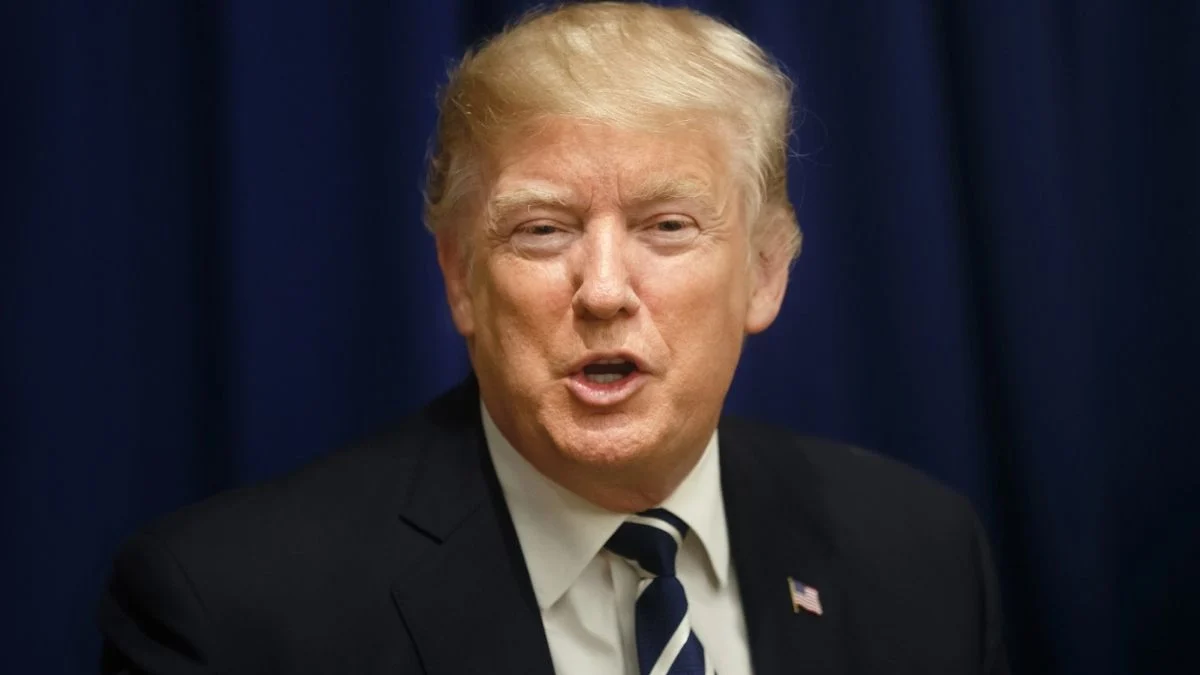

President Trump is once again targeting the global nature of modern filmmaking, doubling down on his promise to penalize productions that move away from American soil. In an interview with the newly launched California Post on Monday, January 26,
The President reiterated his intention to impose heavy tariffs on films made overseas. However, he also introduced a new financial carrot to go along with his legislative stick: the potential for “low-interest bonds” to incentivize domestic shoots.
While the President did not dive into the technicalities of the bond proposal, he made his ultimate goal clear. I want to bring the movie business back to Los Angeles in particular, he told the publication.
The suggestion of federal loans marks a departure from the typical tax credit models favored by industry unions and producers, who have spent the last year lobbying for rebates similar to those found in the U.K. and Canada.
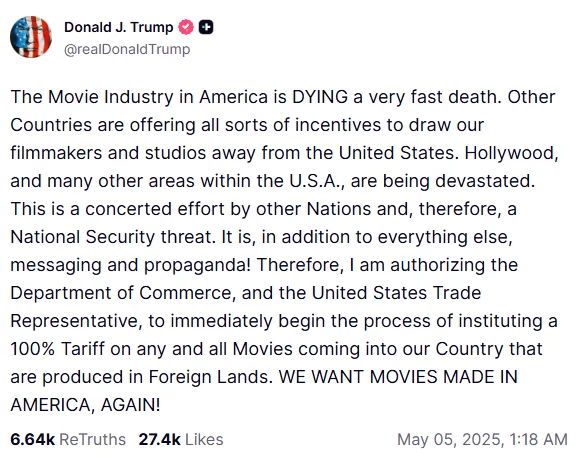
The President’s rhetoric has previously sent ripples of concern through the entertainment industry, particularly when he first threatened a 100% tariff on foreign-made films via Truth Social in May 2025. At the time, he stated that the American movie industry was dying a very fast death due to international outsourcing. While some filmmakers initially panicked, many industry veterans have since viewed the threats with skepticism, with one producer describing the latest remarks as just hot air again.
Trump’s focus on the industry was largely sparked by his collaboration with actor Jon Voight, who was appointed as a “special ambassador” to Hollywood early in the administration. Voight, alongside producers Steven Paul and Scott Karol, developed an extensive policy framework that included federal incentives and deductions. And so I’m going to put tariffs on, and we’re going to be doing bonds, some bonds, some low-interest bonds, for the movie industry. We’ll bring it back, Trump stated on Monday.
The proposal comes at a time of heightened competition for production dollars. California Governor Gavin Newsom recently upped the ante by expanding the state’s tax credit to $750 million, while Democratic lawmakers like Senator Adam Schiff have been pushing for a federal labor-based incentive. The Motion Picture Association has so far declined to comment on the President’s bond idea, while labor unions have indicated a preference for straightforward tax deductions over a loan-based system.
Do you believe that federal low-interest bonds are a viable way to bring film production back to the United States, or are tax-based incentives the only way to effectively compete with international markets? Share your thoughts in the comments.