Stephen King Names the Film That Surpassed His Novel in Style and Impact

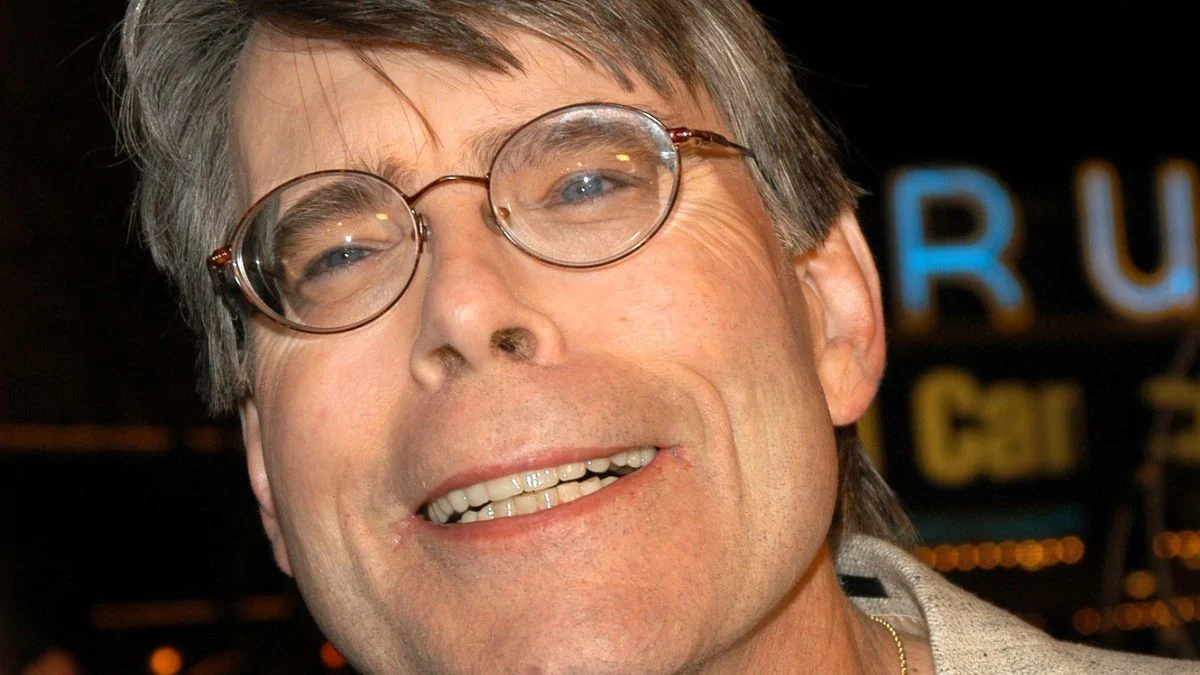

Stephen King has frequently expressed his admiration for filmmakers who handle his narratives with a sense of elegance, often praising Frank Darabont’s work on The Shawshank Redemption and The Green Mile.
Conversely, he remains one of the few critics of Stanley Kubrick’s The Shining, a film many consider a pinnacle of the horror genre. King felt the director fundamentally altered the character of Jack Torrance, transforming him from a sympathetic man battling inner demons into a clear-cut psychopath.
The author viewed Torrance as a fundamentally decent person who was slowly corrupted by malicious supernatural forces. Kubrick, however, chose to emphasize the inherent horror within humanity, a conceptual shift that King felt undermined the tragedy of the story.
This clash illustrates the difference between King’s straightforward, character-centric creation and Kubrick’s more abstract, intellectual style. Generally, King appreciates adaptations that tighten and drive his stories forward rather than those that explore entirely new conceptual territory.
Given how protective he is of his creative vision, it is unsurprising that he maintains such rigid standards for what constitutes a faithful translation of his work. The inconsistency across his vast filmography is a common talking point, and King himself is the first to admit that his own attempt at directing, Maximum Overdrive, was an undeniable disaster.
It is quite ironic that the very first cinematic interpretation of his writing continues to be regarded as one of the best. Brian De Palma’s 1976 version of Carrie was a massive success, effectively launching a new era of coming-of-age horror.
“Brian De Palma’s Carrie was terrific,” King stated in an honest review. “He handled the material deftly and artistically and got a fine performance out of Sissy Spacek.” Spacek’s portrayal of the troubled teenager remains a landmark in horror history and earned her an Academy Award nomination.
King even went as far as to call the movie superior to his own book, noting that the film had a style and focus that improved upon his original prose. “It’s a really good horror/suspense film,” he told Movieline, adding that it was “much better than the book.”
The author has largely ignored the various remakes and television versions of Carrie that have appeared over the last few decades. For him, De Palma’s vision remains the definitive version, holding its place at the top tier of King adaptations.
Even fifty years later, it stands as a testament to what can happen when a director perfectly aligns with the author’s dark imagination. As of March, the world of Stephen King adaptations is more active than ever, with several projects currently dominating streaming platforms.
The film version of The Long Walk, based on his 1979 dystopian novel, has been a major hit since its arrival on Starz in January. On the television side, the prequel series It: Welcome to Derry concluded a successful first season on HBO late last year and is set for a physical media release this May.
Director Mike Flanagan, who helmed the recent hit The Life of Chuck, is currently working on a new reimagining of Carrie that is expected to premiere later this year. Meanwhile, original Carrie director Brian De Palma is preparing to return to the director’s chair this summer to shoot a true-crime thriller titled Sweet Vengeance in Portugal.
Have something to add? Share your thoughts in the comments.