‘It Ends’ Ending Explained: What Alexander Ullom’s Endless Road Actually Means


The horror world has spent the past several months buzzing about a small, existential road trip film that refuses to give its audience a clean answer. Written, edited, and directed by Alexander Ullom in his feature directorial debut, ‘It Ends’ has become one of the more talked about genre releases of the year, and its finale is a large part of why.
The film is distributed by NEON and stars Mitchell Cole, Akira Jackson, Noah Toth, and Phinehas Yoon. It carries an R rating for pervasive language and runs about 89 minutes, a tight runtime that belies how much philosophical weight it tries to carry by the time the credits roll.
The Setup Behind ‘It Ends’
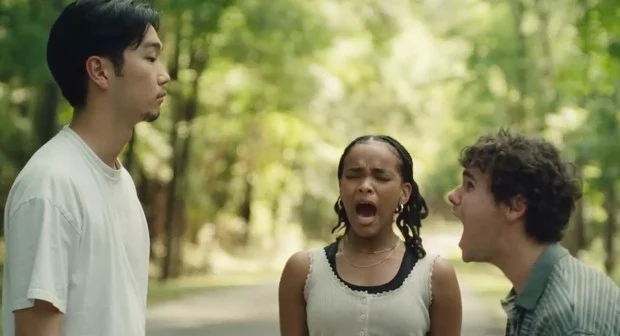
The story follows four recent college graduates, James, Day, Fisher, and Tyler, who piles into Tyler’s Jeep Cherokee for what should be a simple late night food run before their lives head in separate directions. Tyler is fresh back from military training, and the group’s conversation ranges from absurd hypotheticals to James’s ambitions for a six figure salary, a wife, and two kids.
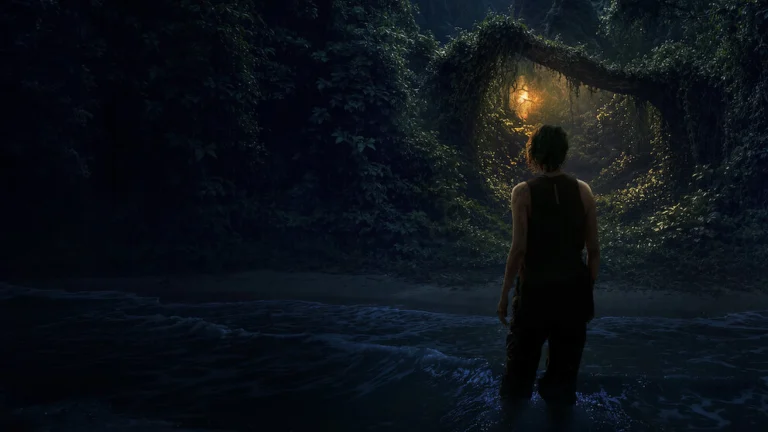
Somewhere on a remote stretch of road, that ordinary hangout curdles into something else entirely. The turn they are waiting for never comes, and the road itself simply refuses to end. When they try to double back, they find a ‘Road Ends’ sign, but beyond it is only a dense forest filled with desperate, panicking people.
That premise has drawn comparisons to other spatial loop horror stories, and one recap outlet noted that getting trapped inside a spatial loop is one of the more effective tropes horror has produced, since it instills dread while keeping the audience guessing about the logic behind it. ‘It Ends’ leans into that discomfort rather than resolving it.
‘It Ends’ Movie Plot and the Fracturing Group
As the miles stretch into the thousands, the four friends splinter along philosophical lines rather than physical ones. According to a detailed breakdown of the film, Tyler chooses refusal, Day and Fisher choose surrender, and James chooses persistence, and none of them is entirely wrong or entirely right.
The film also uses small, repeated rituals to mark the passage of time and the group’s psychological unraveling. At one point they stare down a Cliff Bar and agree not to eat it, treating the decision like a pact, out of fear it will keep digesting inside them forever. It is a strange, almost darkly comic detail that captures the film’s tonal balance between dread and absurdism.
Day’s arc is the most emotionally direct. She eventually says she cannot continue, Fisher agrees, and the two get out of the car and sit on the road together. Day admits she once tried to take her own life, and despite appearing resilient throughout the film, she finally accepts her fate, with Fisher following her. James, by contrast, is described as a repressor who never takes part in the group’s screaming ritual and instead searches for a rational explanation, clinging to the belief that the road must have a definite end.
A campus arts publication that reviewed the film described the writing choice behind that dynamic directly. Ullom takes the members of what feels like a typical group chat and drops them straight into hell, and that grounded naturalism is what gives ‘It Ends’ its emotional weight.
How the Never Ending Road Concludes
The film’s literal ending is deliberately restrained. ‘It Ends’ closes with James still driving, and there is a suggestion that he picks up a new passenger, played by Ullom himself in a cameo, hinting that the cycle may be starting over again.
That final beat is central to how critics have read the film’s themes. Reaching the destination mattered enormously to James, but once he arrives there, or rather, once he accepts he will never truly arrive, he comes to understand the value of the journey itself, of companionship, and of living inside the moment he is actually in. The film suggests life offers no instruction manual, no guaranteed exits, and no promise that simply enduring will be rewarded with meaning.
A separate ending explainer framed the film’s refusal to answer its own mystery as the entire point. If a viewer finishes the film frustrated by the lack of answers, they are essentially experiencing exactly what James experiences, demanding that the journey have meaning and that the road lead somewhere logical. That same piece argues there is still a thread of hope in the conclusion, since meaning in the film is not found by reaching a predetermined destination but in the connections made along the way.
Critical Reception and What Comes Next
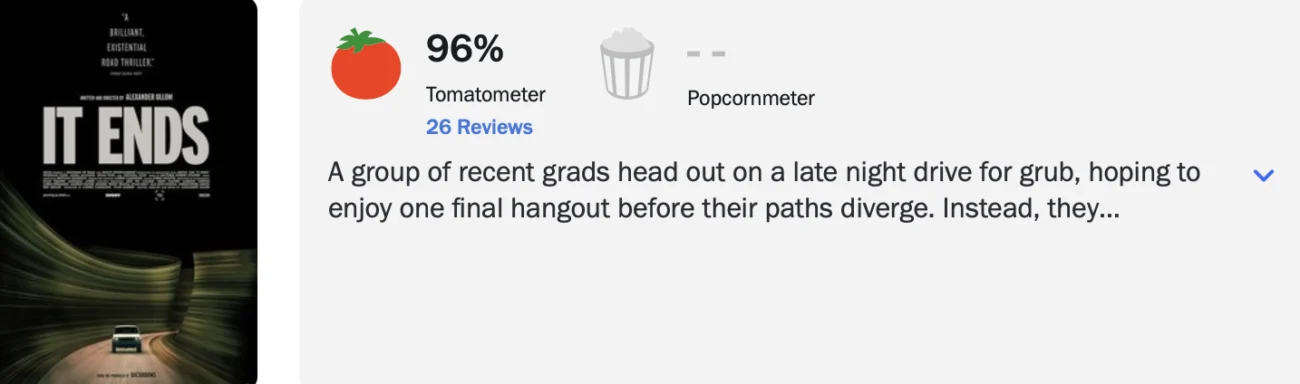
‘It Ends’ has built its reputation gradually, starting well before its wide theatrical release. The film premiered at the South by Southwest Festival on March 7, 2025, and it later won the Best First Feature Award at the Fantasia International Film Festival.
It was also selected for the “Unreleased Gems” section of Letterboxd’s newly launched Video Store platform, before NEON acquired the film outright for a full theatrical rollout. That theatrical run began in New York and Los Angeles on August 21, followed by a nationwide expansion on August 28.
Critics have largely responded to the film as a meditation on early adulthood dressed in genre clothing. One review described it as an existential crisis nestled inside a genre bending road trip thriller, noting that what begins as an intense horror movie eventually settles into a meditative rhythm functioning as an inventive slice of life metaphor. Another take was more mixed, calling it a metaphorical odyssey about the Sisyphean doldrums of adulthood that generates interesting conversation without always delivering intriguing characterization.
For a movie built almost entirely around a single stretch of highway and four people trapped inside a car, ‘It Ends’ has managed to spark an unusually large conversation about what it actually means to grow up and let go. Now that James’s choice, and that final cameo, have had time to sink in, what do you think that endless Florida panhandle road was really trying to tell him.