‘Sparks of Tomorrow’ Season 2 Faces an Uncertain Wait as Kyoto Animation Weighs Its Next Move

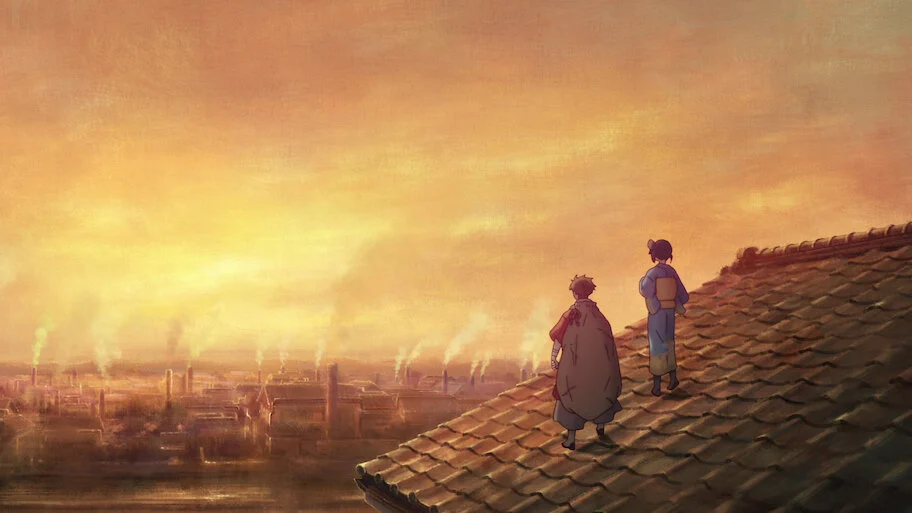

‘Sparks of Tomorrow’ has become one of the more distinctive anime releases of the year, and it did not take long for viewers to start asking what comes after its first run. The series is a Japanese light novel written by Hiro Yūki and illustrated by Kazumi Ikeda, with Kyoto Animation publishing the original novel under its KA Esuma Bunko imprint in August 2018 before producing the television adaptation itself. Set in an alternate early 20th century where steam power halted industrial development instead of electricity, the show follows Kihachi, a skeptical young man mourning his brother, and Inako, a devout girl hiding grief over her mother, as they uncover the secrets of the 20th Century Electrical Catalog together.
That premise, paired with Kyoto Animation’s reputation for meticulous visual craft, has been enough to generate steady conversation about a follow up season even while the first one is still airing. Fans want to know whether the studio and its streaming partner intend to keep telling Kihachi and Inako’s story, and right now the honest answer is that nobody outside the production has said so publicly.
‘Sparks of Tomorrow’ Season 2 Renewal Status
As of now, there has been no official confirmation of a second season from Kyoto Animation, the novel’s publisher, or Netflix. With the first season still airing as of summer 2026, the question of a renewal is already circulating across anime forums, and the short answer remains that Season 2 has not been officially confirmed.
That is not especially surprising for a show that had not even reached its finale at the time the speculation started. Studios and streamers typically wait for a season to conclude, and for viewership data to settle, before making any formal renewal statement.
Kyoto Animation is also not known for rushing announcements or productions, which tends to stretch out the waiting period for fans of its other properties as well. Anyone hoping for a quick yes or no on ‘Sparks of Tomorrow’ should expect that process to take time rather than happen the moment the credits roll on the finale.
Kyoto Animation’s Source Material Challenge
One complicating factor sits with the material the show is adapting in the first place. The original novel, titled 20 Seiki Denki Mokuroku in Japanese, is a comparatively compact light novel rather than a long running series with dozens of volumes still waiting to be adapted.
That limited runway creates a genuine question about what a second season would actually cover. A studio adapting a sprawling manga can simply keep moving forward through existing chapters, but a single novel does not offer that same cushion.
Because of that, any continuation would likely need to lean more heavily on original material developed alongside the novel’s creator rather than a straightforward chapter by chapter adaptation. Kyoto Animation has handled expansions like this before, and the studio’s production team, including director Minoru Ōta and series composition writer Tatsuhiko Urahata, would presumably be involved in shaping whatever comes next.
The upside is that a thinner source text also means fewer constraints on where the story could go if the creative team chooses to keep building the world rather than closing it off after one season.
Netflix’s Role In A Potential Renewal
Streaming distribution is another piece of the puzzle worth considering. Netflix is streaming ‘Sparks of Tomorrow’ globally, giving the series a level of international reach that many seasonal anime do not receive.
That kind of worldwide footprint matters because renewal decisions for anime increasingly depend on how a title performs across multiple markets, not just its ratings in Japan. A steady global audience gives both the studio and the platform more reason to continue investing in a property once the first season wraps.
Viewership figures for streaming titles are rarely made public in detail, so outside observers cannot point to a specific number and say a renewal is guaranteed. Even so, the show’s presence on a major global platform, combined with its production pedigree, puts it in a stronger position than many smaller seasonal titles when it comes to future consideration.
What A Second Season Could Explore
If ‘Sparks of Tomorrow’ does return, there is no shortage of unresolved threads for a new season to pick up. The central mystery surrounding Kihachi’s missing brother and his connection to the electrical catalog has been positioned as a long term hook rather than something the first season was built to fully resolve.
There is also room for the story to widen beyond its Kyoto setting, following the ripple effects of a technological shift that threatens to upend the steam based industries the world currently depends on. The series has already grounded that conflict in its two central characters, who carry personal losses tied to the very “Age of Electricity” they are chasing.
A continuation would also give the show more space to develop Kihachi and Inako’s relationship beyond where the first season leaves it, without necessarily turning the series into a straightforward romance. Given Kyoto Animation’s history with emotionally driven storytelling, that character focused growth is likely to be treated as seriously as the show’s larger science fiction ideas.
None of this is confirmed, and it is worth repeating that everything here remains speculative until Kyoto Animation, the novel’s creative team, or Netflix says otherwise. For now, the smartest approach for fans is to watch how the first season closes and treat that finale as the real signal for whatever happens next.
What do you think Kihachi and Inako still need to find out before ‘Sparks of Tomorrow’ can wrap up its story in a satisfying way?