‘High Value Target: The Hunt for Saddam’ Episode 6 Recap and Ending Explained: What Saddam’s Warning About Iran Really Means

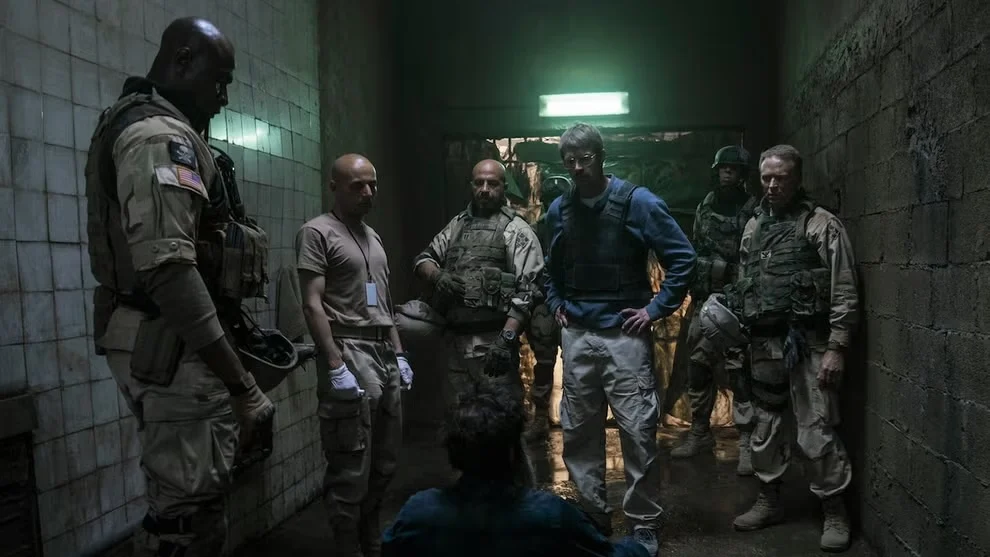

‘High Value Target: The Hunt for Saddam’ pushed its central figure into new territory with episode six, an hour that trades gunfire for something arguably more dangerous, a room full of skeptical superiors. The episode, titled “The Devil You Know,” premiered as part of the show’s staggered Sunday and Monday release pattern, arriving after a previous hour spent deep in hostile territory. The eight episode political thriller is inspired by the memoir ‘Debriefing the President’ by CIA analyst John Nixon.
The series follows Nixon, played by Joel Kinnaman, as the first American intelligence officer to sit across from Saddam Hussein following his capture. Created by Daniel Stiepleman and Jonathan Wakeham and developed by Leslie Greif for TNT, the limited series premiered on September 13, 2026, and stars Waleed Zuaiter as Hussein. Episode six marks the moment the show’s back half finally forces its central question into the open, and that shift changes the entire texture of the story.
What Happens in ‘High Value Target’ Episode 6
The official synopsis for episode six describes John returning from Najaf after following Saddam’s warning, arriving at the realization that the real threat is Iran, and now having to convince the White House. That single sentence carries the whole episode, picking up directly from the fallout of Nixon’s dangerous, unauthorized detour into hostile territory the week before, a trip that had ended in a chase for his life.
Nixon’s unsanctioned trip was never framed as an act of bravery for its own sake. It was about chasing down something Hussein had told him, and episode six is where that information finally has to be reckoned with by the people around him.
Once Nixon returns to Washington, the tone shifts almost immediately from field thriller to political drama. He goes from dodging insurgents to dodging superiors who view him as an analyst who has badly overstepped his role, and that friction has been building since the earlier hours of the season.
The episode’s central conflict plays out less like a chase or a raid and more like a briefing room argument, with Nixon forced to translate what he heard from Hussein into something the intelligence community and eventually the White House can act on. Given how the season has structured Nixon’s journey, that scene functions as the emotional core of the hour.
Saddam Hussein’s Warning About Iran Explained
The pivot toward Iran did not arrive out of nowhere. Longtime viewers will recognize it as a thread the writers have pulled since Nixon first sat across from Hussein, with the show’s depiction of that first confrontation built from transcripts capturing how the two men actually spoke and what they believed. That grounding is part of why Hussein’s warning lands with weight rather than playing like an invented plot twist.
Historically, this beat tracks with what the real John Nixon has described in his memoir, having volunteered to join the hunt for Hussein after the invasion and later becoming the first American agent to interrogate him directly following Operation Red Dawn. The show dramatizes a documented intelligence relationship rather than fabricating one from scratch.
At the same time, it is worth remembering that ‘High Value Target’ is not a strict transcript of events. The programme is a scripted adaptation of Nixon’s memoir rather than an episode by episode reconstruction, told from his own perspective on the period, which matters when weighing how much of the Iran subplot is drawn from history versus shaped for pacing.
For a show that spent five episodes on manhunts and firefights, turning toward a geopolitical warning in episode six is a deliberate structural choice. It reframes Hussein from a fugitive to be captured into a source whose information now threatens Washington’s entire narrative about the war.
John Nixon’s Fight to Be Believed
Nixon’s arc has always hinged on credibility, both his own and the intelligence he is trying to deliver. The character is defined in part by never having been a field operative, despite coming from a family steeped in military symbolism, with his retired colonel father frequently needling him for staying out of the dirt.
That backstory explains why episode six’s institutional standoff hits harder than a typical bureaucratic disagreement. Nixon is an analyst, not a field agent, and here he is attempting to convince career officials and political leadership that the premise of the war they sold to the public may need to be reconsidered.
Kinnaman’s performance in the role has drawn mixed reactions from critics covering the series. According to comicbasics.com, one reviewer described the performance as complicated in a role that could have easily settled for histrionics, while other outlets have been harsher about the casting fit for the material.
If the season follows its established pattern, this episode functions as the hinge between the manhunt driven first half and the reckoning that follows, where Nixon’s discoveries begin colliding directly with policy rather than staying confined to the field.
Critical Reception and What Comes Next
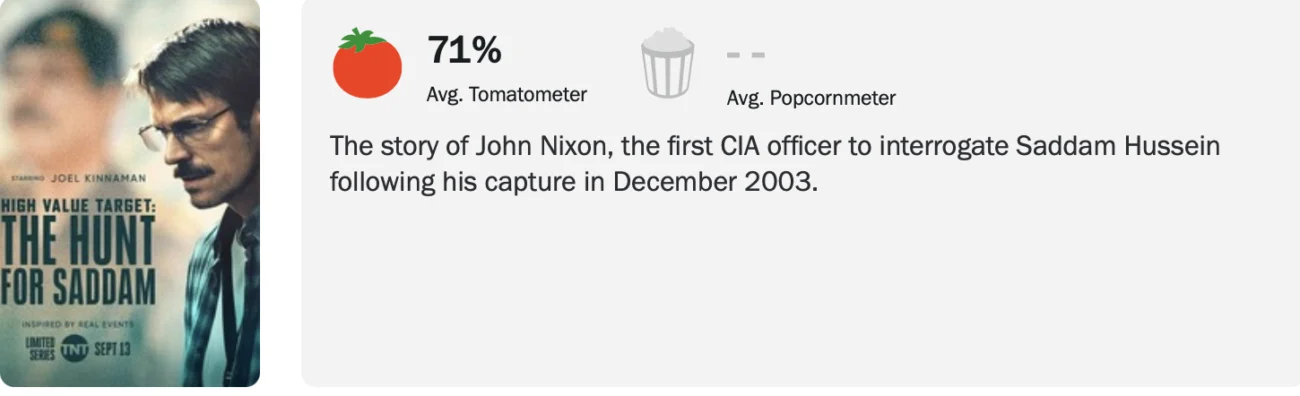
On Rotten Tomatoes, the first season holds a 71 percent approval rating based on seven critic reviews, with an average score of 5.7 out of 10, while Metacritic gave the series a weighted score of 53 out of 100 based on six critics, a result generally described as mixed or average. That split suggests critics see genuine ambition in the series even where execution has wobbled.
Some of the harsher notices have focused on pacing in the earlier hours, arguing the first stretch of episodes leaned too conventional and formulaic, while still crediting the show for being among the first major television dramas to chronicle the hunt for Hussein. Other critics have pointed to the scenes between Nixon and his translator Samir as the strongest material in the series.
With only two episodes left after “The Devil You Know,” the season is clearly building toward Hussein’s trial and the political fallout Nixon has been trying to head off. The penultimate episode was set to premiere Monday, September 28 at 9pm ET and PT on TNT, with the season finale arriving Sunday, October 4.
That finale finds Iraq in chaos after two years with no weapons of mass destruction found and the White House under political siege, with Nixon convinced the ousted leader holds the key to regional peace even as he struggles to persuade the CIA to intervene on Hussein’s behalf. Episode six is where Nixon’s Iran warning either gains traction or gets buried, and that outcome will shape whatever the finale needs to pay off.
After watching Nixon fight this hard to be taken seriously about Iran, do you think Washington actually listens to him, or is ‘High Value Target’ setting him up to be right and ignored anyway.