Netflix’s ‘East of Eden’ Ending Explained: What Adam’s Final Word Means for Cal

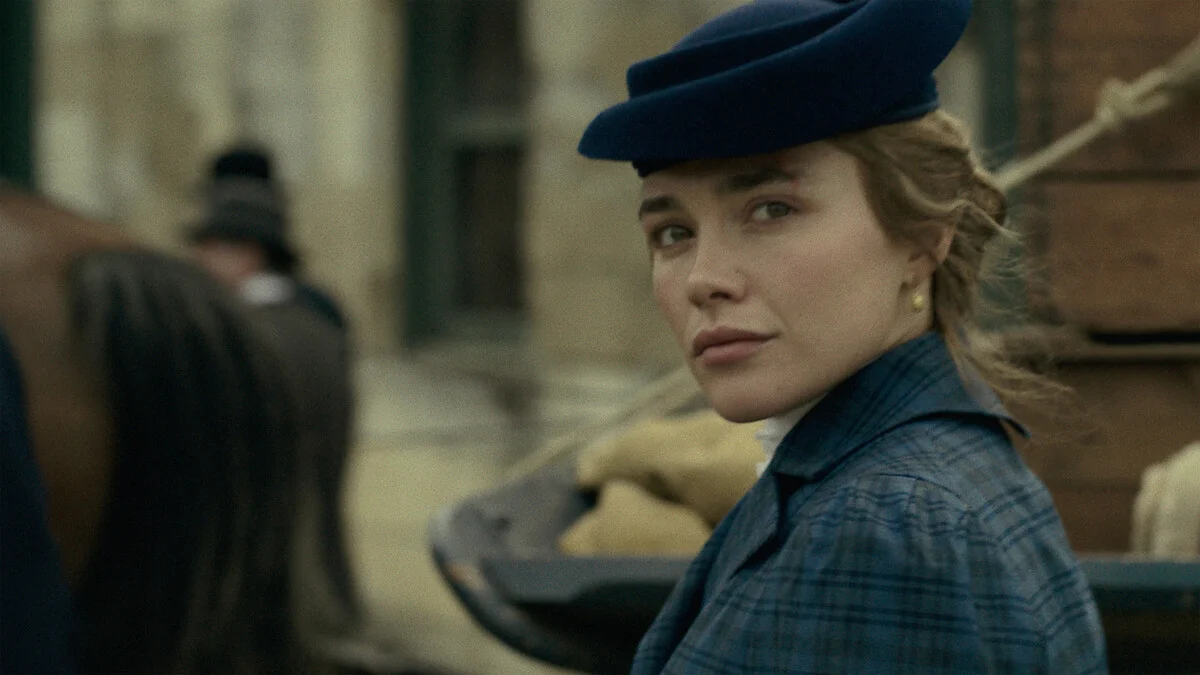

Netflix’s ‘East of Eden’ arrived on the platform on 1 October. It is a seven part reimagining of John Steinbeck’s 1952 novel that follows the Trask family, farmers who settle in California’s Salinas Valley in the early twentieth century. The finale gathers decades of rivalry and resentment into a short, devastating run of events.
The ‘East of Eden’ ending hinges on a single Hebrew word and what it offers a young man who believes he has inherited his mother’s worst instincts. Florence Pugh stars as Cathy Ames, with Christopher Abbott as Adam Trask, Joseph Zada as Cal and Joe Anders as Aron. What follows is a closer look at how the story closes and why it lands the way it does.
East of Eden Ending Explained and How the Finale Unfolds
By the finale, Cathy is living as Kate in Salinas. She has inherited Faye’s business, turned it into a darker establishment, and gathered both money and compromising information about influential men. Her hold on the town looks secure from the outside, yet her body and her circle are both starting to fail her.
Arthritis makes ordinary movement painful for her, and morphine eases the pain while leaving her increasingly detached from the world around her. She also decides she cannot fully trust the people nearest to her, and she arranges for authorities to learn that Joe is an escaped convict after he begins looking into her past.
The ending then links several threads together. Cal exposes Aron to the truth about their mother, Cathy makes a final decision about her fortune, Aron runs away to war, and Adam is left gravely ill. The structure mirrors the original book’s final act, which readers will recognize from a story that writer Zoe Kazan has shaped into a seven episode limited series.
Why Cathy Dies in the East of Eden Finale
Kate dies by taking a fatal amount of morphine after Aron’s visit. He looks at her with horror and rejection, and she is forced to face how completely she has failed a son she never truly knew. The scene is quiet and removes much of the menace the character carried earlier in the series.
The death is tied to imagery that follows Cathy through the series. She once describes imagining herself growing smaller, like Alice in ‘Alice in Wonderland’, without ever vanishing completely, and in her final moments she is finally ready to disappear. That choice also echoes the book, where Kate leaves everything to Aron and takes her own life.
Before she dies, the series has her envision a younger version of herself. The moment does not absolve her, but it brings the adult Kate and the child Cathy together, so she is seen as both responsible for great harm and shaped by experiences she spent her life escaping. It is a measured way to close the most divisive figure in the story.
What Timshel Means in the East of Eden Ending
Timshel is the answer Adam gives Cal at the end, and it carries the central idea of the story. Earlier in the series, Lee discusses the word in connection with Cain and Abel and reads it as thou mayest, meaning a person is neither guaranteed goodness nor condemned to evil. The title itself points back to that biblical story. Steinbeck took it from Genesis, where Cain goes out from the presence of the Lord and settles east of Eden.
The idea matters most for Cal. He has spent his life afraid that Cathy’s blood has already decided who he is, and he reads every flash of jealousy toward Aron as proof he is like his mother. Timshel tells him that nothing about his nature is fixed.
Cal did something cruel when he brought Aron to Cathy, but that act does not determine every choice he makes afterward. Aron also made his own decisions once he learned the truth. The series asks the audience to hold both facts together, which is harder than simply blaming or excusing him.
Does Adam Forgive Cal at the End of East of Eden
Adam suffers a stroke after learning Aron has enlisted, begins to recover, and then declines again when news of Aron’s death arrives. By the finale he is bedridden and partially paralyzed, and his doctor cannot say how long he will survive. Cal’s fear is plain. He does not want his father to die while still blaming him.
Lee understands the danger. If Adam dies without giving Cal some form of forgiveness, Cal may spend the rest of his life defining himself by the worst decision he ever made, so Lee pushes Adam to respond while he still can. Adam cannot manage the long conversation Lee hopes for, and one word has to do the work.
Saying timshel works as both forgiveness and a final responsibility. Adam does not tell Cal his actions did not matter, but he refuses to define his son by that mistake. That is why the word lands harder than a plain apology, because it gives Cal ownership of whatever he does next. It is a restrained ending for a story built on such heavy tragedy, and it leaves open whether one word from a dying father truly settles what Cal did to Aron, or whether the finale of ‘East of Eden’ asks that single word to carry too much.