Should You Stay Seated Through the Credits of ‘You Can See Everything’

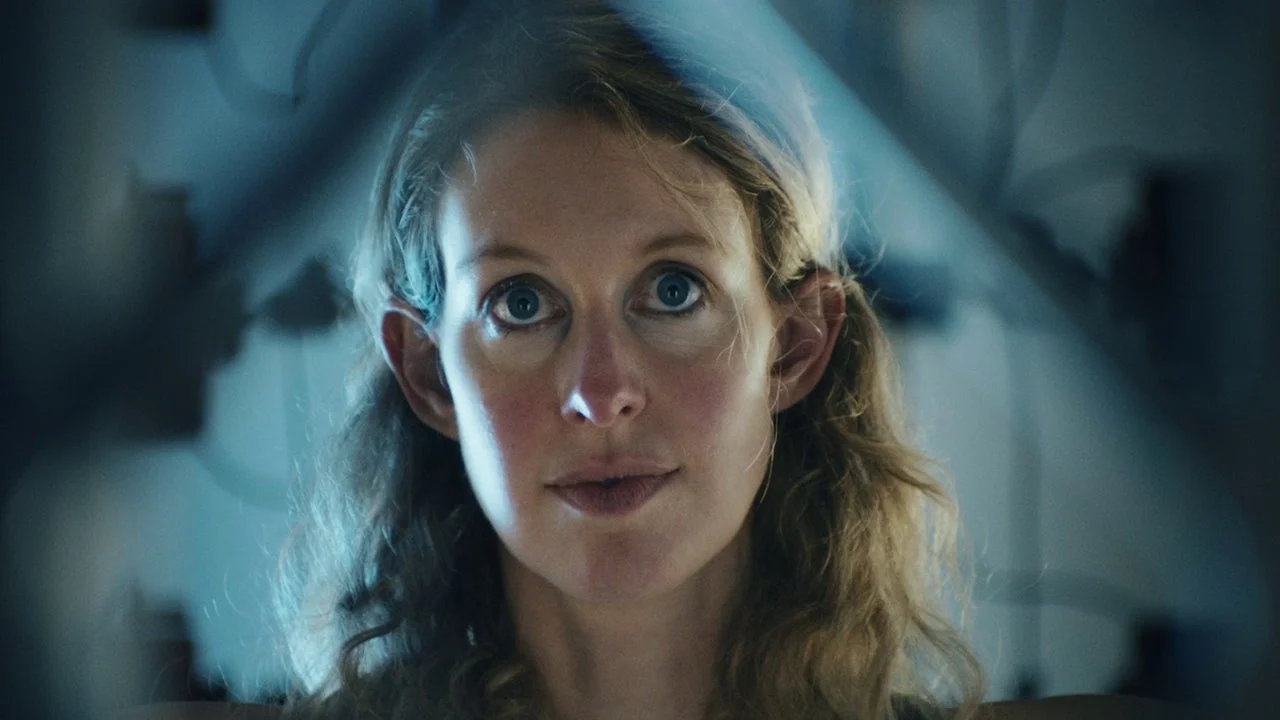

‘You Can See Everything’ arrived in theaters on October 16, directed by Nathan Fielder and Lance Oppenheim. The A24 documentary opens thirty-four days before Elizabeth Holmes is sent to prison and follows a skeptical film crew documenting her every move.
With a story this layered, many moviegoers want to know whether a ‘You Can See Everything’ post-credits scene is waiting once the names begin to scroll. Here is what has been confirmed about the ending, the length of the film, and why the credits land the way they do.
Is There a Post-Credits Scene After the Credits Roll
The tracking site What’s After The Credits reports no extras during the credits and none after them. It lists the film as a non-stinger.
That means viewers who need to leave when the screen cuts to black will not miss a bonus scene or a teaser. This is a standalone documentary rather than a franchise entry, so it carries none of the sequel setup audiences have come to expect from big studio releases.
Those who stay will find the film does not tie off its central mystery either. Where Fielder ultimately lands on whether Holmes is sincere or calculating remains an unsolved question at the end, perhaps even to himself.
How Long the Elizabeth Holmes Documentary Runs
Apple TV lists the film at 2 hours 54 minutes with an R rating. Variety’s review from the Telluride Film Festival gives the running time as 174 minutes, which matches. Anyone planning an evening around it should treat it as a near three hour commitment.
The review was filed after a screening on September 6 at Telluride. The film made a surprise debut there and the buzz has been loud ever since. It also marks Fielder’s feature-length directorial debut.
The theatrical rollout is sizable for a documentary of this length. Opening weekend projections put it at $7 to $8 million from 800 theaters.
Why the Film Feels Like It Ends Halfway
The structure explains why the credits feel like a real destination. Rolling Stone noted that Holmes enters prison roughly 90 minutes in, and viewers expect the end credits to roll, but the film has only reached its halfway point. Variety describes that first half as ending with Holmes going to the minimum security federal prison camp in Bryan, Texas.
The second half changes the film’s method entirely. Fielder and Oppenheim reenact their own footage in scenes reminiscent of ‘The Rehearsal,’ with Fielder playing himself and Christopher Abbott playing Holmes’ partner Billy Evans. There is also a major celebrity appearance that A24 has asked viewers to treat as a spoiler.
SlashFilm’s ending breakdown carries the headline More Questions Than Answers, and notes that Holmes is serving an 11 year sentence after a wire fraud and conspiracy conviction. A closing scene that offered a neat answer would sit oddly against a film built on ambiguity. The absence of one feels consistent with what the directors set out to do.
What Critics Are Saying About the Ending
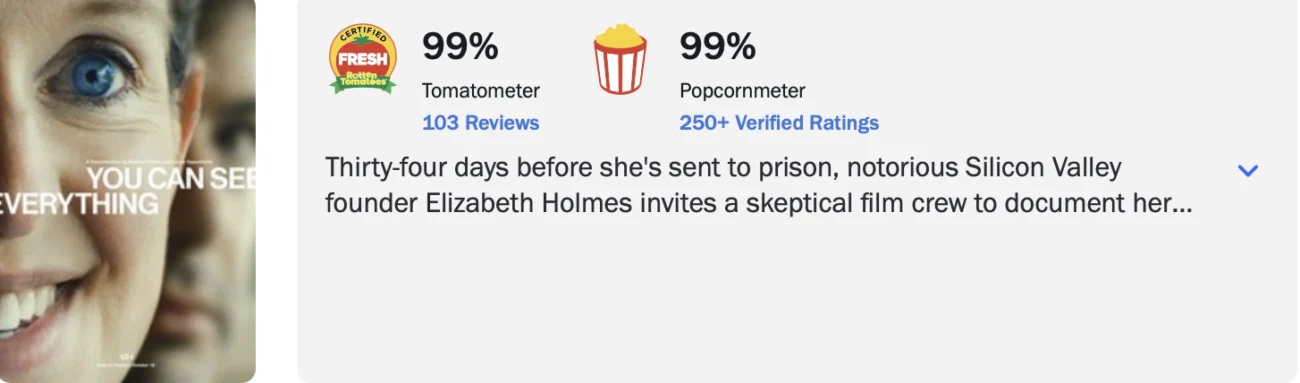
Early reception has been exceptionally strong. Metacritic shows a Metascore of 99 across 37 reviews. Rotten Tomatoes lists a Tomatometer of 99 percent from over 100 reviews.
The critic at Variety framed the film as a fascinating look at entitled duplicity in which reality television consumes itself. That reading fits the way the film turns its cameras on its own process. It also helps explain why the experience stays with viewers after the lights come up.
Not every response is unqualified praise. Next Best Picture found the first act to be the weakest stretch and flagged blind spots around the real victims and the consequences for Holmes’ family. Even so, the same review says the film leaves haunting questions and treats its inability to reach an absolute truth as a strength. If you stayed until the last name faded from the screen, did the lack of a final stinger make the unresolved questions about Holmes and Fielder hit harder, or did you want one more answer before leaving your seat.