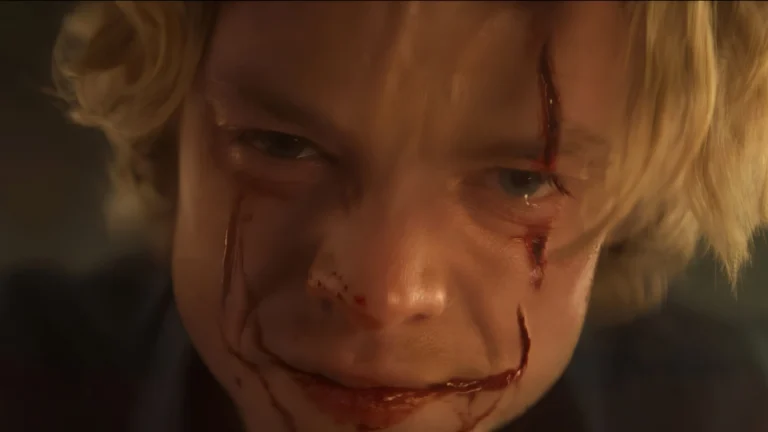
‘Fjord’ Ending Explained: What Noora’s Final Walk Across the Water Means

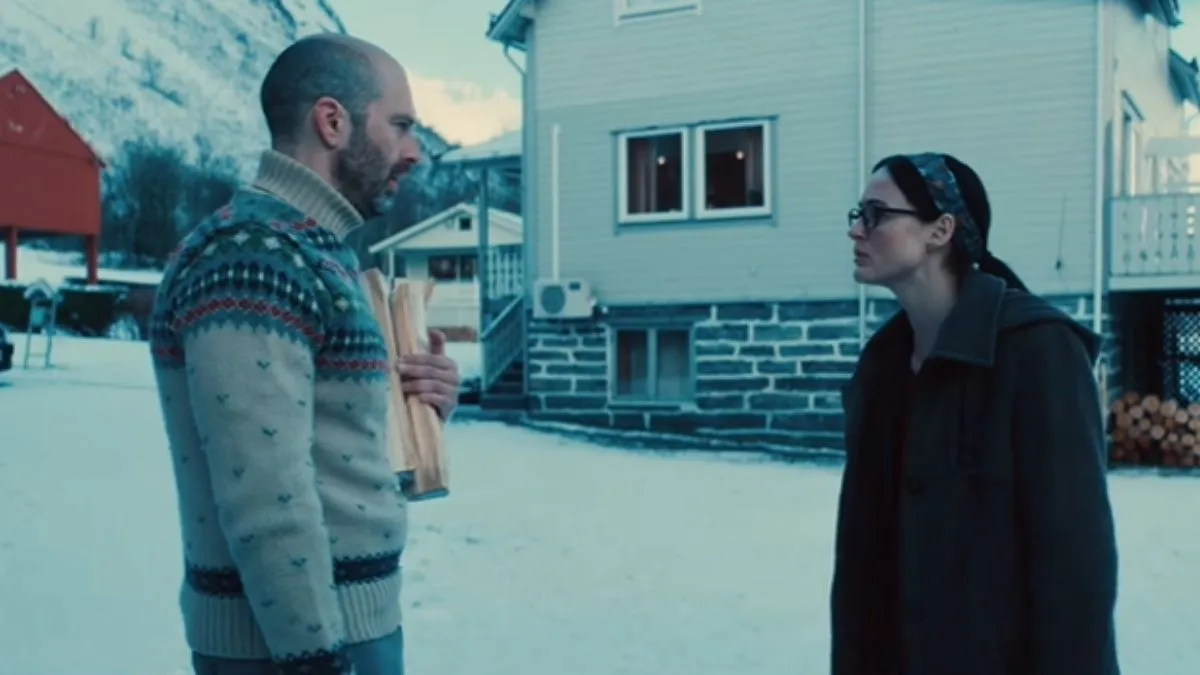

Cristian Mungiu’s ‘Fjord’ stars Sebastian Stan and Renate Reinsve as a conservative Romanian and Norwegian couple who face scrutiny after moving to the wife’s progressive and remote Norwegian hometown. The film went on to win the Palme d’Or at Cannes.
The ending of ‘Fjord’ pairs a painful departure with an image that appears to defy physics. The sources dissecting that closing sequence read it in noticeably different ways.
What Happens in the Final Scene of ‘Fjord’
The story turns when the eldest daughter, Elia, is noticed with bruises at school, and Child Welfare Services step in and place the children in foster homes without the parents’ consent. That decision sets the legal and emotional conflict in motion for everything that follows.
By the end, Mihai tricks his children into returning to Romania. The family leaves in the early hours of the morning without warning, and Elia initially refuses to board the boat because she has no chance to say farewell to her best friend Noora. Her mother eventually convinces her to get on.
Noora tracks Elia’s phone and rushes after them, but she arrives just after the ferry has departed. The film closes on a devastated Noora calling out that she loves Elia as the boat pulls away.
Noora and Elia at the Heart of the Ending
Noora is portrayed as a rebellious teenager who self harms and engages in dangerous activities. Her bond with Elia is one of the film’s genuine connections, and it proves positive for her. That context explains why the missed farewell lands so hard.
Noora gives Elia a mobile phone and secretly visits her and her brother Emmanuel at their foster home. Those small acts show a friendship that survives the separation imposed by the authorities. They also set up why the phone becomes the tool that lets Noora chase the ferry.
Mihai begins to suspect a romantic attraction between the two girls, to his dismay. Some viewers read the subtext as a thwarted love, and it may help explain his concern and the decision to flee Norway. Another reading is that Mihai, as a deeply religious man who sees homosexuality as a sin, worries about the closeness, though the film never confirms his motive.
Walking on Water and the Meaning of the Final Image
As the ship leaves, Noora approaches the fjord in tears and seemingly walks upon the water. After a second viewing, Hollywood Elsewhere wrote that Noora definitely walks on water in the final shot, having first suggested an invisible pier beneath the surface as a possible explanation.
A more grounded reading holds that Noora is moving along a partly submerged structure, which creates the illusion of crossing the fjord. Earlier in the film, Noora sees Elia seemingly walking on water, and Elia suggests she could one day teach her how. The final scene reverses that moment, and it leaves room for both a practical and a spiritual interpretation.
The image recalls the biblical story of Jesus walking on water, which suits the strong Christian beliefs of the Gheorghiu family. It can also be taken as a visual metaphor for the effect the two girls have had on each other, with faith and reason left in balance.
Why the Ambiguity of ‘Fjord’ Divides Critics
One review notes that ‘Fjord’ remains largely ambiguous, does not appear to want to pass judgment on its characters, and ultimately offers no answers. Another describes Mungiu as observing this microcosm of society while reserving judgement, leaving viewers to decide what they believe is right.
Not every critic embraces the finale. The New Republic described the closing coda as unapologetically blunt, one that exposes the film’s machinery, and noted that Noora’s long repressed parting words are predictably lost on the breeze, a picture of failed communication.
Eye For Film points to the question hanging over the film at the end, which is whether a man who demands that his child admit when they are wrong can learn to do the same himself. The film was influenced by real cases involving immigrant families and Nordic child protection authorities, and it does not settle whether Mihai and Lisbet are victims or parents whose behavior justified intervention. Do you see Noora’s walk across the fjord as a miracle, a trick of a hidden walkway, or proof that Elia and Noora changed in ways the adults of ‘Fjord’ never could?