Where the Story of ‘The Law of Beasts’ on Netflix Comes From


Viewers who finished ‘The Law of Beasts’ on Netflix have been asking what the series is built on. The Polish production, known in its home country as Prawo bestii, is a four part drama exploring the limits of friendship and justice. It reached the platform on November 18 and it arrived with a serious premise and a restrained tone.
The answer to the question is specific and worth unpacking. The series is inspired by the true events that led to the introduction of what became known as Poland’s Beast Law. That context shapes everything about how ‘The Law of Beasts’ plays out, from its two time periods to its central argument about justice.
The Netflix Series Origins and Real Events Behind the Drama
The production draws on a real criminal case. The series takes inspiration from the Mariusz Trynkiewicz case and the events surrounding Poland’s Beasts Act. The drama does not present itself as a documentary reconstruction.
Netflix has been open about that distinction. The two lead women, Anna Bersz and Agnieszka Grabska, are described as fictional characters created for the series. The real case supplies the legal and emotional backdrop while the central friendship is invented.
Director Kasper Bajon framed the project in similar terms. According to Netflix, Bajon says that although the story is inspired by real events, its heart lies in people who serve the state and face impossible choices. He also describes it as an exploration of what happens when law, a sense of justice and public safety cannot be reconciled.
The series also arrives as part of a wider push. Netflix’s investment in Polish productions continues, and this limited series comes from the creator of ‘High Water’.
Cast and Characters Who Carry the Story
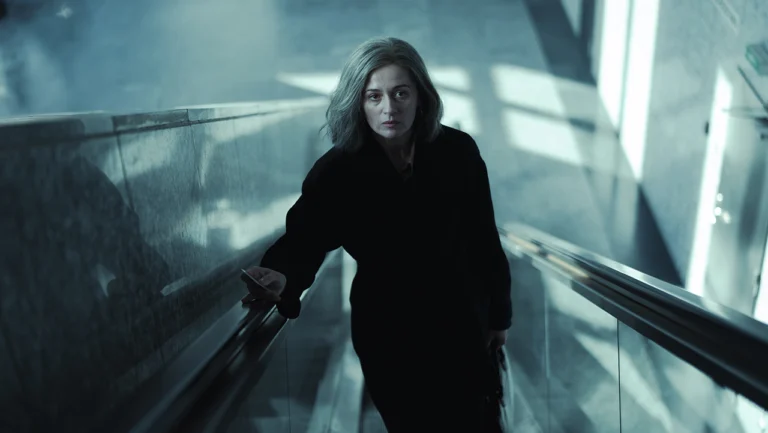
The ensemble is anchored by three actors. Agnieszka Grochowska plays Major Anna Bersz, who leads the investigation, while Agnieszka Żulewska plays her friend, the psychiatrist Agnieszka Grabska. Their shared history is the emotional engine of the drama.
Michał Pawlik plays the suspect, Mariusz Trynkiewicz. One recap of the finale notes that the series is more interested in the people and institutions responding to his case than in presenting him as the conventional protagonist of a crime thriller. That choice keeps the focus on the two women and the systems around them.
The supporting cast fills out the wider world of the story. The ensemble includes Jacek Beler, Michalina Łabacz, Jakub Sasak and Aleksander Talkowski. They help build the institutional and personal pressures that surround the central decision.
Behind the camera, the writers are Kasper Bajon and Anna Kasińska, and the producer is Edyta Krajewska for the production company Entrego. The creative team is largely Polish, which fits a project so rooted in a national debate.
How the 1988 and 2014 Timelines Fit Together
The structure moves between two periods. In 1988, Poland is shaken by the murder of four boys, and the two friends make a decision that ends their friendship and affects the rest of their lives. That decision hangs over everything that follows.
The second period picks up decades later. In 2014 the convicted man is due to be released, and Anna, now a public official, and Agnieszka, a renowned psychiatric expert, must revisit the case. Both women are forced to ask how to protect society without abandoning the principles that the rule of law is built on.
The format suits the subject. Each episode runs for approximately 45 minutes, which brings the complete series to around three hours of storytelling. That compact length keeps the argument tight, although one recap observes that the four episode format leaves some ideas feeling more compressed than fully explored.
The legislation sits at the center of the later timeline. The proposed Beasts Act would allow certain dangerous offenders to be placed in a specialised closed institution after their prison terms have ended. Anna supports it while Agnieszka has serious doubts, and that disagreement drives the final episodes.
The Ending and the Questions It Leaves Behind
The finale resolves the legal question while leaving the moral one open. Trynkiewicz is transferred to the National Centre for the Prevention of Dissocial Behaviours in Gostynin. Anna gets the practical outcome she worked toward, but the series does not treat it as a clean victory.
The courtroom sequence carries the drama. Agnieszka refuses to provide a politically convenient assessment and separates what psychiatry can establish from what must be decided through the legal process. Her stance reflects how far she has moved since the pressure she faced in 1988.
The friendship does not fully mend. The two women do not reconcile, and they walk away from the courthouse in opposite directions. The same recap describes the ending as bittersweet and unsettling, with both women left to live with the consequences of their decisions.
A second season is not on the table for now. Netflix has not officially confirmed one, and the production has been presented as a four part limited series. For viewers who have just finished the story, the more interesting debate may be whether Agnieszka’s refusal in court was the right call, or whether Anna’s push to keep a dangerous man confined was the more defensible choice in ‘The Law of Beasts’.