Anime Eyes: Styles, Colors and How to Describe Them

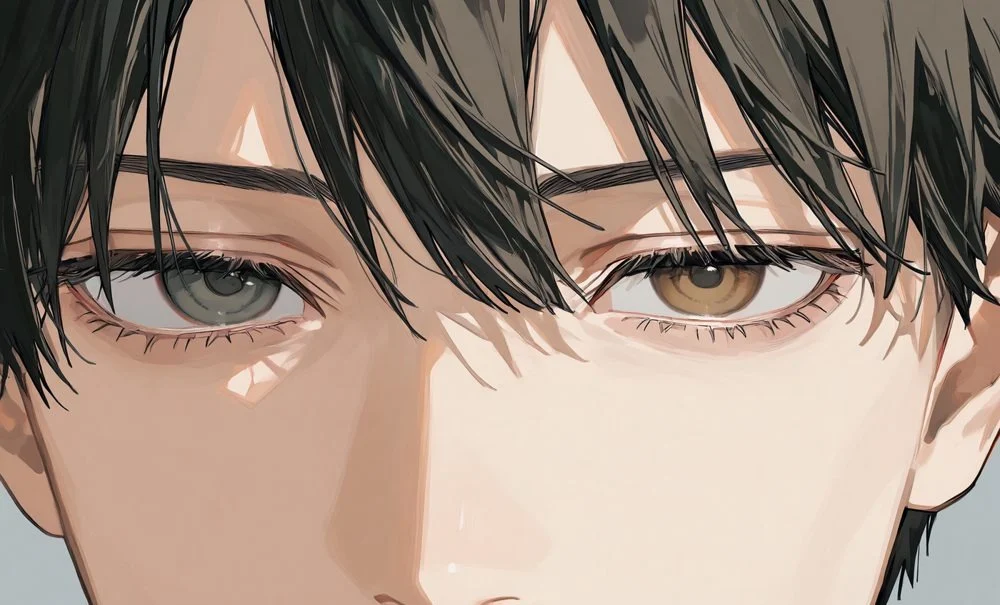
Adding “beautiful anime eyes” to a character description leaves most of the design undecided. The eyes might become larger, brighter, or busier without looking more like the pair you imagined. Start by naming their shape and how the lids sit around the irises. Color and highlights come afterward.
This is a guide to recognizing and describing eye designs. You can use the vocabulary in a drawing brief, a character sheet, or an image prompt without turning the description into a step-by-step drawing lesson.
The Parts That Make Anime Eyes Read Differently
The opening between the lids sets the basic silhouette. Notice its width relative to its height, the position of the outer corners, and the curve of the upper lid. Two designs can have equally large irises and still feel very different because one opening is round and the other is long and narrow.
The iris is the colored area around the pupil. Its size determines how much white remains visible, while the pupil gives the gaze a center. A lid crossing the top of the iris changes the expression without changing the underlying color or pupil shape.
Highlights are separate design elements. One small reflection can keep the iris readable; several large reflections can dominate it. Decide whether you’re describing ordinary reflected light or a decorative symbol such as a star. They serve different purposes.
Lashes and liner establish emphasis along the edge. A thick upper contour, a cluster of outer lashes, or a lightly suggested lower lid can each change the balance. The eyelid crease adds another line above the opening, so keep it distinct from an eyebrow or an extra outline.
Anime Eye Shapes and the Expressions They Suggest
The following anime eye styles are useful visual shorthand. The mood associations are creative conventions that artists can use, soften, or reverse. They aren’t rules about personality, gender, or real people.
| Shape or style | Visual feature | Common creative use | Prompt wording |
| Tsurime | Outer corners rise into a point | Alertness, determination, a challenging look | Upturned outer corners, angled upper lids, focused gaze |
| Tareme | Outer corners slope downward | Gentleness, concern, a relaxed manner | Downturned outer corners, curved upper lids, soft gaze |
| Large round eyes | Tall opening with curved lids | Curiosity, surprise, openness | Large rounded eye openings, clearly visible irises |
| Narrow eyes | Wide opening with little vertical height | Restraint, concentration, composure | Long narrow eyes, low vertical opening, steady gaze |
| Half-lidded eyes | Upper lids cover more of each iris | Tiredness, relaxation, quiet confidence | Lowered curved upper lids, partly covered irises |
| Jitome | Flattened upper lids create a level stare | Skepticism, annoyance, deadpan humor | Nearly horizontal upper lids, partly covered irises, unimpressed stare |
These types of anime eyes overlap. A character can have downturned outer corners and lowered lids at the same time. “Half-lidded” describes lid position; it doesn’t automatically identify the tilt of the corners.
Jitome is also more specific than simply making the eyes small. The flat upper boundary helps create that unimpressed expression. For a sleepy look, a curved drooping lid and relaxed brow may be more useful than the label.
Compare the eyes in a neutral expression before defining a permanent character trait. Surprise opens the lids, a smile compresses them, and a sideways glance changes the visible whites. A character sheet benefits from separating the default shape from temporary acting choices.
Anime Girl Eyes and Anime Boy Eyes: Conventions You Can Adjust
Designs described as anime girl eyes often emphasize a tall opening, visible lashes, and larger areas for iris decoration. Designs described as anime boy eyes frequently use a wider, lower opening, heavier brows, and fewer lash marks. These are recurring choices in some styles, not requirements.
Don’t use those labels as substitutes for the actual design. A reserved woman might have narrow eyes and minimal lashes; an expressive man might have round eyes with several reflections. State the width, lid angle, iris size, and lash placement directly.
For cute anime eyes, try a rounded opening and a clearly readable iris before adding sparkle. Leave room for the pupil. Filling every available area with white shapes can make the gaze harder to locate, especially in a small portrait.
Age and facial proportions need separate attention, too. Changing the eye height alone can change how old a character appears. Compare the nose, jaw, and spacing around the brows when adapting the same eye design to different faces.
Anime Eye Colors Without a Fixed Personality Code
Choose a color that belongs to the whole palette. Amber can echo a brass accessory, green can contrast with copper hair, and gray can keep a brightly colored costume from competing with the face. Check value as well as hue: a dark iris needs enough separation from the pupil to remain legible.
There’s no universal anime eye color meaning. Red may support an intense fantasy design, blue a cool palette, or gold an unusual visual accent, but none establishes a character’s morality or temperament. Story context and expression do more work than a color chart.
If you collect anime eye colors as references, note the lighting beside each sample. A cool shadow or warm reflection can alter the apparent hue. For a reusable character description, record the base iris color separately from the light falling across it.
Heterochromia needs explicit placement. Write “the character’s left iris is amber; the right iris is gray,” then check the image carefully. A mirrored reference can reverse what a viewer assumes is left.
Gradient irises need an internal direction, such as darker blue above and turquoise below. Keep that color transition separate from the lighting description so it doesn’t become a bright glow around the whole eye.
Star or heart highlights are decorative shapes within the iris area. Use one clear motif if the face is small. Eyes without highlights can suggest emptiness or a withdrawn mood as a storytelling convention, but expression and context should support that reading.
Write Shape, Color, Highlights, Lashes, Then Emotion
Use that order as an editing aid, not a technical formula. It puts the structural choices before the finishing details and makes contradictions easier to catch. “Narrow eyes, wide-open round lids” needs a decision before it needs more adjectives.
Try a neutral description first:
Close portrait of an original adult anime character with gently downturned outer eye corners and medium-sized irises. Warm brown eyes, round dark pupils, one small white reflection in each iris, short outer lashes, relaxed brows, attentive expression. Both eyes are unobstructed, with even light across the face.
For a more skeptical expression, change the lids and acting while preserving the identity:
The same original adult character has warm brown irises and short outer lashes. Nearly horizontal upper lids cover the tops of the irises, with one small reflection in each eye. One brow rises slightly, the gaze stays forward, and the mouth remains relaxed, creating a dry, unconvinced expression.
An unusual eye design can stay equally specific:
An original adult fantasy mapmaker has long narrow eyes; the character’s left iris is gray and the right iris is amber. Round pupils, and one small reflection in each eye. Fine upper lash lines, minimal lower lashes, focused expression, neutral frontal portrait, soft daylight, no glowing effects.
When comparing anime eye types, keep the crop and head angle consistent. Inspect the face at its intended display size. If the pupil disappears or the highlights merge, simplify the iris decoration before enlarging every feature.
Where PixAI Fits
PixAI focuses on anime art, and its default model, Tsubaki.3, accepts full-sentence descriptions. That makes the shape-to-emotion sequence a practical way to write a starting prompt without relying entirely on category tags.
The character-eye prompt examples cover details such as size, color, iris treatment, and lashes. Read them alongside the face-description prompt examples when the eyes work in isolation but feel wrong on the face.
Because the description is read as a sentence, contradictions matter more than missing tags. If the result opens the lids after you asked for a jitome stare, look for another phrase, such as “bright, lively eyes,” pulling in the opposite direction before adding more emphasis.
An Eye Description to Keep on the Character Sheet
- Shape: record corner tilt and the opening’s width and height.
- The base iris color stays separate from scene lighting.
- Specify pupil shape and any left-right color difference.
- Highlight count and placement should leave the gaze readable.
- Note the lash emphasis, then the neutral brow position.
- Keep expression changes separate from permanent features.
Write one eye description and try it in a simple portrait on PixAI, checking the whole face before adding more iris detail.