Best Bottle Episodes In Anime

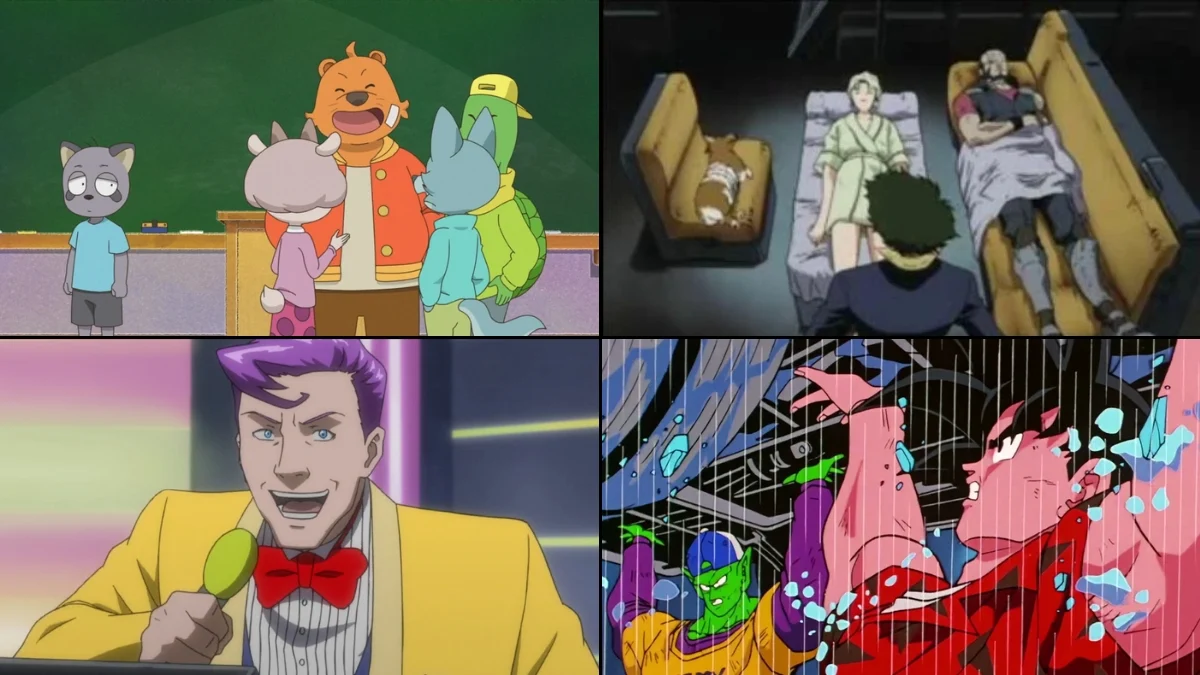

Sometimes, all you need is one room and a great setup. Anime has plenty of tightly contained episodes that lock characters into a single location, turn up the pressure, and let writing, staging, and sound do the heavy lifting. Below are twenty standout bottle episodes that largely unfold in one space—ships, club rooms, courtrooms, apartments, and more—each leveraging limited settings for maximum focus and momentum.
‘Cowboy Bebop’ (1998) – “Toys in the Attic”

Most of this episode plays out entirely aboard the Bebop, with the crew hunting a mysterious intruder through familiar corridors and compartments. It’s structured like a ship-bound thriller, using lighting, POV gags, and the show’s established set geography to stage the search. The story keeps to maintenance bays, the galley, and the cargo hold, rarely stepping outside that footprint. It’s one of the series’ most contained outings, showcasing how the Bebop itself functions as a suspense set.
‘The Melancholy of Haruhi Suzumiya’ (2006) – “Someday in the Rain”

This low-key finale stays almost entirely inside North High’s Literature Club room and nearby hallways. Much of the runtime is dedicated to quiet, everyday tasks—waiting out rain, running a mundane errand, and idling in the club space. The episode foregrounds ambient sound and minor actions over plot, all within school interiors. Its single-location approach deliberately contrasts the show’s usual supernatural hijinks.
‘Neon Genesis Evangelion’ (1995–1996) – “Both of You, Dance Like You Want to Win!”

The episode centers on Shinji and Asuka’s synchronized training regimen, staged mainly in Misato’s apartment and NERV facilities. By confining rehearsals and downtime to a small set of rooms, it spotlights character dynamics and timing drills needed for a tandem operation. The climactic deployment flows directly from that interior practice. The structure is famously compact compared to the show’s city-level battles.
‘Steins;Gate’ (2011) – “Dogma in Event Horizon”

This installment keeps its action largely within the Future Gadget Laboratory, culminating in a pivotal, lab-bound turning point that propels the series into its second half. Lab props, the phone microwave, and the cramped workstation layout become blocking tools for reveals and reversals. Dialogue, phone calls, and a single doorway manage the tension. The episode’s contained staging underscores the consequences unfolding right where the experiments began.
‘Death Parade’ (2015) – “Death Seven Darts”
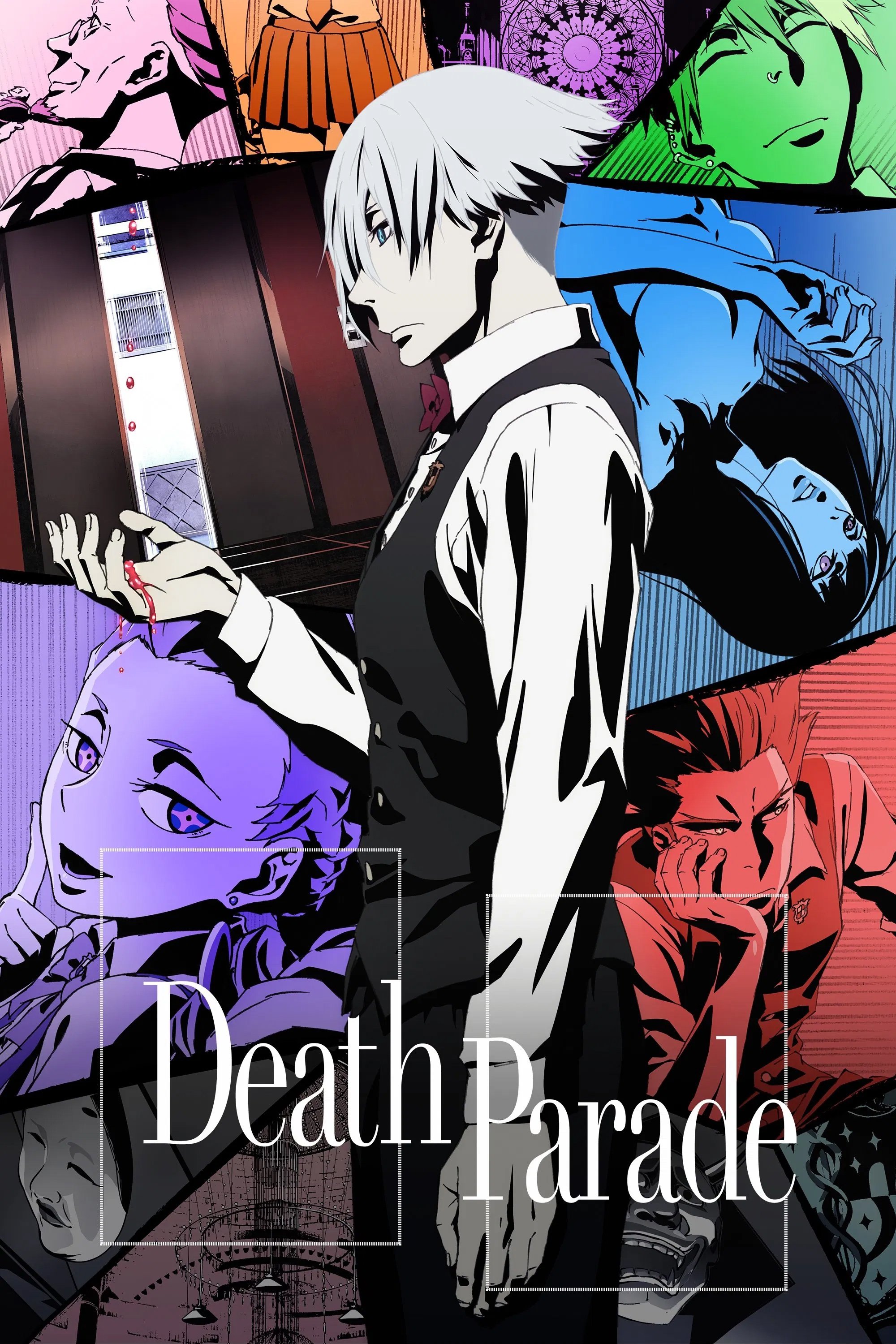
Set almost entirely at the Quindecim bar, the premiere establishes the series’ fixed arena for arbitration games. All major beats—from the rules briefing to the match and judgment—occur at the counter, dartboard, and elevator vestibule. The enclosed, symmetrical set supports shot-reverse-shot interplay and game mechanics. It’s a textbook “one-place” introduction for the show’s format.
‘The Tatami Galaxy’ (2010) – “The End of the 4½ Tatami Age”
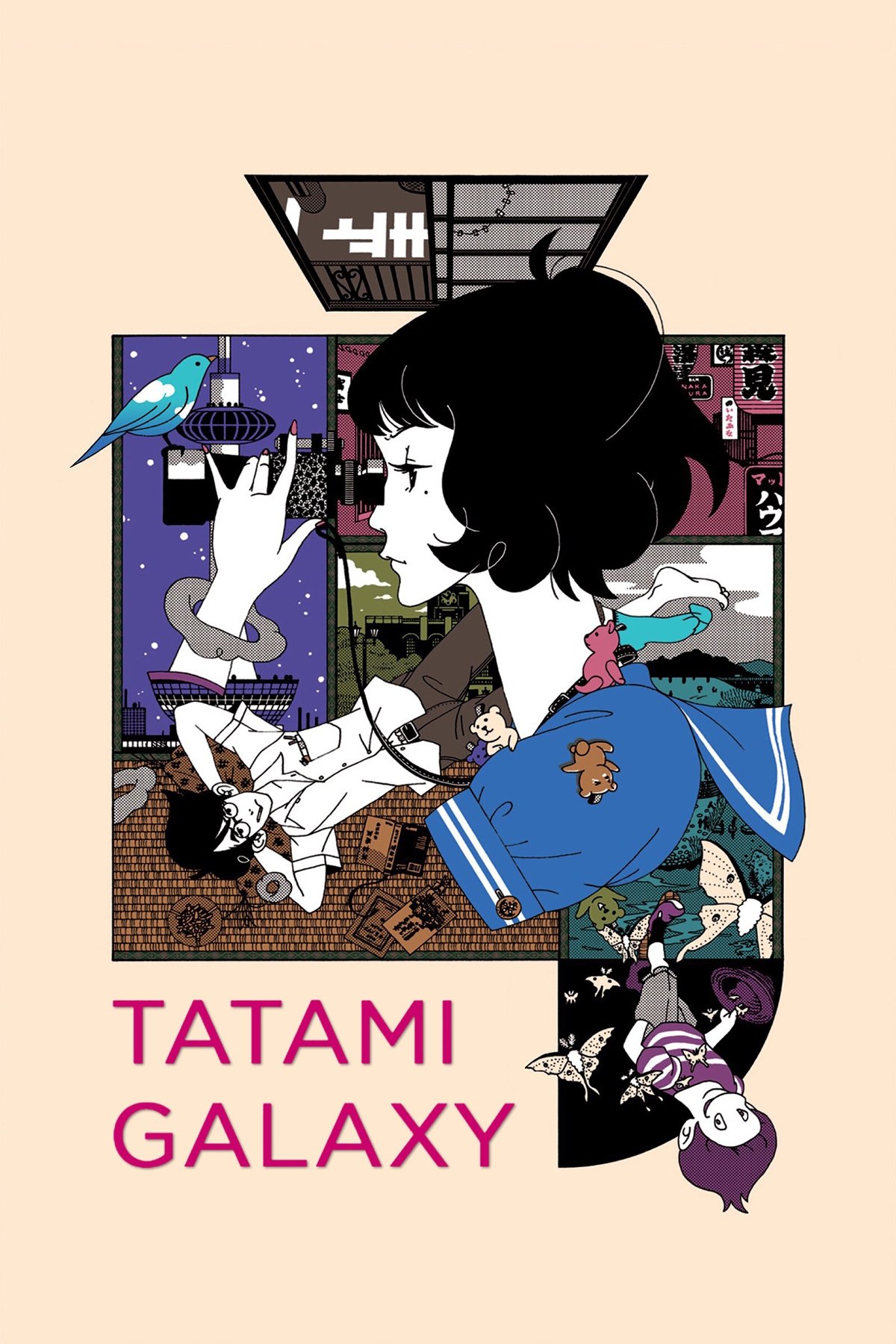
The protagonist is effectively trapped amid an endless maze of near-identical 4.5-tatami rooms, turning his tiny apartment into a recursive stage. Scenes loop through the same bed, desk, door, and window, with minute variations used for orientation. The direction leans on close-quarters layouts to sell the spatial paradox. It’s one of the medium’s most literal “single-room” conceits.
‘Zoku Owarimonogatari’ (2015) – “Sodachi Riddle, Part One”

This case-file chapter confines its interrogation and deductions to a single classroom, using benches, chalkboards, and camera angles as visual punctuation. With minimal blocking, it prioritizes timeline reconstruction and motive analysis. The sparse setting fits the series’ dialogue-driven style, letting long takes and seated compositions carry the scene. Its classroom bottle approach defines the entire arc’s staging.
‘ODDTAXI’ (2021) – “Tanaka’s Revolution”
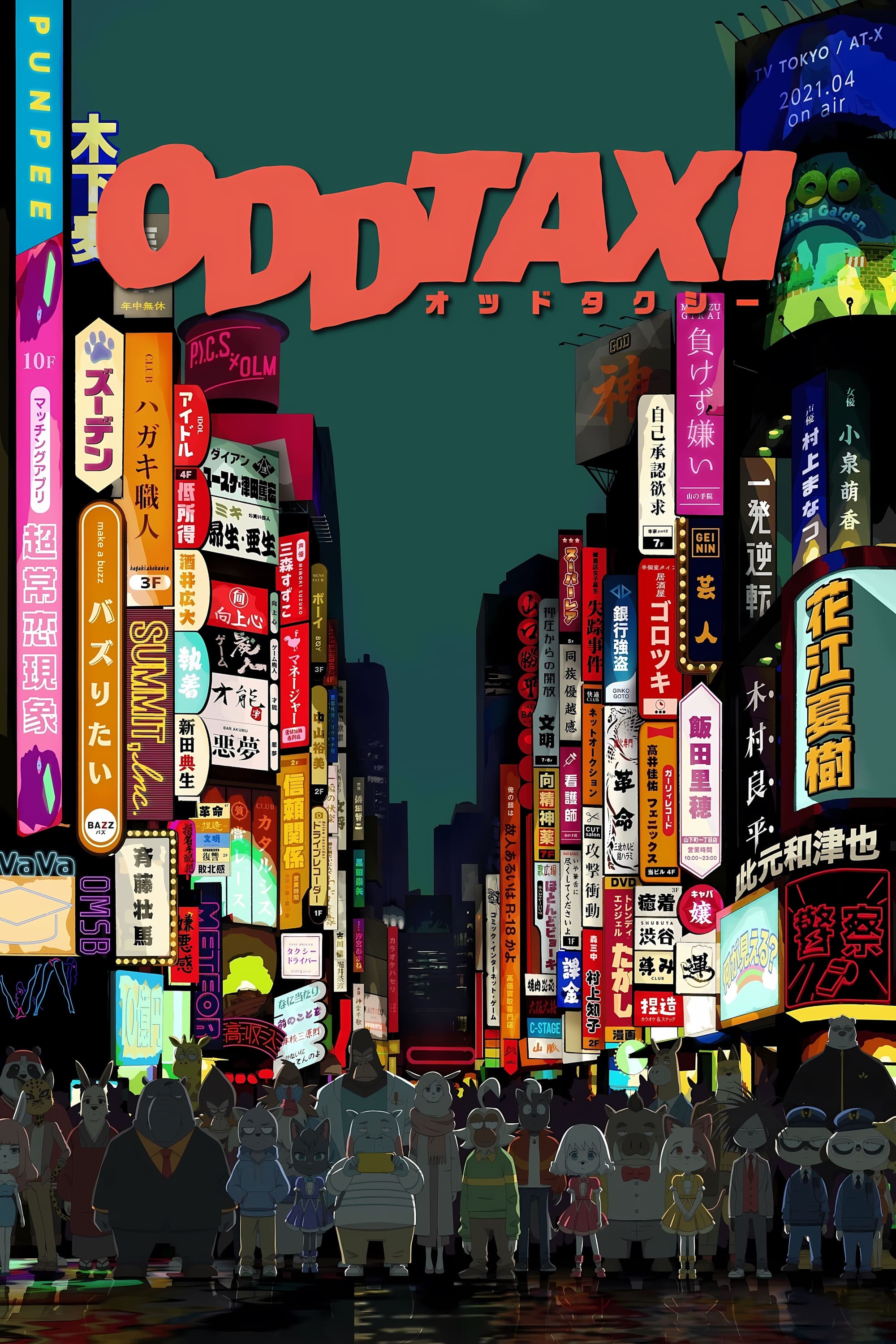
The episode focuses on one character’s spiral, presented largely through interiors like his room, PC desk, and a few tight city spaces that feel functionally enclosed. The narrative relies on screen interfaces, monologue, and routine objects to chart obsession. Its limited locations intensify the perspective shift away from the usual taxi routes. The compact staging helps frame a self-contained cautionary tale inside the season.
‘Thus Spoke Kishibe Rohan’ (2017) – “Millionaire Village”

This one-off takes place almost entirely inside a remote house governed by bizarre etiquette rules. The episode’s puzzle unfolds across a foyer, corridor, and traditional room, with door thresholds and tatami edges treated as literal lines not to cross. The contained setting turns etiquette into a physical hazard. Its limited space and fixed rules make it a quintessential chamber mystery.
‘Dragon Ball Z’ (1989–1996) – “Goku’s Ordeal”

Instead of battlefield vistas, this comedic detour narrows to a driving school and its adjacent test course. Goku and Piccolo spend the episode in and around a car, instructor’s office, and track lanes. The DMV-style setting enables staged gags using a small handful of practical areas. It’s a rare franchise entry built around one mundane location.
‘Kino’s Journey’ (2003) – “A Tale of Mechanical Dolls”

The episode confines its exploration to a single mansion and workshop complex. Kino investigates production processes and ethics within hallways, rooms, and a factory floor that all belong to one estate. The story’s reveals are staged as room-to-room progressions without broader travel. It exemplifies how the series can compress a country’s “journey” into one building.
‘Assassination Classroom’ (2015–2016) – “Assassination Time”

This opener establishes Class 3-E’s fixed homeroom as the primary arena for training and attempted hits. The bulk of the action—orientation, demonstrations, and initial practice—stays within four classroom walls. Desk layouts and blackboard space are used to block group reactions and Koro-sensei’s movements. This room remains the series’ central stage thereafter.
‘Angel Beats!’ (2010) – “Guild”

Most of the episode occurs in the underground “Guild,” a sprawling but continuous base treated as one connected environment. The team advances through workshops and corridors built under the school, using booby-traps and improvised machinery. Despite multiple chambers, the setting functions as a single contiguous location reached via one access route. It’s a contained, trap-room gauntlet rather than a campus tour.
‘Detective Conan’ (1996–present) – “The Locked Room in the Sky: Shinichi Kudo’s First Case”
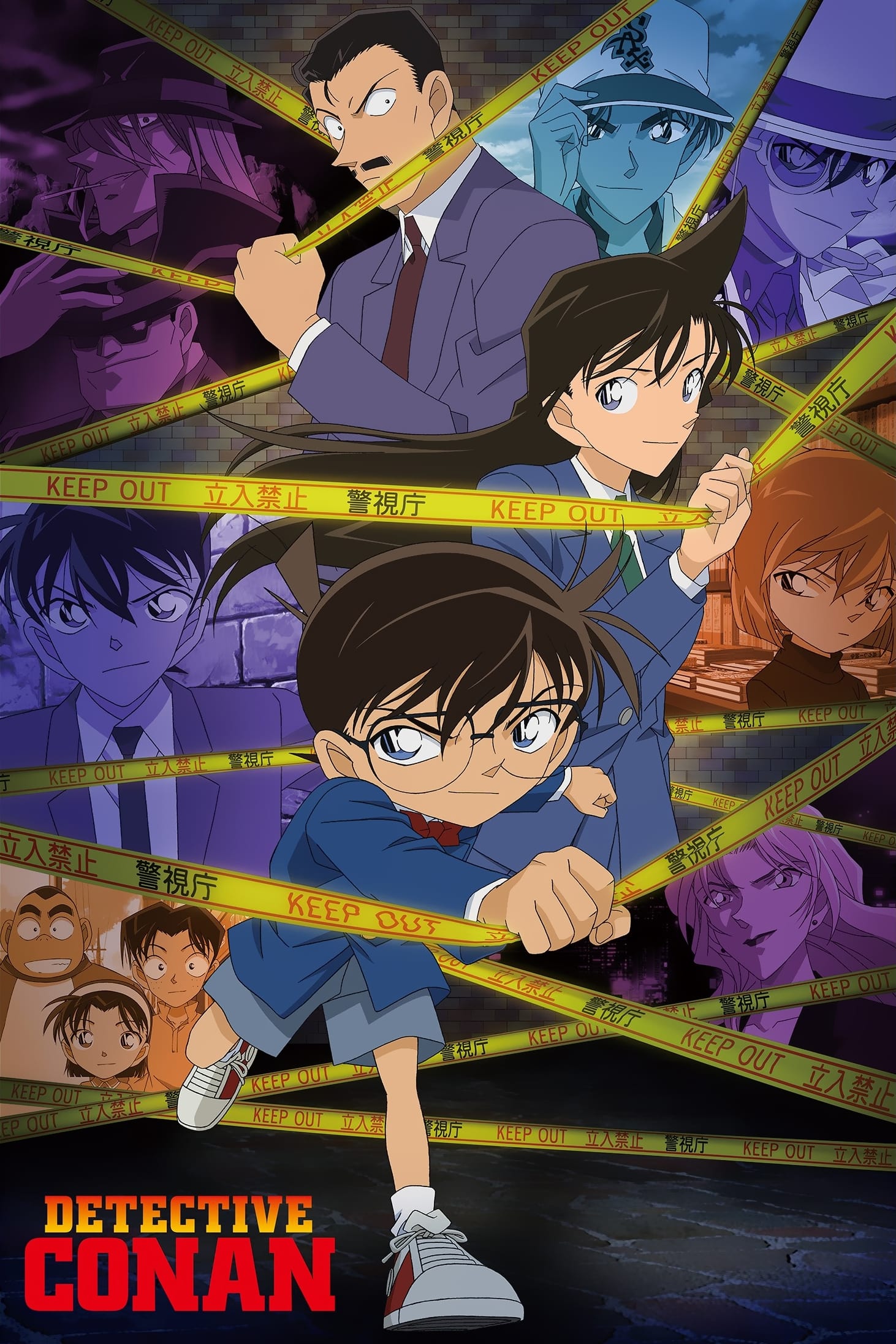
This special is staged primarily inside an airplane cabin, leveraging aisles, lavatories, and galley space for all key beats. The mystery setup, investigation, and solution play out in flight, with limited sets and a fixed passenger list. The airplane’s constraints guide the deductions on access and opportunity. It’s a classic “sealed vehicle” case for the series.
‘Ergo Proxy’ (2006) – “Who Wants to Be in Jeopardy! / Nightmare Quiz Show”

Here the cast is trapped on a single game-show set, with the stage, audience bleachers, and control booth comprising the entire arena. The surreal quiz format unfolds without cutting to exterior B-plots. Studio fixtures—spotlights, podiums, and screens—become diegetic tools for exposition. The bottle staging heightens the episode’s meta-interrogation of the protagonists.
‘Planetarian: The Reverie of a Little Planet’ (2016) – “The Robot’s Bouquet”

This premiere situates almost everything inside a derelict planetarium where a lone robot greets a scavenger. The projector room, lobby, and a small maintenance area form the episode’s full geography. Dialogue and repair scenes lean on the star-theater’s acoustics and fixed seating. The planetarium remains the narrative’s emotional and physical center.
‘Jujutsu Kaisen’ (2020– ) – “Curse Womb Must Die”

The first-years are dispatched to a juvenile detention center, and the episode keeps the action within the cursed interior. Corridors, stairwells, and one central chamber provide all staging for the mission and its pivot. The setting acts as a hostile “Domain,” limiting exits and camera angles to sell disorientation. The follow-up immediately continues in the same confined site.
‘Kakegurui’ (2017–2019) – “The Woman Who Became Livestock”

This early match is staged in a single academy gambling room, with the table, audience rows, and dealer stand comprising the whole space. The episode explains rules, debts, and stakes without leaving the venue. Shot continuity keeps viewers oriented around the same table edges and sightlines. The room’s setup is integral to the game’s psychology and twists.
‘One Room’ (2017–2020) – “Hanasaka Yui Makes a Request”

The series’ first episode embraces a pure apartment-room format, presenting the story from a first-person POV inside a single unit. Dialogue, props, and blocking stay within the living space and entryway. The show’s episode titling and structure are designed around visits and conversations in that same room. It’s a literal example of building a narrative inside one set.
‘Teasing Master Takagi-san’ (2018–2022) – “Letter / First Day of School / Seating Arrangement”

This anthology episode’s school segments play primarily at desks within one classroom, using chalkboards, rows, and seat charts as story devices. The “Seating Arrangement” portion in particular treats the room layout as the puzzle. Camera setups remain within the class interior for the bit’s entire duration. It’s a compact showcase of how desk placement can drive gags and beats.
Share your favorite anime bottle episodes—and the scenes that made them pop—in the comments!