


25 Best Screenplays of the 21st Century (So Far)



The twenty first century has delivered a wave of original and adapted scripts that shaped how stories are built, paced, and told on screen. From tightly engineered thrillers to expansive character studies, these screenplays show clear choices in structure, dialogue, and point of view that filmmakers and students still study.
This list highlights screenplays that left a measurable mark through formal innovation, award recognition, and lasting influence on filmmakers. Each entry notes who wrote it, where the story came from, and what specific writing choices make the script stand out in practice.
‘No Country for Old Men’ (2007)
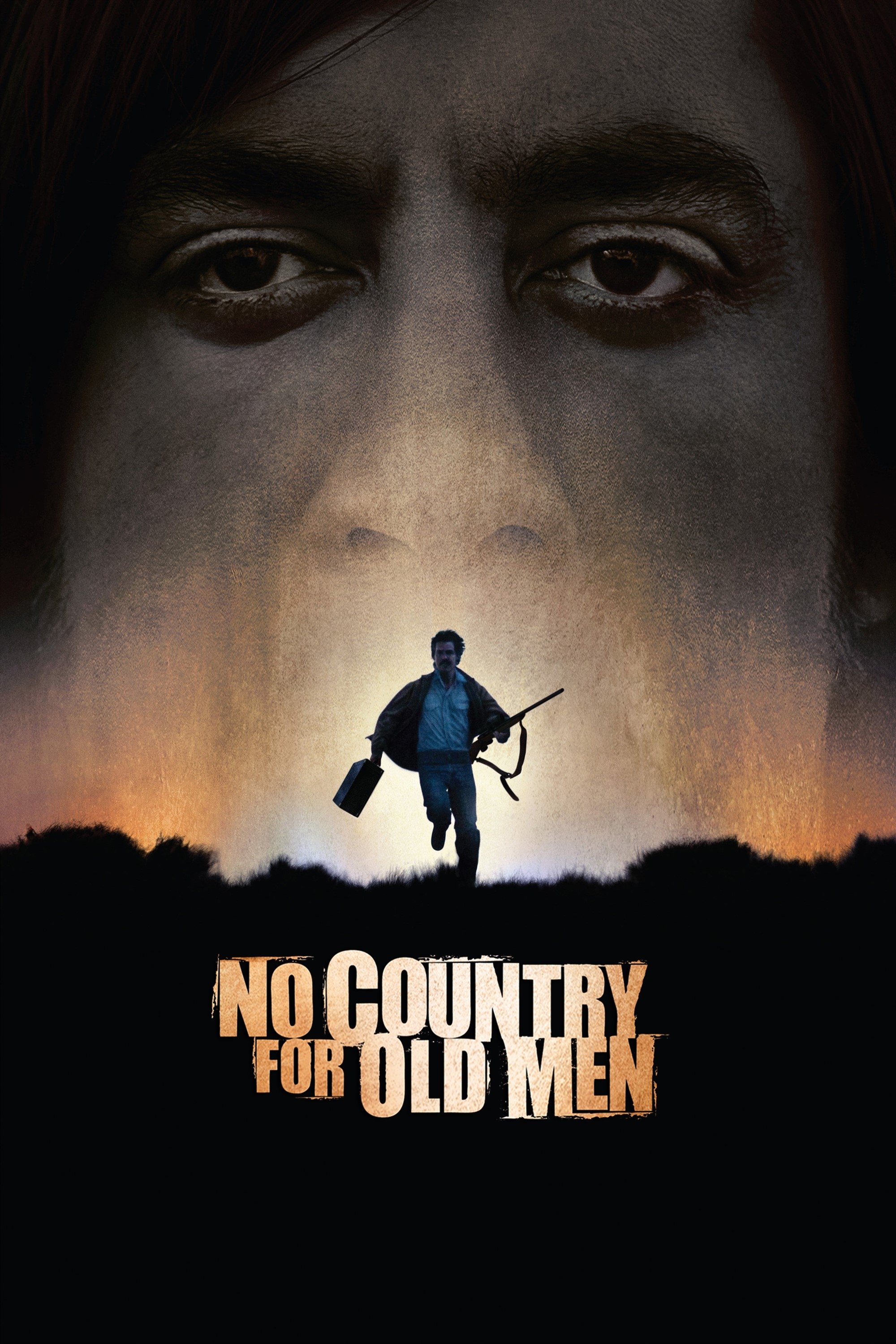
Joel and Ethan Coen adapted the novel by Cormac McCarthy with an approach that preserves the book’s spare style and stark momentum. The script tracks three central characters across intersecting paths and uses limited exposition to keep focus on action and consequence. Scenes often end on decisive beats that push the chase forward without commentary.
The screenplay is noted for controlled silence and precise description that guides rhythm without dictating performance. It won the Academy Award for Adapted Screenplay and retains entire passages from the source while restructuring sequences for clarity on screen.
‘There Will Be Blood’ (2007)
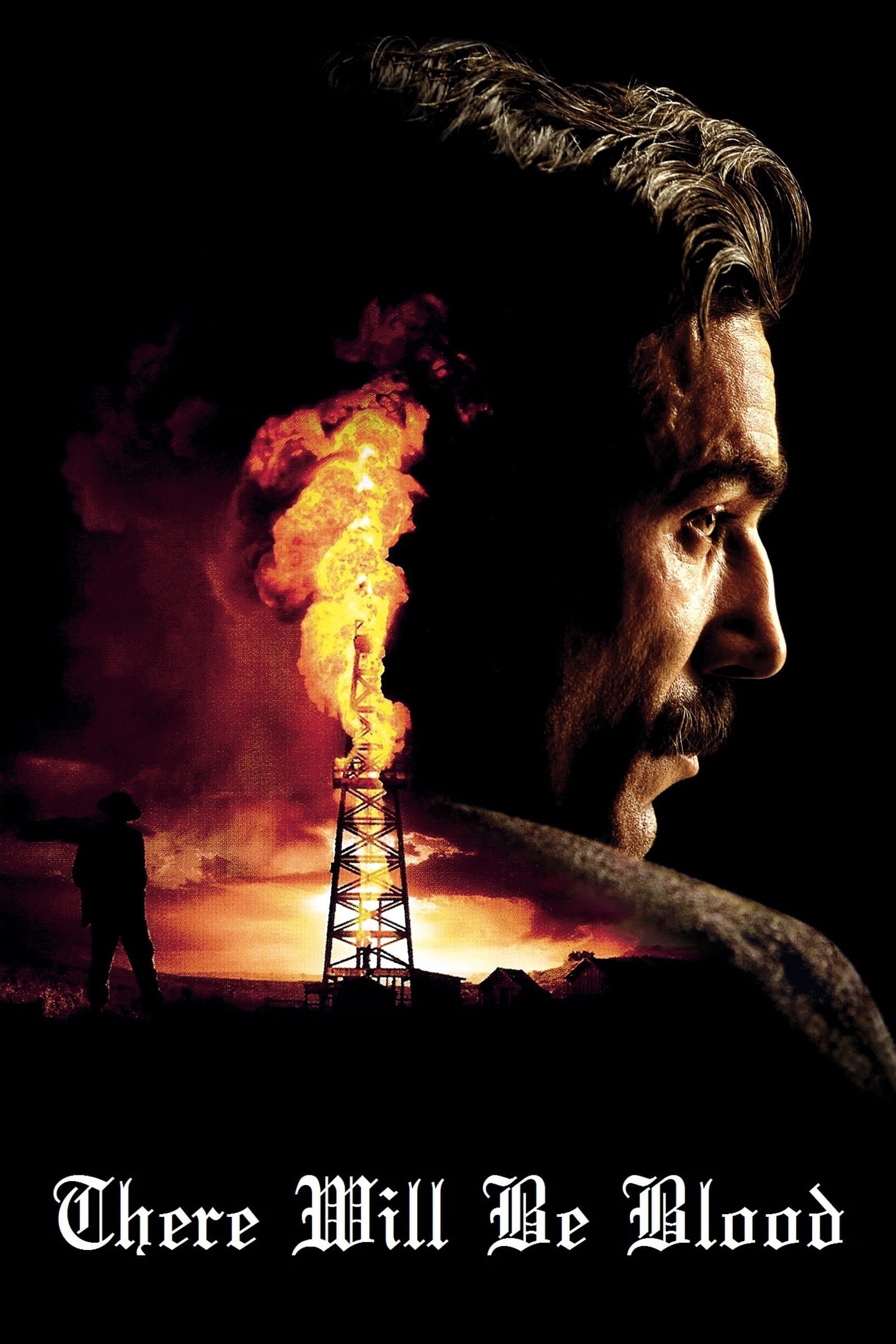
Paul Thomas Anderson drew elements from Upton Sinclair’s novel ‘Oil!’ while crafting a distinct narrative around Daniel Plainview and the growth of a California oil enterprise. The script compresses years of ambition into a progression of set pieces tied to business deals and family ties.
Dialogue is economical and grounded in negotiations, with long scenes that build tension through shifting power dynamics. The film received multiple Academy Award nominations including Adapted Screenplay, and the writing set a template for character driven epics with minimal signposting.
‘Eternal Sunshine of the Spotless Mind’ (2004)
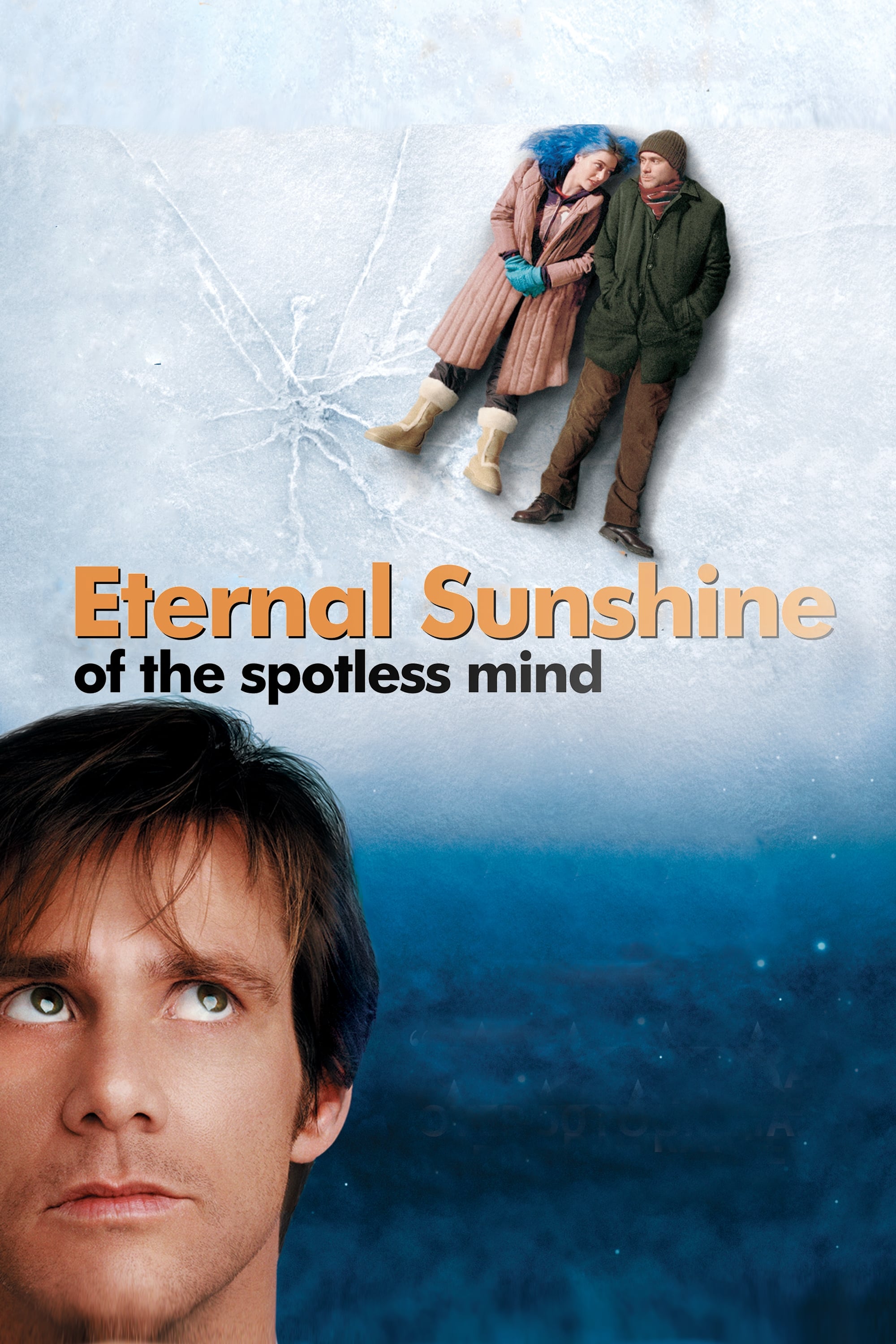
Charlie Kaufman wrote the screenplay from a story by Kaufman, Michel Gondry, and Pierre Bismuth, using memory erasure as a narrative device. The script blends a present day frame with extended sequences inside a collapsing mind, which required detailed stage directions to map shifting locations.
The nonlinear structure is anchored by objective markers that keep the timeline legible as memories are deleted. It won the Academy Award for Original Screenplay and is frequently used in classes to demonstrate how high concept ideas can be organized into clear emotional beats.
‘The Social Network’ (2010)

Aaron Sorkin adapted Ben Mezrich’s book ‘The Accidental Billionaires’ and built the film around deposition rooms that frame the story of a company’s early years. The script intercuts testimony with flashbacks, allowing conflicting accounts to reveal character and motive.
Pacing relies on rapid dialogue balanced with visual cues in the action lines that specify tempo and intention. The screenplay won the Academy Award for Adapted Screenplay and remains a model for legal framing devices that streamline complex business history.
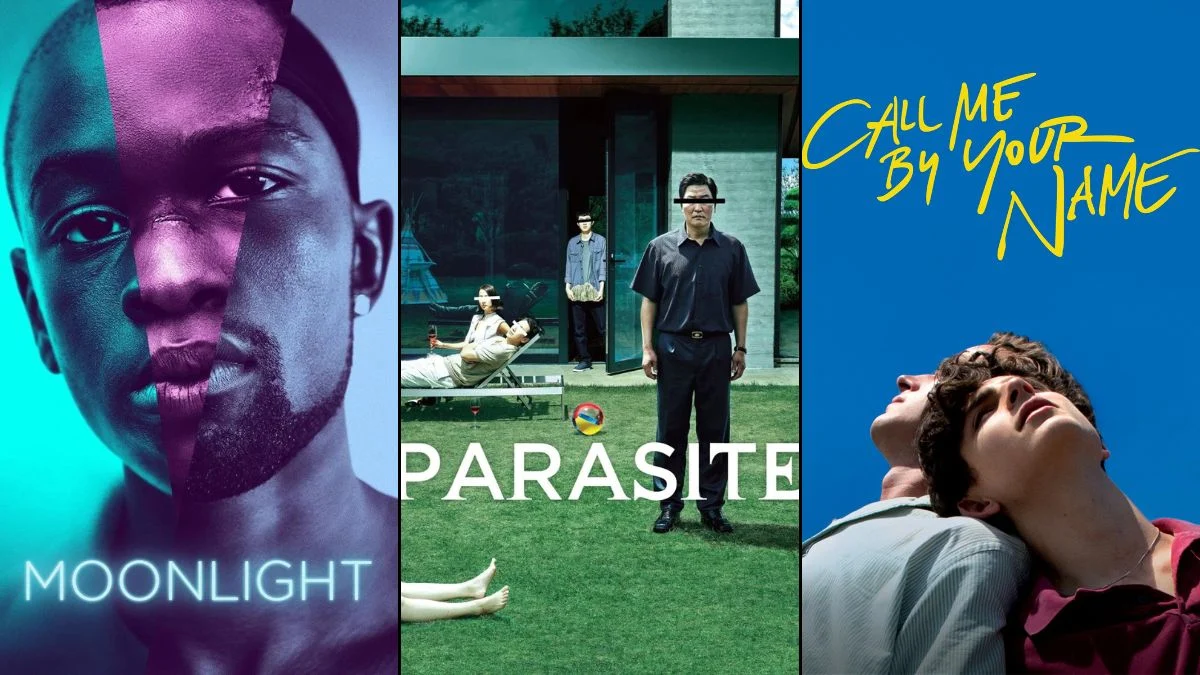
‘Parasite’ (2019)

Bong Joon Ho and Han Jin Won wrote an original screenplay that tracks two families and a plan that escalates through a series of reversals. The script marks clear turns with simple visual objectives that make each beat easy to stage and follow.
Tonally, it shifts from social comedy to thriller while maintaining consistent stakes for every character. It won the Academy Award for Original Screenplay and demonstrates careful planting and payoff across multiple locations within a single house.
‘Get Out’ (2017)
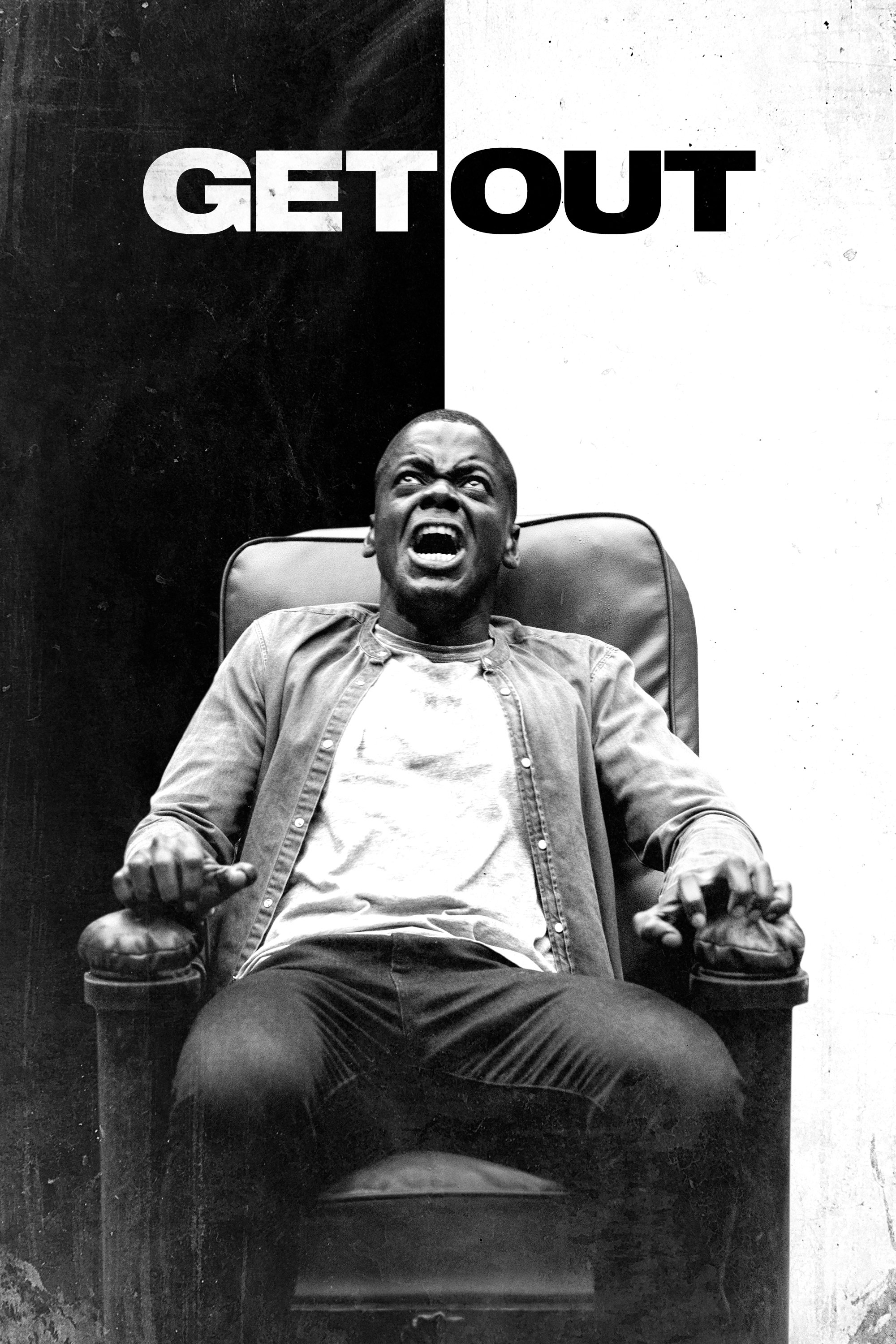
Jordan Peele wrote the screenplay with a structure that moves from meet the parents to a discovery and escape cycle. The script integrates social tension through concrete set pieces that reveal information step by step.
Draft history includes an alternate ending, and the final version balances suspense with clear cause and effect. It won the Academy Award for Original Screenplay and is widely cited for precise foreshadowing that reads cleanly on the page.
‘Moonlight’ (2016)

Barry Jenkins adapted Tarell Alvin McCraney’s play ‘In Moonlight Black Boys Look Blue’ into a three chapter film that follows one character at different ages. Each chapter uses a self contained arc with its own goal and resolution, which lets the story track growth without heavy narration.
Scene descriptions call out physical details and recurring motifs that connect chapters. The screenplay won the Academy Award for Adapted Screenplay and shows how a triptych structure can deliver a complete coming of age story.
‘Mad Max: Fury Road’ (2015)
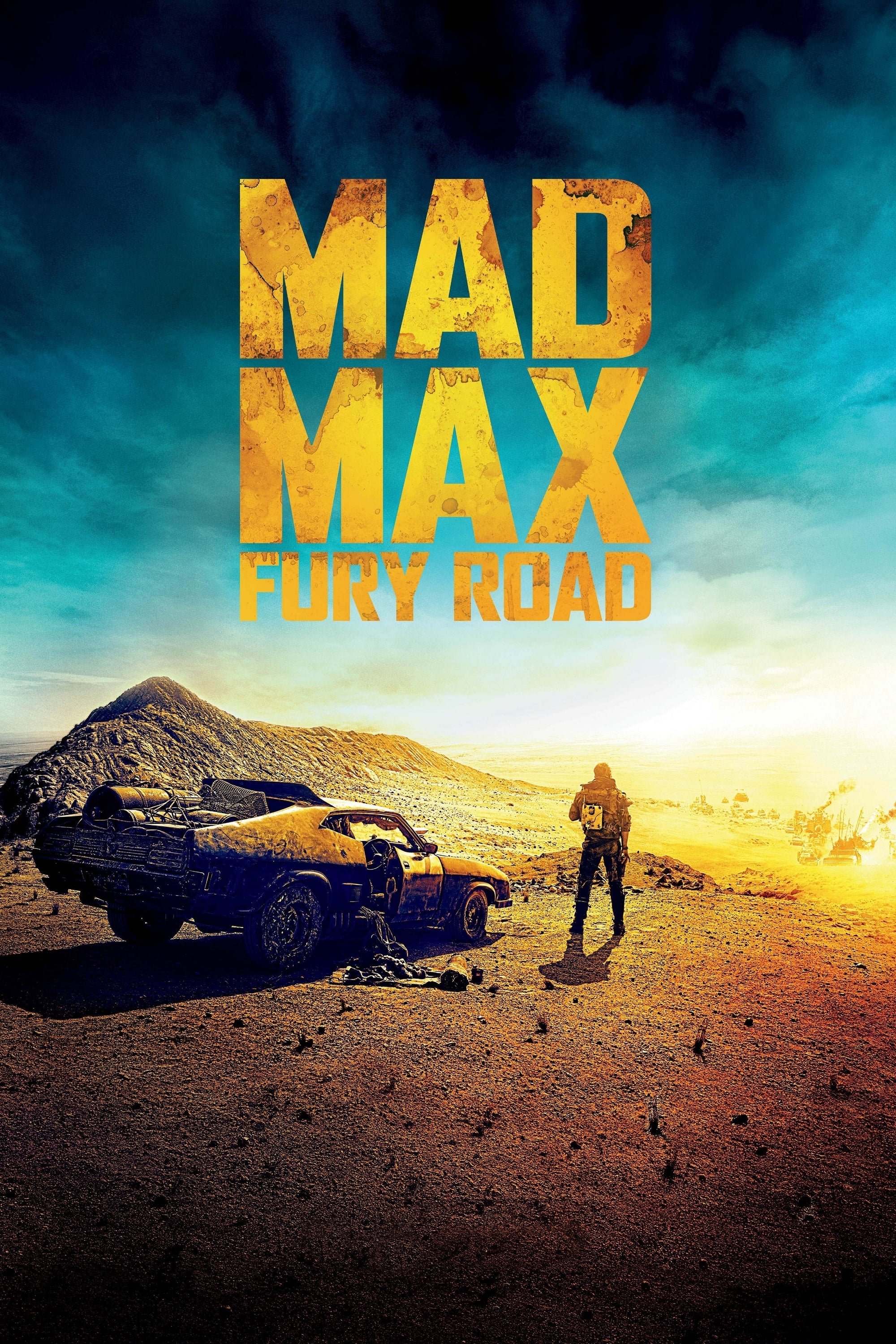
George Miller, Brendan McCarthy, and Nico Lathouris wrote the screenplay after developing extensive storyboards that mapped action and geography. The script uses minimal dialogue and relies on visual objectives such as fuel, water, and distance to define stakes.
Character turns are conveyed through repeated gestures and clear prop based cues rather than long speeches. The writing demonstrates how to sustain character development inside an action chase without breaking momentum.
‘In Bruges’ (2008)
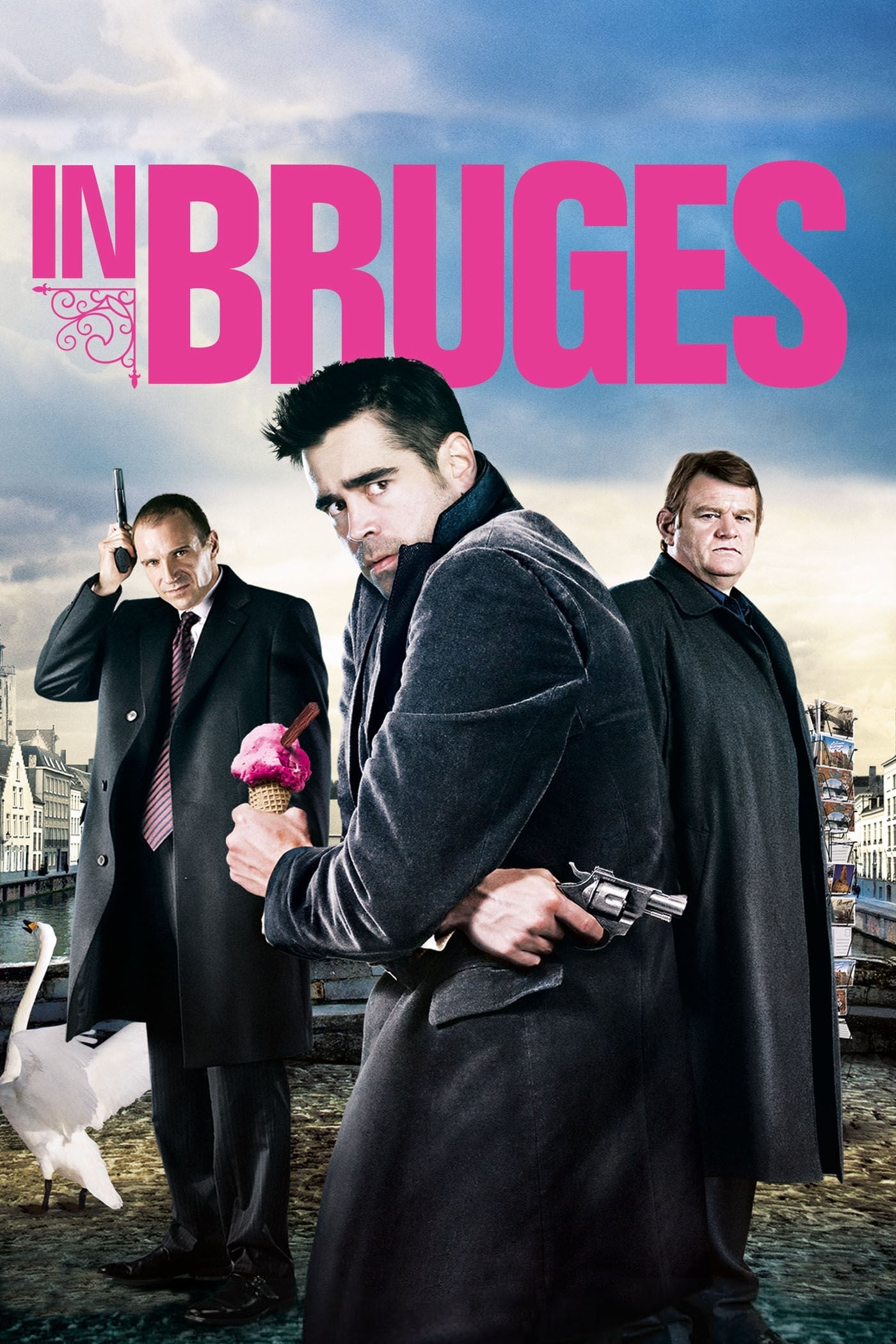
Martin McDonagh’s original screenplay places two hitmen in a medieval city while a botched job brings consequences. The script alternates quiet scenes with sudden bursts of action and uses recurring locations to track rising pressure.
McDonagh’s background in theater shows in the way conversations are built into long exchanges that shift tone while advancing plot. The screenplay won the BAFTA for Original Screenplay and has become a reference for location driven storytelling.
‘Spotlight’ (2015)

Tom McCarthy and Josh Singer wrote the screenplay based on the Boston Globe investigation conducted by the Spotlight team. The script compresses months of reporting into a sequence of interviews, document requests, and editorial meetings.
It avoids composite characters in favor of documented steps, which preserves process on the page. The film won the Academy Award for Original Screenplay, and journalism programs use the script to teach how to dramatize verification without invention.
‘Inside Out’ (2015)
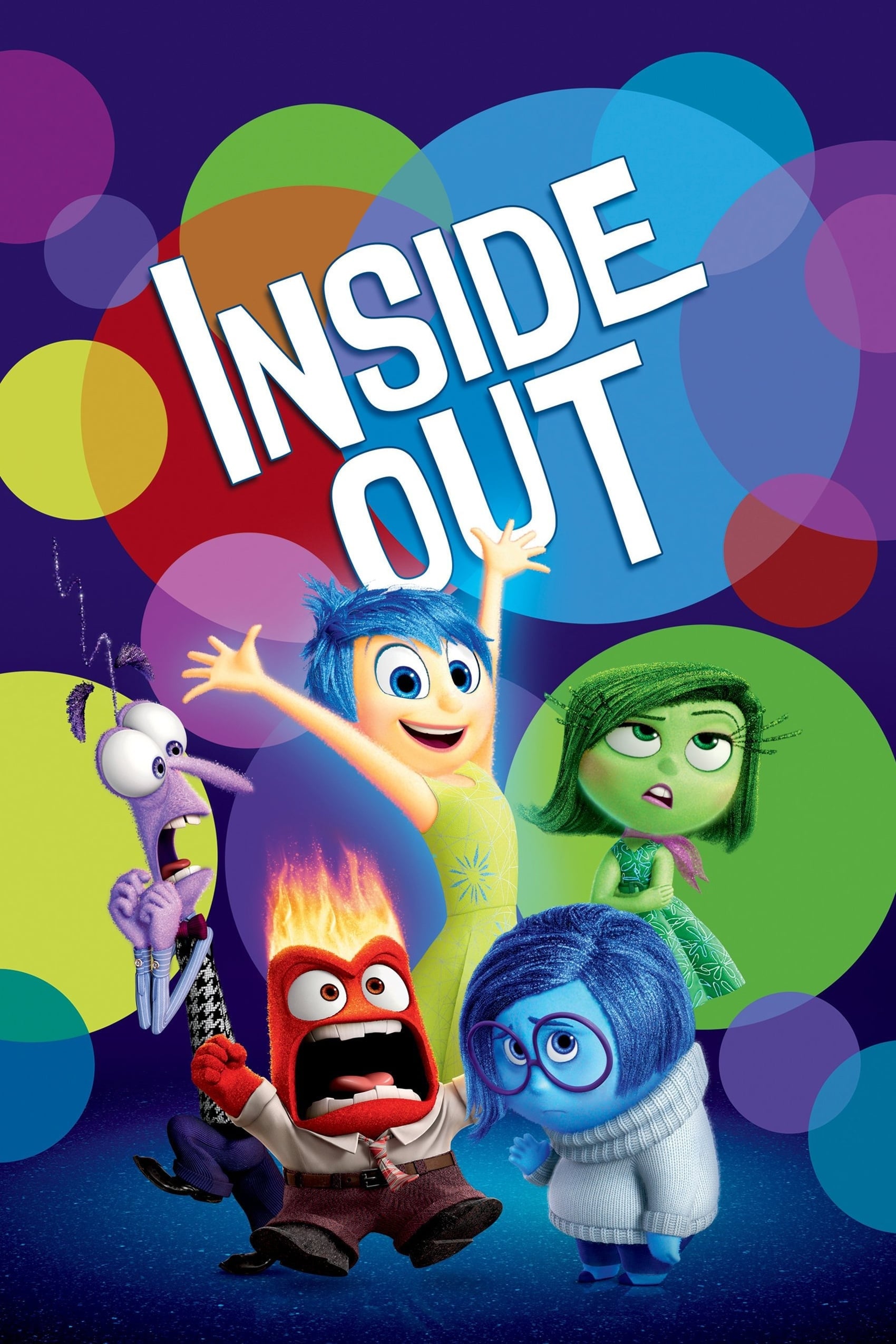
Pete Docter, Meg LeFauve, and Josh Cooley developed a story that personifies emotions inside a child’s mind. The screenplay aligns interior action with exterior life events so that each mission within the mind has a direct effect on behavior.
Consultation with cognitive scientists informed terminology and the architecture of memory, islands of personality, and core memories. The script was nominated for the Academy Award for Original Screenplay and is a common example of world building that supports clear character goals.
‘Whiplash’ (2014)

Damien Chazelle expanded the feature from his own short, which placed the story in the Adapted Screenplay category at major awards. The script maps rehearsals, performances, and confrontations with precise time markers that control tempo.
Each scene tracks a simple objective tied to performance stakes, which keeps tension high without complex subplots. The screenplay’s development path through a short film and festival premiere is often studied as a financing and writing strategy.
‘Before Sunset’ (2004)

Richard Linklater, Julie Delpy, and Ethan Hawke wrote the screenplay based on characters created by Linklater and Kim Krizan. The film unfolds in near real time across a walk and conversation that must end before a flight.
Action lines specify route and time pressure, which provides structure for long dialogue passages. The script was nominated for the Academy Award for Adapted Screenplay and is frequently cited for sustaining tension through a deadline and continuous movement.
‘Call Me by Your Name’ (2017)
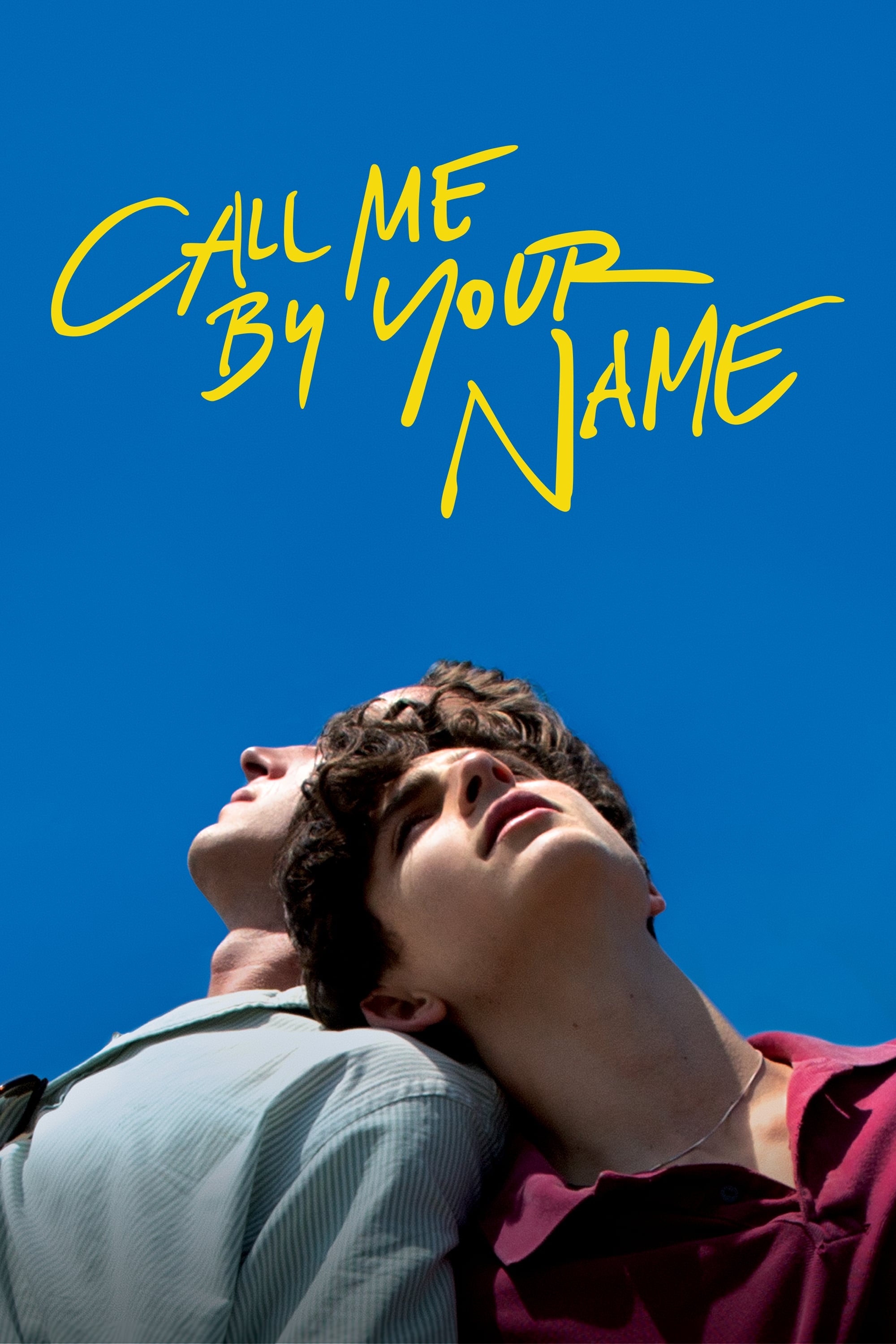
James Ivory adapted André Aciman’s novel with a focus on seasonal routine, family life, and the rhythms of a summer in northern Italy. The script uses letters, artifacts, and music cues to mark shifts in connection.
Ivory’s adaptation won the Academy Award for Adapted Screenplay and demonstrates how to condense interior narration into visual action. The writing preserves cultural and linguistic detail through concise description rather than lengthy explanation.
‘The Favourite’ (2018)
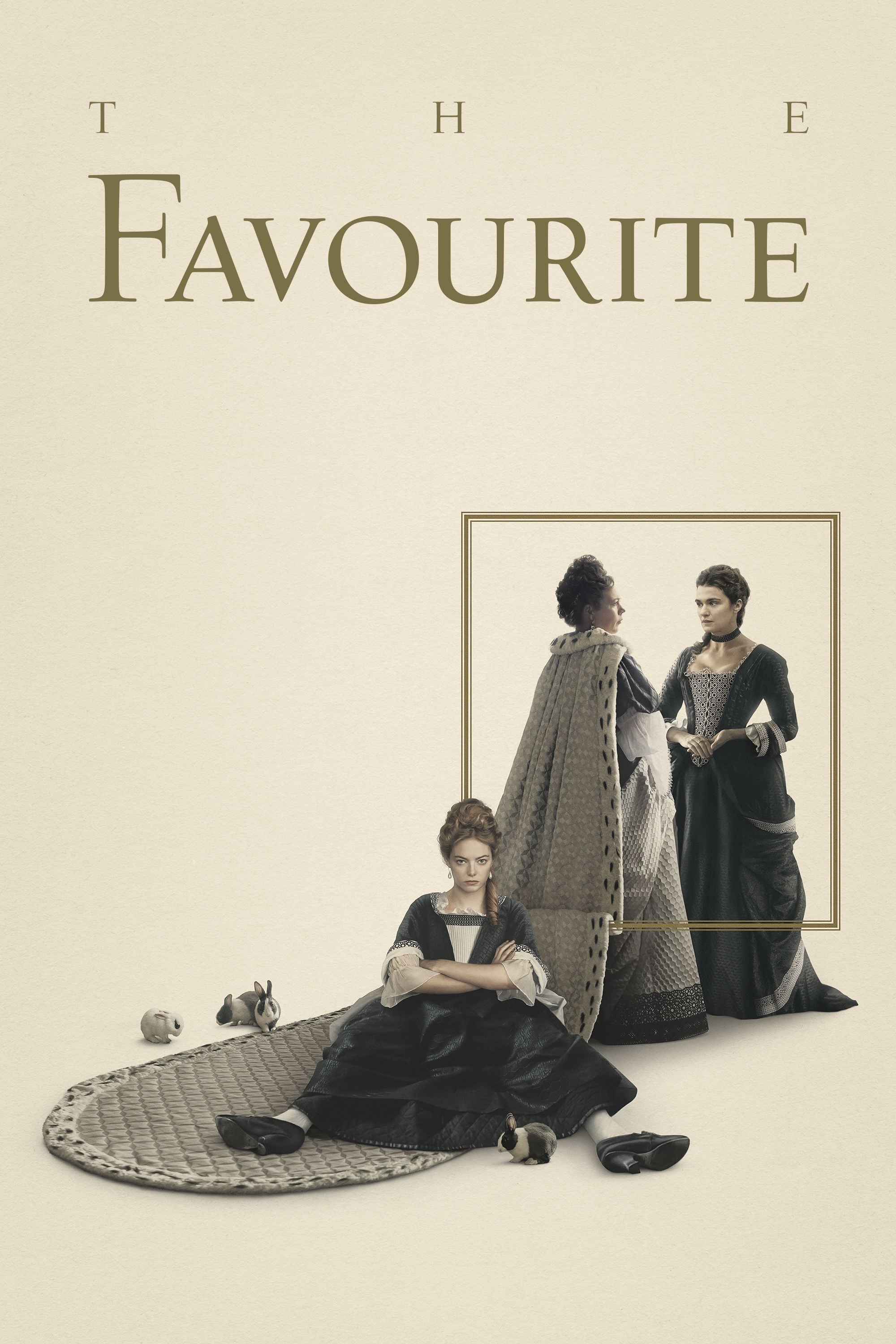
Deborah Davis originated a script about Queen Anne and her court, which Tony McNamara later revised with contemporary rhythms. The screenplay organizes rivalry through clear objectives around proximity, influence, and access to the monarch.
Scenes are arranged as contests that turn on small wins and losses, which helps track shifting alliances. The script was nominated for the Academy Award for Original Screenplay and is widely referenced for period storytelling with sharply defined games.
‘The Grand Budapest Hotel’ (2014)
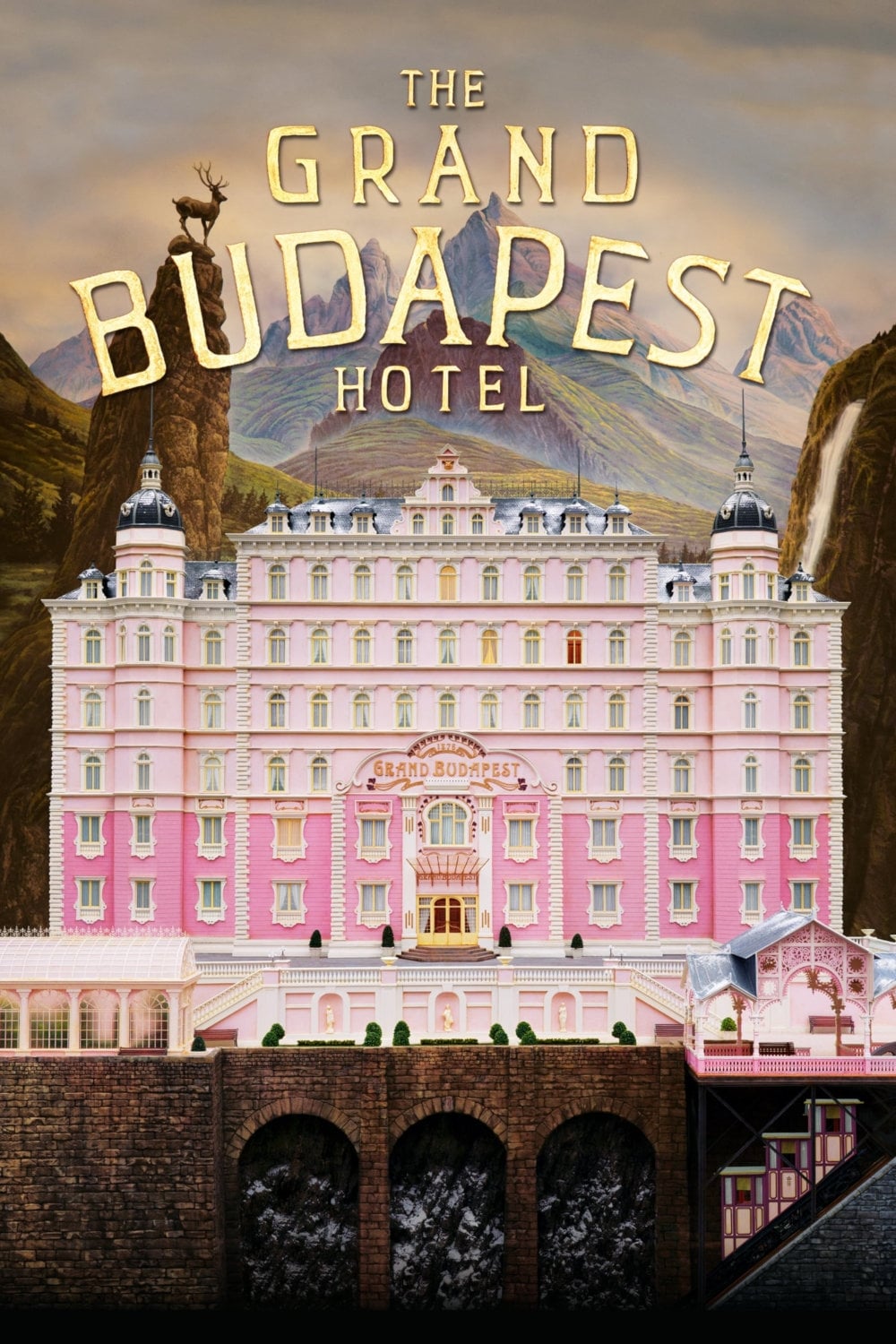
Wes Anderson and Hugo Guinness wrote an original screenplay inspired by writings of Stefan Zweig. The script uses a story within a story framework that nests multiple narrators to move across time.
Precise stage directions define props and choreography, which supports elaborate ensembles. The screenplay was nominated for the Academy Award for Original Screenplay and showcases multi level framing that stays readable.
‘Lady Bird’ (2017)

Greta Gerwig wrote an original screenplay set in Sacramento with a senior year timeline that follows milestones across school, family, and first relationships. The script uses clear date anchors like holidays and admissions deadlines to keep structure tight.
Scenes balance conflict with small reconciliations that move relationships forward without repeating beats. The film earned an Academy Award nomination for Original Screenplay and is often discussed for efficient scene work that covers character history in brief exchanges.
‘Manchester by the Sea’ (2016)
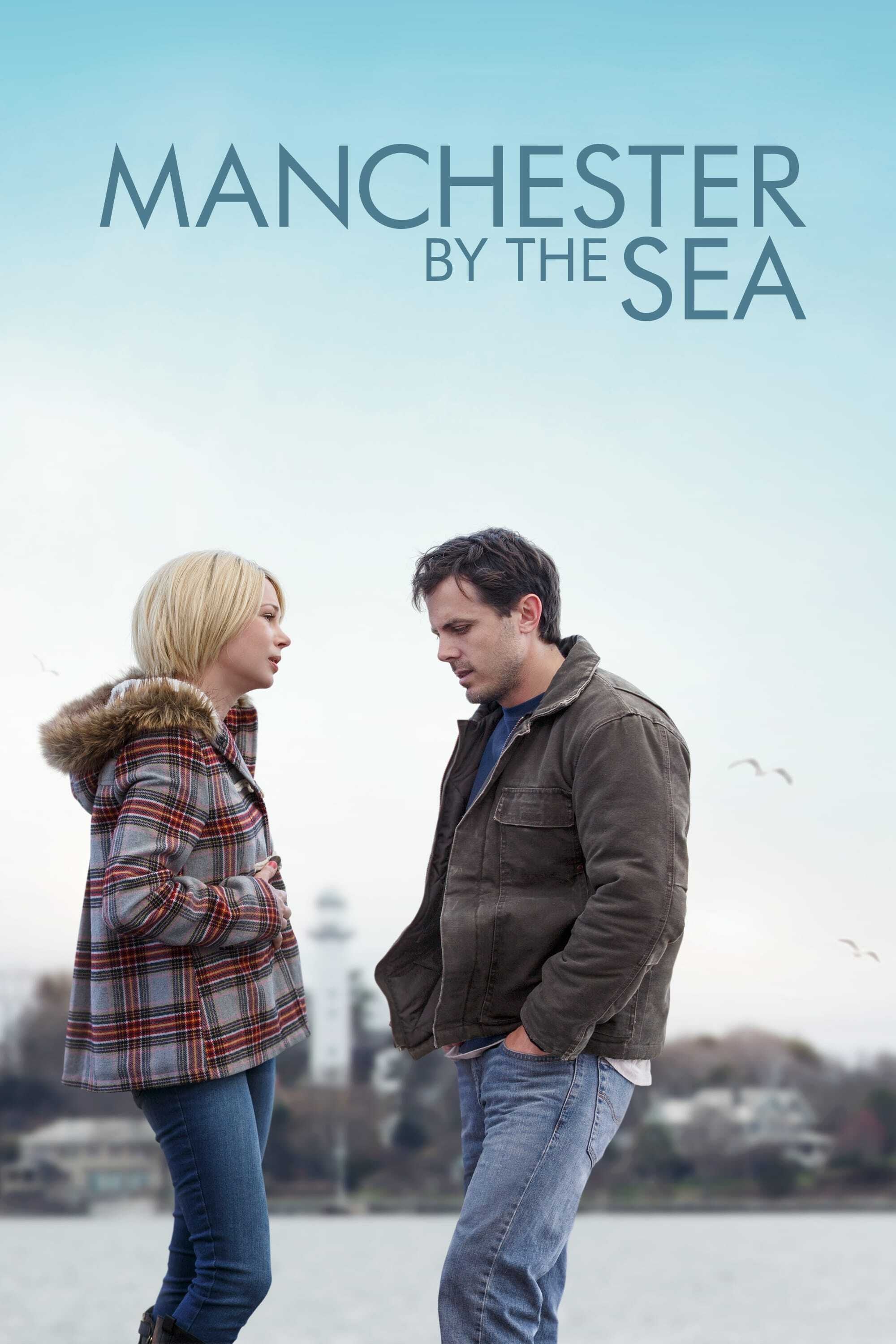
Kenneth Lonergan wrote and directed a screenplay that reveals backstory through strategically placed flashbacks. The script times these reveals to shift understanding of present day choices without withholding information for shock.
Dialogue captures regional speech and workplace routine, and action lines describe physical tasks that underline character state. The screenplay won the Academy Award for Original Screenplay and serves as a case study in non chronological structure.
‘The Departed’ (2006)
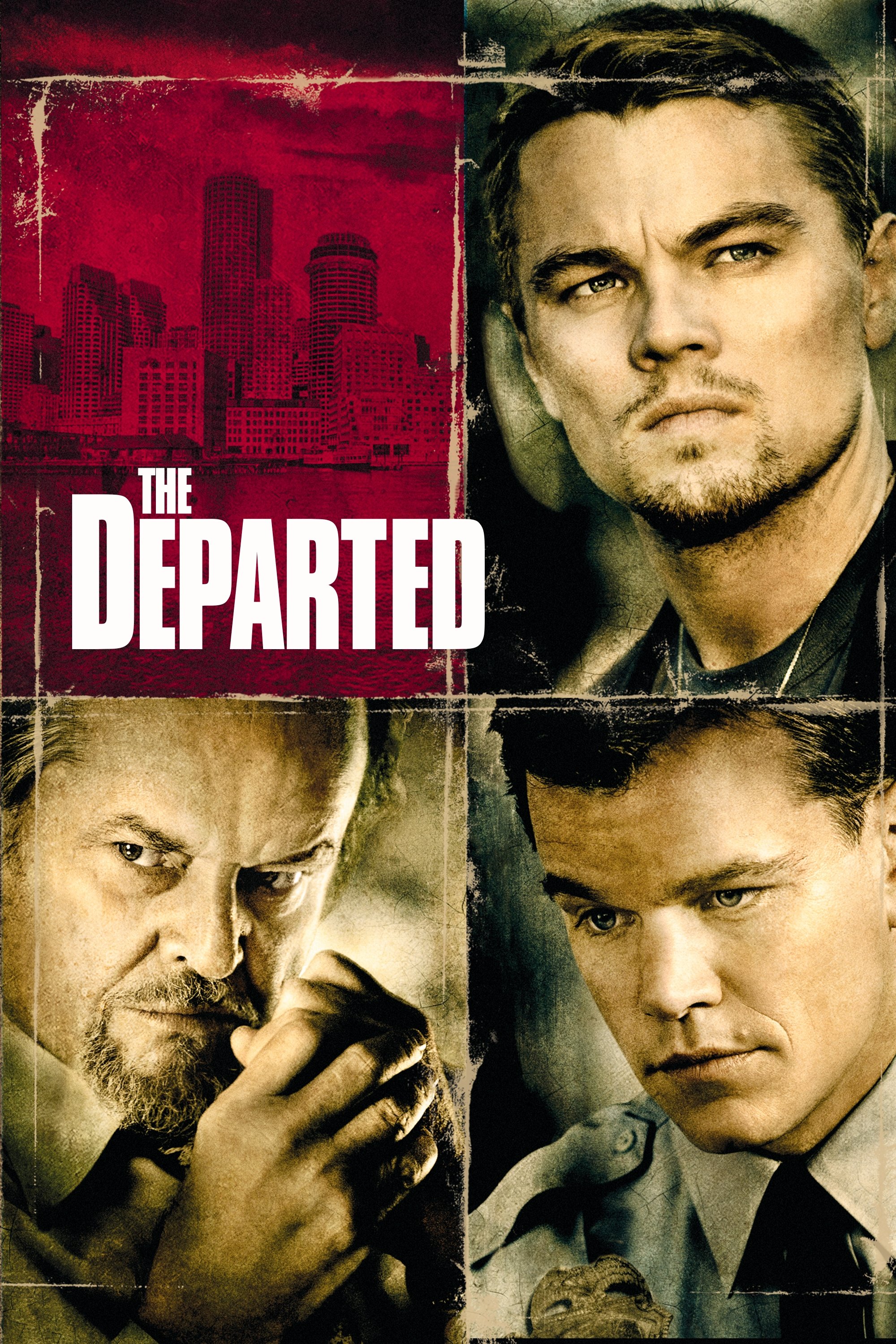
William Monahan adapted the Hong Kong film ‘Infernal Affairs’ and relocated the story to Boston. The script maps parallel undercover operations with mirrored scenes that make comparisons clear.
It adds specific institutional details and local alliances to reframe the stakes. The screenplay won the Academy Award for Adapted Screenplay and shows how to translate plot architecture across cultures while building new context.
‘Pan’s Labyrinth’ (2006)
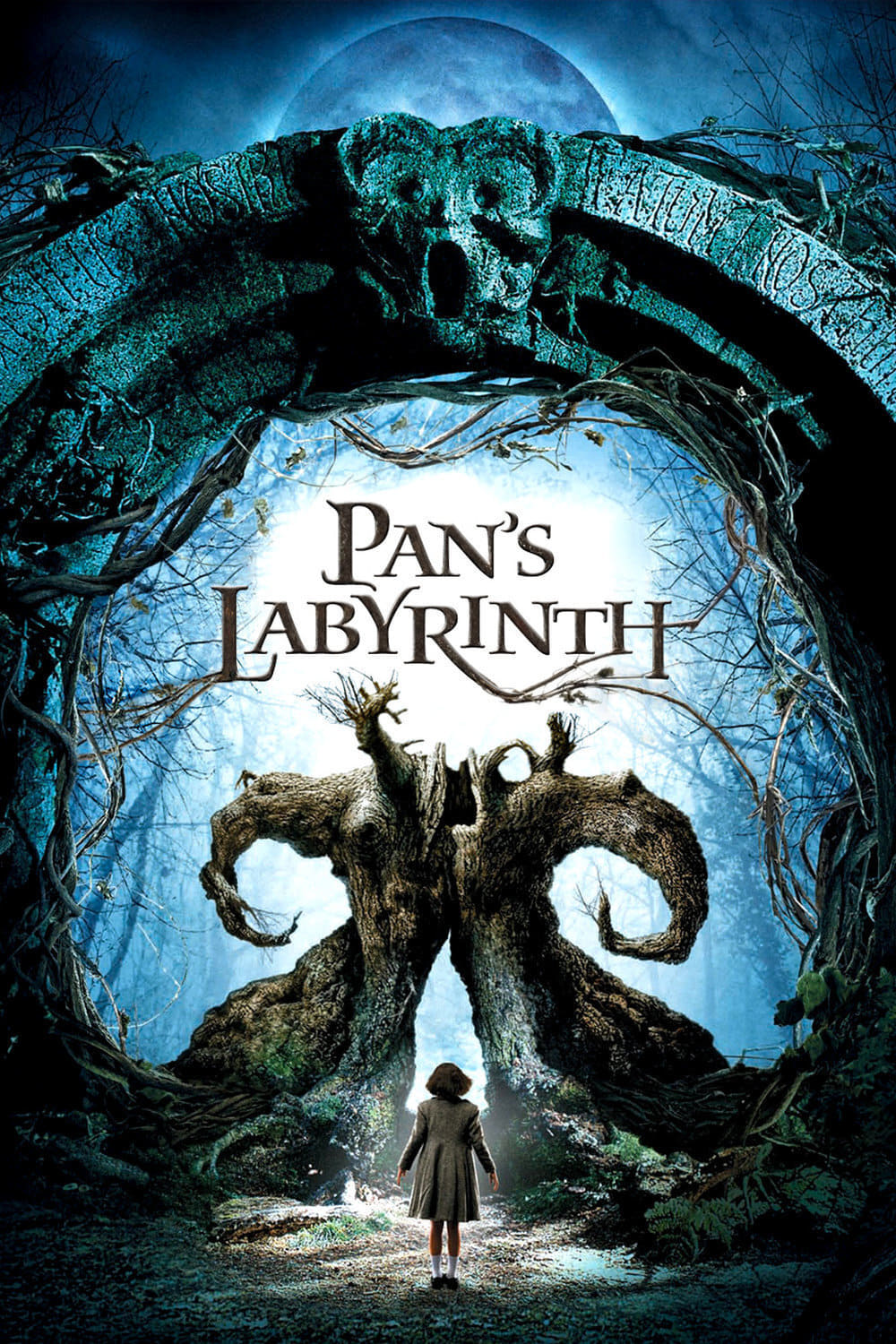
Guillermo del Toro wrote an original screenplay that intertwines a fairy tale quest with life under a military post. The script alternates between two worlds and assigns rules to each, which keeps transitions legible.
Motifs such as keys, chalk, and food signal tasks and consequences, and the writing sets strict conditions for success. It received an Academy Award nomination for Original Screenplay and remains a model for parallel narrative design.
‘The Lives of Others’ (2006)
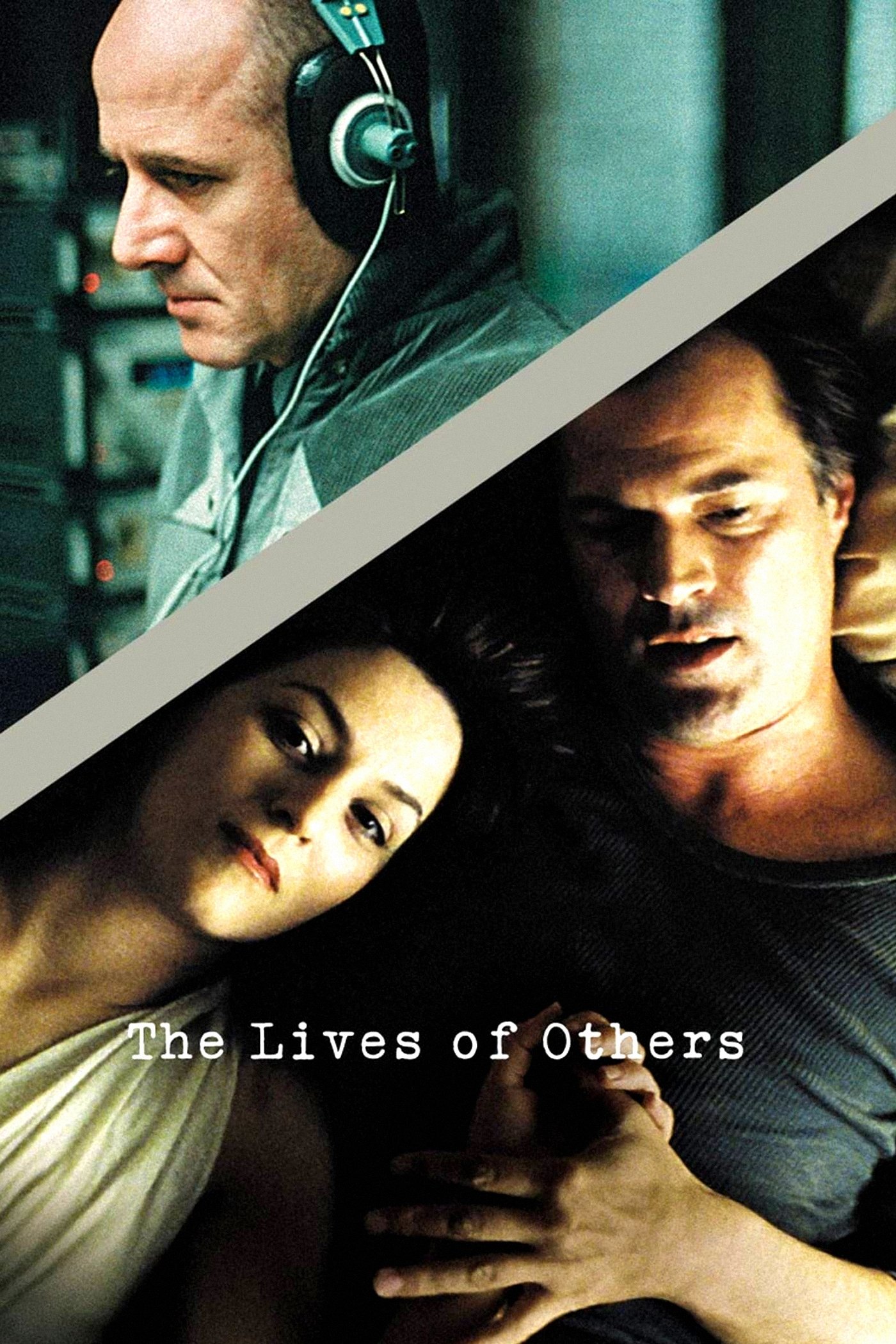
Florian Henckel von Donnersmarck wrote and directed a screenplay set in East Germany that tracks surveillance and its effects. Research into Stasi files and procedures informs the specific methods shown on screen.
The script builds suspense through routine and paperwork, with attention to permissions, reports, and audits. It won the Academy Award for Best Foreign Language Film, and the writing is frequently cited for procedural accuracy within a character driven story.
‘Her’ (2013)
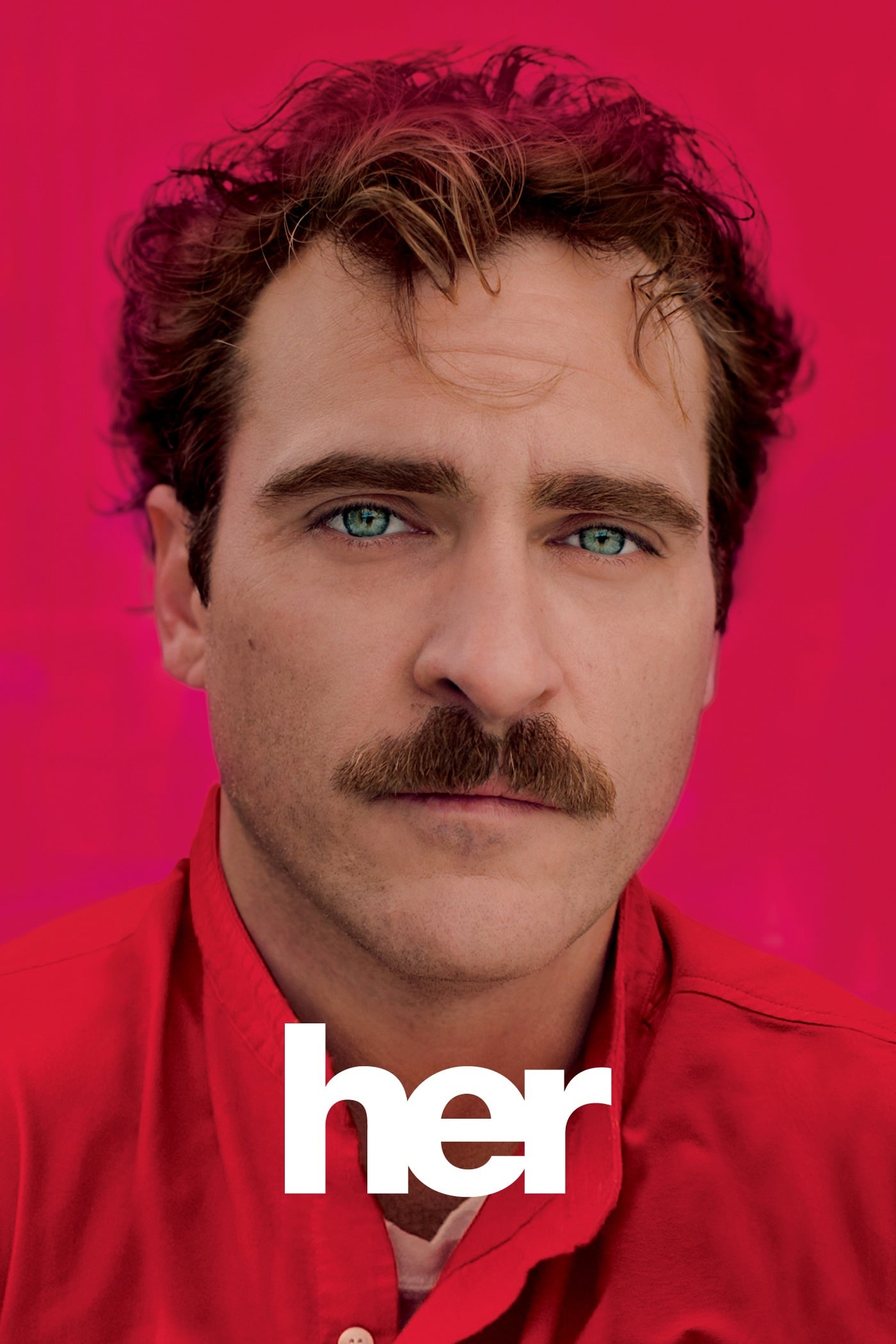
Spike Jonze wrote an original screenplay that explores a relationship between a man and an operating system. The script uses letters, voice messages, and conversations to make intangible interactions readable.
World rules are kept simple so the focus remains on behavior and choice. The screenplay won the Academy Award for Original Screenplay and is a key example of speculative storytelling grounded in everyday detail.
‘The Wolf of Wall Street’ (2013)
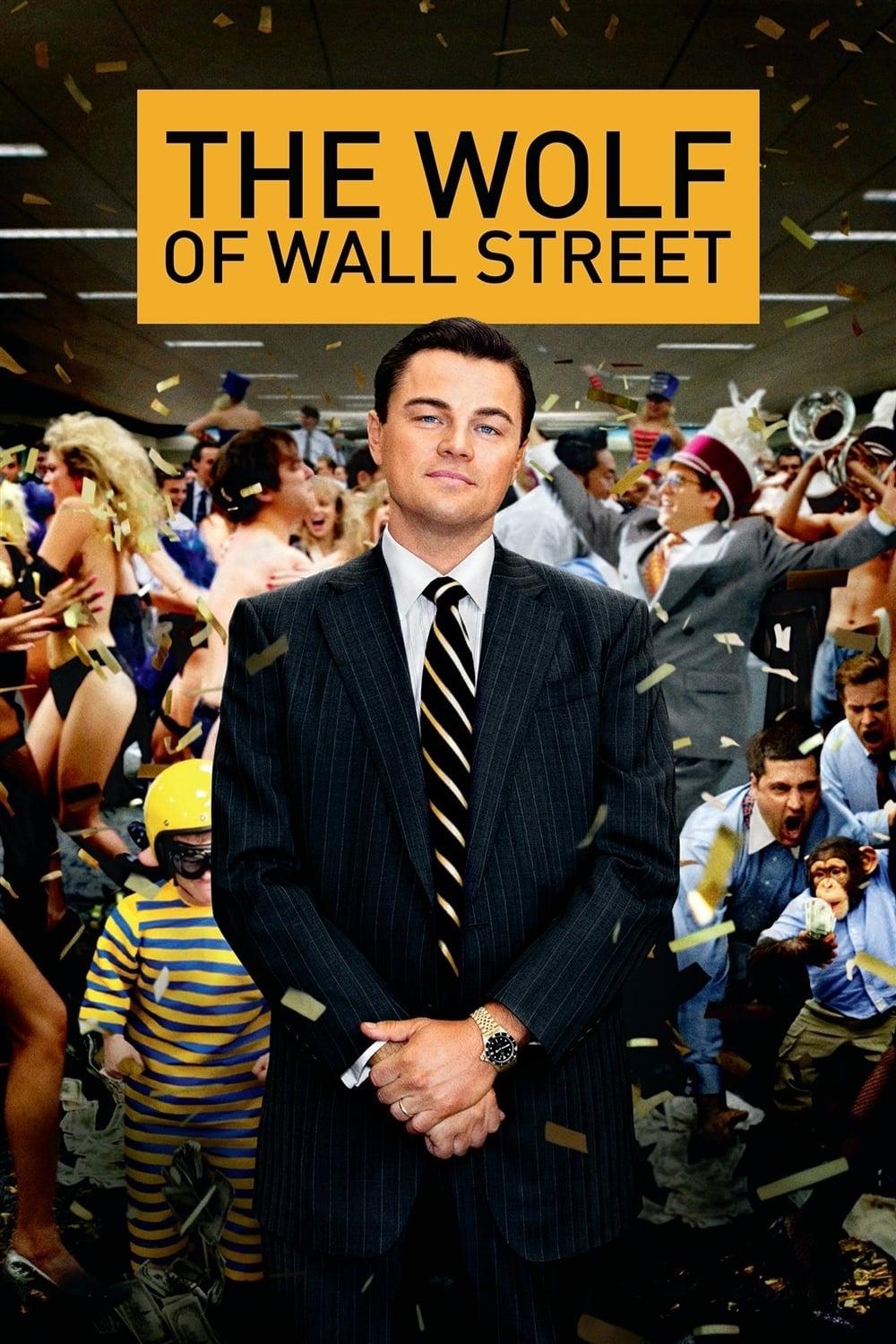
Terence Winter adapted Jordan Belfort’s memoir and organized the rise and fall into chapters tied to schemes and investigations. The script employs voiceover and occasional direct address to compress complex financial activity.
Scenes are built around demonstrations of methods and their consequences rather than abstract explanation. The screenplay was nominated for the Academy Award for Adapted Screenplay and remains a reference for adapting first person accounts.
‘Slumdog Millionaire’ (2008)
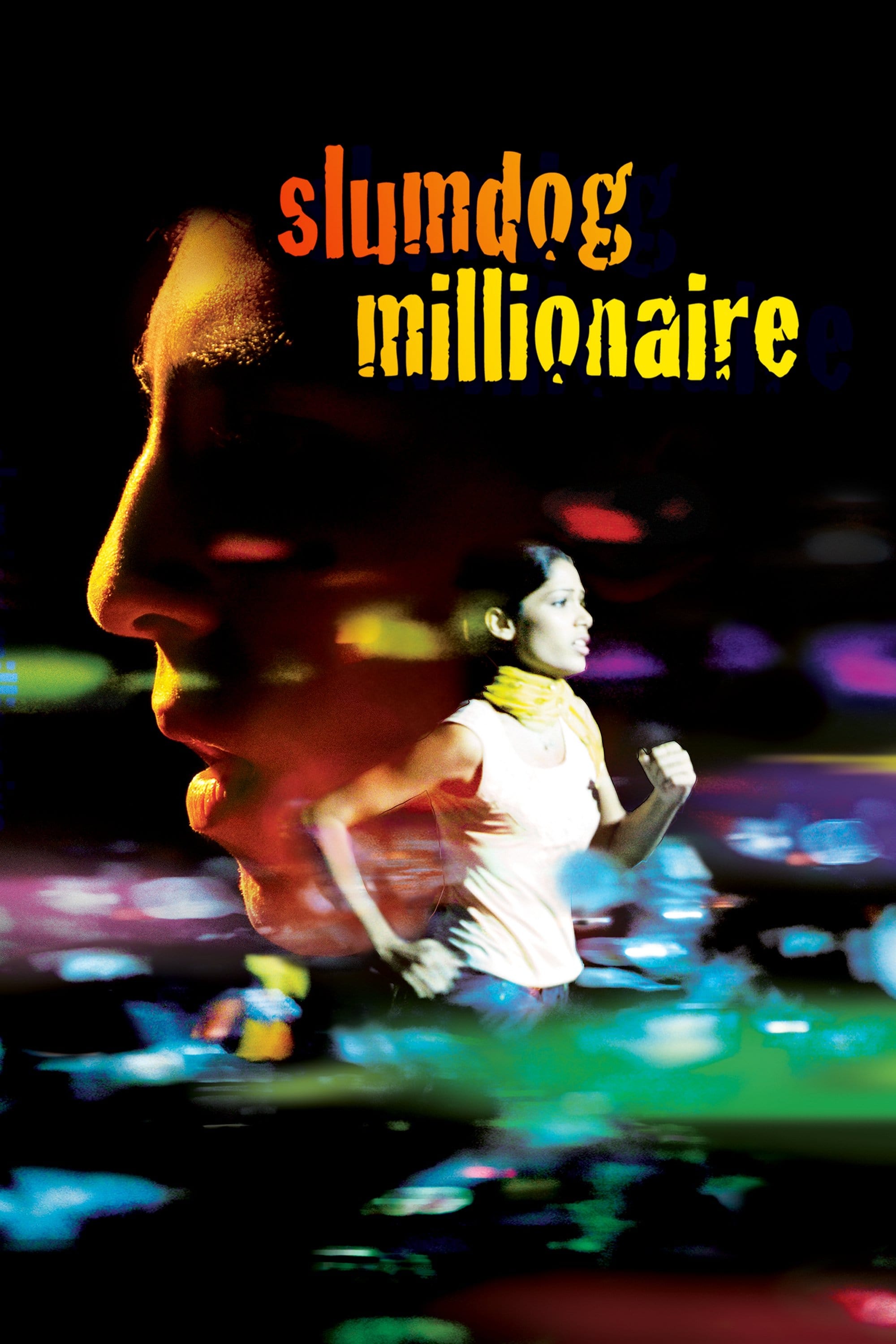
Simon Beaufoy adapted Vikas Swarup’s novel ‘Q and A’ and used a game show as the spine for a life story. Each question triggers a flashback that provides the answer, which creates a clear episodic structure.
The film won the Academy Award for Adapted Screenplay, and the writing balances present tense suspense with past events that supply knowledge. The approach is often cited as a practical application of trigger based flashbacks.
‘A Separation’ (2011)

Asghar Farhadi wrote and directed a screenplay that begins with a simple family decision and expands into legal and moral complications. The script lays out facts with careful chronology and uses repeated testimony to explore conflicting accounts.
Character motivations are revealed through actions that carry verifiable consequences, which keeps the drama grounded. The film won the Academy Award for Best Foreign Language Film, and the screenplay is widely taught for its precise layering of cause and effect.
Share your own picks for standout twenty first century screenplays in the comments so we can compare notes and keep the conversation going.