‘Biosphere’ Ending Explained: What the Bowling Ball and the Green Light Actually Mean

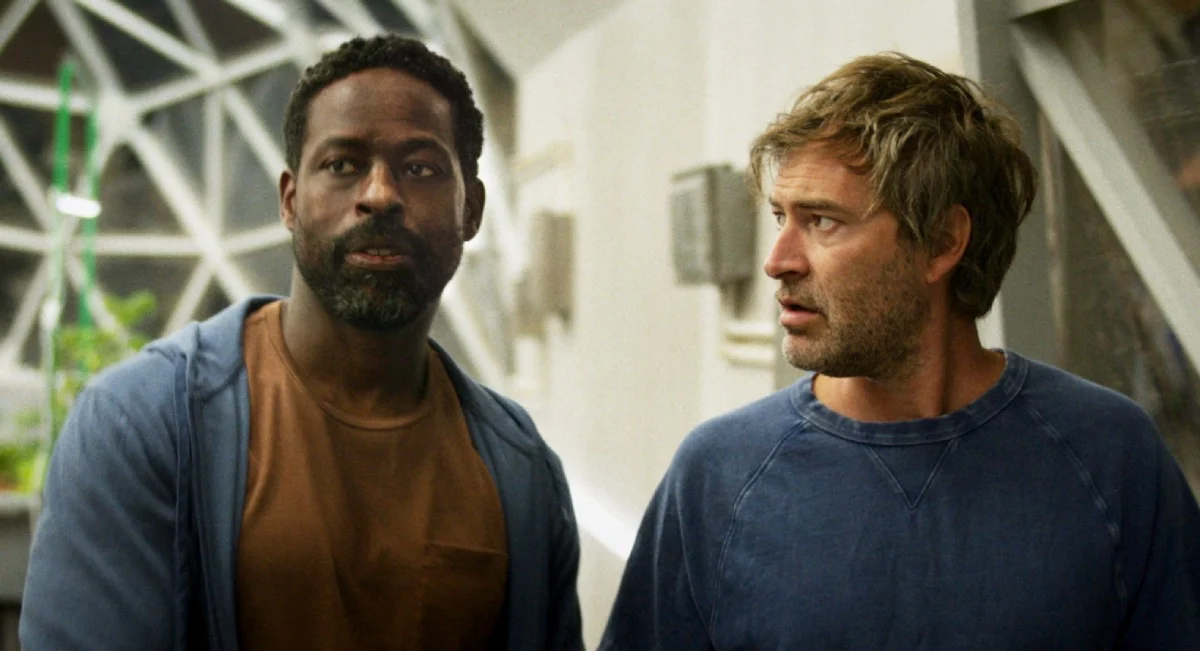

Mel Eslyn’s post apocalyptic dramedy ‘Biosphere’ has spent the past few years quietly gathering a devoted following of viewers who finish the film and immediately search for answers. The story follows two childhood friends riding out the end of the world inside a sealed dome, and its final moments leave just enough unexplained that audiences keep circling back to parse what really happened.
The film centers on Billy, a former President of the United States, and Ray, a scientist who once served as his adviser, as they navigate life as the only known survivors of a global apocalypse. This piece breaks down what happens in the dome, what the strange final images represent, and why so many viewers have called the ending both ambiguous and oddly hopeful.
What Happens Inside Billy and Ray’s Dome in ‘Biosphere’
Carrying guilt over his perceived role in causing the apocalypse, Billy finds refuge alongside Ray inside a protective dome that Ray built to shield them both from the ruined world outside. Life inside that shelter is small and repetitive by design, which is part of what gives the film its dry, melancholic sense of humor.
The two men fill their days jogging, rewatching ‘Lethal Weapon,’ and arguing about the Super Mario Bros video game, the kind of mundane routines that stand in sharp contrast to the fact that they are the last two people on Earth. That domestic rhythm is undercut by a fragile food system built around a small fish pond that keeps them alive.
Ray eventually admits the real danger they face, explaining that the fish in their pond will die once it stops being self sustaining, and that the same fate applies to the two of them within their own closed ecosystem. The film uses that pond as a quiet metaphor for the fragility of their entire situation, and losing one of the fish sends a visible shock through both men.
When Diane, the only remaining female fish, ends up eaten rather than surviving, the weight of dwindling time starts pressing harder on Billy and Ray’s already strained nerves. That loss becomes a turning point that pushes both characters toward the emotional confrontations that define the back half of the movie.
Billy’s Transformation and the Meaning Behind the Green Light
As the dome’s situation grows more dire, ‘Biosphere’ introduces a genuinely strange physical development for Billy that many viewers did not see coming. His unusual pregnancy, paired with an unexplained green light that appears in the sky above them, functions as a symbol of life’s unpredictable persistence even in a supposedly dead world.
The two men also use this stretch of the film to work through old wounds tied to Billy’s time in office. Ray confronts Billy about his refusal to face reality during his presidency, arguing that the same ignorance that shaped his time in politics is resurfacing now that the changes are happening to his own body. The exchange gets personal fast, and Billy storms off rather than sit with the accusation.
Ray goes further while trying to coax Billy out of isolation, revealing that Billy did not even realize he was a registered Democrat, a detail that underscores just how disconnected Billy had become from his own convictions. It is a small, almost absurd revelation, but it lands as one of the film’s sharpest jabs at political complacency.
A bright green light that appears to move slowly closer becomes a recurring mystery for both men, and true to the film’s tone, the story never offers a definitive explanation for what it actually is. That refusal to explain everything is intentional, and it sets up the ambiguity that defines the closing minutes.
The Bowling Ball and What the Final Thud Represents
The most talked about image in ‘Biosphere’ is the bowling ball, a recurring bit that Billy describes earlier in the film as a kind of magic trick where a ball seems to drop out of nowhere. That same trick resurfaces at the very end, when Ray attempts to replicate it as the two men face what looks like their final moments after the dome itself is compromised.
With Ray finally out of answers and ready to give in to hopelessness, it is Billy who steps forward as the believer, picking up a notepad and drawing the bowling ball into existence as an act of will. The role reversal matters, since Ray had spent most of the film as the rational one keeping Billy grounded.
How do you feel about the bowling ball ending?
The audience never actually sees the bowling ball fall, but the film cuts to black on the sound of it hitting the ground, a choice that leaves the moment feeling sudden and quietly devastating rather than triumphant. That restraint is very much the point, since the film has never been interested in tidy literal answers.
The thud is generally read as a stand in for the necessity of hope during difficult circumstances, and several critics have noted how closely Billy and Ray’s isolation echoes the experience of pandemic era quarantine. Whether or not that comparison was intentional on the filmmakers’ part, it has clearly shaped how audiences have connected with the material.
How Critics Have Interpreted the Ending of ‘Biosphere’
Reactions to the finale have been notably split, with some viewers embracing the ambiguity and others wanting firmer answers. Some critics have framed the ending as an allegory for facing down the existential threat of climate change, while others see it as applicable to any number of looming threats, and most agree the conclusion lands as ambiguous yet ultimately optimistic.
Speaking with Inverse, the director and producer of ‘Biosphere’ addressed the polarizing nature of the ending directly, acknowledging that the mystery of the green light was never meant to be resolved for the audience. That confirmation from the filmmakers themselves has helped settle some of the online debate over whether a deeper answer was intentionally withheld.
Other write ups have emphasized that the film’s closing note is less about literal explanation and more about the idea that hope and transformation remain possible even in the most unlikely and absurd conditions. That reading fits the film’s broader tone, which mixes genuine dread with an oddball sense of humor throughout.
Billy’s arc from denial to belief is treated as the emotional core of the finale, with the film suggesting that even the person who spent the story avoiding hard truths can end up carrying hope for someone else when it matters most. That shift from skepticism to faith, however small and strange the gesture, is what most interpretations of the ending keep coming back to.
For a film built almost entirely around two men, a dome, and a handful of fish, ‘Biosphere’ has left an unusually large footprint in conversations about how stories can end without spelling everything out. Given how differently people have read that final thud, it seems worth asking what Billy and Ray’s story left you believing about hope, and whether you think that bowling ball was ever meant to be real.