


Bob Iger Confirms Disney Is Using AI in Every Division: “Over Time It Will Become An Important Component Of How Our Company Operates”

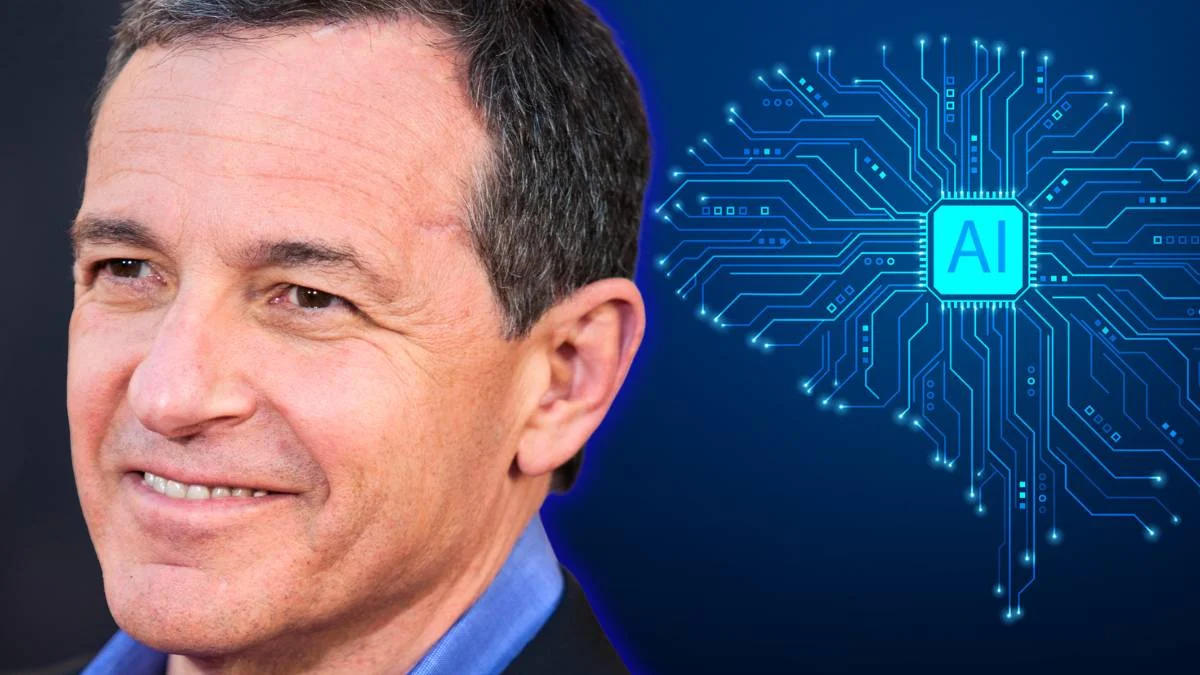


Disney CEO Bob Iger says artificial intelligence is already being used across every part of Disney’s business, and he believes it will play an even bigger role in the company’s future.
Speaking with CNBC, Iger confirmed that he recently joined a meeting at the White House with President Trump’s AI team to discuss the growing impact of the technology.
“We did have a meeting in the White House, the president’s AI team, and we were largely talking about issues related to intellectual property protection,” Iger explained.
“But we also made it a point of saying that Disney believes that AI will be an important part of our future. We’re already using AI in every one of our businesses, and we believe that over time it will become an important component of how our company operates.” He said.
Iger also stressed that while Disney is embracing AI, the company remains cautious about how it’s applied. “It’s important that as we migrate to a new world when it comes to technology, that we continue to respect the creative community and also be mindful of the impact it can have on our intellectual properties, which you know is essentially the core of our company and what we do and who we are,” he told CNBC.
The discussion comes as the White House prepares to release its AI action plan, which could affect how copyright law applies to training AI models. Iger’s comments reflect Disney’s concern about protecting its characters and stories while still finding ways to use AI responsibly inside the company.
Disney CEO Bob Iger has been talking with the White House about growing concerns over artificial intelligence and how it could misuse Disney’s characters and stories.
According to people familiar with the meeting, Iger and Disney’s legal chief Horacio Gutierrez met with officials to raise red flags about AI models possibly copying Disney’s intellectual property and using it in harmful or inappropriate ways.
ctors, writers, and studios are worried that if AI tools are allowed to freely use movies, shows, or performances, their value could disappear.
The tension has already led to lawsuits. Disney and Universal recently sued the AI company Midjourney, accusing it of using their copyrighted images without permission to train its AI image generator. Midjourney has not responded publicly to the claims.
This legal and political battle is unfolding in both courtrooms and government offices. A lot of money is on the line, along with the rules that could shape how AI develops in the U.S. in the future. Some people in entertainment fear the changes are moving too fast to stop.
“They’re fighting over who’s going to control and dictate the next generation of technological development,” said Joshua Levine, a research fellow at the Foundation for American Innovation.
The White House has heard from both sides but hasn’t decided what direction to take. Officials say the issue is complicated, and there’s a risk in appearing to favor tech companies or creative industries too strongly. The final version of the action plan is expected soon.
Meanwhile, the courts have started weighing in. Judges recently gave partial wins to tech companies like Meta and Anthropic. In two separate cases, judges said using copyrighted content to train AI models can count as “fair use” when the result is something totally different from the original.
But that doesn’t mean the companies are in the clear. In one ruling, Anthropic was told it will have to go to trial over whether using pirated content for training is legal. In the Meta case, the judge also made it clear that future lawsuits could go the other way if creators can prove that AI harms their work or industry.
David Sacks, a White House AI adviser, said on his podcast that “it’s very important that we end up with a sensible fair use definition like the one the judge has come up with in this Anthropic case because otherwise we will lose the AI race to China.”
There are still a lot of open questions, especially about whether artists should get paid when AI systems use their work. Keith Kupferschmid, the CEO of the Copyright Alliance, said these early cases could cause confusion for both copyright owners and AI companies.
AI Progress, a group representing tech giants like Meta, Google, and Microsoft, is expected to meet with administration officials soon. During a separate meeting with the Motion Picture Association, Sriram Krishnan, a senior White House adviser on AI, said his main goal is making sure the U.S. wins the AI race.
The U.S. intelligence community has also been involved. Officials met with companies like Meta to discuss how legal uncertainty around AI and copyright could slow down national security projects that depend on these new technologies.
Earlier this year, President Trump dismissed the librarian of Congress, who oversees the Copyright Office. According to sources, the decision was partly due to concerns over a coming report that was believed to favor copyright holders. A draft of that report came out the next day. While the report doesn’t carry legal weight, courts often refer to it.
The draft said whether AI training is legal depends on whether the AI creates something that looks or sounds too similar to the original work. It also said it matters if the content was pirated or if the AI output hurts the original creator’s business. One judge recently echoed that point, suggesting future plaintiffs could win cases by proving AI-generated content damages their market.
This tug-of-war between creators and tech companies is still heating up, with no clear end in sight.
For Disney, the challenge is balancing innovation with protection. Iger made it clear that the company sees AI as a tool that can shape its future, but only if it respects both the creators who make the work and the intellectual property that defines the brand.
Have something to add? Let us know in the comments!