China’s First AI Movie Flopped Hard, While a $200 Cow Film Made Millions

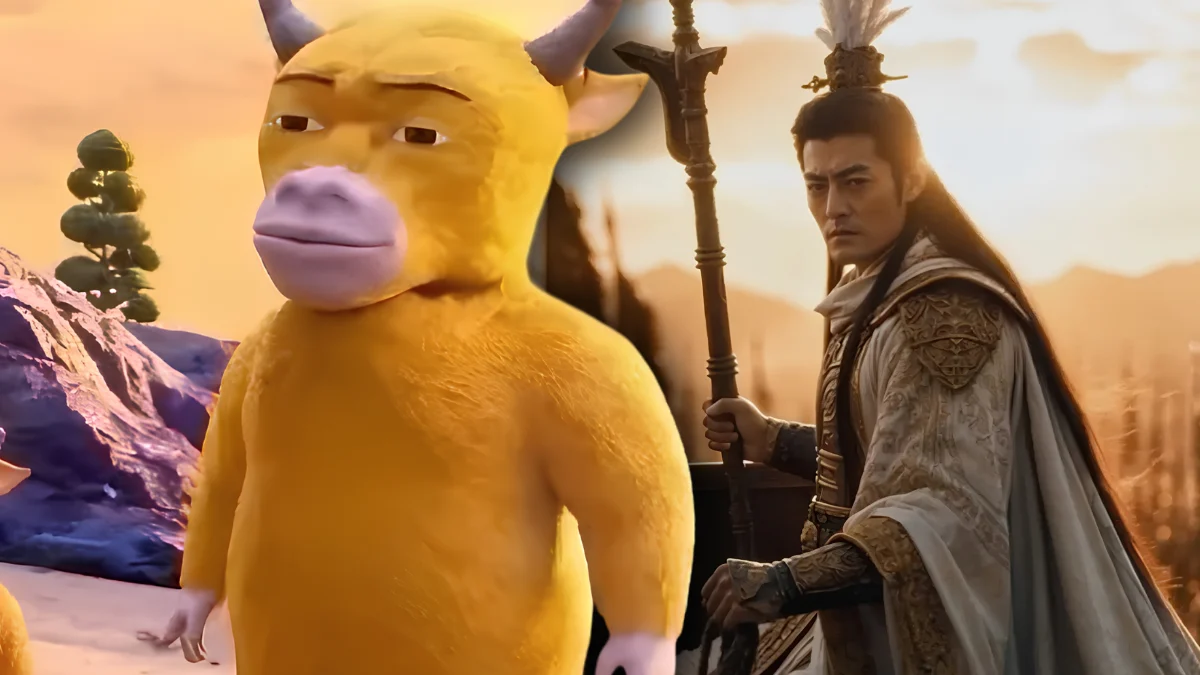

The debate over artificial intelligence in filmmaking has been raging for years, but China just delivered one of its most telling real-world tests. Its first fully AI-generated feature film finally reached cinemas, and the box office verdict has been brutal.
The project came from Bona Film Group, which set up its AIGMS production center at the end of 2023. The studio first primed audiences with an AI sci-fi short-drama series, ‘Sanxingdui: Revelation of the Future’, which pulled in nearly 200 million views on Douyin after launching in July 2024.
Building on that momentum, Bona released ‘Sanxingdui: Future Past’ in Chinese theaters on October 23. Despite being treated as a proper wide release with more than 10,000 screens scheduled on opening day, the sci-fi thriller brought in an estimated $180,000 through Monday, according to ticketing platform Maoyan, against a reported budget of $1.5 million.
That works out to less than $20 per screen, making it extremely unlikely the film will recoup its costs. Its first 2 days produced just over 500,000 yuan, accounting for roughly 1% of the box office share.
The story follows an archaeologist who must save a future world enslaved by AI. It draws on the ancient Sanxingdui civilization of Sichuan, known for its enigmatic bronze masks and artifacts, to build its vision of humanity’s future.
China’s first fully AI-generated feature film, Sanxingdui: Future Past, has bombed at the box office The flop comes after Niu Lai, a movie dubbed ‘worse than AI’ made millions despite a $200 budget https://t.co/UYHIhiK1Gb
— Dexerto (@Dexerto) October 27, 2026
The production was hardly a shortcut, either. The team generated more than 1.2 million base images and revised the film over 100 times, with nearly 100 people working on it for more than 2 years, even though the characters’ voices and visuals were AI-generated.
Bona executive Jiang Defu acknowledged the lukewarm response in an interview with Chinese film outlet Yuli. Still, he defended the project as an important experiment, stressing that the company was the first to attempt it, the first to secure a theatrical release permit and the first to face audiences.
首部 AI 院线电影《三星堆:未来往事》 定档 10 月 23 日。 片长 100 分钟,拿到公映许可证。 角色全是原创数字形象,不含真实演员复刻。 对做 AI 的人,看点不是特效,是 10月23日 之后的票房和口碑。 如果火了,还可以观察下meme币这块。 这会影响资本怎么看“AI 原生内容”。 https://t.co/EFsEh6OteH
— 良竹 (@liangzhu_AI) October 4, 2026
Experts see a clear pattern emerging. USC professor Stanley Rosen, who specializes in Chinese film and society, noted that the public remains highly skeptical of AI in major feature films, even while short-form AI content has found acceptance.
He added that the financial loss will likely push others considering AI-driven features to proceed more carefully. Online reactions were split as well, with one viewer saying the film had left them traumatized, while another praised the format for lowering costs and opening up storytelling freedom.
The flop looks even harsher next to the surprise success of ‘Niu Lai’, a crudely animated film widely mocked for its rough visuals. Made over about 5 years by Xin Yumeng and his mother Sun Lifang, the movie used an architectural modeling program called SketchUp for its animation, with the pair voicing every character themselves.
Released on August 5 by Tianjin Yamazaki Film with no promotion beyond a single poster, it earned just $995 on its first day. Word of mouth then exploded across Chinese social media, with some critics comparing its cult appeal to ‘The Room’.
By late August, China’s Global Times reported the film had made $6.7 million, and some estimates now put its haul closer to $10 million. With a budget of roughly $200, it overtook ‘Obsession’ as the most profitable movie ever relative to its cost, at one point even ranking near ‘Spider-Man: Brand New Day’ in China’s daily box office results.
The contrast is hard to ignore. A movie built with millions of images and years of polish struggled to fill seats, while a homemade project embraced for its flaws became a phenomenon.
For now, ‘Sanxingdui: Future Past’ has at least proven an AI-driven production can reach Chinese cinemas. Whether audiences will ever truly buy tickets for one is a far bigger question.
What matters most to you when deciding whether to watch a movie?
Have something to add? Let us know in the comments!