


Christopher Nolan Names the Steven Spielberg Classics He Loves the Most

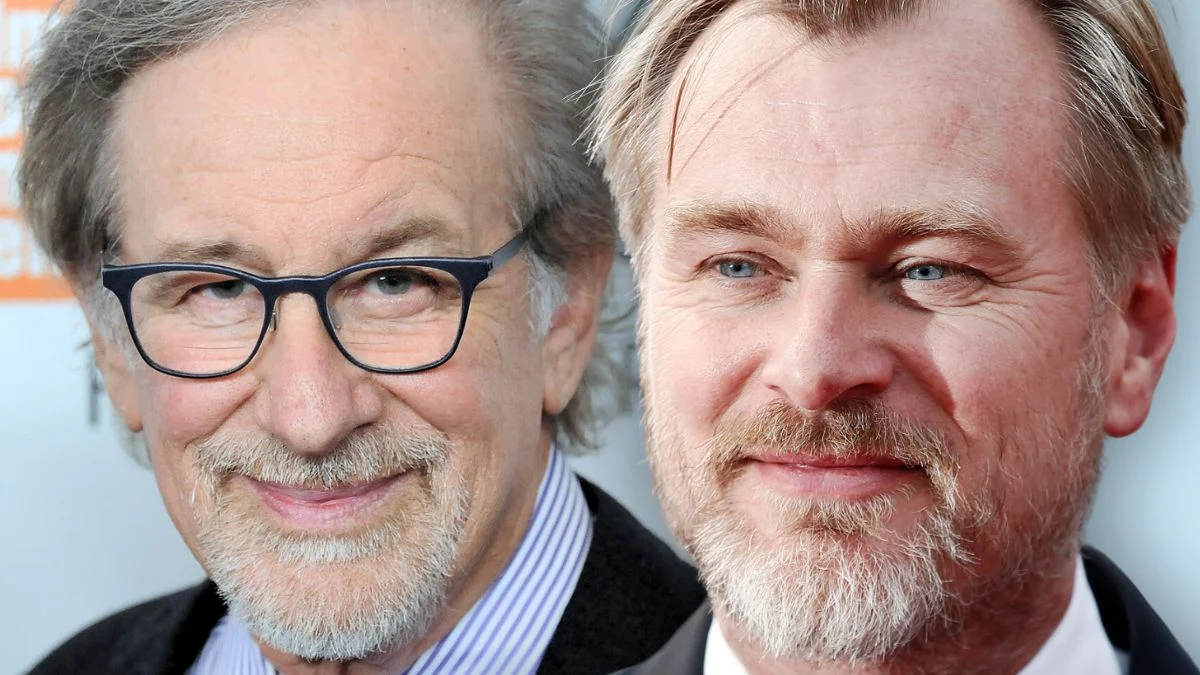


Christopher Nolan’s Oppenheimer stands as a monumental fusion of technical prowess and narrative depth, utilizing groundbreaking practical effects to pull audiences into the complex psyche of J. Robert Oppenheimer.
The film’s staggering depiction of the historical Trinity Test utilized what appeared to be genuine, visceral footage of a nuclear blast, proving Nolan’s mastery of large-scale spectacle.
In the realm of contemporary cinema, this specific blend of massive scale and emotional resonance is a trait Nolan largely inherited from his primary creative predecessor, Steven Spielberg.
The influence of the Jurassic Park director is woven into the very fabric of Nolan’s filmmaking philosophy, as both directors prioritize high-budget, original stories centered on fresh characters.
Among Nolan’s personal list of the top 30 films ever made, two specific Spielberg masterpieces stand out for their profound impact on his own aesthetic. While he has long praised Raiders of the Lost Ark as true movie magic, the two titles he frequently cites as foundational to his style are Close Encounters of the Third Kind and Saving Private Ryan.
Released in 1977, Close Encounters of the Third Kind served as a blueprint for how to balance intimate family drama with grand, world-altering events. Much like Nolan’s own Interstellar, Spielberg’s sci-fi epic used the genre to explore a father’s obsession and the weight of first contact with extraterrestrial forces.
The film’s legendary use of lighting and practical effects earned it an Academy Award for cinematography, setting a standard for visual world-building that Nolan has consistently emulated in his own work.
Nolan’s second essential Spielberg pick is the 1998 war drama Saving Private Ryan, a film he admires for its total command over the cinematic medium. From its notoriously brutal opening sequence on Omaha Beach to its emotionally draining conclusion, the film demonstrated a director operating at the absolute peak of his powers.
It fundamentally redefined the war genre by keeping the sensory and visceral experiences of individual soldiers at the forefront of a massive historical event. This approach clearly informed Nolan’s own 2017 war epic Dunkirk, which utilized minimal dialogue to emphasize the immediate, life-or-death struggles of its protagonists.
By prioritizing the soldiers’ personal stories amidst a breathtaking visual extravaganza, Nolan paid direct homage to the immersive techniques Spielberg pioneered decades earlier. The mutual respect between the two has even come full circle, with Spielberg previously championing Nolan’s The Dark Knight for a Best Picture nomination.
As of early this year, both directors are currently in the midst of their most anticipated projects in years. Christopher Nolan is finalizing his latest “mythic action epic,” an adaptation of Homer’s The Odyssey, which is scheduled to hit IMAX screens on July 17.
The $250 million production features a massive ensemble cast including Matt Damon as Odysseus, Tom Holland as Telemachus, and Anne Hathaway as Penelope, alongside Zendaya, Robert Pattinson, and Charlize Theron.
Steven Spielberg is also returning to his sci-fi roots with the upcoming film Disclosure Day, set for release on June 12. The project marks his first foray into UFO territory in over 20 years and reunites him with Jurassic Park screenwriter David Koepp.
Starring Emily Blunt, Josh O’Connor, and Colin Firth, the film is expected to be a grounded yet spectacular “event movie” that explores the global aftermath of humanity discovering they are not alone.
Have something to add? Share your thoughts in the comments.