Christopher Nolan’s ‘The Odyssey’ Reframes Circe’s Ancient Exile for a New Generation

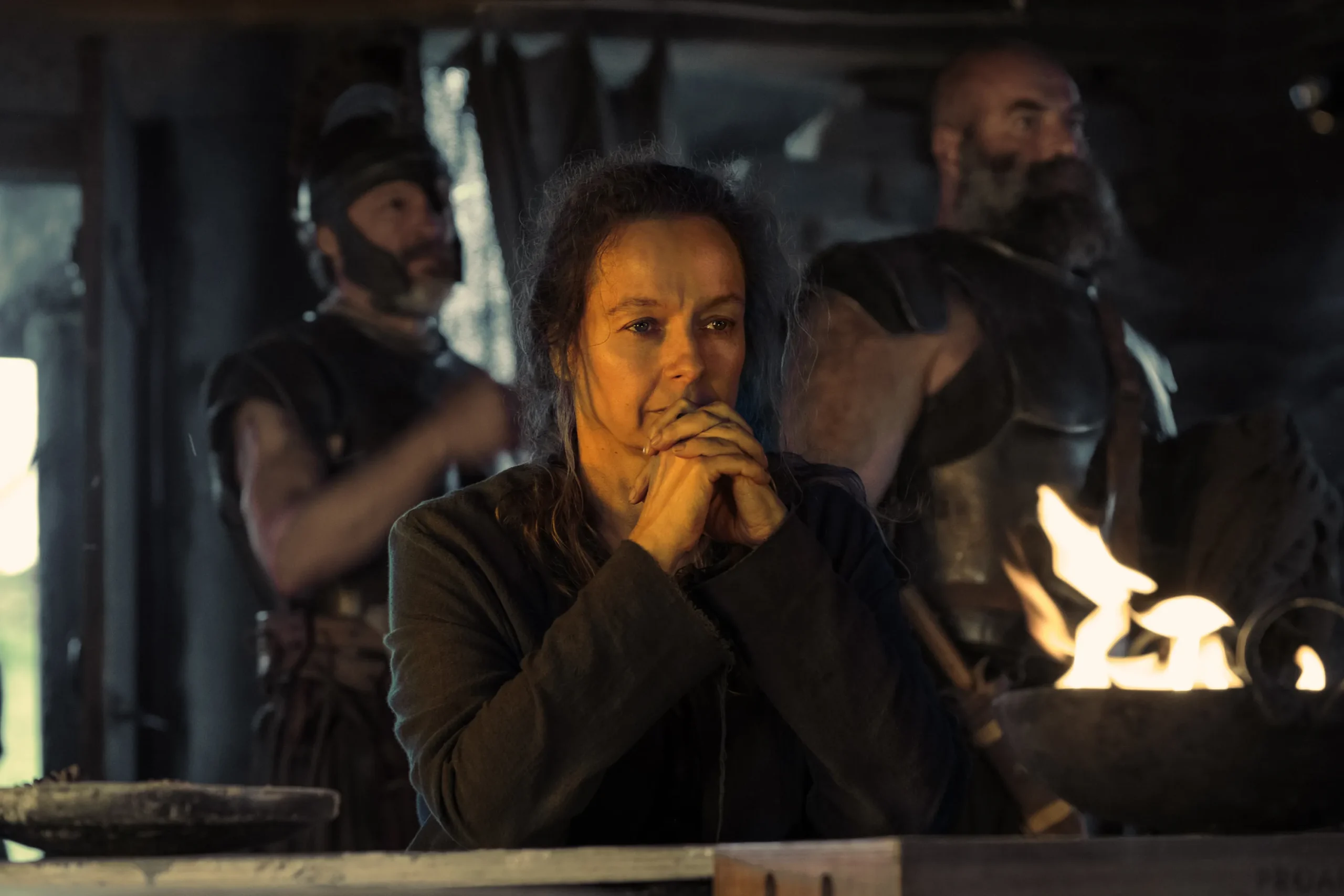

Christopher Nolan’s adaptation of Homer’s epic poem has arrived in theaters, and among its most talked about turns is Samantha Morton’s performance as Circe, the sorceress who has haunted readers and moviegoers for centuries. The film, written and directed by Nolan and starring Matt Damon, Tom Holland, Anne Hathaway, Robert Pattinson, Lupita Nyong’o, Zendaya and Charlize Theron, was released on July 17, 2026 through Universal Pictures.
For audiences new to the source material, one question keeps surfacing after the credits roll, namely why Circe was living alone on the island of Aeaea in the first place. In the film, Circe is introduced as a powerful, solitary witch who makes her home on that remote island, one of several mythical figures who complicate Odysseus’s ten year journey back to Ithaca. The answer to her isolation reaches back thousands of years into Greek myth, long before Nolan ever picked up a camera.
Circe’s Exile in Greek Mythology
Ancient sources do not agree on a single reason for Circe’s banishment, which is part of what makes her such a rich character for adaptation. One widely cited version holds that Circe fell in love with the sea god Glaucus, who instead became infatuated with the nymph Scylla, and in a jealous rage Circe poisoned the water where Scylla bathed. That act transformed Scylla into a monster, and the consequence for Circe was lifelong banishment from her immortal family and home.
Ovid’s Metamorphoses points to this same poisoning of Scylla’s bathing pool as the trigger for her isolation on Aeaea, framing it as an act of envious anger serious enough that even her godly relatives turned on her. The island itself is described in Homer’s original text as separated from both human and divine company, a kind of built in prison for a goddess with immense power but almost no one to share it with.
A separate strand of myth offers a different explanation entirely. In this version, Circe murdered her husband, the prince of Colchis, and was expelled by her own subjects before her father placed her on the solitary island of Aeaea. World History Encyclopedia notes that some accounts specifically describe her arrival on the island in Helios’s own chariot, again tied to punishment following her husband’s death.
Whichever version a reader favors, the throughline is consistent. Circe’s siblings received kingdoms of their own from their father, while she was largely ignored, and once her magical abilities drew scrutiny she was banished to Aeaea for eternity. That backstory of a gifted, overlooked daughter punished more harshly than her siblings gives Nolan’s film a foundation of loneliness that Morton leans into fully.
Samantha Morton’s Circe Performance Anchors the Film
Samantha Morton’s casting as Circe was confirmed as part of a star studded ensemble that also includes Matt Damon, Anne Hathaway, Tom Holland, Lupita Nyong’o, Zendaya and Charlize Theron, in a production shot across six countries without green screens. The role has become one of the most discussed elements of the film’s rollout, due in large part to comments from Nolan himself.
Nolan told the Los Angeles Times that the film would have lived or died depending on Morton’s approach to the role, and recalled that the crew broke into applause after one of her takes. He said the last time he remembered that happening on one of his sets was during Heath Ledger’s performance in ‘The Dark Knight.’ Producer Emma Thomas separately confirmed that Morton’s work earned the first standing ovation from cast and crew on a Nolan production since Ledger’s Oscar winning turn as the Joker.
What do you think of Samantha Morton's performance as Circe?
The sequence that has generated the most attention comes when Odysseus’s starving, exhausted crew stumbles onto Circe’s home. By the time they reach the island of Aeaea, Odysseus’s men have already been decimated by the Cyclops Polyphemus and a violent tribe of giants, and they are lost at sea when they find the isolated cottage where Circe eventually discovers them. When Odysseus returns from hunting, he finds his men transformed, and Circe furiously tells him she did not turn his soldiers into pigs, she simply revealed who they really were, before their gentler transformation back into men and her guidance sending Odysseus toward the underworld.
Circe’s Place in Christopher Nolan’s ‘The Odyssey’
In the film’s structure, Circe lures the surviving crew inside with the promise of food that has actually been laced with drugs, and the men are unable to stop eating before succumbing to her magic and transforming into pigs. Odysseus only realizes what has happened after one of the animals reverts to human form when struck by an arrow, and once he talks Circe down, she instructs him to travel north to the underworld to consult the blind prophet Tiresias.
The character functions as one of several tests along Odysseus’s journey rather than a simple obstacle. Circe and Calypso in particular are framed as tests of Odysseus’s memory of home, distinct from the physical dangers posed by figures like Polyphemus or Scylla and Charybdis. That framing gives Morton’s Circe a psychological weight beyond her sorcery, and it echoes the myth’s portrait of a woman defined as much by isolation as by power.
Critics have also noted that Nolan’s version of the character stays fairly faithful to the ancient text even as Morton’s casting sets it apart from earlier screen interpretations, since Circe has traditionally been portrayed as significantly younger. That choice reframes her not as a temptress but as someone who has spent an eternity alone on Aeaea, closer to the myth’s original punishment than to more modern, glamorized depictions of the sorceress.
Critical Reception for ‘The Odyssey’
Early reviews have largely praised Nolan’s approach to the material. Variety’s review calls the film a vastly ambitious undertaking, noting that adapting the well worn text in 2026 requires both adventurous instinct and a certain traditionalism, qualities the outlet argues Nolan has built an entire career on.
The production itself has been described as the first feature length film shot entirely on IMAX cameras, with a crew that developed new technology to manage the format’s noise and size challenges, and principal photography wrapped in 91 days, nine days ahead of schedule. That level of ambition, paired with the reaction to Morton’s Circe, has shaped much of the film’s pre and post release conversation.
For a character whose myth has shifted depending on which ancient author told it, Nolan’s film adds one more version to a very long tradition, and it leaves plenty of room for viewers to decide which telling of Circe’s exile lingers with them longest after watching Morton’s performance on the island of Aeaea.